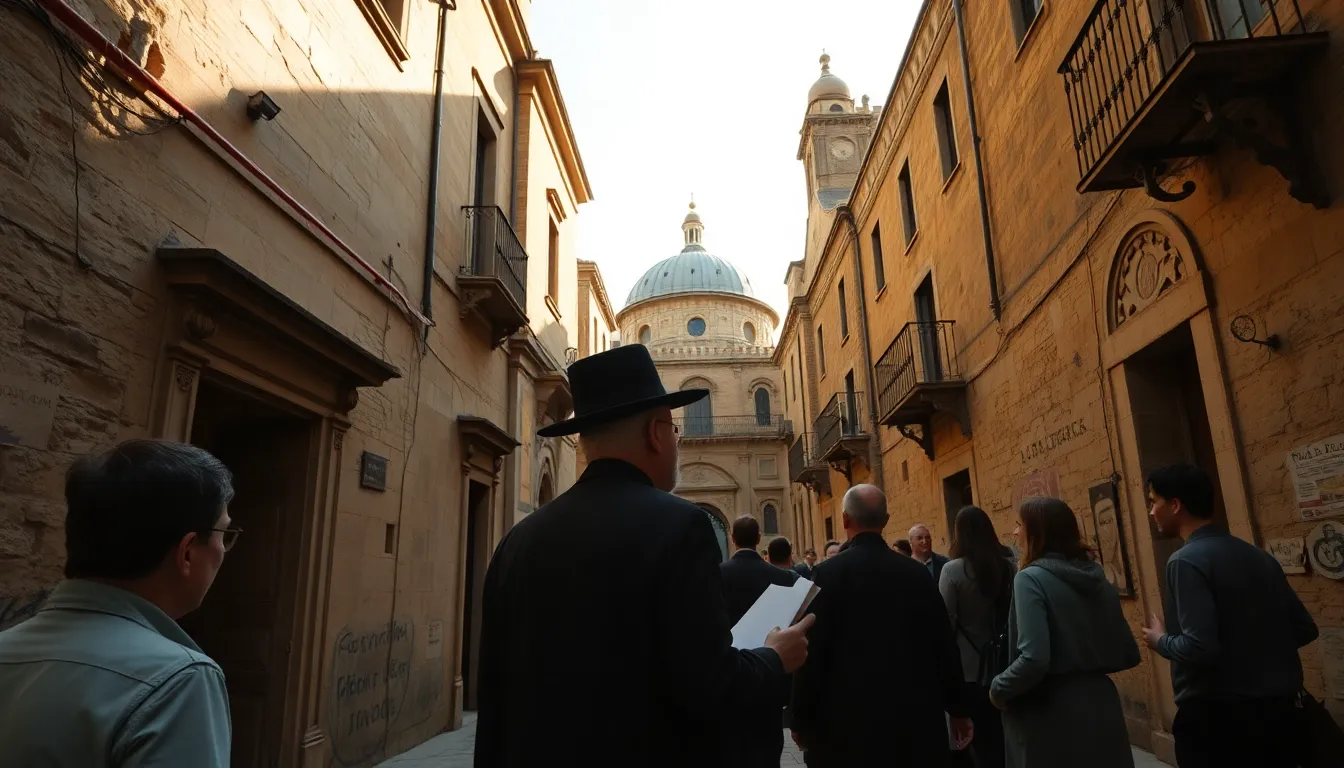
When a rabbi calls me about Spain, there is a weight in the conversation that I do not hear with other destinations. Spain is not just a place with old synagogues. It is Sefarad. It is the land your community was expelled from in 1492, the place where a flourishing Jewish civilization produced Maimonides, Nachmanides, Judah Halevi, and centuries of poetry, law, and philosophy that still shape Jewish life today. Bringing a congregation there is not sightseeing. It is a return.
I have built these Sephardic journeys with rabbis for over twenty years, and the ones that move people most are the ones where the rabbi shaped the spiritual arc from the start. Not picking sites off a list, but deciding what story their community needs to walk through. Here is how I help a rabbi build that journey.
Decide the Arc Before the Itinerary
A Sefarad journey has a natural emotional shape, and the rabbi is the one who decides how to tell it. There is the height of Jewish life under Muslim and then Christian rule, the golden age in Cordoba and the intellectual life of Toledo. There is the slow narrowing, the pressures, the forced conversions. And there is 1492, the expulsion, and what your community carried out of Spain into the rest of the diaspora.
Before we choose cities, I ask the rabbi what arc they want. Some want to dwell in the golden age, to let their people stand in the world that produced the Rambam and feel the greatness of it. Some want the fuller, harder story, including the expulsion, because their community needs to grieve and to understand what survived. Both are right. But the arc determines everything downstream, which sites, how long, where the moments of reflection fall.
Once the arc is set, the corridor is usually clear. Toledo, Cordoba, and Granada form the strongest Sephardic spine, and we build around it.
The Core Sephardic Sites and What They Hold
Let me walk through the spine itself, because the sites are not interchangeable.
Toledo. The old Jewish quarter is one of the best-preserved in Spain. The Synagogue of Santa Maria la Blanca and the Sinagoga del Transito, with its stunning plasterwork and the El Greco connections nearby, anchor the city. Standing in a synagogue commissioned by a Jewish treasurer to a Christian king, built by Muslim craftsmen, tells the whole layered Sephardic story in one room.
Cordoba. The heart of the golden age. The Juderia, the narrow streets of the old Jewish quarter, the small medieval synagogue, and the statue of Maimonides who was born here. For many groups, the Maimonides connection is the emotional center of the trip. This is where Jewish thought reached one of its great peaks.
Granada. The last stand of Muslim Spain, and the place where the expulsion decree was signed in 1492 in the shadow of the Alhambra. The contrast is heavy and deliberate. The beauty of the Alhambra alongside the date that ended Sefarad gives a group a great deal to sit with.
A good local guide who understands the religious history, not just the architecture, is what turns these stones into the story. I work only with guides who can explain Jewish life under medieval Spanish rule, not just tell you when a building went up.
Kashrut, Shabbat, and the Logistics That Cannot Be Afterthoughts
This is where a Sefarad journey lives or dies on the planning, and where a rabbi needs an operator who treats observance as central, not as a special request.
Kashrut. Spain is not Israel. Kosher options are limited outside Madrid and Barcelona. This must be discussed at the very first planning call, not added later. We work with local providers to arrange meals that meet your community’s standard, and the level of that standard, who certifies, what is acceptable, is your call, made early, so I can build the trip around it. For a group that keeps strict kashrut, this shapes the itinerary itself, including where we stay and how we route the days.
Shabbat. Where your group spends Shabbat matters enormously. Madrid and Barcelona have functioning Jewish communities and synagogues where your congregation can daven with local Jews, which is often one of the most moving moments of the entire trip. I plan the itinerary so that Shabbat lands somewhere your community can rest, eat, and pray properly, with walking distance between hotel and synagogue. We never schedule travel or site visits across Shabbat for an observant group.
Pacing for the community. Many of your most committed travelers will be older. Heritage sites in Toledo and Granada involve cobblestones, stairs, and hills. Tell me who is coming and we plan accessible alternatives and realistic days, so the journey is open to your whole congregation, not just the able-bodied.
For a wider view of how these pieces fit, our group heritage tour planning guide for Spain lays out the operational side in detail.
The Free Travel Benefit and What It Means for a Synagogue
Let me be clear about this, because it changes the budget conversation with your board.
When your group includes 15 or more participants, you as the rabbi travel free. Your full trip, flights, hotels, ground transportation, site entries, and included meals, is covered at no cost. This exists because organizing a Sefarad journey for a congregation is months of work, planning, teaching, and trust-building, and the benefit honors that and makes it possible for you to lead in person without it becoming a line in the shul budget or a cost to your family.
For a synagogue weighing whether to support a trip, this matters. You are not asking the congregation to fund the rabbi’s travel. You are leading a journey at no personal cost, and every member who joins moves the group toward that 15-person threshold. I walk through the per-person numbers with you early so you can present the trip honestly to your board and your community.
Make It a Teaching Journey, Not Just a Trip
The rabbis whose trips resonate longest treat Spain as a teaching opportunity that starts months before departure. Teach a series on the golden age in the lead-up. Study a piece of Maimonides or Sephardic poetry so that when your people stand in Cordoba, the words are already in them. Frame the expulsion in a class so Granada is not just a beautiful fortress but a place of communal memory.
By the time your group lands in Toledo, they should already know why they are there. The journey then becomes the embodiment of what you taught, and the sites speak because your community is prepared to hear them. This is the difference between a congregation that comes home with photos and one that comes home changed. Our piece on educational framing for Spain heritage trips goes further on building that teaching arc.
If you are a rabbi beginning to imagine a Sefarad journey for your community, I would be honored to help you shape it. Start with our Spain heritage destination overview, or see how our group heritage tours handle observance and logistics.
FAQ: Building a Spain Sephardic Heritage Journey
Can you accommodate a kosher-keeping group in Spain?
Yes, with early planning. Kosher options are limited outside Madrid and Barcelona, so we discuss your community’s kashrut standard at the first planning call and build the itinerary, meals, and routing around it. This is central to how we plan a Sephardic journey, not an add-on.
How do you handle Shabbat for an observant congregation?
We plan the itinerary so Shabbat falls where your community can rest and pray properly, typically near a functioning synagogue in Madrid or Barcelona, with walking distance between hotel and shul. We do not schedule travel or site visits across Shabbat for observant groups.
Which cities form the core of a Sephardic itinerary?
Toledo, Cordoba, and Granada are the strongest spine. Toledo for its preserved Jewish quarter and synagogues, Cordoba for the golden age and the Maimonides connection, and Granada for the Alhambra and the 1492 expulsion. We shape the arc around your community’s spiritual focus.
Does the rabbi travel free?
Yes. With 15 or more participants, the rabbi’s full trip is covered, including flights, hotels, ground transportation, site entries, and included meals. It honors the work of organizing the journey and keeps the cost off the synagogue budget and your family.
How far in advance should we plan a Sefarad journey?
Six to nine months at minimum, and earlier if your group keeps strict kashrut or you are planning around the Jewish calendar. Early planning lets us secure site reservations, coordinate kosher providers and Shabbat arrangements, and give your community time to prepare.
If you are ready to begin shaping your community’s return to Sefarad, reach out and we will talk it through. Every congregation carries this history differently, and the right journey is the one built around yours.