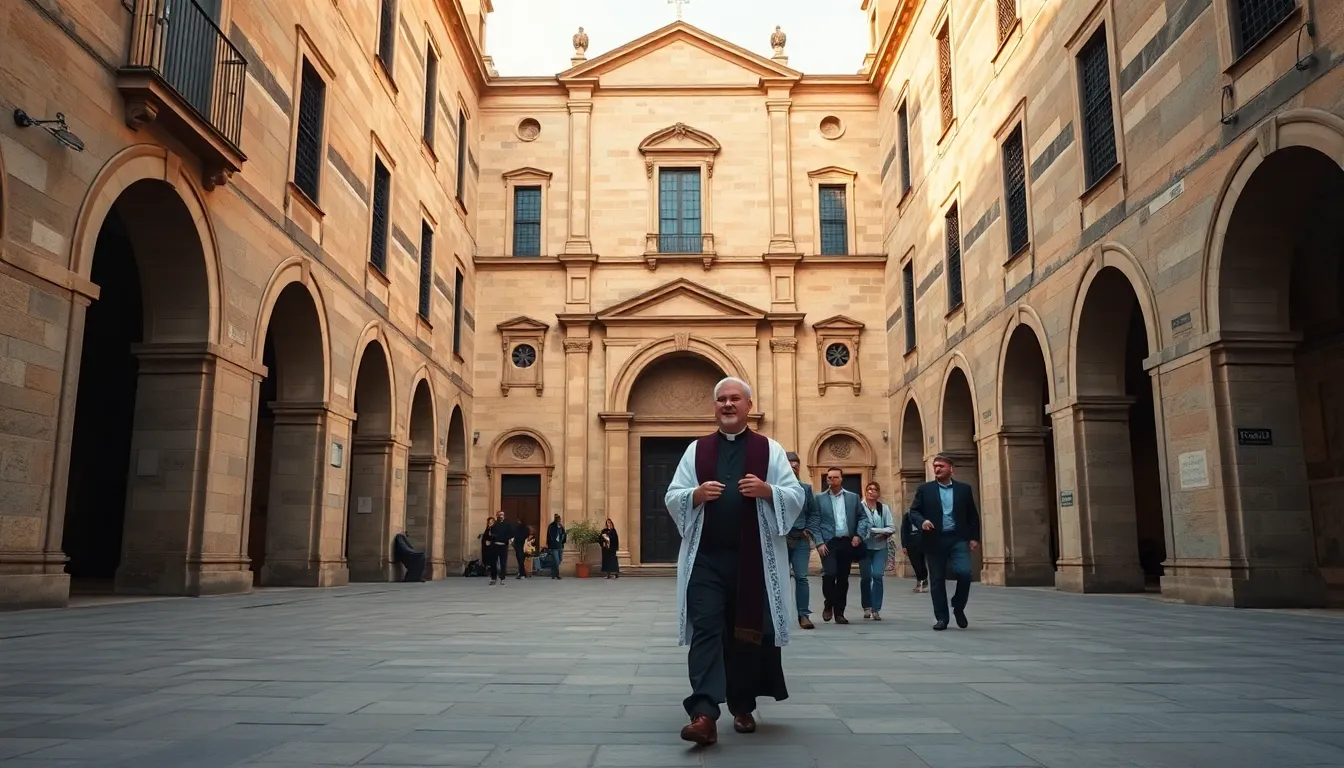
The first time a pastor calls me about Spain, the question underneath the question is almost always the same: “Can I actually do this?” Not “is Spain a good destination.” They already know it is. What they want to know is whether a person who has never led a trip abroad, who has a full schedule and a congregation to shepherd, can pull off something this big without it swallowing their year.
You can. I have watched dozens of first-time pastors do it, and the ones who succeed are not the ones with the most travel experience. They are the ones who understand what their job is and what it is not. Your job is to be the spiritual leader and the inviter. My job is everything else. When those lines are clear, a first Spain trip is not just doable. It becomes one of the most meaningful things you will do in ministry.
Here is the playbook I walk every first-time pastor through.
Start With Why Your People Need Spain, Not Where
Before you look at a single itinerary, sit with the reason. Spain is not a place you take a congregation because it photographs well. It is a place where Christian, Jewish, and Muslim history sit on top of each other, often inside the same walls. The cathedral in Cordoba was a mosque before it was a cathedral. Toledo held a thriving Jewish quarter under Christian and Muslim rule. For a church group, that layering opens conversations about faith, history, and what it means to walk where the early and medieval church lived.
So the first thing I ask a pastor is not “which cities.” It is “what do you want your people to come home understanding.” Maybe it is the depth of Christian roots in Europe. Maybe it is the Camino de Santiago and the pilgrim tradition. Maybe it is the harder, richer story of how three faiths shared and fought over the same ground. Once you know the answer, the itinerary almost builds itself. We pick two or three regions, four or five sites, and we leave room to breathe.
If you skip this step and start with a map, you will try to see everything, and a trip that races through five regions in seven days leaves your people exhausted and your message scattered. Decide the why first.
What You Handle, and What You Hand Off
This is the part that frees most first-time pastors. Let me draw the line plainly.
You handle the people. You invite. You preach the vision from the pulpit. You answer the questions only a pastor can answer, the spiritual ones, the “is this right for our family” ones. You set the tone. On the trip itself, you lead the devotionals and the moments of reflection at each site. That is irreplaceable, and it is the reason your people will go with you when they would not go with a travel agency.
We handle the logistics. Flights, hotels near the historic quarters, ground transportation with hotel pickup and dropoff, site entries and the advance reservations that places like the Alhambra require, local guides who know the religious history, and meals including any dietary needs. You do not build spreadsheets. You do not call hotels. You do not stand in a parking lot counting heads onto a bus, unless you want to.
The pastors who struggle are the ones who try to do my job on top of theirs. The pastors who thrive treat me like the staff member who carries the operational weight so they can carry the spiritual weight. That is the whole arrangement.
The Money Conversation, Made Simple
Cost is the fear that stops most first trips before they start. So let me take the pressure off.
When your group reaches 15 or more participants, you as the group leader travel free. Your full trip, flights, hotels, ground transport, site entries, and the meals in the itinerary, is covered at no cost to you. That is not a discount or a loyalty perk. It exists because organizing a meaningful trip for a congregation is real work, and the benefit is how we make it possible for the pastor to be there without it coming out of the church budget or your own pocket.
What this does for a first-timer is remove the awkwardness. You are not asking your congregation to fund a vacation for the pastor. You are inviting them on a journey you are leading at no personal cost, and the math actually helps you fill the group, because every person who signs on moves you toward that threshold. I walk through the per-person numbers with you early so you can speak to cost honestly the first time someone asks after a service.
Build the Group Before You Build the Hype
First-time pastors often want to announce the trip with a big splash and a finished brochure. I would slow that down. The strongest first trips start quietly, six to nine months out, with a small core.
Start with the people you already know will come. The couple who has mentioned wanting to travel. The longtime members who support everything you do. Get a handful of committed yeses before you go wide. That core does two things. It gets you most of the way to 15, and it gives you living proof when you announce to the full congregation, because now you can say “the Hendersons are going, the Pattersons are going,” and that does more than any flyer.
When you do go wide, lead with the why you settled on at the start. Show your people what they will encounter and why it matters for their faith, not a list of hotels. People do not commit a week and a chunk of savings to an itinerary. They commit to a story and a leader they trust. For more on filling the group well, our guide on marketing a Spain heritage trip to your congregation goes deep on this, and if you want a step-by-step on how to recruit and fill your group, that walkthrough covers the outreach that actually moves people from interested to committed.
The Mistakes I Watch First-Timers Almost Make
A few patterns come up again and again, and they are easy to avoid once you see them.
Trying to be the tour guide. You are not. We provide guides who know the history cold. Your role at each site is the reflection, the prayer, the connection back to Scripture and to your community’s life. If you try to memorize dates and architectural facts, you will exhaust yourself and do worse than the professional. Let the guide teach. You shepherd.
Booking too late. Spain’s heritage sites need lead time. The Alhambra in Granada sells out months ahead. If you want spring or early fall, which are the best windows for a mixed-age group, start the conversation six to nine months before you travel.
Underestimating the older travelers. Some of your most eager participants will be in their seventies. Heritage sites have cobblestones, stairs, and uneven ground. A good operator plans for this with accessible alternatives and pacing. We do, but tell me early who is coming so we can plan around real bodies, not an average.
Going it alone on the spiritual program. Some first-time pastors think they need to script every devotional before departure. You do not. Walk the sites first. The right words come when you are standing in the place. Bring an outline, not a manuscript.
If you are a pastor weighing your first Spain trip and you want to talk it through, that is exactly the conversation I love having. Start with our Spain heritage destination overview, or look at how our group heritage tours handle the logistics so you can focus on your people.
FAQ: Leading Your First Heritage Trip to Spain
Do I need travel experience to lead a church group to Spain?
No. The most successful first-time group leaders are pastors who lean on the operator for logistics and focus on the spiritual leadership only they can provide. We handle flights, hotels, transport, guides, and reservations. You handle the invitation, the vision, and the devotional life of the trip.
How many people do I need before the trip makes sense?
Heritage Tours groups typically start at 10 participants, and the group leader free travel benefit begins at 15 or more. Most first-time pastors aim for that 15-person threshold, which covers your full trip at no cost and makes the per-person economics work well for everyone.
As the pastor, do I really travel free?
Yes. With 15 or more participants, your full trip is covered, including flights, hotels, ground transportation, site entries, and included meals. This applies to all our group itineraries, Spain included. It exists to honor the work of organizing the trip and to keep the cost off your shoulders.
How far ahead should a first-timer start planning?
Six to nine months is the right window for most Spain trips. That gives time to secure reservations at popular sites like the Alhambra, coordinate guides and any dietary needs, build your core group, and present the trip to your congregation without rushing.
What if someone in my group has mobility limitations?
Tell us early. Many heritage sites involve stairs and uneven terrain, and we plan accessible alternatives and realistic pacing when we know who is traveling. No one should be left behind, and with advance notice, no one is.
If you want to see the full arc of planning before we talk, the complete guide for group leaders lays out every step end to end. If you are ready to start, reach out and we will talk through what your first Spain trip could look like. No pressure. Just a conversation about your people and where you want to take them.