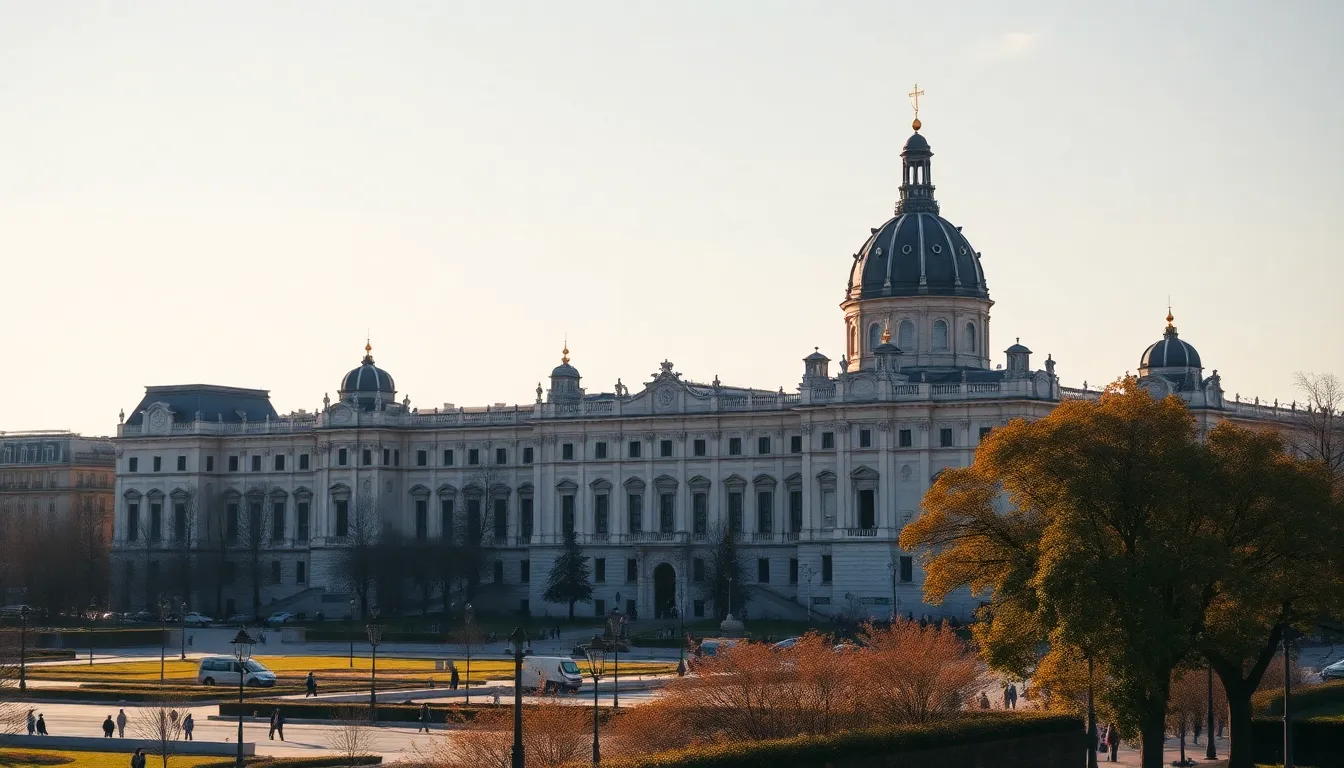
Group leaders sometimes treat Madrid as the place you fly into before the real trip begins. I understand why. Madrid does not wear its history on its sleeve the way Toledo or Granada do. There is no medieval Jewish quarter you can walk through, no Moorish palace on a hill. But I have learned over the years that Madrid rewards a group that knows where to look, and it offers something the old heritage cities cannot: a living Jewish community, world-class sacred art, and a base that connects to almost everywhere else in Spain.
If you are planning a Spain trip, you will almost certainly pass through Madrid. The question is whether you treat it as an airport or as a destination. Let me make the case for the second, and show you what is actually here.
Where Madrid Sits
Madrid is the capital, set right in the geographic center of Spain on the high Castilian plateau, over 650 meters up. That altitude shapes the climate: hot, dry summers and genuinely cold winters, with clear, sharp light most of the year. Spring and autumn are the comfortable seasons for a group.
The real strength of Madrid for a heritage planner is connection. It sits at the hub of Spain’s high-speed rail network and has a major international airport. From Madrid you can reach Toledo in half an hour, Avila and Segovia in well under an hour, and Cordoba or Seville in a couple of hours. That makes Madrid the natural base for a Castilian and central Spain itinerary, with day trips radiating out.
Christian Heritage: The Royal City and Sacred Art
Madrid became the capital in the sixteenth century, so its Christian heritage is royal and Counter-Reformation in character rather than medieval. That gives it a particular flavor.
The Royal Palace and the Almudena Cathedral
The Royal Palace of Madrid is one of the largest palaces in Europe, and beside it stands the Almudena Cathedral, completed only in the twentieth century after centuries of plans. Together they form the ceremonial heart of the city. For a group, this is where you understand Madrid as the seat of Catholic Spain at the height of its empire, the Spain of the Counter-Reformation that shaped so much of the country’s religious art and identity.
The Prado and Sacred Art
Here is where Madrid does something no other Spanish city can. The Prado Museum holds one of the greatest collections of religious painting in the world. The works of El Greco, Velazquez, Murillo, and others fill room after room with scenes from scripture, the lives of the saints, and the spiritual struggles of the Spanish soul.
For a pastor or a Christian group, a guided visit to the Prado is not a tourist detour. It is an encounter with how Spain prayed through its art. Standing in front of an El Greco, with its stretched, heaven-reaching figures, or a Velazquez crucifixion, your group sees the faith of Counter-Reformation Spain rendered by its greatest hands. I always tell groups to go with a guide who can read the sacred art for them, because the meaning is layered and easy to miss.
Just outside Madrid, the great monastery-palace of El Escorial, built by Philip II, is one of the most important religious and royal monuments in Spain. Many groups make the half-day trip out to see it.
Jewish Heritage: A Living Community, Not Just a Memory
This is what makes Madrid genuinely different for a Jewish group, and it surprises people.
Medieval Madrid was a small town, so it does not have a great preserved Jewish quarter like Toledo or Girona. If your group is looking for Sephardic stones, you find those in the old heritage cities. But Madrid offers something those cities cannot: a living Jewish community today.
After centuries during which Jewish life in Spain was effectively absent following the 1492 expulsion, the modern era saw Jewish life return. Madrid is now home to an active Jewish community, with a functioning synagogue and communal institutions. For a rabbi bringing a congregation, this is meaningful in a way the empty medieval quarters are not. Your group can encounter not only the memory of Sephardic Spain but the continuation of Jewish life in the capital today.
Spain has also passed laws offering citizenship to descendants of Sephardic Jews expelled in 1492, a public reckoning with that history. Visiting the living community in Madrid lets your group hold both halves of the story: the loss in 1492 and the return in our own time. Our Spain heritage travel guide covers the medieval Sephardic centers that complete the picture.
Moorish Heritage: The Toledo Connection
Madrid itself does not hold the great Moorish monuments. But it is the gateway to one of the most important heritage cities in all of Spain: Toledo, just half an hour south.
Toledo is where Jewish, Christian, and Muslim Spain all left their mark in one small hilltop city, the synagogues of El Transito and Santa Maria la Blanca, the cathedral, the Moorish-influenced architecture. Almost every group based in Madrid takes the short trip to Toledo, and many treat it as the real heart of their central Spain experience. From Madrid you can also reach Cordoba and its Mezquita by fast train. So while Madrid is not itself a Moorish city, it is the practical launch point for the Moorish and convivencia story.
If your itinerary runs north into the Castilian highlands, our Avila heritage guide covers the walled city of Saint Teresa, an easy add from Madrid.
Planning a Madrid Heritage Trip
A few things I tell every group leader.
First, use Madrid as a base. Its real value is the day trips: Toledo, El Escorial, Avila, Segovia, all reachable and back in a day. Build your central Spain leg around Madrid and let the spokes do the work.
Second, get a guide for the Prado. The collection is enormous and the sacred art rewards interpretation. A two-hour guided visit focused on religious painting is worth far more to a faith group than wandering on your own.
Third, if you have a Jewish group, arrange a visit to the living community. Coordinating a respectful visit to an active synagogue takes advance planning, but it gives your group an experience the heritage cities cannot.
Fourth, plan for the season and the altitude. Madrid summers are hot and winters are cold. Spring and autumn are best for comfortable walking and day trips.
Fifth, the right operator ties it all together, Prado guides, community visits, day-trip logistics, and a schedule that fits Madrid into the larger trip without wasting your group’s energy. At Heritage Tours, we build every itinerary around what matters to your specific community, and with 15 or more participants, the group leader always travels free.
If Madrid is part of your community’s Spain journey, I would love to talk about what that trip could look like. Explore our Spain heritage tours or take a look at how our group heritage tours work. There is no obligation, just a conversation.
FAQ: Madrid Heritage Travel
Is Madrid worth more than a stopover for a heritage group?
Yes, if you know what to use it for. Madrid is the best base in central Spain, with fast connections to Toledo, El Escorial, Avila, and beyond. It also holds the Prado, one of the world’s great collections of sacred art, and a living Jewish community. Treated as a base and a destination rather than just an airport, Madrid earns real time on a heritage itinerary.
What sacred art should a Christian group see in Madrid?
The Prado Museum is the answer. It holds an extraordinary collection of religious painting, including major works by El Greco, Velazquez, and Murillo, scenes from scripture and the lives of the saints rendered by Spain’s greatest painters. A guided visit focused on the sacred art lets your group read the faith of Counter-Reformation Spain through its art.
Is there a Jewish community in Madrid today?
Yes. Unlike the medieval heritage cities, which hold the memory of Sephardic Spain, Madrid has an active modern Jewish community with a functioning synagogue and communal institutions. For a Jewish group, this offers something the empty old quarters cannot: an encounter with the continuation of Jewish life in Spain, alongside the memory of what was lost in 1492.
How do we use Madrid for day trips?
Madrid sits at the hub of Spain’s high-speed rail network. Toledo is about thirty minutes away, Avila and Segovia under an hour, and Cordoba and Seville a couple of hours by fast train. El Escorial is a short drive. Many groups base in Madrid and take day trips out to these heritage cities, which keeps logistics simple and lets you cover a lot of central Spain.
Do group leaders travel free on Heritage Tours Spain trips?
Yes. When your group includes 15 or more participants, the group leader travels free. This applies to all Heritage Tours group itineraries, including any trip based in Madrid. It is our way of honoring the work spiritual leaders put into bringing their communities together for these journeys.