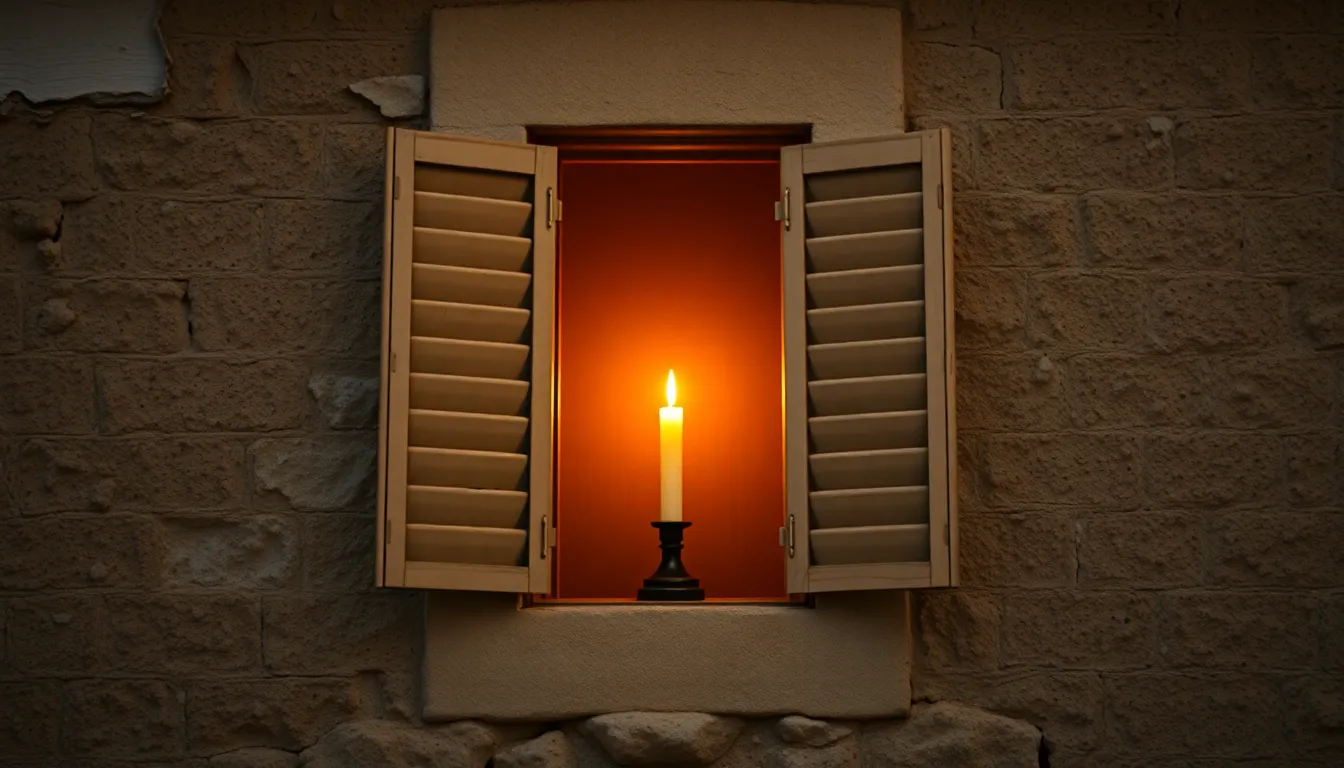
On a quiet street in a Spanish town, I once stood with a group in front of an ordinary house and told them a hard thing. Behind a window much like this one, generations ago, a family may have lit candles on Friday evening, then closed the shutters so no neighbor could see. They went to Mass on Sunday. They ate what they had to eat in public. And in private, in whispers, in fragments handed down through mothers and grandmothers, they held on to scraps of a faith they were forbidden to practice. This is the story of the conversos and the crypto-Jews, and it is the hardest and in some ways the most human chapter of Jewish Spain.
The synagogues tell you about the community that left or was destroyed. This story is about the ones who stayed, who converted under force, and who carried a hidden heritage forward in secret for generations. It does not offer easy comfort. But for a thoughtful group, it is often the part of the trip that stays with them longest, because it asks the most difficult questions about faith, fear, identity, and survival.
Forced Conversion: How It Happened
To understand the conversos, you have to understand the pressure that created them, and it did not begin with the famous expulsion of 1492. It built for a century before.
In 1391, a wave of violent anti-Jewish riots swept through Spain, beginning in Seville and spreading across the peninsula. Thousands of Jews were killed. Many thousands more, facing the choice between death and the baptismal font, converted to Christianity. These converts and their descendants became known as conversos, sometimes by the crueler term marranos. Over the following decades, waves of pressure, preaching, and persecution produced more conversions still.
Then came 1492. The Alhambra Decree gave the remaining Jews of Spain a stark choice: convert, leave, or die. Tens of thousands left. But a significant number, families with deep roots, businesses, the elderly, those without the means to start over, chose conversion in order to stay. The converso population swelled.
I am careful with a group here, because judgment is the wrong response. Picture an aging couple in Toledo with grandchildren in the city, no money to fund a sea voyage, and a deadline of months. The decision to convert was sometimes a decision to survive. It deserves compassion, not the comfortable certainty of people who never faced the choice.
Crypto-Jews: Faith Behind Closed Doors
Conversion on paper did not always mean conversion in the heart. Many conversos became Christian outwardly while continuing, in secret, to keep what they could of Jewish practice. These are the crypto-Jews, the hidden Jews, and their story is one of extraordinary quiet courage.
What did secret practice look like? Often it was fragmentary, dangerous, and passed down without books:
- Lighting candles on Friday evening and hiding them in a cupboard or behind shutters so the Sabbath flame would not be seen from the street.
- Avoiding pork quietly, or keeping small dietary customs whose origins later generations sometimes no longer remembered.
- Cleaning and changing linens for the Sabbath, sweeping the house, marking the day in small domestic ways that looked like ordinary housekeeping.
- Whispered prayers and blessings, often kept alive by the women of the household, passed mother to daughter when the formal texts and teachers were gone.
- Burial customs quietly preserved, washing the dead, particular forms of mourning, even when the rest of the funeral had to look Catholic.
Over generations, much of this knowledge thinned. Families remembered that they did certain things without always remembering why. A custom of covering mirrors, of not mixing certain foods, of a candle on a Friday, survived as habit long after its meaning had blurred. That blurring is itself part of the tragedy and the wonder. The thread stretched thin but did not always break.
The Shadow of the Inquisition
The reason all of this had to be secret has a name: the Spanish Inquisition, established in 1478.
It is important to be clear with a group about what the Inquisition was actually for. It had no authority over practicing Jews, who were outside the church. Its target was precisely the conversos, baptized Christians suspected of secretly keeping Jewish practice, judaizantes, as the records call them. The Inquisition existed to police the sincerity of the converted, and it did so with informers, interrogation, torture, confiscation of property, and public executions.
This is why a hidden candle was not a quaint custom but a mortal risk. A neighbor’s report, a servant’s testimony, a child’s innocent remark, any of these could bring the tribunal. Families lived for generations under the knowledge that their truest selves, if discovered, could cost them everything. I tell a group this not for grim effect but because it is the only way to understand the courage of what these people did. They held on anyway.
The Heritage That Survived
Here is what moves me most, and what I want a group to carry away. The story did not entirely end.
Across the centuries, and across the lands touched by Spanish and Portuguese exploration, traces of crypto-Jewish heritage persisted. In remote communities, in the American Southwest, in parts of Latin America, in Portugal’s mountain villages, families surfaced who had kept fragments of practice and a quiet memory of who they once were. In the Portuguese town of Belmonte, an entire crypto-Jewish community survived in secret for roughly five centuries before returning openly to Judaism in the modern era. That story alone is enough to silence a room.
In recent decades, many descendants of conversos have begun to explore and reclaim this heritage. Spain’s 2015 citizenship law for Sephardic descendants was, in part, an acknowledgment of this long, hidden lineage. The candle behind the shutter, it turns out, was not always extinguished. Sometimes it was simply waiting.
Walking This Story in Spain
You cannot put the crypto-Jewish experience behind glass, which is exactly why it needs a good guide and a thoughtful group. It lives in the converso quarters, in the streets near where the Inquisition tribunals sat, in the stories of specific families whose conversions and tragedies the records preserve. Figures like Abraham Seneor of Segovia, who converted rather than leave, give the story a name and a face on the ground.
This chapter threads through the whole of a Spain heritage trip and deepens every other stop. It connects directly to the broader arc in our Spain Jewish heritage guide, and it gives a particular weight to the preserved quarters in our guides to Hervas, a village whose converso identity is so central that it names its annual festival for it, and to the living culture in our primer on Ladino and Sephardic culture, the open inheritance of those who left set against the hidden one of those who stayed.
I hold this part of a trip with care. There are members of many congregations whose own family stories brush against this history, and a group leader needs to make room for that. The conversos are not only a lesson. For some travelers, they are kin.
FAQ: Conversos and Crypto-Jews
What is the difference between a converso and a crypto-Jew?
A converso was a Jew, or the descendant of one, who converted to Christianity, usually under force or pressure. A crypto-Jew was a converso who outwardly lived as a Christian while secretly continuing to keep Jewish practice. Not every converso was a crypto-Jew, but the crypto-Jews are the ones who preserved a hidden Jewish heritage across generations.
Why did Spanish Jews convert instead of leaving?
Many did leave. But conversion was sometimes a matter of survival. The riots of 1391 forced thousands to choose baptism over death, and the 1492 decree confronted families with rooted lives, no means to emigrate, or elderly and young members, with the choice to convert in order to stay. The decisions deserve compassion rather than judgment.
What did crypto-Jews do to keep their faith in secret?
Practice was fragmentary and dangerous. It included lighting Sabbath candles hidden behind shutters, quietly avoiding pork, preparing the home for the Sabbath in ways that looked like housekeeping, whispering prayers often kept alive by women, and preserving burial customs. Over generations some of these customs survived as habit even after their meaning had blurred.
What was the Spanish Inquisition’s role in this?
The Inquisition, established in 1478, had authority only over baptized Christians, not practicing Jews. Its specific target was conversos suspected of secretly keeping Jewish practice. Through informers, interrogation, torture, and public executions, it policed the sincerity of the converted, which is why hidden practice carried a mortal risk.
Does crypto-Jewish heritage still exist today?
Yes. Traces survived for centuries in remote communities in Portugal, the American Southwest, and Latin America. The Portuguese town of Belmonte famously kept a secret crypto-Jewish community for roughly five hundred years before returning openly to Judaism. Many descendants of conversos are now reclaiming this heritage, and Spain’s 2015 citizenship law acknowledged the lineage.
This is among the most moving and difficult stories a heritage group can walk, and it deserves a guide who handles it with dignity. We build our group heritage tours around the questions and histories your community brings, and with fifteen or more participants the group leader travels free. See the wider journey on our Spain destination page, and contact us when you are ready to talk it through.