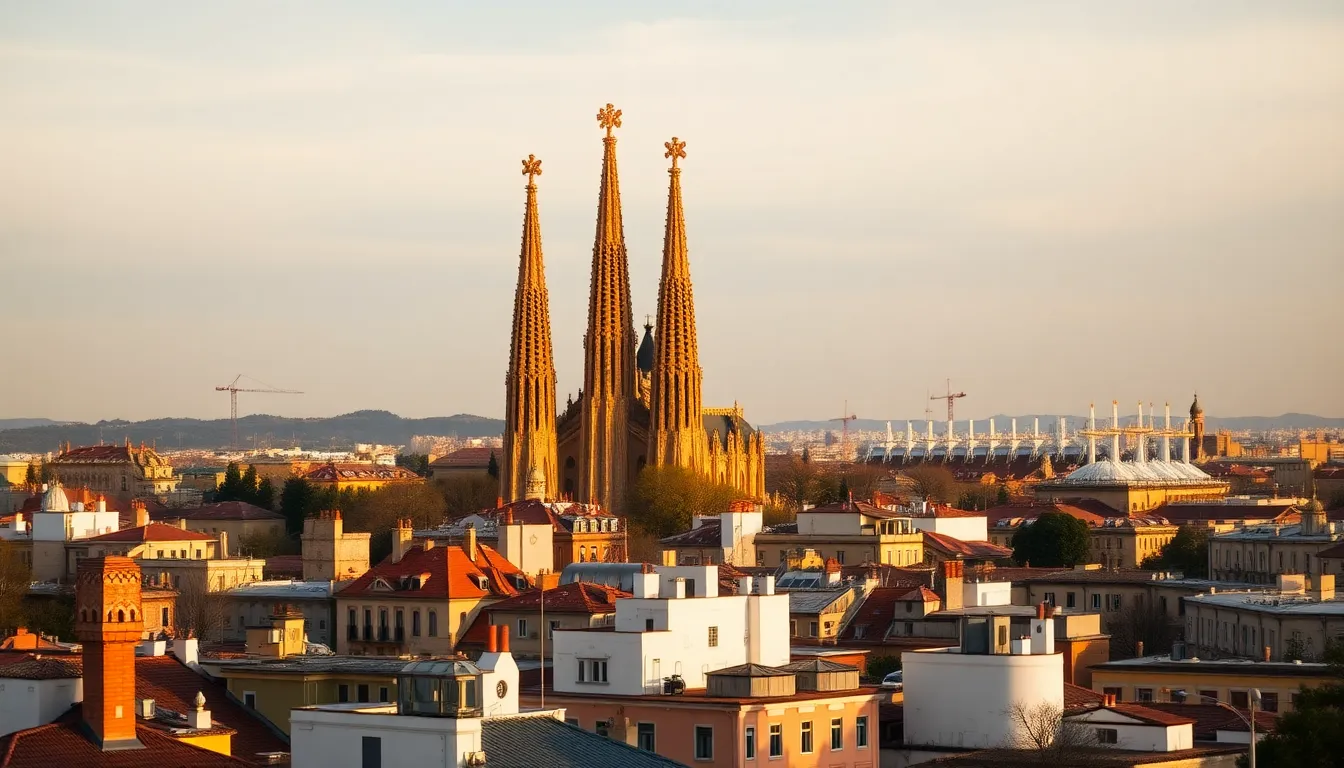
Most group leaders come to me wanting Barcelona for one reason: the Sagrada Familia. And I understand that. There is nothing else like it on earth. But every time I bring a group here, the thing that surprises them is not the famous basilica. It is a quiet stone street in the old city, barely wide enough for two people, where I stop and tell them that this was the heart of one of the oldest Jewish communities in Europe. People who came for Gaudi end up moved by a thirteenth-century synagogue they had never heard of.
That is the gift of Barcelona for a faith community. It holds the soaring and the hidden in the same compact old city. If you lead a church group, a synagogue group, or a mixed heritage group, this city gives you a lot to work with. Let me walk you through it.
Where Barcelona Sits
Barcelona is on the Mediterranean coast in Catalonia, the northeast corner of Spain. Catalonia has its own language, Catalan, alongside Spanish, and its own strong cultural identity. The city is large and modern, but the medieval old town, the Barri Gotic, is dense and walkable, and most of what a heritage group wants sits within a manageable area.
The weather is kind. Barcelona has a mild Mediterranean climate, which makes it comfortable for groups across much of the year, though summer is hot and crowded. Spring and autumn are ideal. The city is well connected by air and high-speed rail, which makes it an easy place to start or end a Spain trip.
Christian Heritage: Gaudi’s Basilica and the Gothic Churches
Barcelona’s Christian heritage runs from the medieval to the still-unfinished, and that range is part of what makes it powerful for a group.
The Sagrada Familia
The Basilica of the Sagrada Familia is Antoni Gaudi’s life work, begun in 1882 and still under construction more than a century later. Calling it a church does not prepare you for it. The interior columns branch like a forest, the light pours through stained glass in shifting color, and every surface carries meaning drawn from scripture and nature. Gaudi understood it as a building that preached, and it does.
For a pastor bringing a group, the Sagrada Familia is an act of faith in stone, a project so large that the people who began it knew they would never see it finished. That patience, that willingness to build for generations not yet born, is itself a sermon. I tell groups to book timed entry well in advance, because access fills up, and to leave plenty of time inside. This is not a place to glance at and move on.
The Gothic Quarter and the Cathedral
The Barri Gotic, the Gothic Quarter, is the medieval core of Barcelona. The Cathedral of Barcelona, a true Gothic cathedral with a quiet cloister, anchors it. The narrow streets around it have been continuously lived in for many centuries. Walking them, your group moves through the same lanes that medieval Barcelonans walked, past churches and squares that have held the city’s religious life for hundreds of years.
Just outside the city, the monastery of Montserrat sits high in a jagged mountain range. It has been a site of devotion since the ninth century and is home to the Black Madonna. Many groups make a half-day trip up to Montserrat for the setting, the boys’ choir, and the sense of stepping out of the city into something older and stiller.
Jewish Heritage: The Old Call
This is the part most visitors do not know about, and it is one of the reasons I love bringing groups to Barcelona.
El Call, the Medieval Jewish Quarter
Tucked inside the Gothic Quarter is El Call, the old Jewish quarter, one of the most important medieval Jewish centers in Catalonia. For centuries before the persecutions of 1391 and the expulsion of 1492, Jews lived, studied, and worked here. The streets are narrow and easy to miss, which is exactly why a group needs a guide who knows where to stop and what to point out.
The Sinagoga Major, the Ancient Synagogue of Barcelona, is held to be one of the oldest synagogues in Europe, recovered and opened to visitors. Standing inside this small space, your group is standing in a room that served the Jewish community of Barcelona in the medieval period, before that world was destroyed. For a rabbi bringing a congregation, El Call is not a museum stop. It is a place where the Sephardic story was lived and lost.
Barcelona’s Call pairs naturally with Girona, an hour and a half north, which has one of the best-preserved Jewish quarters in all of Europe. Many groups visit both to get the fuller Catalan Sephardic picture. Our Spain heritage travel guide sets these sites in the wider story of Jewish Spain.
Moorish Heritage: Why Barcelona Is Not the Place for It
I want to be straight with you, because it affects how you plan. The great Moorish heritage of Spain is in the south and center, in Granada, Cordoba, and Seville. Catalonia and Barcelona were never deeply part of Al-Andalus. Muslim rule reached this corner only briefly in the eighth century before the Frankish and Catalan counts pushed it back.
So if part of your group’s purpose is to understand Al-Andalus and the centuries when three faiths shared one country, Barcelona is not where you will find it. You will find that story in Andalusia. What Barcelona gives you instead is the meeting of medieval Christian and Jewish life in one dense old city, plus a thread of Catalan religious culture you will not see anywhere else. If your trip also reaches the Moorish south, the contrast deepens the whole experience.
Planning a Barcelona Heritage Trip
A few things I tell every group leader.
First, book the Sagrada Familia early. Timed entry sells out, especially in spring and autumn. This is the one reservation you cannot leave to chance.
Second, get a guide for El Call. The Jewish quarter is small, woven into the Gothic streets, and easy to walk past without realizing what you are seeing. A knowledgeable guide turns it from a few narrow lanes into a living story.
Third, consider Girona. If Jewish heritage matters to your group, the short trip north to Girona’s Call is worth building in. Barcelona and Girona together give a far richer Sephardic experience than either alone.
Fourth, think about where Barcelona fits. Because it sits at the northeast edge of Spain and connects easily by air and rail, Barcelona makes a strong start or finish to a wider trip. Some groups pair it with Madrid and the Castilian cities; you can read about that base in our Madrid heritage guide.
Fifth, the right operator handles the parts that are easy to get wrong, timed basilica access, a Call guide, Montserrat logistics, and a schedule that does not exhaust your group. At Heritage Tours, we build every Barcelona itinerary around what your specific community wants, and with 15 or more participants, the group leader always travels free.
If Barcelona is calling to your community, I would love to talk about what that trip could look like. Explore our Spain heritage tours or take a look at how our group heritage tours work. There is no obligation, just a conversation.
FAQ: Barcelona Heritage Travel
Do we need to book the Sagrada Familia in advance?
Yes, absolutely. The Sagrada Familia uses timed entry, and slots fill up, especially in spring and autumn. For a group, you want to reserve well ahead so you can lock in a time that fits your schedule and leave plenty of room inside. It is the one Barcelona reservation you should not leave to chance.
What is El Call in Barcelona?
El Call is the medieval Jewish quarter, tucked inside the Gothic Quarter. For centuries it was one of the most important Jewish centers in Catalonia, until the persecutions of 1391 and the expulsion of 1492. The Sinagoga Major, one of the oldest synagogues in Europe, has been recovered and opened to visitors. A knowledgeable guide makes the difference between walking past it and understanding it.
Should we visit Girona along with Barcelona?
If Jewish heritage matters to your group, yes. Girona, about an hour and a half north, has one of the best-preserved Jewish quarters in Europe. Visiting both Barcelona’s Call and Girona gives your group a much fuller picture of medieval Jewish life in Catalonia than either site alone.
Is Barcelona a good place to understand Moorish Spain?
Not really. The great Moorish heritage is in the south and center of Spain, in Granada, Cordoba, and Seville. Catalonia was never deeply part of Al-Andalus. Barcelona’s strength is the meeting of medieval Christian and Jewish heritage in one walkable old city, plus its distinct Catalan religious culture. For the Moorish story, you would build in a southern leg.
Do group leaders travel free on Heritage Tours Spain trips?
Yes. When your group includes 15 or more participants, the group leader travels free. This applies to all Heritage Tours group itineraries, including any trip that features Barcelona. It is our way of honoring the work spiritual leaders put into bringing their communities together for these journeys.