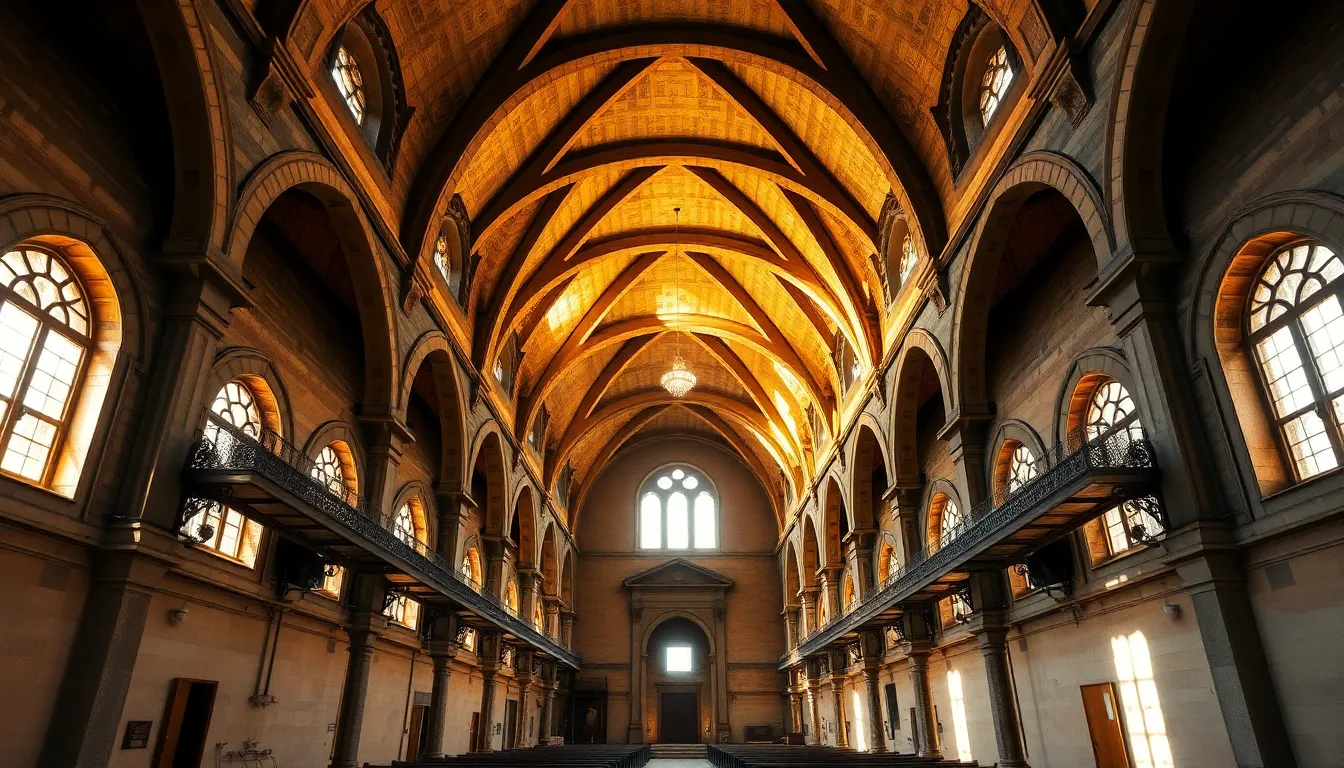
I have walked a lot of groups down the narrow Rua Joaquim Jacinto in Tomar, and I always slow down before we reach the door, because the building is so modest from the street that people walk right past it. There is no grand facade. There is a plain stone front on a quiet lane in the old town. And then you step inside, and you are standing in the only intact synagogue in Portugal that predates the expulsion. Five centuries collapse into one room.
I tell my groups this plainly: every other synagogue from Portugal’s medieval Jewish life was destroyed, seized, converted, or lost. This one survived. That it is still standing, still legible, still itself, is close to a miracle. Let me tell you how it survived, and what you are actually looking at when you walk in.
A Synagogue From the Window That Closed
The Tomar synagogue was built in the middle of the 15th century, generally dated to between roughly 1430 and 1460. That places it in the brief window when Jewish life in Portugal was still public and still permitted, before everything changed.
You have to picture the moment it was built. Portugal in the mid-15th century held a thriving Jewish community. Tomar itself had a Jewish quarter, and this synagogue served the families who lived and worked there. It was a community building, not a monument, made for daily and weekly worship, for the ordinary rhythm of a living congregation. The people who built it had no idea that within a couple of generations, public Jewish life in Portugal would be ended entirely.
The forced conversions of 1497 closed that window. The Jewish community of Tomar, like every other in the country, was driven into exile or into outward conversion and secret practice. The synagogue was no longer needed as a synagogue, because there was no longer an open community to use it. And here is where its survival begins.
How It Survived
A synagogue with no congregation could easily have been demolished or left to ruin. The Tomar synagogue avoided that fate in an unexpected way: it was put to other uses. Over the centuries after 1497, the building served at various times as a prison, as a storehouse, including use connected to hay, and as a Christian chapel.
This is worth sitting with. The very repurposing that erased the building’s Jewish function is also what preserved its Jewish structure. A building that is being used, even for purposes its makers never imagined, gets a roof kept on it and walls kept standing. The Gothic columns and the vaulted ceiling endured through every one of those uses. The shell survived because someone always had a reason to keep it up.
In the early 20th century, the building’s true identity was recognized again. In 1921 it was classified as a national monument, an early and important act of acknowledgment. A few years later, a Jewish scholar named Samuel Schwarz, the same man whose work helped bring the crypto-Jewish community of Belmonte to the wider world’s attention, acquired the building and ultimately donated it to the Portuguese state with the intention that it become a museum of Luso-Hebrew history.
So the Tomar synagogue’s survival is really two stories joined together: centuries of accidental preservation through humble reuse, and then a deliberate 20th-century rescue by people who understood what it was.
What You See Inside
The interior is the heart of the visit, and it rewards slow attention.
The Gothic Hall
The prayer hall is a roughly square room with four slender columns rising to support a vaulted Gothic ceiling. The proportions are intimate rather than grand. This was never meant to overwhelm. It was meant to gather a community. Standing under those vaults, in a space built before Columbus sailed, you feel the ordinary holiness of a room where people prayed week after week, generations deep, until they no longer could.
The Acoustic Vessels
One detail I always point out: set into the upper corners of the hall are clay vessels, jars built into the structure. They are generally understood to have served an acoustic purpose, helping to carry and shape sound in the prayer hall. It is a small, clever, human detail, the kind of thing that makes a building feel less like a relic and more like the work of people who cared how their voices would sound when they prayed.
The Abraham Zacuto Museum
Today the building houses the Abraham Zacuto Luso-Hebrew Museum. It is named for the Jewish astronomer and mathematician whose astronomical tables and improved astrolabe were used by Portuguese navigators during the age of maritime discovery. Zacuto’s story is its own reminder of how deeply Jewish scholarship was woven into Portugal’s golden age, even as the country was preparing to expel the community he came from.
The museum holds Hebrew inscriptions, gravestones, and fragments recovered from Jewish sites across Portugal, gathered into this one surviving room. So the synagogue is not only a building to admire. It is also a keeping place for the scattered traces of a whole vanished world.
Visiting Tomar With a Group
The Town Itself
Tomar rewards a group beyond the synagogue. The town is best known for the Convent of Christ, the great Templar and later monastic complex that is a designated World Heritage Site and one of the most remarkable monuments in Portugal. Pairing the intimate Jewish synagogue with the vast Christian convent in the same town makes for a rich and thought-provoking day, and for mixed faith groups it opens real conversation.
Practical Notes
The synagogue is small, so I bring groups through with awareness of the space and the other visitors. It sits on a narrow lane in the old town with uneven footing, so I plan the pace for everyone, including older travelers. A guide who can read the Gothic hall, the acoustic vessels, and the museum’s holdings turns a ten-minute look into a genuine encounter.
Where It Belongs in the Journey
Tomar is the pivot of a Portugal heritage trip. It is where the abstract loss your group felt in the erased Judiaria of Alfama becomes concrete and standing and real. It sets up everything that follows, the crypto-Jewish interior, the modern return at Porto’s Kadoorie synagogue, and the open revival marked by Lisbon’s Shaare Tikva synagogue. Our overview of Jewish heritage in Portugal lays out the full arc, and you can see how we structure the trip on our Portugal destination page.
For groups of 15 or more, the group leader travels free, which makes the planning conversation with your congregation easier.
FAQ: The Tomar Synagogue
What makes the Tomar synagogue significant?
It is the only intact pre-expulsion synagogue still standing in Portugal. Built in the mid-15th century, before the forced conversions of 1497, it survived when every other medieval synagogue in the country was destroyed, seized, converted, or lost. Walking into it means standing in an authentic Jewish prayer hall from Portugal’s public Jewish era, which exists nowhere else in the country.
How did the building survive the Inquisition?
After 1497 left it without a congregation, the building was repurposed over the centuries as a prison, a storehouse, and a Christian chapel. That ongoing reuse is what preserved its structure, because a building in use keeps its roof and walls. In 1921 it was classified as a national monument, and the scholar Samuel Schwarz later acquired it and donated it to the state to become a museum.
What is inside the Tomar synagogue today?
It houses the Abraham Zacuto Luso-Hebrew Museum, named for the Jewish astronomer whose tables aided Portuguese navigation. The intimate Gothic prayer hall has four columns supporting a vaulted ceiling, with clay acoustic vessels set into the upper corners. The museum holds Hebrew inscriptions, gravestones, and fragments recovered from Jewish sites across Portugal.
Who was Abraham Zacuto?
Abraham Zacuto was a Jewish astronomer and mathematician whose astronomical tables and improved astrolabe were used by Portuguese navigators during the age of maritime discovery. The museum in the Tomar synagogue carries his name as a reminder of how deeply Jewish scholarship contributed to Portugal’s golden age, even as the country moved to expel the Jewish community.
What else is there to see in Tomar?
Tomar is also home to the Convent of Christ, a Templar and monastic complex that is a World Heritage Site and one of Portugal’s great monuments. Pairing the intimate Jewish synagogue with the vast Christian convent in a single town makes for a rich day, especially for mixed faith groups, and it opens real conversation about the layered religious history of the place.
If your community is planning a journey through Jewish Portugal, Tomar is the room where the whole story becomes real. I would be glad to help you place it at the heart of your itinerary and pair it with the rest of the journey.
Contact us whenever you are ready to start that conversation.