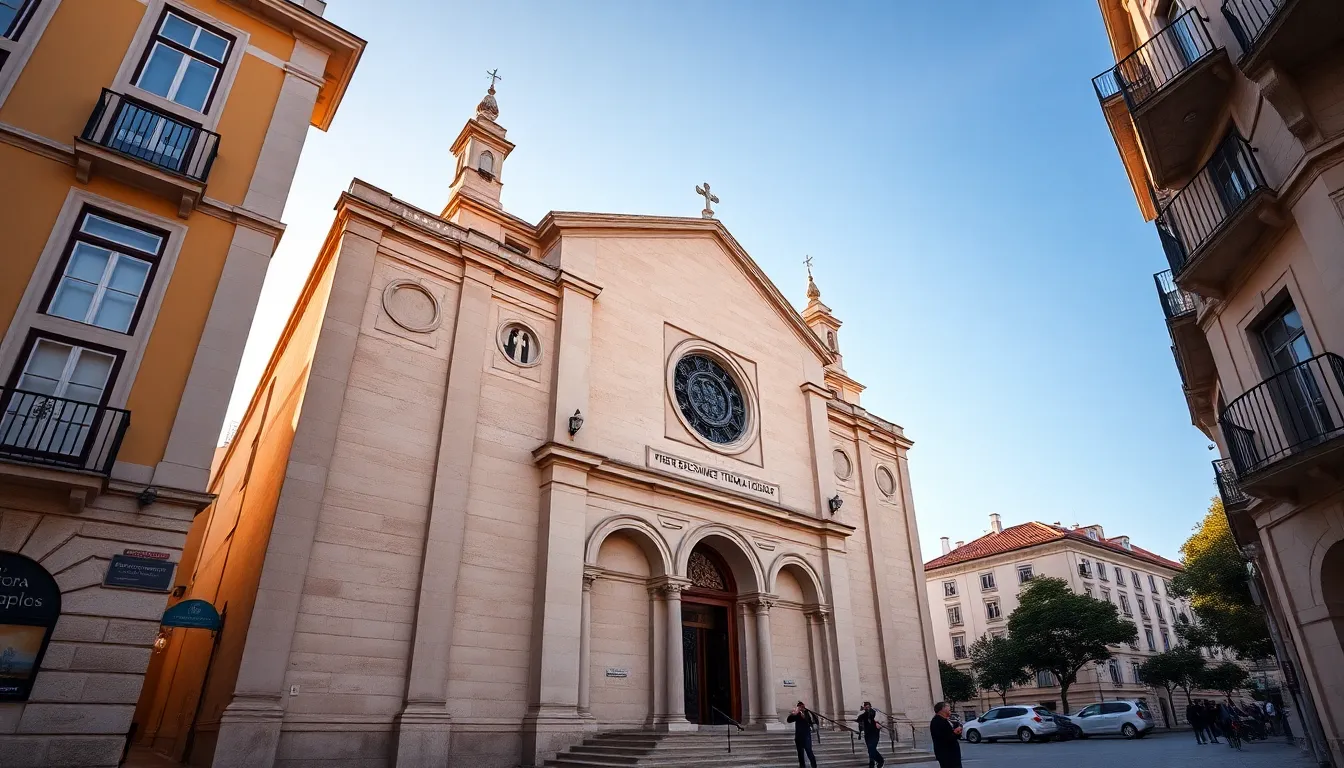
I have stood in a lot of synagogues with a lot of groups. Most of the time, the building is the setting and the history is the story. At Shaare Tikva in Lisbon, the building is the story. When I tell a group what this synagogue means, I usually start with one date and one fact, and I watch it land. The fact is this: when Shaare Tikva opened in 1904, it was the first synagogue built openly in Portugal since 1497.
Sit with that number for a moment. More than four hundred years. Four centuries in which no Jewish house of worship could be openly built in a country that had once held one of the largest Jewish communities in Europe. Shaare Tikva is what the end of that silence looks like in stone.
Four Hundred Years of Silence
To understand why a synagogue opening in 1904 is remarkable, you have to remember what happened in 1497. King Manuel I ordered the forced conversion of all Jews in Portugal. Public Jewish life ended. Synagogues were seized, converted, or destroyed. For the families who stayed and practiced in secret, worship moved into closed rooms and hidden corners, where it remained for generations.
The Inquisition in Portugal was not formally abolished until 1821. Even after that, openly building a synagogue was not a simple matter. Jewish life returned to Lisbon slowly through the 19th century, much of it brought by Sephardic families from Morocco and Gibraltar and by Ashkenazi families from central Europe. They worshipped quietly, in private homes and rented rooms, rebuilding a community in the shadows of the city.
The community grew, and with it grew the desire for a real synagogue, a permanent and visible house of worship. That desire ran straight into the limits of the time. So Shaare Tikva, the name means Gates of Hope, became possible only at the turn of the 20th century. And even then, the law shaped how it could be built.
A Building Designed to Be Hidden in Plain Sight
Here is the detail that moves my groups the most. Under Portuguese law at the time, only Catholic churches were permitted to front directly onto a public street. So Shaare Tikva was built set back from the road, behind a gate and a garden, on Rua Alexandre Herculano.
Think about what that means. The first synagogue built openly in Portugal in four hundred years still could not stand directly on the street like the churches around it. It had to be set back, partly screened from public view. The community had emerged from centuries of hiding, and the building itself still carried a trace of that hiding in its very placement.
I find this more powerful than any grand facade could be. The synagogue is not concealed. It is open, it is functioning, it is proud. But its position quietly records the exact moment in history when it was built, a moment of emergence that was real but not yet complete.
The synagogue was consecrated in 1904. The architecture draws on a neo-Byzantine and Moorish revival style that was common for synagogues of that era across Europe, a deliberate echo of Sephardic and Eastern Jewish heritage. Inside, the sanctuary is dignified and warm rather than enormous, built for a community that was real and growing but not large.
The Community Behind the Building
Shaare Tikva was founded by the Comunidade Israelita de Lisboa, the Jewish Community of Lisbon, which remains the central Jewish institution in the city to this day. From the beginning, the congregation brought together Sephardic and Ashkenazi traditions under one roof, a reflection of how Lisbon’s modern community was rebuilt from different streams of Jewish migration.
The synagogue lived through the 20th century’s hardest chapters. During World War II, Lisbon became a critical transit point for Jewish refugees fleeing Nazi-occupied Europe, many of them passing through Portugal toward safety overseas. The Lisbon community, with Shaare Tikva at its heart, was part of the world that received and helped move those refugees. The synagogue that had marked the end of one long silence found itself standing in the middle of another era of Jewish flight and rescue.
Today Shaare Tikva remains an active, functioning synagogue. This is not a museum piece. Services are held, the community gathers, life continues inside it. When you visit with a group, you are visiting a living congregation, and I always frame it that way for my travelers, with the respect a working house of worship deserves.
Visiting Shaare Tikva With a Group
A visit here works best when your group already carries the context. This is why I rarely bring people to Shaare Tikva cold. I bring them after we have walked the old Judiaria of Alfama, where the medieval community was erased, so that when they arrive at Shaare Tikva, they feel the full arc: erasure, four centuries of silence, and then this, the visible return.
Access and Security
Because Shaare Tikva is an active synagogue and because security is a genuine consideration for Jewish institutions today, visits are arranged in advance, not by simply walking up to the gate. Groups coordinate access ahead of time, often through the community or through a tour operator with established relationships. I tell group leaders this early so there are no surprises. Spontaneous entry is not how this works, and that is appropriate.
Dress and Conduct
As in any working synagogue, modest dress is expected, and men cover their heads in the sanctuary. For mixed faith groups, I brief everyone beforehand so the whole group enters respectfully. These small acts of respect matter, especially in a congregation that has worked so hard, over so long, simply to exist openly.
Timing
I plan Shaare Tikva around the community’s schedule rather than my own. Visit times work around services and the rhythm of the congregation. A weekday late morning often works well, but it is always arranged in coordination with the community.
Where It Fits in the Larger Story
Lisbon is where I almost always begin a Jewish heritage journey through Portugal, and Shaare Tikva is where the Lisbon chapter resolves. The wider arc runs from the Alfama through Tomar and Belmonte and on to Porto, and our overview of Jewish heritage in Portugal lays out that full sweep.
For the surviving pre-expulsion building, your group will want to see the Tomar synagogue, the oldest in the country. The contrast between a 15th-century synagogue that survived by being repurposed and a 1904 synagogue that marked the open return is one of the most instructive pairings in all of Jewish Portugal. You can see how we weave these together on our Portugal destination page, and learn how the group leader experience works through our group heritage tours.
For groups of 15 or more, the group leader travels free, which helps the planning conversation with your synagogue or congregation.
FAQ: Shaare Tikva Synagogue
Why is Shaare Tikva historically significant?
When it opened in 1904, Shaare Tikva was the first synagogue built openly in Portugal since the forced conversions of 1497. That makes it a marker of the end of more than four centuries in which no Jewish house of worship could be openly built in the country. The building represents the visible return of Jewish life to Lisbon after generations of secrecy and silence.
Why was the synagogue built set back from the street?
Under Portuguese law at the time, only Catholic churches could front directly onto a public street. So Shaare Tikva was built behind a gate and a garden on Rua Alexandre Herculano, set back from the road. The placement quietly records the moment it was built, a real emergence from centuries of hiding that was not yet fully complete.
Can tourists visit Shaare Tikva?
Yes, but visits are arranged in advance rather than by walking up to the gate. Because it is an active synagogue with genuine security considerations, groups coordinate access ahead of time, often through the Jewish Community of Lisbon or a tour operator with established relationships. Modest dress is expected and men cover their heads in the sanctuary.
Is Shaare Tikva still an active synagogue?
Yes. It remains the principal synagogue of the Jewish Community of Lisbon and holds regular services. It is a living congregation, not a museum, and from its founding it has brought Sephardic and Ashkenazi traditions together under one roof. Visitors are asked to treat it with the respect due a working house of worship.
How does Shaare Tikva connect to the rest of Jewish Portugal?
It is the resolution of the Lisbon chapter. After walking the erased medieval Judiaria of Alfama and learning of the 1497 conversions, a group arrives at Shaare Tikva to feel the full arc from erasure to open return. It pairs especially well with the pre-expulsion Tomar synagogue, contrasting a 15th-century building that survived by repurposing with a 1904 building that marked the open return.
If your group is planning a journey through Jewish Portugal, Shaare Tikva is one of the visits people remember most, because it tells the whole story in a single building. I would be glad to help you arrange it properly and place it where it belongs in your itinerary.
Contact us whenever you are ready to start that conversation.