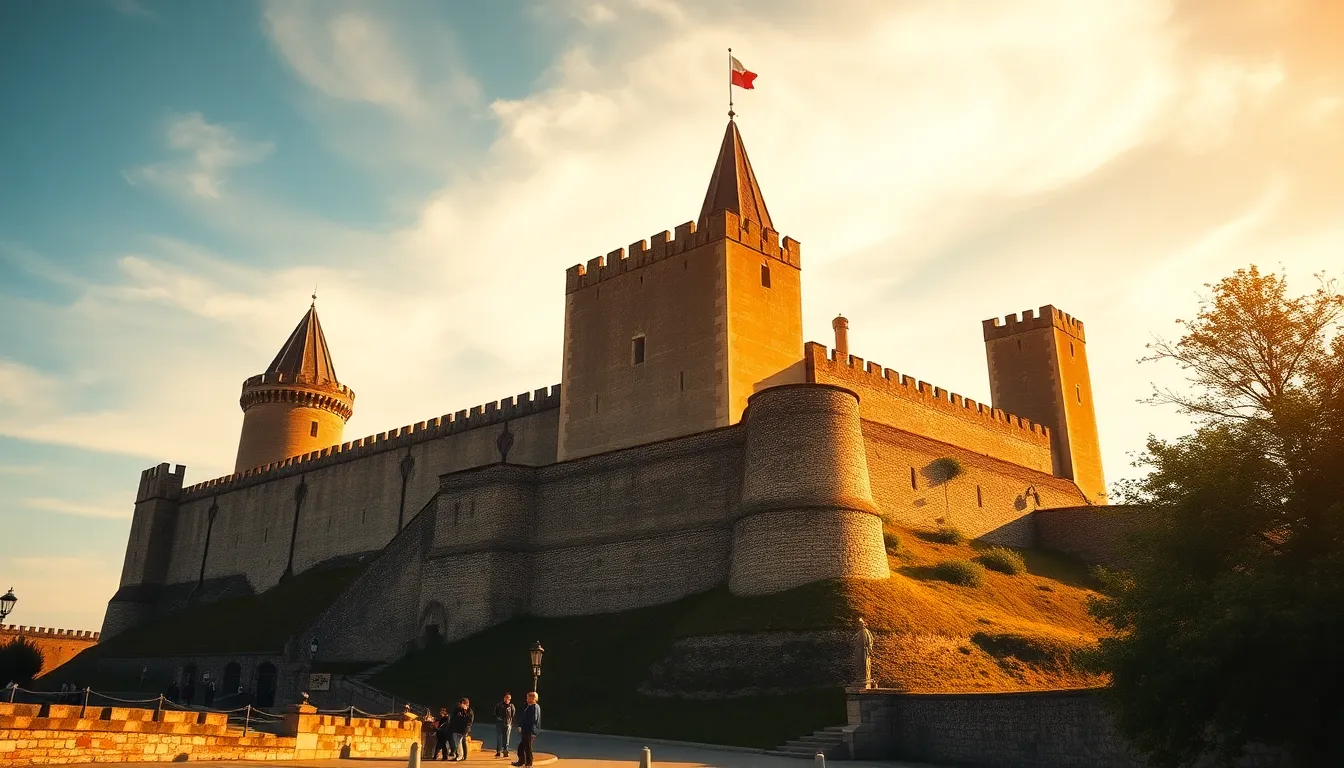
When I stand a group in front of the castle at Guimaraes, I read them four words carved on a wall in the old town: Aqui nasceu Portugal. Here Portugal was born. And then I tell them the thing that always reframes the whole trip for people. Portugal is not just a country that happens to be Christian. Portugal is a country that exists because of a Christian war. The kingdom was born out of the Reconquista, the centuries-long effort to take the Iberian Peninsula back from Moorish rule, and you cannot understand Portuguese faith, or Portuguese identity, without understanding that.
So before a group goes to Fatima, before they walk the Manueline cloisters, I want them to grasp the founding. Let me lay it out.
What the Reconquista Was
Beginning in 711, Muslim armies from North Africa crossed into the Iberian Peninsula and within a few years had conquered most of what is now Spain and Portugal. Small Christian kingdoms survived in the mountainous north, and from those footholds, over nearly eight centuries, Christian rulers pushed gradually southward in a long, uneven campaign known as the Reconquista, the reconquest.
This was not one war but many, stretched across generations, advancing and retreating, shaped as much by politics and marriage as by battle. But running through it was a religious conviction: that the peninsula had been Christian before the conquest, and that retaking it was a sacred duty. The Reconquista became entangled with the wider crusading movement of medieval Europe, and crusaders bound for the Holy Land sometimes stopped to fight in Iberia along the way.
For Portugal, this long process did something specific. It did not just push back a frontier. It gave birth to a nation.
Afonso Henriques and the Birth of a Kingdom
The founding figure is Afonso Henriques, and his story is the spine of the whole heritage trail.
He was born around 1109, the son of Count Henry of Burgundy, who ruled the County of Portugal as a vassal of the kingdom of Leon. Afonso was not content to remain a count under a distant king. In 1128, at the Battle of Sao Mamede near Guimaraes, he defeated the forces of his own mother and her allies and took control of the county for himself. That battle is traditionally treated as the moment the independent Portugal began to form.
The decisive turn came in 1139 at the Battle of Ourique, where Afonso won a great victory over Moorish forces. Tradition holds that on the eve of that battle he received a vision of Christ promising him victory, and that he was acclaimed king by his troops on the field. Whatever the precise history, after Ourique he took the title King of Portugal, and the five small shields arranged in a cross on the Portuguese flag are traditionally said to represent the Moorish kings he defeated, with the points within them recalling the wounds of Christ. The national symbol itself encodes the religious meaning of the founding.
Afonso then spent his long reign pushing the frontier south. In 1147 he captured Santarem and then, with the help of passing crusaders, took Lisbon, one of the most important moments of the entire Portuguese Reconquista. His independence was formally recognized over the following decades, and the Pope eventually confirmed the new kingdom. By the time Afonso died in 1185, Portugal was an established Christian kingdom with much of its modern shape, and the Reconquista within Portuguese territory was largely complete by the mid-thirteenth century, well ahead of neighboring Spain.
This is why I say Portugal was founded as a Christian kingdom in the most literal sense. Its existence, its borders, its flag, and its founding king’s legitimacy were all bound up with the reconquest carried out in the name of the faith.
The Sites Where the Story Lives
The beauty of the Reconquista for a group is that you can walk it. The story is written across real places.
Guimaraes, the Cradle of the Nation
Guimaraes in the north is where it begins. The medieval castle, with its great square keep, is associated with the birth of Afonso Henriques and the early county of Portugal. Nearby stands the small Romanesque Church of Sao Miguel, where tradition holds Afonso was baptized. The old town below, beautifully preserved, carries the phrase that says it all: here Portugal was born. I bring groups here to start the founding story at its source.
Coimbra, the First Capital
Coimbra became the capital of the young kingdom and the burial place of its first kings. Afonso Henriques founded the Monastery of Santa Cruz there, and he and his successor are entombed in it. Coimbra also holds the Se Velha, the old cathedral, a fortress-like Romanesque church begun in his reign, one of the finest Romanesque cathedrals in Portugal and a direct architectural witness to the founding era. For a group, Coimbra is where the new kingdom organized its faith and its learning.
Lisbon and the Frontier Cathedrals
The Cathedral of Lisbon, the Se, was begun in 1147, the very year Afonso took the city, and its fortress form is a monument to the conquest itself. The first bishop was an English crusader who had joined the campaign. Reading the Se as a Reconquista building, raised on the site of the city’s main mosque the moment Lisbon changed hands, makes the cathedral come alive in a way that a purely architectural tour never does.
The Monastic Foundations
The great monasteries the kingdom built were acts of thanksgiving and consolidation. Afonso Henriques founded Alcobaca in 1153 and gave it to the Cistercians, planting one of the most powerful religious houses in the country as the frontier moved south. Later, Batalha would be built as a vow fulfilled after a battle that secured Portuguese independence against Castile. The monasteries are the Reconquista’s faith made permanent in stone.
Why I Build the Founding Into a Pilgrimage
A group can go to Fatima and the great churches and have a moving trip without ever hearing the word Reconquista. But something is missing when they do. They see the fruit without the root.
When a group understands that Portugal was forged as a Christian kingdom out of a centuries-long religious struggle, every later site reads more deeply. The Manueline churches of the Age of Exploration make sense as the next chapter of the same conviction, a nation that believed it had a God-given mission, now carrying it across the sea. Fatima itself, a Marian apparition in a country whose flag carries the wounds of Christ, lands differently in a group that knows the founding. The founding is the soil everything else grows in.
That is why, for groups with the appetite, I weave a northern leg through Guimaraes and Coimbra into the wider Portugal pilgrimage, or at minimum tell the founding story at the Lisbon cathedral on day one. You can see how we structure these journeys on our Portugal destination page and how the group experience works.
FAQ: The Reconquista and Portugal’s Founding
What was the Reconquista?
The Reconquista was the long, centuries-spanning effort by Christian kingdoms to retake the Iberian Peninsula from Moorish rule after the Muslim conquest that began in 711. It was not a single war but a series of campaigns stretching across nearly eight hundred years, driven in part by the religious conviction that the peninsula had been Christian before the conquest and that retaking it was a sacred duty. It became entangled with the broader crusading movement of medieval Europe.
Who founded the kingdom of Portugal?
Afonso Henriques, born around 1109, is regarded as the founder of Portugal. He won control of the County of Portugal at the Battle of Sao Mamede in 1128, then defeated Moorish forces at the Battle of Ourique in 1139, after which he took the title King of Portugal. He captured Lisbon in 1147 and ruled until 1185, by which time Portugal was an established independent Christian kingdom with much of its modern shape.
Why is Portugal called a Christian kingdom by founding?
Because its very existence grew out of the Reconquista, a war fought in the name of the faith. Its founding king claimed legitimacy partly through a tradition of a vision of Christ before the Battle of Ourique, its first cathedrals were raised the moment cities were reconquered, and its national flag encodes religious meaning, with five shields traditionally representing defeated Moorish kings and points recalling the wounds of Christ. Faith and nationhood were bound together from the start.
Which sites best tell the Reconquista story?
Guimaraes in the north is the cradle of the nation, with the castle and the church traditionally linked to Afonso Henriques. Coimbra, the first capital, holds the tombs of the early kings, the Monastery of Santa Cruz, and the fortress-like Old Cathedral. The Cathedral of Lisbon was begun the year the city was reconquered in 1147. The monasteries of Alcobaca and Batalha represent the faith of the founding and the defense of independence made permanent in stone.
Should a faith group include the Reconquista in a Portugal pilgrimage?
It deepens everything else. A group that understands Portugal was forged as a Christian kingdom reads the later sites, the Age of Exploration churches and even Fatima, with more depth. For groups with the days, a northern leg through Guimaraes and Coimbra brings the founding story to life. At minimum the story can be told at the Lisbon cathedral on the first day. Contact us and we will weave the founding chapter into your journey.
The founding is the chapter most Portugal itineraries skip, and it is the one that makes all the others make sense. If you want your group to understand not just the sites but the soil they grew in, I would love to help you build it in. Reach out and we will shape the journey together.