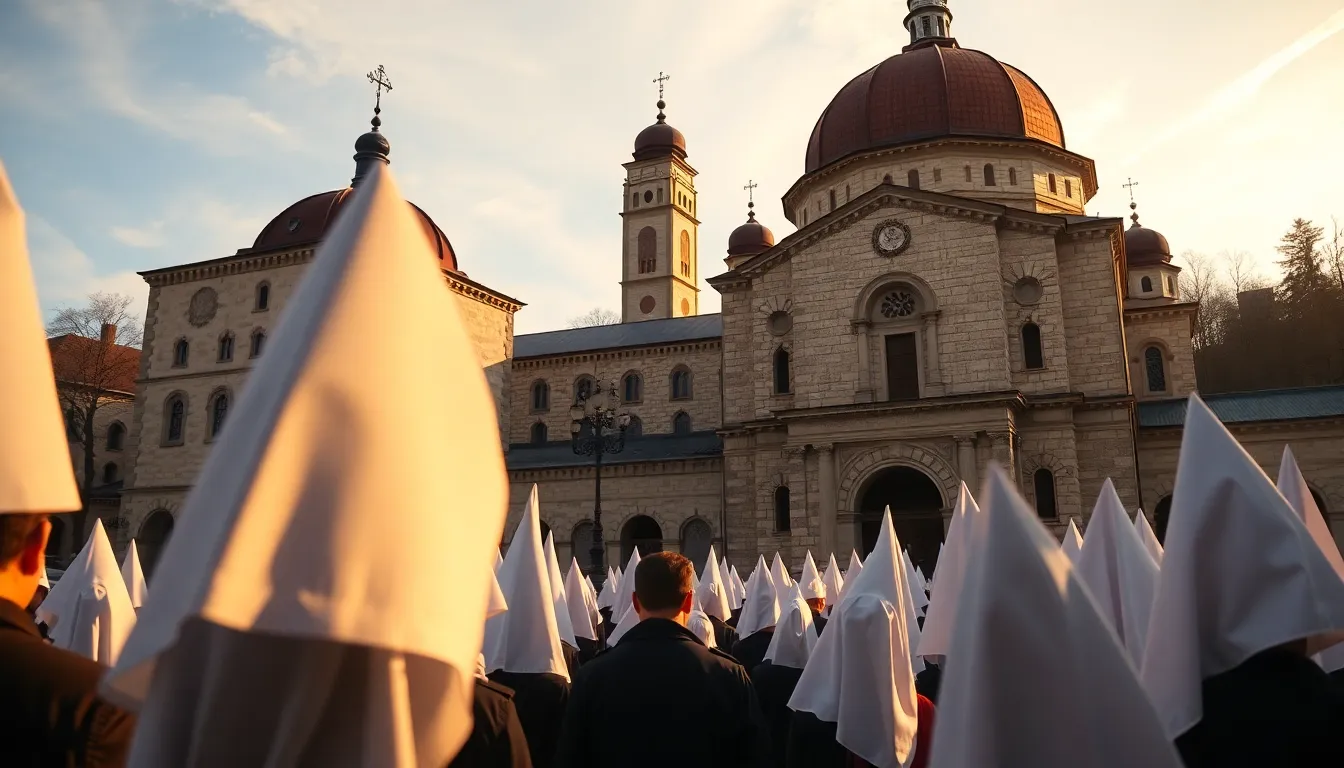
A pastor I worked with years ago told me, after his first day in Poland, that he had not understood the country until he watched a line of ordinary people waiting to pray at Jasna Gora at six in the morning on a weekday. Not a feast day. Not a festival. A Tuesday. He had read about Polish Catholicism. Standing in that line, he said, was the first time he felt it.
That is the thing I most want group leaders to grasp before they bring their people here. Poland is not a country that happens to be Catholic. Catholicism is woven into how Poland understands itself, its history, its survival, and its identity. If you bring a group and treat the churches as architecture, you will miss what is actually in front of you. If you understand the faith beneath them, every site you visit opens up.
This guide is the background I wish every group leader had before the trip. For the specific sacred sites themselves, our overview of spiritual sites across Poland covers the where. This covers the why.
A Thousand Years of Catholic Poland
Poland’s Catholic story begins in the year 966, when Duke Mieszko I accepted baptism. That single event is usually treated as the founding moment of the Polish state, which tells you a great deal: in the Polish imagination, becoming Christian and becoming a nation are the same event. You cannot separate them.
From there, the church became the thread running through Polish history. It built the first cathedrals, educated the first generations of scholars, crowned the kings, and recorded the language. When you visit Poznan Cathedral and the first Polish bishops, you are standing at the literal beginning of this story, the place where organized Christianity in Poland took root.
For a thousand years that thread held, through golden ages and partitions, through occupation and war. Understanding that continuity is the single most useful thing a group leader can carry into the country.
Faith and Survival: Why Catholicism Runs So Deep
Here is the part that surprises most of my travelers. Polish Catholicism is not just old. It is bound up with national survival in a way that has few parallels in Europe.
The Partitions and the Lost Nation
For 123 years, from 1795 to 1918, Poland did not exist as a state. It was carved up among Russia, Prussia, and Austria and erased from the map. During those years, when there was no Polish government, no Polish army, and in many places no Polish schooling, the Catholic Church was one of the few institutions that remained Polish. Mass was a place the language survived. The parish was a place the nation survived. Faith and national identity fused under pressure, and they have not come apart since.
The Twentieth Century
Then came the 20th century, which tested that fusion again. The Second World War devastated Poland and its churches. After the war, four decades of communist rule treated the church as a rival to be contained. And yet it held. The church became, again, the space where Poles gathered outside the reach of the state.
When a Polish cardinal was elected pope in 1978, it was not only a religious event. It was a national one. The story of Saint John Paul II across Poland is inseparable from this history, and his role in the collapse of communism is something every group should understand before visiting the sites tied to his life.
The Shrines That Anchor Polish Faith
Polish Catholicism is intensely Marian, devoted to the Virgin Mary, and it expresses that devotion through a handful of shrines that function as the spiritual capitals of the country.
Jasna Gora and the Black Madonna
The monastery of Jasna Gora in Czestochowa holds the Black Madonna, an icon venerated since 1382 and formally regarded as the spiritual center of Polish Catholicism. Mary is titled Queen of Poland, crowned as such in 1656 after the monastery’s defense against a Swedish siege became a symbol of national resistance. Millions of pilgrims come every year. If your group visits one shrine in Poland, this is the one.
Lichen and the Modern Devotion
The same Marian current produced, in our own time, one of the largest churches in the world. The Basilica of Our Lady of Sorrows in Lichen, completed in 2004, shows that this devotion is not a museum piece. Ordinary Poles built it with their own donations within living memory. It is proof that the faith described in the history books is still being lived.
Divine Mercy in Krakow
Krakow’s Lagiewniki district holds the Divine Mercy Shrine, built where Saint Faustina Kowalska received her visions in the 1930s. John Paul II, who knew the site from his years as archbishop of Krakow, consecrated the basilica in 2002. It has become one of the most important modern Catholic pilgrimage sites in the world.
What This Means for a Visiting Group
So how do you actually lead a group through a Catholic landscape this deep, especially when your travelers may be Protestant, Jewish, or of no particular tradition at all?
Come as a Learner
The most important posture is to arrive curious rather than comparative. I have seen groups treat Polish Marian devotion as something to evaluate against their own theology, and it closes them off. The groups that get the most out of Poland are the ones that come to understand rather than to assess. You do not have to share a devotion to be moved by witnessing a thousand years of it.
Read the Sites Together
Polish churches are dense with meaning that is invisible without context. The crowned image, the votive offerings left by pilgrims, the worn stone where generations have knelt, all of it tells the story of faith and survival I described above. A few minutes of explanation before you enter a church turns a building into a testimony. This is the work I do with leaders before every trip, and it changes the visit entirely.
Respect Living Worship
These are not monuments. They are active houses of prayer, full of people for whom this is not history but daily life. Modest dress, quiet during services, and following the lead of the community are not just courtesies. They are the difference between visiting a place and intruding on it. You can see how we build this awareness into our group heritage tours.
Honoring Both Traditions
One more thing worth saying. Poland is also the largest Jewish heritage landscape in Europe, and the two stories are not separate trips. A thoughtful Poland itinerary can honor Catholic and Jewish heritage together, and for many of the pastors and rabbis I work with, holding both is exactly the point. The deep Catholic identity of Poland and the loss of its Jewish communities are part of one history, and a group that sees both leaves with a fuller understanding than one that sees either alone. Our Poland destination page shows how those threads can be woven into a single journey.
FAQ: The Heritage of Polish Catholicism
Why is Poland so deeply Catholic?
Poland’s Catholic identity dates to the baptism of Duke Mieszko I in 966, treated as the founding of the Polish state. Faith and nationhood fused over a thousand years, especially during the 123 years when Poland did not exist as a state and the church was one of the few institutions that kept the language and identity alive. That bond between faith and survival is why Catholicism runs so deep.
What is the spiritual center of Polish Catholicism?
The monastery of Jasna Gora in Czestochowa, home to the Black Madonna icon venerated since 1382. Mary is titled Queen of Poland, and the shrine draws millions of pilgrims each year. It functions as the spiritual heart of the country and is the single most important Catholic site a group can visit in Poland.
Can non-Catholic groups appreciate Poland’s Catholic heritage?
Yes, and many of the most engaged groups we lead are Protestant or interfaith. The key is arriving as a learner rather than a critic. You do not need to share Marian devotion to be moved by witnessing a thousand years of faith bound up with a nation’s survival. Context before each site turns the visit from sightseeing into genuine understanding.
How does John Paul II fit into Polish Catholic heritage?
The election of a Polish cardinal as pope in 1978 was both a religious and a national event, and his role in supporting the movements that ended communist rule made him a figure of survival as well as faith. His life and the sites tied to it are central to understanding modern Polish Catholicism.
Should a Poland trip include Jewish heritage too?
For many groups, yes. Poland holds the largest Jewish heritage landscape in Europe, and that history and the deep Catholic identity of the country belong to one story. A thoughtful itinerary can honor both traditions, which is often exactly what visiting pastors and rabbis are looking for.
If you want your group to arrive in Poland understanding the country rather than just touring it, that preparation is some of the most valuable work we do together. I would be glad to talk through what your community needs and how to frame the trip.
Contact us whenever you are ready to begin.