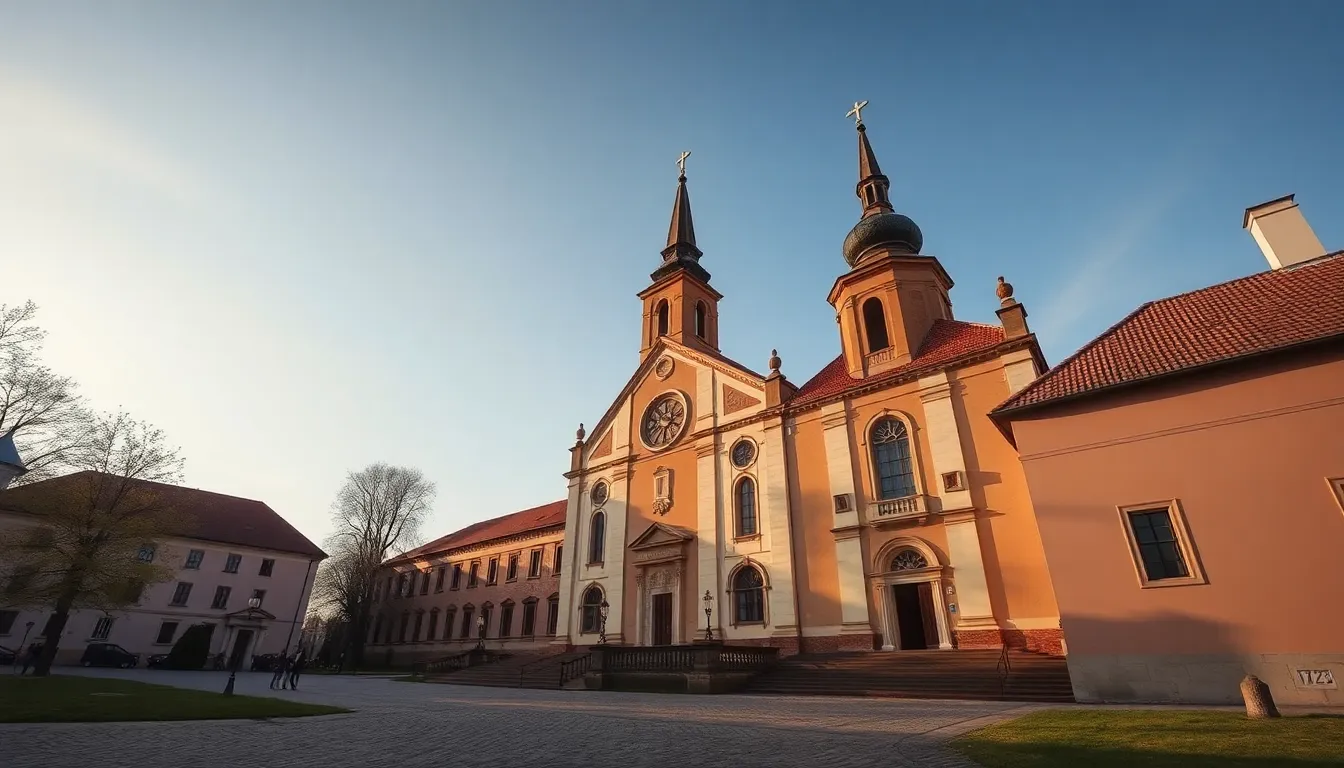
I have led a lot of John Paul II pilgrimages over the years, and I have learned to start them in the same place every time: a small town called Wadowice, in a square in front of a church, looking up at the window of an ordinary apartment. That window is where the story begins, in 1920, with a boy named Karol Wojtyla. Groups always expect the pilgrimage to begin with grandeur. It begins instead with a normal home in a normal town, and that is exactly the point.
What makes a John Paul II pilgrimage different from a tour of famous churches is that it follows a life. You move through the same towns and cities he moved through, in roughly the order he lived them, and by the end your group has traced a man from a small-town boyhood to one of the most consequential lives of the 20th century. That arc is the experience. The sites are stops along it.
This guide lays out that journey, the places that anchor it, and how to lead it well. For the deeper background on why Poland produced and venerates this pope, our piece on the heritage of Polish Catholicism is the place to start.
Wadowice: Where the Story Begins
Karol Wojtyla was born in Wadowice in 1920, a town about an hour southwest of Krakow. His family home, just off the main square, is now a museum dedicated to his early life. The Basilica of the Presentation of the Blessed Virgin Mary stands beside it, the church where he was baptized and where he attended Mass as a boy.
I always give groups time in the square here, because Wadowice grounds everything that follows. This was not a child marked from birth for greatness in any obvious way. He lost his mother young, then his brother, then his father. He grew up in grief and in an ordinary Polish Catholic town. Standing where that began gives weight to everything the pilgrimage builds toward.
There is a small tradition worth mentioning to your group: the local cream cakes, kremowki, that the pope fondly remembered from his youth. It is a light note, and groups enjoy it, and it makes the man human before the pilgrimage turns to the monumental.
Krakow: The Heart of His Life
If Wadowice is where the story begins, Krakow is where most of it happened. Wojtyla came here as a young man, and the city shaped nearly every chapter of his life before Rome.
The Years of Formation
He studied at the Jagiellonian University, worked as a laborer during the German occupation, and entered an underground seminary during the war, when training for the priesthood was forbidden. He was ordained in 1946. These Krakow years, lived under occupation and then under communist rule, formed the convictions he carried for the rest of his life.
Archbishop of Krakow
He became Archbishop of Krakow in 1964 and a cardinal in 1967. Wawel Cathedral, atop Wawel Hill, was his cathedral, the place he celebrated Mass and led the archdiocese for fourteen years. For a pilgrimage group, Wawel is essential, both as one of the most important churches in Poland and as the seat from which Wojtyla served before his election. Our overview of spiritual sites across Poland covers Wawel’s full significance.
Divine Mercy at Lagiewniki
It was also in Krakow, at the convent in Lagiewniki, that Saint Faustina Kowalska had received her Divine Mercy visions in the 1930s. Wojtyla knew the site well as archbishop, championed the devotion, and as pope consecrated the great Divine Mercy basilica there in 2002. The shrine connects his life to one of the most important strands of modern Catholic devotion, and it makes a natural pairing with Wawel for a full day of Krakow pilgrimage.
Czestochowa: The Pope and the Black Madonna
No John Paul II pilgrimage is complete without Jasna Gora in Czestochowa, home of the Black Madonna and the spiritual center of Polish Catholicism. Wojtyla’s devotion to Mary was central to his faith, captured in his papal motto, Totus Tuus, meaning “totally yours,” addressed to the Virgin. He returned to Jasna Gora repeatedly as pope, drawing enormous crowds.
For your group, Czestochowa links the personal pilgrimage of one man to the thousand-year Marian devotion of a whole nation. It is where the individual life you have been tracing opens out into the faith of all of Poland.
The Larger Story: Faith and a Changing World
Here is the dimension I make sure every group understands. The John Paul II story is not only a religious biography. When he was elected pope in 1978, the first non-Italian pope in centuries and the first ever from Poland, it sent a shock through a country then under communist rule. His return visit to Poland in 1979 drew millions and is widely seen as a turning point that helped give rise to the Solidarity movement and, in time, the fall of communism across Eastern Europe.
I tell groups this plainly: you are tracing the life of a man whose faith reshaped not just a church but a continent. That framing turns a pilgrimage of churches into a pilgrimage through history, and it lands especially with the pastors and educators I work with. The wider context sits within the story of Polish Catholicism and national survival, which is worth reading before the trip.
Leading the Pilgrimage Well
A few things I have learned about running this particular journey with a group.
Follow the Life in Order
Wherever the logistics allow, move through the sites in the order he lived them, Wadowice, then Krakow, then outward. The chronological arc is what makes this more than a church tour. A group that experiences the life in sequence carries home a story, not a list.
Build in Reflection
This pilgrimage produces strong feeling, and people need room to process it. Leave unscheduled time after the major sites, a quiet hour at Wawel, a slow coffee after Wadowice, space on the bus to talk. The reflection is where the pilgrimage actually happens. Our group heritage tours are paced to leave that room.
Respect Living Devotion
For millions of Poles, John Paul II is not a historical figure but a beloved saint, canonized in 2014. The sites tied to him are places of active devotion. Lead your group to enter as guests in a living faith, with the quiet and respect those spaces ask for.
Where the Pilgrimage Fits
A John Paul II pilgrimage anchors beautifully in southern Poland, with Krakow as a base. From there, Wadowice and Czestochowa are both within easy reach. The route also combines well with a broader Poland itinerary that includes Jewish heritage and the wider Christian story, which is how many of the groups I work with choose to travel. You can see how we shape these journeys on our Poland destination page.
FAQ: A John Paul II Pilgrimage in Poland
Where was John Paul II born?
In Wadowice, a town about an hour southwest of Krakow, in 1920. His family home is now a museum, and the basilica beside it is where he was baptized and worshipped as a boy. Wadowice is the natural starting point of any pilgrimage tracing his life.
What are the key John Paul II sites in Poland?
Wadowice, his birthplace; Krakow, where he studied, was ordained, and served as archbishop, with Wawel Cathedral and the Divine Mercy Shrine at Lagiewniki at its heart; and Czestochowa, home of the Black Madonna he was devoted to. Together these trace his life from boyhood through his years before Rome.
Why is John Paul II so significant beyond the church?
His election as the first Polish pope in 1978 and his 1979 return visit to communist-ruled Poland are widely seen as turning points that helped give rise to the Solidarity movement and the eventual fall of communism in Eastern Europe. A pilgrimage tracing his life is also a journey through that history.
How long does a John Paul II pilgrimage take?
The core sites can be covered in a few days based in Krakow, with day trips to Wadowice and Czestochowa. Many groups fold the pilgrimage into a longer Poland itinerary that includes the country’s wider Christian and Jewish heritage, which gives the journey more depth and reflection time.
Is the pilgrimage suitable for non-Catholic groups?
Yes. While John Paul II is venerated as a Catholic saint, his life story, lived under occupation and communism and bound up with the freedom of a nation, speaks across traditions. Protestant and interfaith groups often find the historical and human arc as moving as the devotional one.
If you want to lead your community through the Poland that shaped this pope, following his life from a small-town window to the world stage, that is one of my favorite journeys to build. I would be glad to talk through what it could look like for your group.
Contact us whenever you are ready to begin.