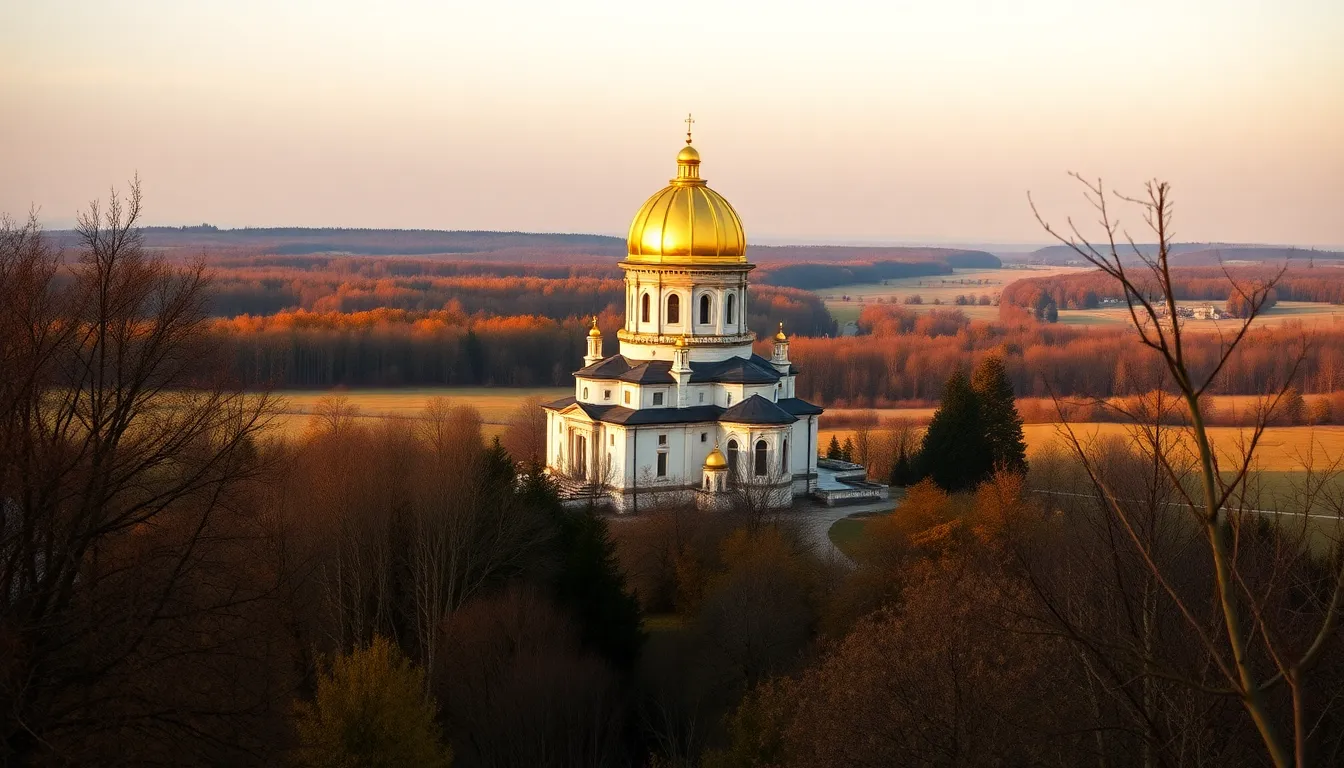
The first time I brought a group to Lichen, nobody in the bus said much as we approached. That is unusual. Most groups chatter right up to the moment they step off. But Lichen does something to people before they even walk through the doors, because you see the basilica from a long way off, rising out of flat farmland in central Poland, and the scale of it does not make sense until you are standing in front of it.
I have led faith groups through the great churches of Europe for more than twenty years. Lichen still surprises my travelers, and it surprises me. It is one of the largest churches in the world, it was finished in the year 2004, and almost nobody outside Poland has heard of it. That combination, enormous and recent and unknown, makes it one of the most interesting stops I can offer a group that thinks it has already seen Europe’s churches.
If you are putting together a Poland itinerary, this guide will tell you what Lichen actually is, why Polish Catholics hold it the way they do, and how to fit it into a trip without it feeling like a detour. For the wider picture of sacred Poland, start with our overview of spiritual sites across Poland.
What Lichen Actually Is
Lichen Stary is a small village in the Greater Poland region, roughly halfway between Warsaw and Poznan. The full name of the church is the Basilica of Our Lady of Sorrows, Queen of Poland. It was built between 1994 and 2004 and consecrated by the papal nuncio, with a message of blessing from John Paul II.
The numbers are hard to take in. The basilica is around 120 meters long. The central dome rises to about 98 meters. The tower reaches 141 meters and is the tallest church tower in Poland. The building can hold tens of thousands of people. By total area it ranks among the dozen largest churches on earth, and it is the largest in Poland by a wide margin.
What I tell groups is this: do not think of it as old. Think of it as a statement. A poor rural parish, with money raised almost entirely from ordinary pilgrims giving small amounts over years, built one of the biggest churches in the world. That tells you something about Polish Catholicism that no statistic can.
The Marian Shrine at the Heart of It
The reason any of this exists is a small painting of the Virgin Mary, known as Our Lady of Lichen.
The Story of the Image
The devotion traces back to the early 19th century. According to tradition, a Polish soldier wounded at the Battle of Leipzig in 1813 had a vision of the Virgin and later found an image that matched what he had seen. In 1850 a local shepherd named Mikolaj Sikatka reported apparitions of Mary near the village, with calls to prayer and penance. The image became a focus of pilgrimage, and it has stayed one ever since.
The painting itself is small, especially set against the vastness of the basilica around it. I always make a point of telling groups that. You walk into this colossal space, and the object everything was built around could fit on a kitchen table. There is a lesson in that contrast, and most travelers feel it without my having to spell it out.
Why Poles Come Here
Lichen receives well over a million pilgrims a year. For Polish Catholics, the title “Queen of Poland” carries real weight. It links the shrine to a national tradition of placing the country under the patronage of Mary, the same tradition you find at Jasna Gora in Czestochowa. If your group is also visiting the Black Madonna and the heart of Polish devotion, Lichen makes a strong companion stop, because the two shrines speak to the same deep current in Polish faith.
Walking the Site With a Group
The basilica does not sit alone. The grounds are a full pilgrimage complex, and you should plan for more than just the church interior.
Inside the Basilica
Give your group time here. The interior is bright, gold, and overwhelming on first entry, and people need a few minutes to simply absorb the scale before they can take in any detail. The main nave, the side chapels, and the dome each reward slow looking. I usually let people wander on their own for twenty minutes before I gather them, because a guided march through a space this size misses the point.
The Grounds and the Stations
Outside, the complex includes a large park with the Stations of the Cross, a Golgotha hill, smaller chapels, and walking paths. For many of my Catholic travelers, the outdoor Stations are the part they remember most. The walk is gentle and gives the visit a contemplative rhythm that the basilica’s sheer size can crowd out.
Practical Notes
Plan two to three hours minimum. The site is large and there is real walking involved, so good shoes matter, especially for older members of the group. There is parking for coaches, and the village has facilities geared to pilgrim numbers. Modest dress is expected inside the basilica, the same as any active Catholic church. Photography is generally allowed, but ask your group to keep it quiet and respectful, because people are praying.
Where Lichen Fits in a Poland Itinerary
This is the honest part. Lichen is not on the standard Krakow and Warsaw circuit. It sits between the two, which makes it an excellent stop if you are traveling overland between them rather than flying or taking the train.
For groups building a route that includes Poznan Cathedral and the birth of the Polish church, Lichen fits naturally, because Poznan is only about two hours west. A day that pairs the oldest cathedral in Poland with one of the newest and largest basilicas gives your group the full sweep of Polish Catholic history, beginning and present, in a single drive.
I would not build an entire trip around Lichen. But as a stop that breaks a long transfer and leaves your group genuinely moved, it earns its place. You can see how we structure routes like this on our Poland destination page.
A Word on Leading Groups Here
Because Lichen is so unexpected, it tends to produce strong reactions, and not all of them are reverent at first. Some travelers find the scale magnificent. Others find it almost too much. I have learned to name that openly with a group before we go in, because both responses are honest and both are fine.
What I encourage leaders to do is let the place speak before interpreting it. Do not over-explain on the way in. Let people meet the building, sit with it, walk the grounds, and then talk about it afterward over coffee or on the bus. The conversations that follow a Lichen visit are some of the better ones I have had with groups, precisely because the place gives them so much to react to. Our group heritage tours are built to leave room for exactly that kind of unhurried encounter.
FAQ: Visiting the Lichen Basilica
Is the Lichen Basilica really one of the largest churches in the world?
Yes. By total area and capacity it ranks among the dozen largest churches on earth and is the largest in Poland. The basilica is roughly 120 meters long with a tower of 141 meters, the tallest church tower in the country. It was completed in 2004 and funded largely by donations from ordinary pilgrims.
Why do Polish Catholics make pilgrimage to Lichen?
The shrine is built around the image of Our Lady of Lichen, linked to apparitions reported in the mid-19th century and to a devotion that names Mary as Queen of Poland. Over a million pilgrims visit each year, drawn by that Marian devotion and by the title that connects Lichen to the broader Polish tradition of national consecration to Mary.
How long should a group plan for a Lichen visit?
Plan two to three hours at minimum. The basilica interior alone deserves unhurried time, and the surrounding grounds include the Stations of the Cross, a Golgotha hill, and walking paths that many visitors find more moving than the church itself. The site involves real walking, so allow extra time for groups with older members.
Where is Lichen and how does it fit a Poland trip?
Lichen Stary sits in central Poland, roughly between Warsaw and Poznan, and works best as a stop on an overland route rather than a standalone destination. Pairing it with Poznan, about two hours west, gives a group both the oldest and one of the newest great churches in Poland in a single day.
Can non-Catholic groups visit Lichen?
Yes. The basilica and grounds are open to visitors of any faith. Modest dress is expected inside, photography is generally permitted, and respectful quiet is appreciated since many people are praying. Protestant and interfaith groups often find the scale and the story behind the building a meaningful window into Polish Catholic identity.
If a route through central Poland is taking shape for your community, Lichen is one of those stops that pays back more than the time it costs. I would be glad to help you see whether it fits your group’s itinerary and your travel dates.
Contact us whenever you want to start that conversation.