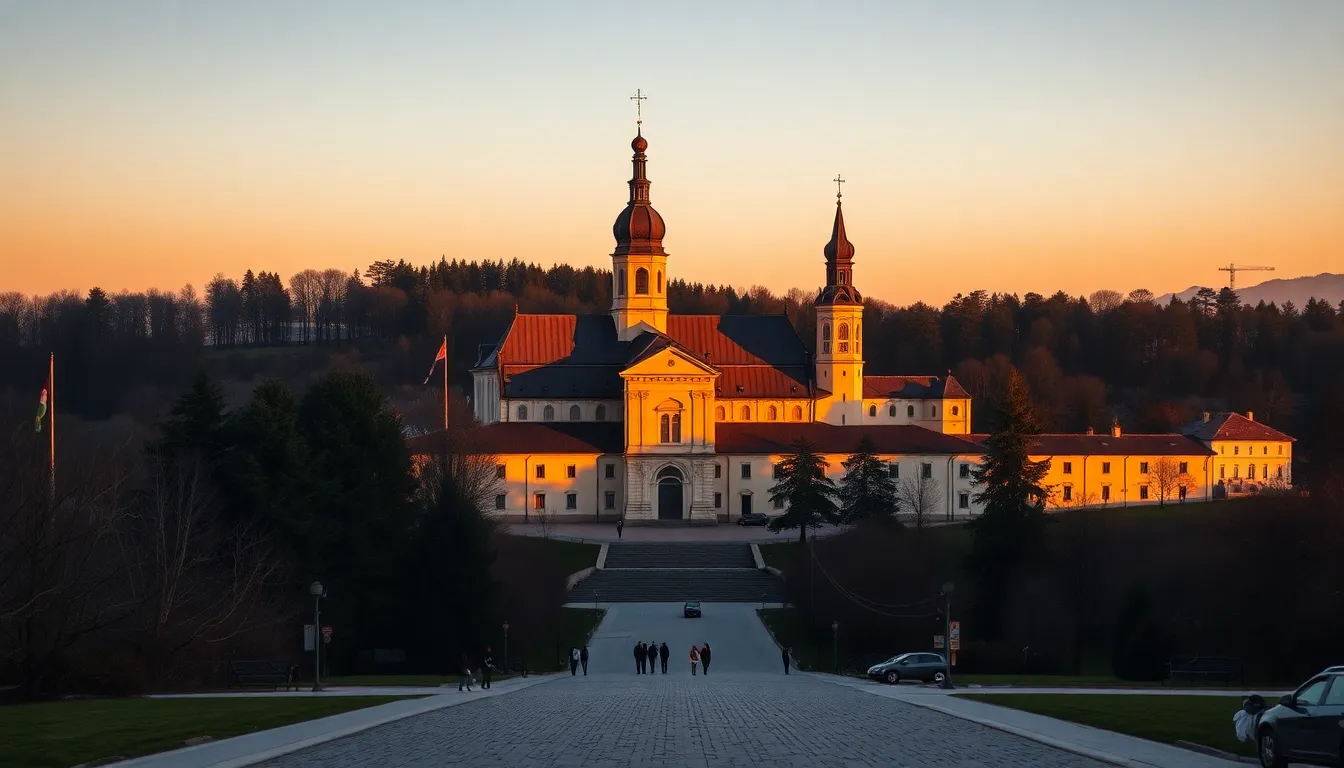
When pastors and priests first ask me about Poland, many of them are surprised that I take the question seriously. Poland is not on the usual Christian pilgrimage map the way Israel or Rome is. But for the right group, especially a Catholic one, Poland is one of the most spiritually dense countries in Europe. This is the land that gave the Church John Paul II. It is home to Jasna Gora and the Black Madonna, where Poles have prayed for six hundred years. It is where Saint Faustina received the Divine Mercy revelations and where Maximilian Kolbe gave his life.
A Christian heritage trip to Poland is a pilgrimage. I build it that way, with Mass and prayer woven into the days, not added on top. What follows is a ten-day route that moves through the great Marian shrine, the cities of the pope’s life, and the sites of mercy and sacrifice that define modern Polish Catholicism. It also makes honest room for Auschwitz, which no Christian pilgrimage to this country should avoid.
If your group leans toward the life of John Paul II specifically, our John Paul II heritage itinerary goes deeper into his personal sites. This itinerary is the broader Christian journey.
How This Pilgrimage Is Shaped
I build Christian Poland trips around three movements. First, devotion: Jasna Gora and the Black Madonna, the heart of Polish Marian faith. Second, the life and witness of John Paul II and the saints who shaped his world. Third, the confrontation with suffering and mercy that Polish Catholicism does not flinch from, including Auschwitz and the Divine Mercy shrine that, remarkably, sits in the same city.
Pilgrimage is not tourism with churches. Where your group celebrates Mass, where it prays the rosary, where it sits in silence, those are the structure. Build them first.
Day 1: Arrival in Warsaw
Your group flies into Warsaw and most land in the afternoon. Rest is the only agenda for Day 1. Let people recover from the flight.
If your group gathers in the evening, the rebuilt Old Town of Warsaw is a fitting first walk. The city was nearly destroyed in the war and raised again afterward, a resurrection in brick that quietly opens themes your pilgrimage will return to all week.
Heritage Tours arranges airport pickup so the first evening is restful.
Day 2: Warsaw, the Faith of a Capital
Warsaw holds more Christian heritage than visitors expect. Begin at St. John’s Archcathedral in the Old Town, rebuilt after the war like the city around it. Nearby, the Church of the Holy Cross holds the heart of Frederic Chopin, a reminder of how deeply faith and Polish identity are braided together.
Visit the tomb and museum of Blessed Jerzy Popieluszko, the priest murdered by the secret police in 1984 for supporting Solidarity. His witness against a totalitarian state is part of the same Polish Catholic story that produced John Paul II, and it moves groups deeply.
Celebrate Mass together at one of these churches if your itinerary and clergy allow. Beginning the pilgrimage at the altar sets the tone for everything after.
Day 3: Warsaw to Czestochowa
Today your group travels to Czestochowa, about two and a half hours south, to Jasna Gora, the spiritual heart of Poland.
Jasna Gora is the monastery that holds the icon of Our Lady of Czestochowa, the Black Madonna. For six centuries Poles have made pilgrimage here. The icon, marked by two scars on the Virgin’s cheek, has been a sign of national survival through invasion, partition, and occupation.
Arrive in time for the ceremonial unveiling of the icon, when the silver covering is drawn back to a fanfare of trumpets. Many group leaders tell me this moment, surrounded by Polish pilgrims who have walked for days to be here, is among the most powerful of the entire trip.
Day 4: Czestochowa, Jasna Gora in Depth
Give Jasna Gora a full day. This is not a place to rush.
Celebrate Mass in the chapel before the icon if you can arrange it. Spend time in the basilica, the treasury, and along the ramparts. Walk the Stations of the Cross on the monastery grounds. Sit in front of the Black Madonna without an agenda and let your group pray.
The afternoon allows quiet personal devotion. Pilgrimage needs unscheduled hours as much as it needs structured ones, and Jasna Gora is exactly the place to give your group that space.
Day 5: Czestochowa to Wadowice to Krakow
Travel south toward Krakow, with a stop in Wadowice, the birthplace of Karol Wojtyla, the future John Paul II.
Visit the Basilica of the Presentation of the Blessed Virgin Mary, where he was baptized, and the family home, now a museum that traces his childhood and the world that formed him. Standing in the town where the pope grew up grounds his story in an ordinary Polish place before you encounter the cities where his vocation unfolded.
Continue to Krakow in the late afternoon and settle into the hotel. Krakow will be your base for the rest of the pilgrimage.
Day 6: Krakow, the City of the Pope
Krakow shaped John Paul II as priest, bishop, and cardinal before the world knew him. Begin at Wawel Cathedral, where he was ordained and later served, a thousand-year church that holds the tombs of Polish kings and Saint Stanislaus.
Walk to the Archbishop’s Palace, where as cardinal he lived and, during his papal visits, spoke to crowds from the famous window. Visit the churches of the Old Town and pray in the spaces where his vocation took root.
Celebrate Mass at one of these churches. To pray where the pope prayed, in the city he loved most, is the devotional center of this day.
Day 7: Krakow, Divine Mercy and Lagiewniki
Today belongs to the Divine Mercy. In the Lagiewniki district stands the Sanctuary of Divine Mercy, built around the convent where Saint Faustina Kowalska lived and received the revelations of the Divine Mercy devotion, including the image of the merciful Christ and the chaplet now prayed around the world.
Venerate the relics of Saint Faustina and pray the Divine Mercy chaplet at three o’clock, the hour of mercy, with pilgrims from across the globe.
Nearby rises the John Paul II Sanctuary, dedicated to the pope who canonized Faustina and entrusted the world to Divine Mercy. The two shrines together hold one of the central messages of modern Catholic devotion. Celebrate Mass here if your schedule allows.
Day 8: Auschwitz-Birkenau
A Christian pilgrimage to Poland that avoids Auschwitz is incomplete. Your group has spent a week in the heart of Polish Catholic faith. Now it must stand where that faith was tested in the darkest place on the continent.
The evening before, prepare your group. Tell them what the day holds and how long it lasts. Let them know that every reaction is normal, whether tears, silence, or numbness. As clergy, prepare a reflection or a prayer for the visit. This is not a tour. It is an act of witness and remembrance.
The day begins at Auschwitz I and moves to Birkenau, the extermination camp whose scale photographs cannot convey. At Auschwitz I, pause at the cell of Saint Maximilian Kolbe, the Franciscan priest who offered his own life in place of a condemned fellow prisoner and died in the starvation bunker. His sacrifice is one of the clearest images of Christ-like love the twentieth century produced, and it belongs at the center of this day.
Move through the sites slowly, in silence, with room to pray. The return to Krakow is quiet. Heritage Tours schedules nothing for the evening.
Day 9: Krakow, Kazimierz and the Old City
Day 9 returns your group to the living city and to the long Jewish history that shares Krakow’s streets. Walk through Kazimierz, the historic Jewish quarter, and its surviving synagogues and ancient cemetery. After Auschwitz, witnessing the depth of Jewish life that once flourished here, and that is returning today, is part of a complete Christian pilgrimage, not a detour from it.
In the afternoon, the Old Town: the great market square, St. Mary’s Basilica with its wooden altarpiece by Veit Stoss, and the slow rhythm of Krakow itself. Leave time for personal prayer and rest before the final day.
Day 10: Closing Mass and Departure
The last day is for closing. If your schedule allows, celebrate a final Mass together, a fitting end to a pilgrimage. Then hold a time of reflection. Ask each member of your group to name what they are carrying home, what shifted in them across these ten days.
In my experience this is where the pilgrimage settles into the soul. People say things on Day 10 they could not have said on Day 3. Give them the space to name it before they fly.
Heritage Tours handles the airport transfer, so the final hours belong to your group.
FAQ: A 10-Day Christian Heritage Itinerary for Poland
Is Poland a good destination for a Christian pilgrimage?
For Catholic groups especially, Poland is one of the richest pilgrimage destinations in Europe. It holds Jasna Gora and the Black Madonna, the life and sites of John Paul II, the Divine Mercy sanctuary of Saint Faustina, and the witness of Maximilian Kolbe at Auschwitz. We build the trip as a pilgrimage, with Mass and prayer woven into the days rather than added on top.
What is the significance of Jasna Gora and the Black Madonna?
Jasna Gora is the monastery in Czestochowa that holds the icon of Our Lady of Czestochowa, the Black Madonna, venerated by Poles for six centuries as a sign of national and spiritual survival. The ceremonial unveiling of the icon, surrounded by pilgrims who often walk for days to reach it, is one of the most moving moments of any Christian trip to Poland.
Should a Christian pilgrimage to Poland include Auschwitz?
Yes. To stand at Auschwitz is an act of witness and remembrance that belongs in any honest Christian journey through Poland. It also holds the cell of Saint Maximilian Kolbe, who gave his life for another prisoner, one of the clearest images of Christ-like love in modern history. We prepare groups carefully and frame the visit with prayer and gravity, never as sightseeing.
Can we celebrate Mass at the major sites?
Yes, and we strongly encourage it. We work to arrange Mass at Jasna Gora, the Divine Mercy sanctuary, the churches of Krakow connected to John Paul II, and a closing Mass to end the pilgrimage. Celebrating at these altars is the devotional spine of the trip, so we coordinate the scheduling and the permissions with your clergy in advance.
How does the group leader arrangement work?
With Heritage Tours, the group leader, whether a pastor, priest, or lay coordinator, travels free with fifteen or more participants. That makes a real difference when you are building a pilgrimage group from a parish, so it is worth raising early as you plan and promote the trip.
If you are a pastor or priest considering a pilgrimage to Poland, I would be glad to help you shape these ten days around your parish, your clergy, and your community’s devotional life. You can reach our group team here, go deeper with the John Paul II heritage itinerary, see the broader 10-day Poland heritage itinerary, and review the Poland destination overview. When you are ready, contact us.