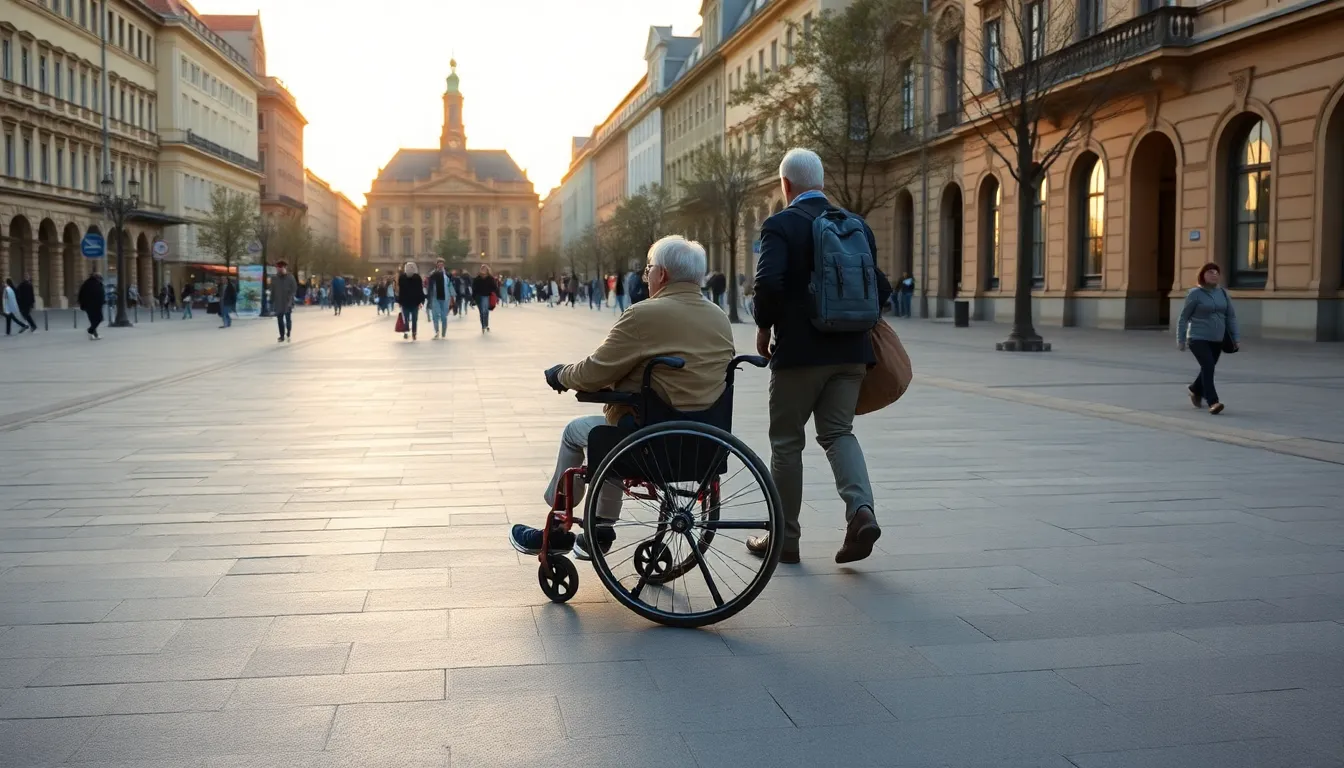
A few years ago a pastor called me about a trip to Poland for his congregation, and partway into the conversation he lowered his voice and said the thing he had been afraid to say. Half his people were over seventy. Two used wheelchairs. One had a heart condition that ruled out long days on her feet. He assumed Poland was off the table for them, and he was calling to hear me say it gently.
It was not off the table. We built that trip, and it was one of the most meaningful I have led. What I told him then I tell every leader in his position. Mobility limits do not close Poland to your group. They change how you plan it. Cobblestones, old buildings, and historic sites are real challenges, but most of them have solutions if you know them in advance and build the itinerary around them rather than against them.
This plan is a mobility-conscious route for groups with limited walkers, slower pacers, or members who simply cannot manage a standard heritage schedule. It keeps the emotional arc of our 10-day Poland heritage itinerary while re-engineering the pace, the distances, and the access so the whole group moves through it together.
How We Plan for Access
A few principles shape every accessible itinerary I build. We keep one major site per day and never stack two demanding visits back to back. We arrange accessible transport, with a coach that has a lift or ramp when needed, so the distance from vehicle to site is short. We scout the accessible entrances in advance, because many historic sites have a step-free route that is not the main one, and knowing it ahead of time changes everything. And we build in rest, with seating planned into each visit and a genuine midpoint rest day.
I also ask every leader to tell me honestly, in advance, what each member can and cannot do. The more I know before we land, the smoother the trip runs for everyone. There is no detail too small.
One thing I want every leader to hear plainly: do not let a member exclude themselves out of fear of slowing the group down. In my experience the limited walkers are often the most worried about being a burden, and they will quietly say they would rather stay home than hold everyone back. That worry is almost always unfounded when the trip is planned for them from the start. An accessible itinerary is not a standard trip with someone struggling at the back. It is a trip built so the whole group moves at one pace, together, and no one is left waiting or left out. When the planning is right, the member who feared being a burden often becomes the one whose presence the whole group remembers most.
Day 1: Warsaw, Arrival and Rest
Your group lands and settles in. Nothing formal. We arrange accessible airport pickup and a hotel chosen for step-free access, elevators, and accessible rooms, which I confirm in advance rather than trust to a listing. An easy evening, dinner together, and rest. After a long flight, the slower starts that help everyone help your limited walkers most of all.
Day 2: Warsaw, POLIN Museum
The POLIN Museum is one of the most accessible major sites in Poland, which makes it an ideal first full day. It is fully step-free with elevators throughout, wide level floors, wheelchairs available to borrow, and plenty of seating in the galleries. Give it a relaxed morning at a pace that lets slower members linger. It tells a thousand years of Jewish life in Poland and lays the foundation for the whole trip, and it does so without asking anything physically difficult of your group. The afternoon is free and gentle.
Day 3: Warsaw to Krakow
A travel day by train, which I strongly prefer to the coach for accessible groups on this leg. Polish intercity trains have accessible carriages and staff assistance for boarding, and the journey is under three hours seated comfortably rather than many hours on the road. We arrange the boarding assistance in advance. You reach Krakow with the afternoon free to settle in slowly.
Day 4: Krakow, Kazimierz Done Carefully
The historic Jewish quarter, and here planning earns its keep. Kazimierz is largely flat, which helps, but it has cobblestones in places that are hard for wheelchairs and unsteady walkers. We choose the smoother routes, which I have scouted, and keep distances short with the coach close by. The Remuh Synagogue and old cemetery has some uneven ground at the cemetery, so we plan how each member experiences it, with the synagogue itself accessible. We keep this to a half day with ample seating and see the living, café-lined side of Kazimierz from comfortable vantage points. One site, taken slowly, beats three sites rushed.
Day 5: Krakow, Rest Day
A genuine rest day, protected, not filled. For a group with limited walkers, this day is structural, not optional. The morning is free. In the afternoon I offer a gentle, fully optional outing for whoever wants it, while others rest at the hotel. This day is what makes the Auschwitz visit possible for your less mobile members, and I guard it.
Day 6: Auschwitz-Birkenau, With Full Access Planning
Auschwitz-Birkenau is more accessible than many people fear, and we plan it carefully. The museum has accessible routes, wheelchairs available to borrow, and accessible facilities. Auschwitz I has some thresholds and stairs in the historic blocks, and we plan in advance which exhibitions each member can reach, with step-free alternatives where they exist. Birkenau is vast and largely unpaved, with long distances and uneven ground, so for wheelchair users and limited walkers we arrange a vehicle to move closer to the key points rather than crossing the whole site on foot.
The evening before, gather your group and prepare them, telling everyone that every reaction is normal. We frame this day with the dignity it requires, and access planning is part of that dignity, making sure no member is left at the gate while the others go in. Our guide to preparing a group for Auschwitz covers the emotional preparation, and I handle the physical access individually with each leader. The day moves at a pace that already allows for stopping and silence, which suits an accessible group well.
Day 7: Krakow, Wawel and Closing
The final morning, and a choice. Wawel Cathedral and the castle sit on a hill with some steep approaches, and parts of the historic interior are not step-free. There is, however, an accessible route to the cathedral and grounds that I arrange in advance, so most of your group can experience Wawel and the views over the Vistula. For anyone who cannot manage the hill, we plan a comfortable alternative nearby rather than asking them to wait alone.
We close with a reflection session in an accessible room. Gather your group and let each person name one thing they are carrying home. This closing matters as much for this group as any other, often more, because these are travelers who were told a trip like this was beyond them and did it anyway. We handle accessible airport transfers so the final hours are calm.
If you lead a congregation with members who use wheelchairs, walk slowly, or simply cannot manage a standard schedule, do not assume Poland is closed to them. Tell me about your group, and I will tell you honestly what is possible and how we make it work. You can see how we run group heritage tours, read the Poland destination overview, or look at the guide for first-time heritage travelers. Group leaders travel free with fifteen or more participants. When you are ready, contact us here.
FAQ: Accessible Poland Heritage Trip
Is Auschwitz-Birkenau wheelchair accessible?
Largely yes, with planning. The museum has accessible routes, wheelchairs to borrow, and accessible facilities. Auschwitz I has some thresholds in the historic blocks, and Birkenau is vast and unpaved, so for limited walkers we arrange a vehicle to reach the key points rather than crossing the whole site on foot. We plan each member’s route in advance.
Can someone with limited mobility do a Poland heritage trip?
Yes. Mobility limits change how you plan Poland, not whether you can go. We keep one site per day, arrange accessible transport and hotels, scout step-free entrances ahead of time, and build in real rest. Many of our most meaningful groups have included wheelchair users and members who cannot manage long days on their feet.
How accessible is Krakow’s Kazimierz quarter?
Kazimierz is mostly flat, which helps, but it has cobblestone sections that are difficult for wheelchairs and unsteady walkers. We choose smoother, scouted routes, keep distances short with the coach close by, and plan ample seating. Taken at a half-day pace, it works well for limited walkers.
What should I tell you about my group’s needs in advance?
Everything. The more detail you give me before we land, the smoother the trip runs. Tell me who uses a wheelchair, who walks slowly, who has health conditions that affect long days, and any specific limits. There is no detail too small, and advance information is what lets us plan step-free routes and the right transport.
Is the transport accessible between cities?
Yes. We use the train between Warsaw and Krakow, which has accessible carriages and boarding assistance we arrange ahead of time, and we provide accessible coaches with lifts or ramps where needed for local transport. Keeping travel legs short and comfortable is a core part of how we plan for limited walkers.