I have lost count of how many heritage groups I have walked into the POLIN Museum, but I remember the reaction almost every time. People come to Poland braced for the Holocaust. They have read about Auschwitz, they have steadied themselves for grief, and then POLIN does something they did not expect. It begins a thousand years earlier. It begins with arrival, not destruction. And by the time a group reaches the end of the exhibition, many of them tell me the same thing: I had no idea how much there was before.
That is exactly what the museum is for. POLIN, the Museum of the History of Polish Jews, is the single most important place I take heritage groups when they want to understand what Jewish Poland actually was. Not only what was lost, but what was built. If your community is coming to Poland, I would put this museum near the front of the itinerary, and in this guide I want to explain why, and how to make the most of it.
What POLIN Means, and Where It Stands
The name itself carries the whole idea. POLIN is the Hebrew and Yiddish word for Poland, and according to an old legend, when Jews fleeing persecution in the West arrived in these lands, they read the name as “po lin,” meaning “here you shall rest.” For many centuries, that is what Poland was for the Jewish people. A place to rest. A place to build.
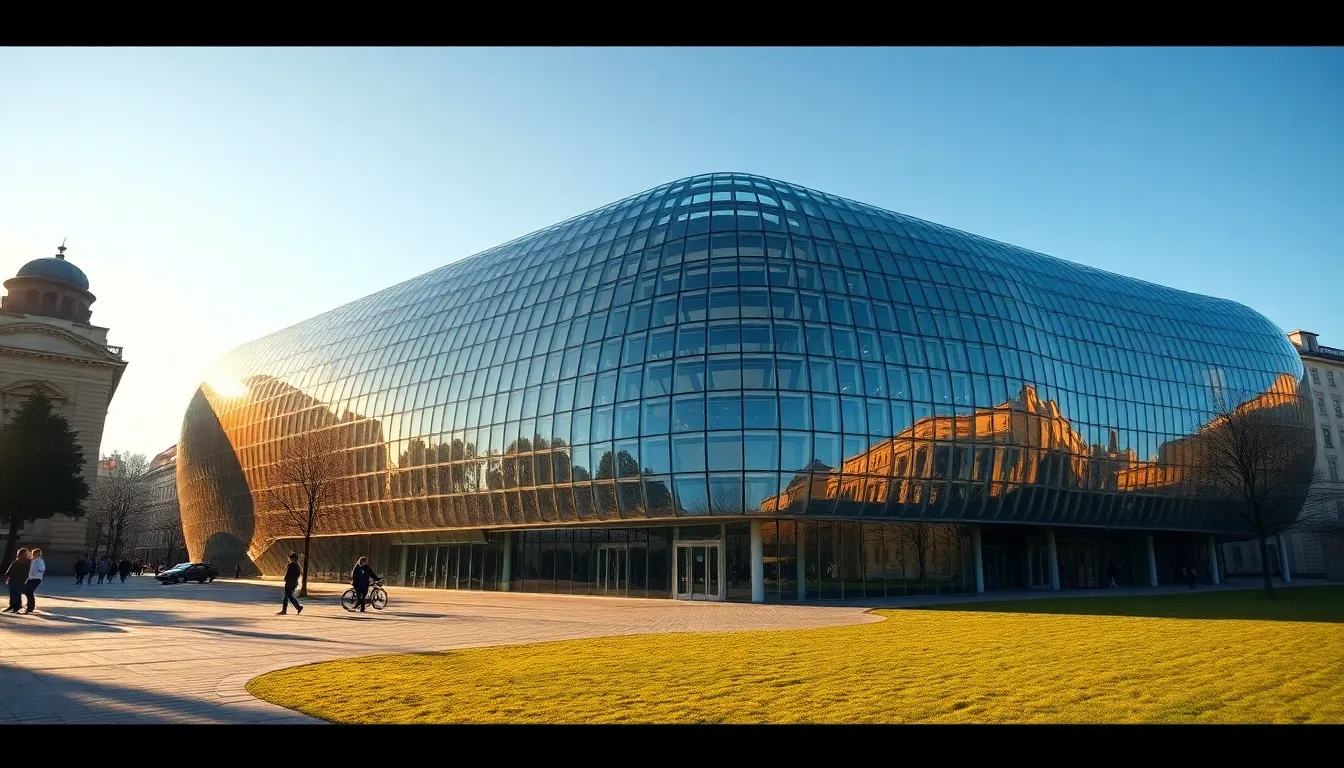
The museum opened its permanent exhibition in 2014, and it stands on a site that gives it almost unbearable meaning. It sits in the heart of what was the Warsaw Ghetto, directly across from the Monument to the Ghetto Heroes. The building is bright, modern, and made largely of glass, with a soaring interior wall that curves like a passage parted through stone. To build a museum celebrating a thousand years of Jewish life on the ground where so much of it was extinguished is a statement in itself. Life, told on the site of death.
The Thousand-Year Story the Museum Tells
The genius of POLIN is its structure. The permanent exhibition is a chronological journey through eight galleries, and it does not rush to the catastrophe. It makes you live through the centuries first.
The Forest, the Charters, and the First Settlement
The journey opens in a dim, forested gallery evoking the legend of arrival, the first Jewish merchants traveling through the Polish lands. From there it moves into the medieval period, when Polish rulers issued charters protecting Jewish communities at a time when much of Western Europe was expelling them. The Statute of Kalisz of 1264 granted Jews the right to trade, to worship, and to govern their own affairs. Your group sees, in concrete terms, why Jews came here and why they stayed.
The Golden Age and the Painted Synagogue
The gallery many groups remember most is the reconstruction of the wooden synagogue roof and bimah from Gwozdziec. It is a stunning, full-color recreation of the painted ceiling of an eighteenth-century wooden synagogue, the kind that once stood across the Polish countryside and were almost entirely destroyed in the war. Standing beneath it, looking up at the painted zodiac and Hebrew inscriptions, your group glimpses the artistry and devotion of a world that photographs alone cannot convey.
This is the period when the Polish-Lithuanian Commonwealth held the largest Jewish population on earth, when the Council of Four Lands governed Jewish communal life across the region, and when the towns and yeshivas of Poland became the beating heart of Ashkenazi civilization.
The Modern Era, the Street, and the Struggle
Later galleries bring your group into the nineteenth and early twentieth centuries: the rise of Hasidism, the Jewish Enlightenment, industry, politics, Yiddish theater, the Zionist and Bundist movements. A reconstructed interwar street places visitors inside the vibrant, contested, modern Jewish life of cities like Warsaw and Lodz, where Jews were a third of the population and shaped the culture of the country.
Only after all of this, after hours of living, does the exhibition arrive at the Holocaust gallery. And that is the point.
Why the Order Changes Everything
I want to dwell on this, because it is the single most important reason I bring groups to POLIN early in their journey.
When a heritage group arrives at Auschwitz or Treblinka having first walked through POLIN, something fundamental shifts in how they grieve. They are no longer mourning an abstraction. They are mourning the painted synagogue ceiling they stood beneath. The Council of Four Lands. The Yiddish theater. The interwar street. The destruction becomes specific because the life was made specific first.
A trip that goes straight to the death camps can leave people with grief and no context, a hollow horror with nothing to hold onto. POLIN gives the grief a home. It ensures your community understands that what was destroyed was not a faceless mass of victims but a civilization, one of the richest the Jewish people ever built. For a fuller discussion of why this distinction shapes an entire itinerary, see our guide to Jewish heritage in Poland.
This is why I almost always schedule POLIN on the first or second day. It is the foundation everything else rests on.
Practical Guidance for Group Leaders
The exhibition is large and content-rich. A thorough visit takes most groups between two and a half and three hours, and even then you are moving steadily. I always tell group leaders not to schedule anything heavy immediately after, because people come out with a great deal to process.
Use a Guide or the Group Resources
POLIN offers guided tours and audio guides, and for a heritage group I strongly recommend guided. A skilled museum educator knows which galleries to dwell in and which to move through, and can adapt the framing for a Jewish congregation or a Christian community, who often come with different questions. The museum also has educators experienced with faith groups specifically.
Pair It With the Surrounding Memorial Landscape
Because POLIN sits inside the former ghetto, it is the natural anchor for a wider walk through the area. Directly outside is the Monument to the Ghetto Heroes. A short distance away is the Umschlagplatz, the site from which Warsaw’s Jews were deported, and the memorial route that connects the ghetto’s landmarks. I usually build POLIN and that remembrance walk into related days, the museum first for context, the ghetto sites after. Our companion guides to walking the Warsaw Ghetto remembrance route and to the Umschlagplatz and the ghetto memorials cover that ground with the care it requires.
Heritage Tours arranges the museum bookings, the licensed guides, and the sequencing of these sites so they tell one coherent story rather than a scattered set of stops. You can see how we structure the leader experience on our group heritage tours page.
More Than a Museum of the Past
One last thing I tell my groups before we go in. POLIN is not only a record of what was. It is part of a living, if small, Jewish revival in Poland today. Warsaw again has an active community, the Nozyk Synagogue still holds services a short distance away, and the museum itself runs festivals, education, and research that keep Polish Jewish life present rather than only remembered. For groups who want to see that the story did not simply end in 1945, our guide to the Nozyk Synagogue and our Poland destination overview carry the thread forward.
I find that this matters to faith communities. To bear witness to destruction is essential. But to also see continuity, a flicker of “po lin” persisting, gives people something to carry home besides sorrow.
FAQ: Visiting the POLIN Museum
What is the POLIN Museum and why is it significant?
POLIN is the Museum of the History of Polish Jews, in Warsaw, built on the site of the former Warsaw Ghetto. Its permanent exhibition tells the full thousand-year story of Jewish life in Poland, from medieval settlement through centuries of community and culture to the Holocaust and the present day. It is widely regarded as one of the most important Jewish museums in the world, and for heritage groups it provides the essential context for everything else they will see in Poland.
How long should a heritage group spend at POLIN?
Plan for two and a half to three hours for a proper visit. The exhibition is large and immersive, with eight chronological galleries, and moving through it carefully takes time. I recommend not scheduling anything emotionally heavy immediately afterward, because groups come out with a great deal to absorb.
When in the itinerary should we visit POLIN?
Early. I almost always schedule POLIN on the first or second day of a Poland journey. Because it tells the story of the civilization that was destroyed before addressing the Holocaust, visiting it early means that when your group later reaches sites like Auschwitz or Treblinka, they grieve something specific and understood rather than an abstraction. The order genuinely changes the experience.
Is POLIN appropriate for both Jewish and Christian groups?
Yes. POLIN tells a human story that resonates across faiths, and its guides can adapt the framing for different communities. Jewish groups often connect to it as the story of their own heritage and loss. Christian groups frequently come away with a far deeper understanding of the world the Holocaust destroyed. Both find it valuable, and a good guide tailors the emphasis.
Do we need to book POLIN in advance for a group?
Yes. POLIN is a major museum and group entry, especially with a guide, should be reserved ahead of time. Booking ensures your timed slot and your guide are secured, which matters in busier seasons. Heritage Tours handles these bookings and the sequencing with the surrounding ghetto sites for the groups we organize.
If your community is coming to Poland, POLIN is one of the first conversations I want to have with you, because where it sits in your itinerary shapes everything that follows. I would be glad to help you build it in the right way, with the right guide, in the right order.
Contact us when you are ready to start planning your group’s journey.