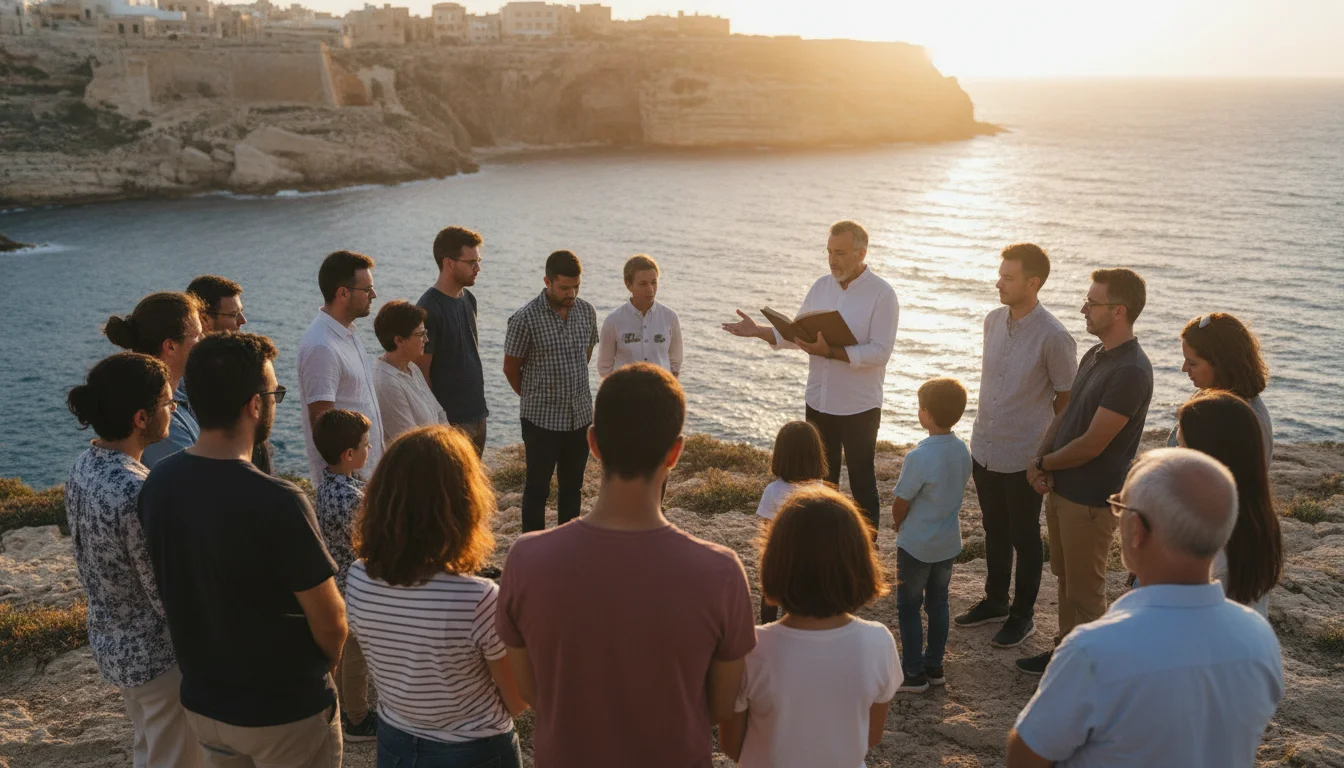
A pastor told me once, a few weeks before his first trip, that he had led his congregation through weddings, funerals, building campaigns, and a pandemic, but he had never led forty of his own members onto a plane. “I know how to shepherd people,” he said. “I don’t know how to shepherd a tour.” I told him what I tell every pastor leading their first heritage trip: those are more similar than you think, and Malta is a forgiving place to learn the difference.
If this is your first congregational heritage trip, here is the honest playbook, the preparation that matters, the pacing that works, and the mistakes I watch first-time pastors make so you do not have to make them yourself.
Start With Why Malta, Specifically
Before you build an itinerary, be able to answer why Malta and not somewhere else, because your congregation will ask, and “our tour company suggested it” is not a satisfying answer from the pulpit. The real answer is strong: Malta is where Paul was shipwrecked, in a storm and rescue told in detail across Acts 27 and 28, and the bay where it happened is still called St. Paul’s Bay. That is not a symbolic connection. It is the actual shoreline. Malta is also small enough that a first-time group leader can plan a single-base trip without the complexity of moving a congregation between cities or countries.
I tell first-time pastors to lead with that combination when introducing the trip: real biblical ground, manageable logistics. It answers the skepticism before it forms.
Preach the Trip Before You Take It
The pastors who get the most out of Malta start teaching Acts 27 and 28 from the pulpit months before departure, not as trip promotion but as genuine preparation. When your congregation has already sat with the storm, the prophecy, the shipwreck, and the healing of Publius before they ever board a plane, standing at St. Paul’s Bay becomes a fulfillment of something they already know rather than a tourist stop with a Bible verse attached.
This matters more for a first-time group than for a congregation that has traveled before, because first-time travelers do not yet know how to be moved by sacred geography. You are training that muscle from the pulpit, and it pays off the moment they stand at the water.
What to Prepare Logistically Before You Ever Call Us
A few things are worth having settled in your own mind before your first planning conversation with a tour operator. Roughly how many people do you realistically expect, since the group leader travels free at fifteen or more participants, and knowing whether you are likely above or below that threshold shapes the whole budget conversation. What season works for your congregation’s calendar, since Malta runs April through November comfortably, with Easter week drawing large crowds to the churches and a quieter fall window for a more contemplative pace, covered in more detail in our best time to visit Malta guide. And whether you are picturing a full congregational trip or a smaller group, since the right format changes the itinerary meaningfully, something our group versus private touring comparison walks through.
You do not need to have these answers perfectly settled. You need to have thought about them, so your first planning call moves forward instead of starting from zero. If you are still working out how to reach the fifteen-participant threshold, our guide on how to recruit and fill your group covers it.
The Itinerary Structure That Works for a First Trip
For a first-time congregational trip, I recommend the standard five-day structure rather than trying to compress the island into three days or overextend into eight. Five days covers Valletta and the Knights’ heritage, St. Paul’s Bay and the Grotto in Rabat, Mdina’s Cathedral of St. Paul, and a full day trip to Gozo, without rushing any of it. Our 5-day Malta heritage itinerary lays out that structure day by day if you want to see the full shape before you commit.
Resist the urge, common among first-time leaders, to add extra sites to justify the cost of the trip. A congregation remembers three or four deeply experienced moments far more than nine rushed ones. St. Paul’s Bay, the Grotto, St. John’s Co-Cathedral, and Gozo’s ancient temples are enough to build a trip your people talk about for years.
Mistakes I See First-Time Pastors Make
The most common mistake is under-communicating the physical demands before departure. Malta involves cobblestone streets, some slopes in Valletta, and stairs down into the catacombs and the Grotto of St. Paul. Tell your congregation this clearly, months ahead, so nobody arrives surprised and nobody who should reasonably sit out a particular stop feels pressured to attempt it.
The second mistake is over-scheduling the trip because it feels like the responsible use of the money raised. It is the opposite. A packed schedule leaves no room for the quiet moments that make a heritage trip transformative rather than merely educational. Build in reflection time deliberately, especially after St. Paul’s Bay and the catacombs.
The third mistake is treating the guide as a formality rather than a partner. A good local guide who knows how to connect the Acts narrative to the physical site in front of your congregation is doing half the spiritual work of the trip. Talk to your guide before the trip about what you want emphasized, and let them know where you plan to speak yourself versus where you want them to carry the narrative.
Leading Devotional Moments on the Ground
As the pastor, your voice matters most at a small number of specific stops, and knowing which ones frees you to let the guide carry the historical narrative everywhere else. St. Paul’s Bay is yours: read Acts 27 and 28 aloud at the water, and let your congregation stand in silence for a moment before moving on. The Grotto of St. Paul in Rabat is an intimate, small space well suited to a short prayer rather than a long address. St. John’s Co-Cathedral, with its floor of Knights’ tombstones, is a natural moment to speak about faith made physical, devotion that outlasted the men who held it.
Save your longest reflections for the bus rides between sites, where your congregation has time to process what they just saw without the pressure of a schedule ticking behind them.
What Happens After You Come Home
The trip does not end at the airport. The pastors whose Malta trip becomes a lasting part of the congregation’s life build in a debrief, a Sunday service or small group series in the weeks after return where travelers share what moved them and non-travelers hear the story secondhand. This is also where you start planting the seed for the next trip, since a first successful heritage journey is almost always followed by requests for another.
FAQ: A Pastor’s First Heritage Trip to Malta
How far in advance should I start planning a first congregational trip to Malta?
Nine to twelve months is a comfortable window. It gives you time to preach the biblical background from the pulpit, let families budget and save, and lock in group airfare before prices move. Shorter timelines are workable but leave less room for the kind of preparation that makes the trip land spiritually.
What should I tell my congregation about the physical demands before they commit?
Be direct: cobblestone streets, some slopes in Valletta, and stairs down into the catacombs and the Grotto of St. Paul. Most adults manage these comfortably, but people with significant mobility limitations should know in advance which specific stops involve stairs so they can plan accordingly.
How many days should a first Malta trip be?
Five days is the sweet spot for a first congregational trip. It covers the essential sites, Valletta, St. Paul’s Bay, Mdina and Rabat, and Gozo, without rushing, and it is short enough to be a manageable first trip for a pastor who has not led one before.
Do I need to lead every devotional moment myself?
No, and you should not try to. Reserve your voice for a few key stops, especially St. Paul’s Bay, and let an experienced local guide carry the historical narrative at the rest. This keeps you present and un-rushed for the moments that matter most.
Does the free group leader policy help a first-time pastor specifically?
Yes. At fifteen or more participants, your seat is free, which matters for a first-time leader who may be personally nervous about the cost of leading before knowing whether the congregation will fully commit. It removes one layer of risk from an already unfamiliar undertaking.
Your first heritage trip does not need to be perfect. It needs to be well planned and honestly communicated, and Malta is one of the most forgiving places to lead your first one. If you want the broader framework beyond Malta, the complete guide for group leaders walks through planning a group pilgrimage from start to finish.
Contact us and let’s build a trip your congregation will still be talking about next year.