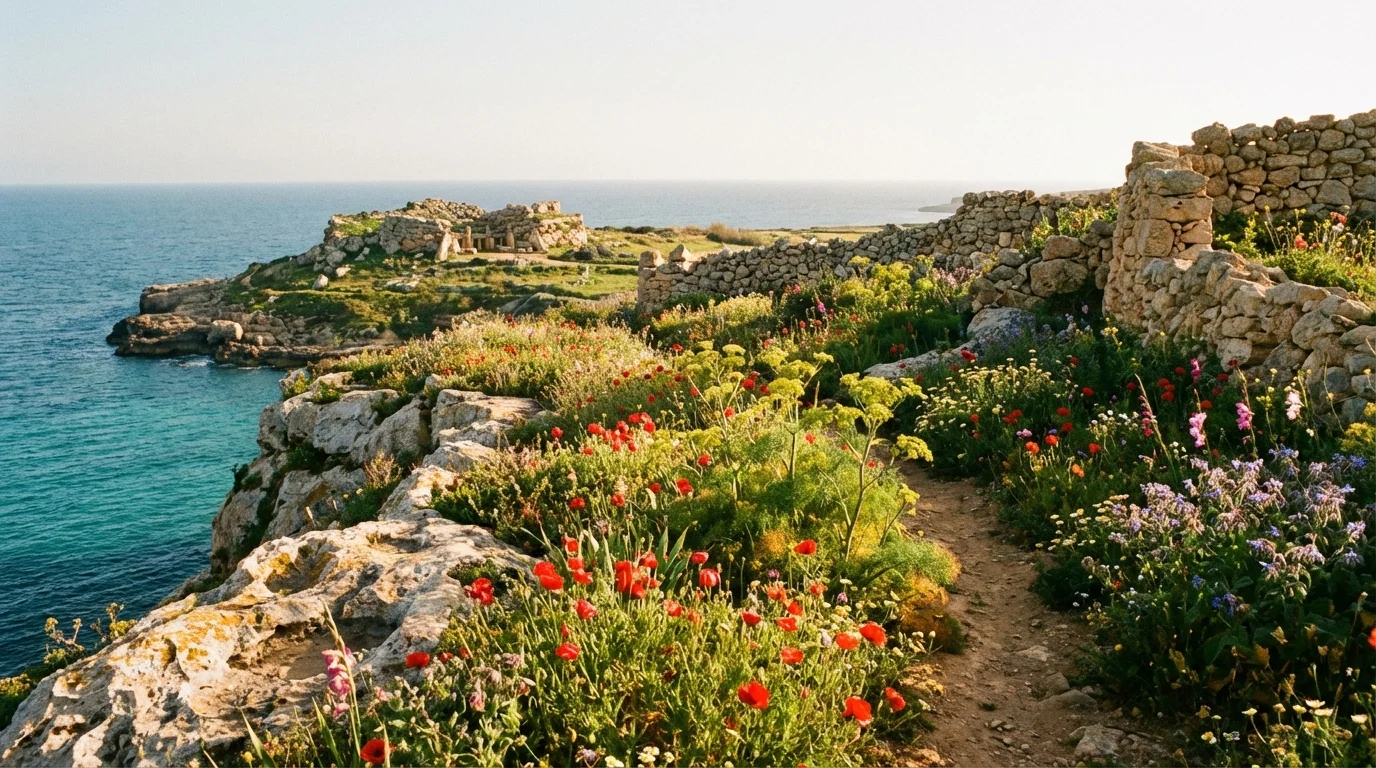
Spring (March through May): Holy Week, Wildflowers, and the Best Conditions
If I could choose one season to take a heritage group to Malta, it would be spring. The weather is warm but not hot, typically between 16 and 24 degrees Celsius. The island is green with wildflowers, which is surprising for a place that spends much of the summer looking dry and golden. The tourist crowds have not yet arrived in force.
But the strongest reason to visit Malta in spring, particularly for Christian groups, is Easter.
Malta takes Holy Week seriously. This is one of the most Catholic islands in Europe, and the celebrations that unfold during the week before Easter are unlike anything most visitors have experienced. The island comes alive with processions, prayer vigils, and public devotion that has continued, largely unchanged, for centuries.
April and May also offer comfortable conditions for walking the heritage sites. Valletta’s streets, Mdina’s medieval alleys, and the exposed stone of St. Paul’s Bay are all far more pleasant before the summer heat settles in.
For most heritage groups, spring is the recommendation. April through mid-May gives you the best of Malta.
Summer (June through August): Hot and Crowded, Plan Accordingly
Malta in summer is hot. Temperatures regularly reach 35 degrees Celsius and above, and the island’s golden limestone, beautiful as it is, radiates heat. There is very little shade at most heritage sites. The open areas around St. Paul’s Bay, the Ggantija temples on Gozo, and even Valletta’s harbor-facing streets can be difficult for older adults in a group.
Summer also brings cruise ships. Valletta’s Grand Harbour is a major cruise port, and between June and September, thousands of day-trippers arrive every morning, concentrate in the same areas your group wants to visit, and leave by mid-afternoon. The result is crowded heritage sites during peak hours and a very different atmosphere from what you want for a reflective group experience.
If summer is your only option, plan your site visits for early morning and late afternoon. Schedule indoor activities, like St. John’s Co-Cathedral and the Wignacourt Museum, for the hottest midday hours. And ask your tour operator about cruise ship schedules so you can avoid the worst of the crowds.
Summer can work. But it requires careful planning.
Fall (September through November): The Quiet Window Heritage Groups Often Miss
Fall is Malta’s best-kept secret for heritage travelers. September is still warm, often around 27 degrees Celsius, but the cruise ship traffic begins to thin. October is genuinely lovely: warm, calm, and uncrowded. November is cooler but still mild by northern European standards.
For heritage groups, fall offers something that summer cannot: quiet. You can walk through St. John’s Co-Cathedral without competing with cruise groups. You can stand at St. Paul’s Bay with your group and have the space for a reading from Acts without being surrounded by tourists. Mdina, the Silent City, actually feels silent.
For Jewish groups, the fall timing has an additional advantage. The period after the High Holidays, from late September through November, is often when communities are most ready to travel together. The emotional arc of the holidays gives way naturally to a heritage journey that deepens the community’s shared experience.
If your group has flexibility in scheduling, consider fall. It is the season that Heritage Tours most often recommends for Malta.
Winter (December through February): Cool for the Mediterranean, But Right for Heritage
Winter in Malta is not cold by continental standards. Temperatures typically range from 10 to 16 degrees Celsius. There is rain, particularly in December and January, and the sea can be rough. But the heritage sites are open, the churches are active, and the island is at its quietest.
For heritage groups that do not need warm weather as part of their experience, winter Malta has real advantages. Hotel rates are lower. Restaurant reservations are easy. And the intimacy of visiting a church or a catacomb in winter, with natural light coming low through stone windows, has its own quality.
Christmas in Malta is also genuine. The island decorates its churches and public spaces with care, and Midnight Mass in Valletta is a meaningful experience for Christian groups.
Winter is not for every group. But for the right group, one that values quiet access and does not mind a jacket, it is worth considering.
Easter and Holy Week in Malta: A Once-in-a-Lifetime Experience for Christian Groups
Easter deserves its own section because what happens in Malta during Holy Week is truly singular.
On Good Friday, towns across the island hold processions. In Valletta, costumed participants carry life-size statues of biblical figures through the narrow streets, moving slowly by torchlight and candlelight while the city watches in near silence. In smaller towns like Zebbug, Qormi, and Rabat, the processions are more intimate but no less devout. Participants wear hooded robes. The statues, carved from wood and painted centuries ago, depict the stations of the cross.
Easter Sunday brings a different energy. Church bells ring across the island. Brass bands march through the streets. Statues of the Risen Christ are carried through town squares while confetti and streamers fill the air. The contrast between Good Friday’s solemnity and Easter Sunday’s celebration is striking.
For a Christian group leader, bringing your congregation to Malta during Holy Week means witnessing a living expression of the faith that has continued on this island since Paul arrived. These are not reenactments for tourists. These are traditions that the Maltese carry out for themselves, as they have for generations.
If you are considering an Easter Week group trip to Malta, plan well ahead. Heritage Tours organizes Easter pilgrimage trips for Christian groups and can coordinate accommodation and site access during the island’s busiest and most meaningful week.
Jewish Calendar Considerations for Malta
Malta does not have major Jewish events to time a visit around, but the calendar still matters for planning.
The period after Sukkot, from mid-October through November, is often ideal for Jewish heritage groups. The community has come through the holidays together, the group energy is high, and Malta’s weather in this window is warm and uncrowded.
Passover in spring is another natural time to travel, particularly if the group is combining Malta with other Mediterranean destinations. The themes of exodus and journey resonate in a place where an entire community was expelled from its home.
Shabbat observance on the island requires advance planning. Heritage Tours works with the local Jewish community in Valletta to arrange Shabbat meals and walking-distance accommodations for groups that observe.
For any season, our Malta destination page has more detail on planning a heritage journey that fits your community’s calendar and needs.
Frequently Asked Questions
What is Easter Week like in Malta for a Christian heritage group? Easter Week in Malta is one of the most powerful heritage experiences available to Christian groups in Europe. Good Friday processions feature life-size biblical statues carried through candlelit streets. Easter Sunday brings church bells, brass bands, and celebration. These traditions have continued for centuries and are genuine community events, not tourist performances.
Is summer a good time to visit Malta for a heritage trip? Summer is possible but challenging for heritage groups. Temperatures regularly exceed 35 degrees Celsius, heritage sites have little shade, and cruise ship day-trippers crowd Valletta during peak hours. If summer is your only option, plan early morning and late afternoon visits and ask about cruise ship schedules.
What is the quietest and best time for a heritage group visit to Malta? October and November offer the best combination of warm weather, low crowds, and full site access. April and May are also excellent. For most heritage groups, Heritage Tours recommends either the spring or fall windows.
Does Malta have any Jewish holiday events or observances worth timing a visit around? Malta does not have major Jewish calendar events. However, the period after the High Holidays (mid-October through November) is often ideal for Jewish heritage groups. The weather is warm, the island is uncrowded, and the communal energy after the holidays lends itself well to a group heritage journey.
Is winter in Malta cold and does it affect heritage site access? Winter temperatures in Malta range from 10 to 16 degrees Celsius, mild by northern European standards. Heritage sites remain open year-round. Rain is more common in December and January, but the quiet and lower costs can make winter an appealing option for groups that do not require warm weather.