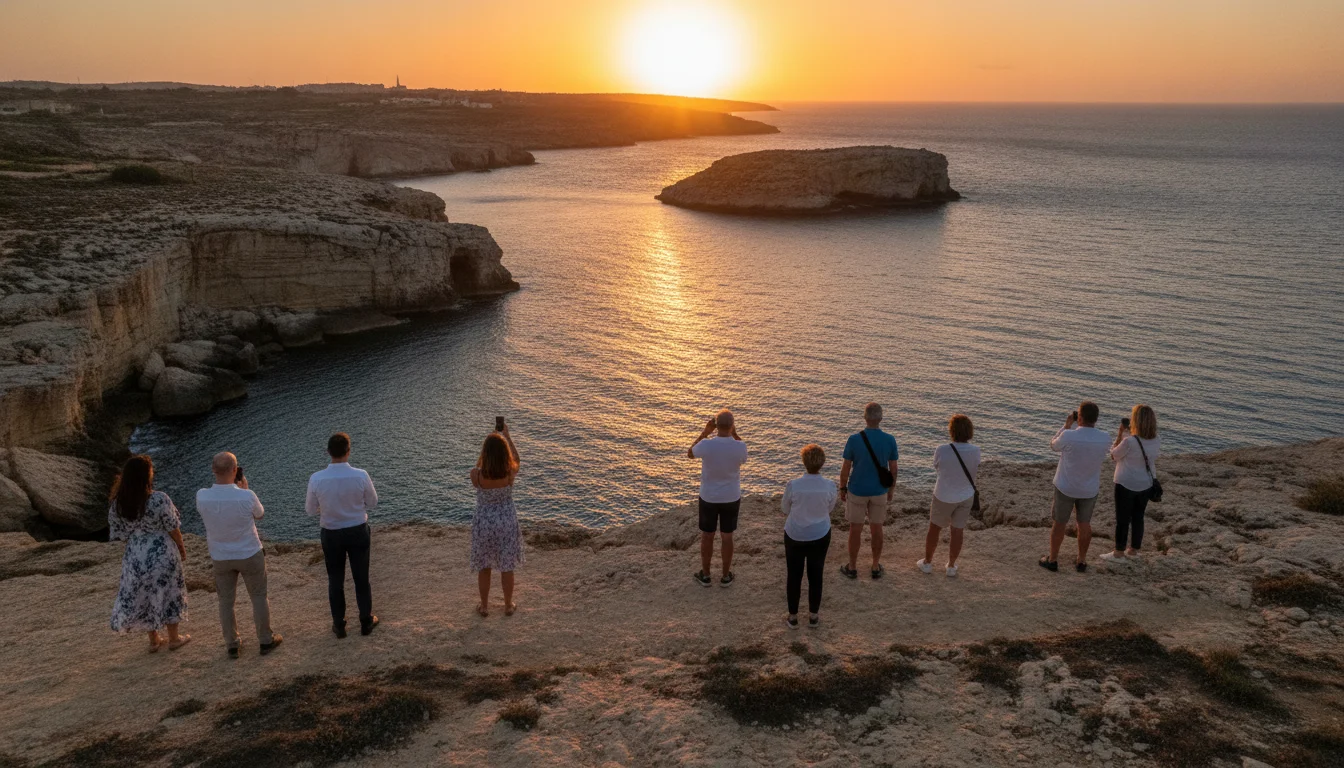
A pastor emailed me last month with a question I want to answer honestly rather than diplomatically. “We’re planning our first big congregational trip. Should it be Malta or Italy?” I could have given him a soft answer that made both sound equally compelling. I did not, because it would not have served him.
For most Christian congregations planning their first major heritage trip, Italy is the right answer. Not because Malta lacks value, but because the two destinations are not the same size of experience, and pretending otherwise does not help a group leader plan well.
Let me lay out why, and where Malta actually fits.
Scale Is the Real Difference, and It Is Not Close
Italy holds an almost unmanageable density of Christian heritage. Rome alone gives you St. Peter’s Basilica, the Vatican Museums, the Sistine Chapel, the catacombs, the churches built over the homes of the earliest Christian communities. Beyond Rome, Assisi holds the world of Francis and Clare. Venice, Florence, and countless smaller towns carry centuries of Christian art, architecture, and pilgrimage tradition layered on top of each other.
A congregation can spend ten days in Italy and still only sample a fraction of what is there. That is simply not true of Malta, and I tell every group leader this plainly. Malta is a small island. Its Christian heritage story is real, well-documented, and moving, but it is not vast. It centers on a single, specific episode.
If your congregation wants breadth, centuries of saints and popes and cathedrals and pilgrimage routes to move through, Italy is where that lives. Our Italy vs Greece heritage comparison gives a sense of just how much ground Italy alone covers before you even bring Malta into the conversation.
What Malta Actually Offers, and Why It Still Matters
Malta’s Christian heritage is built almost entirely around one story: the Apostle Paul’s shipwreck on the island, recorded in detail in Acts 27 and 28. Paul and 276 others survived the wreck, and the islanders showed them what Scripture calls unusual kindness. St. Paul’s Bay marks the traditional site. The Grotto of St. Paul nearby marks a place tradition holds he sheltered. From there, tradition credits Paul with converting the Roman governor Publius, planting Christianity on the island directly from an apostle’s own hand.
Layer onto that the Knights of Malta era: Valletta’s St. John’s Co-Cathedral, one of the most ornate Baroque interiors in Europe, and the Grand Master’s Palace, both tied to the Knights Hospitaller who ruled the island for centuries and built much of what a visitor sees in the capital today.
That is a real, focused, well-told story. It is just not Italy’s scale. What Malta offers instead is intimacy. A congregation can see the entire island’s core heritage sites in five or six days without rushing, standing in the specific bay where a specific, named apostle survived a specific, dated event. Our Malta heritage travel guide walks through that full itinerary.
When Malta Stands Alone
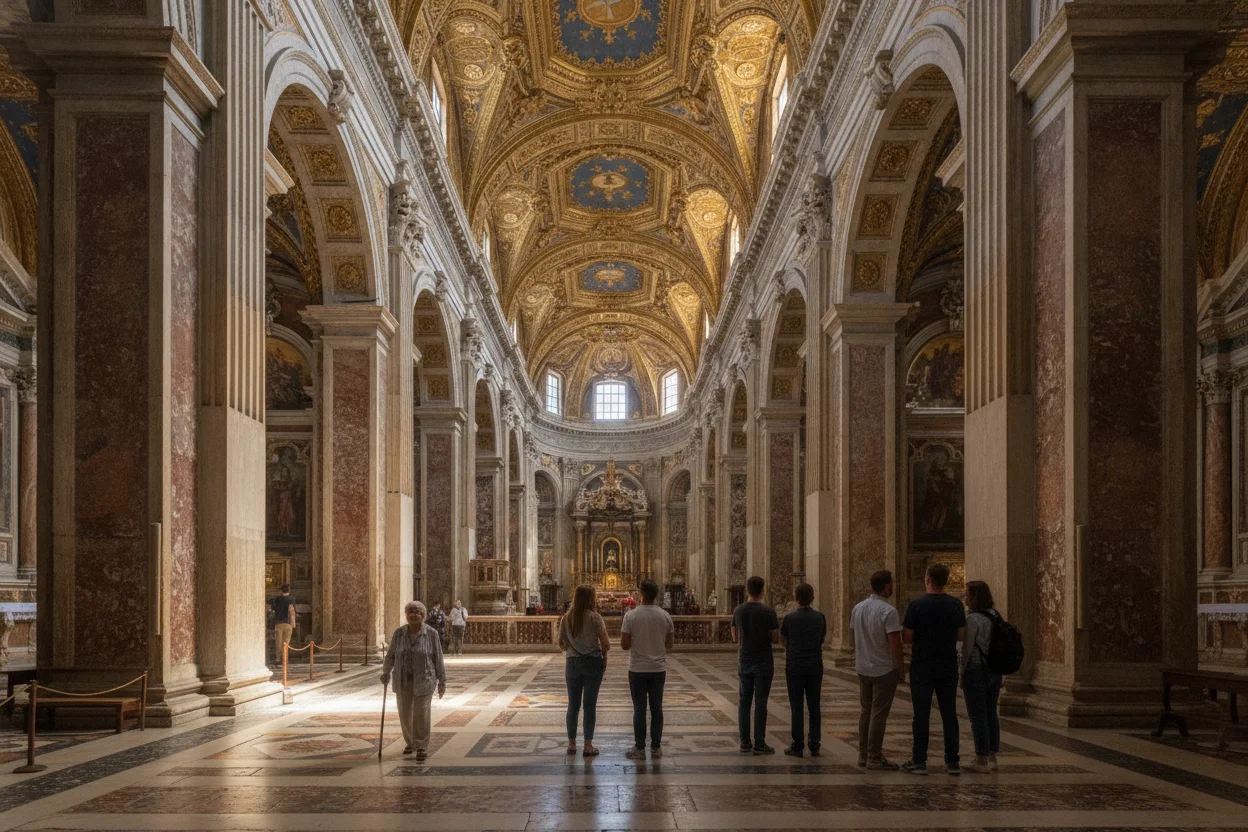
Malta works as a standalone trip for a congregation specifically drawn to the Pauline shipwreck narrative, or for a smaller group that wants a manageable, low-logistics first heritage trip. Because the island is compact, with every site within about thirty minutes of every other, a Malta-only trip avoids the long transit days that a multi-city Italy itinerary requires. For groups with older congregants, tighter budgets, or a shorter travel window, that matters.
It also stands alone well for a congregation that has already done Italy, or a broader Mediterranean trip, and wants a focused return visit to go deeper on one specific New Testament episode rather than covering new geographic ground.
When Malta Works Better as an Add-On
For most congregations planning a first major Christian heritage trip, I recommend thinking of Malta as a pairing rather than a substitute for Italy. A common and effective itinerary adds three or four days in Malta onto the front or back end of a broader Italy trip, or onto a wider Mediterranean itinerary that includes Greece.
This works logistically because Malta connects easily by short flight to several Italian and Mediterranean hubs. It works narratively because Paul’s journey to Rome, recounted in Acts, runs directly through the Malta shipwreck on the way to his eventual arrival and imprisonment in the capital. A group that visits Malta first and then follows Paul’s route into Italy is retracing an actual biblical journey, not just visiting two unrelated countries back to back.
How to Decide for Your Congregation
Choose Italy alone when your congregation wants breadth: the full arc of Christian history from the earliest Roman-era church through the Renaissance and beyond, spread across multiple cities.
Choose Malta alone when your group wants a focused, intimate trip built around one apostle and one dramatic episode, with simple logistics and a shorter time commitment.
Choose both when you have the budget and the days, roughly twelve to sixteen total, and want your congregation to experience Paul’s actual route toward Rome, from the shipwreck to the capital of the empire he was ultimately martyred in.
I will say this plainly because it is the honest answer: if a congregation can only choose one destination for a first Christian heritage trip and has no particular pull toward the Pauline shipwreck story specifically, Italy should usually win. Malta earns its place as an addition or as a second trip, not as competition for Italy’s scale.
FAQ: Malta vs Italy for Christian Heritage
Is Malta a good substitute for an Italy Christian heritage trip?
Generally no, and I say that directly rather than oversell Malta. Italy holds vastly more Christian heritage across more sites, cities, and centuries. Malta offers a focused, meaningful experience centered on Paul’s shipwreck, but it is a smaller trip by design, not an equivalent alternative.
What is Malta’s actual Christian heritage story?
It centers on Acts 27 and 28, the Apostle Paul’s shipwreck near St. Paul’s Bay and his time on the island afterward, including the traditional site of the Grotto of St. Paul and the conversion of the Roman governor Publius. Layered on top is the Knights of Malta era, visible in Valletta’s St. John’s Co-Cathedral and the Grand Master’s Palace.
Can Malta and Italy be combined in one trip?
Yes, and it works especially well narratively, since Paul’s biblical journey to Rome passes directly through the Malta shipwreck. Many congregations add three to four days in Malta onto a broader Italy or Mediterranean itinerary.
How many days does a Malta-only trip need?
Five to six days covers Malta’s core heritage sites comfortably without rushing, since every major site sits within about thirty minutes of every other. Our 5-day heritage itinerary shows how that time gets used.
Does the free group leader policy apply to both Malta and Italy trips?
Yes. The group leader travels free with fifteen or more participants, whether the trip is Malta alone, Italy alone, or a combined itinerary across both.
If you are trying to decide honestly what your congregation actually needs, whether that is Italy’s full scale, Malta’s focused story, or both together, I am glad to help you think it through. Contact us or look at our group heritage tours to see how we build these itineraries.