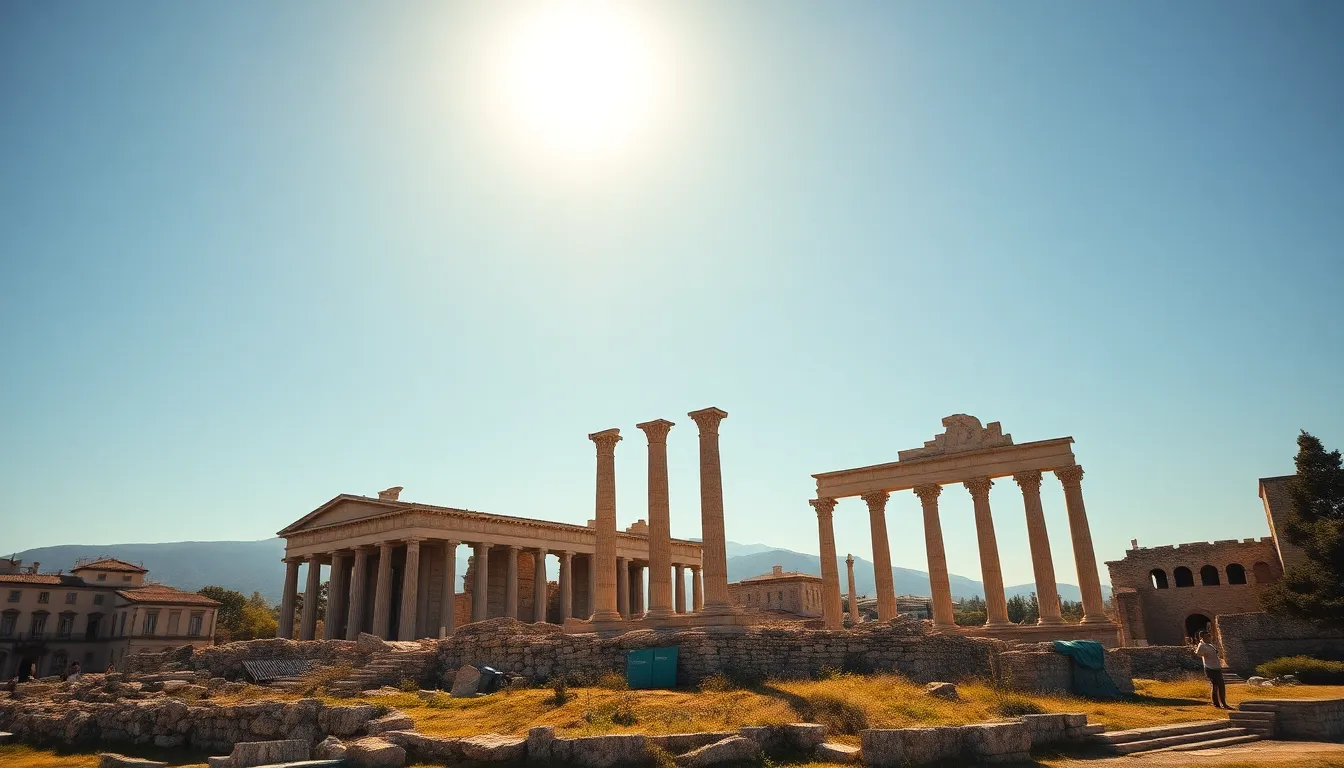
A pastor asked me last spring, “If we are following Paul, do we go to Greece or to Italy?” And I told him the truth, which is that the question contains its own answer once you understand what each country holds. They are not competing destinations. They are two chapters of the same man’s life, and which one you visit first depends on which chapter your congregation needs to walk into.
I have brought Christian groups to both, and I want to lay out the real difference, not the brochure version. Because if you understand where Paul was doing what in each place, the choice for your group becomes much clearer.
Greece Is the Mission Field. Italy Is the Arrival.
Here is the simplest way I know to frame it. Greece is where Paul worked. Italy is where his road ended.
In Greece, you are walking the second and third missionary journeys. Philippi, where Lydia was baptized and Paul and Silas sang in prison. Thessalonica and Berea. Athens, where Paul stood on the Areopagus and preached to the philosophers about the unknown god. Corinth, where he stayed eighteen months and later wrote two of the most pastoral letters in the New Testament. Greece is the book of Acts in motion. It is the faith being planted, city by city, often against resistance.
Italy is the destination Paul spent years trying to reach. Rome is where he was finally brought as a prisoner, where, by tradition, he spent his last years under house arrest and was eventually martyred along with Peter. The Mamertine Prison, the sites tied to both apostles’ final days, the Catacombs where the next generations of believers hid and worshiped. Italy is not the mission field. It is the arrival, the cost, and the church that grew up after the apostles were gone.
So when a group asks me which to choose, my first question back is always the same. Do you want to walk where the gospel was being preached, or where the man who preached it finally arrived and laid it down?
The Case for Greece First
For a congregation deep in the letters of Paul, I often steer toward Greece, and the reason is the text.
So much of the New Testament was written to or about the Greek cities. When your group stands in the ruins of Corinth and you read aloud from First Corinthians, the letter stops being abstract instruction and becomes a real message to a real, messy church in a real port city full of every temptation Paul was warning against. Philippians lands differently when you have stood in Philippi. The Areopagus sermon in Acts 17 is one thing on the page and another thing entirely when you are standing on the rock looking out over Athens the way Paul did.
Greece gives a study-driven group the most direct payoff. If your community has spent a season working through Acts or the epistles, Greece turns that study into geography. The cities are spread across the country and often paired with a few days of cruising the Aegean, which gives the trip a natural rhythm and some genuine rest between site days.
The honest tradeoff is that Greece is more spread out. You cover more ground between sites than you do in Italy, and the logistics of moving a group between mainland cities and islands take more coordination. It is well worth it, but it is a more dispersed trip than a Rome-centered one.
The Case for Italy First
There are real reasons I point Christian groups to Italy first, and I do it confidently.
Italy concentrates an enormous amount of heritage in a small footprint. Rome alone holds the Catacombs, the Mamertine, the sites of both Peter and Paul’s final witness, the rise of the early church, and two thousand years of Christian history layered on top of each other. For a group that wants depth without long transfers, Italy delivers more per day of travel than almost anywhere.
Italy also carries the weight of the larger story. Greece is the planting. Italy is what the seed became when it reached the heart of the empire. Standing in the Catacombs, your group is looking at the generation that came after Paul, the believers who kept the faith alive underground while Rome was still hostile. That arc, from a hunted minority to a faith woven into the city itself, is something only Italy tells. For a congregation thinking about endurance, persecution, and the long faithfulness of the church, Italy is the more resonant destination.
And practically, Italy is the easier first trip. The infrastructure is excellent, the distances between key sites are short, and the comfort level is high. For a community that has never traveled together, Italy is a gentler introduction that still goes deep. Once they have felt what a group heritage tour does, Greece becomes an easy second journey.
Why the Best Answer Is Often Both, In Order
If your community has more than one trip in them, the strongest plan I can offer is to walk Paul’s life in order. Greece first, then Italy.
Follow him through the mission field, the cities where he preached and was beaten and imprisoned and kept going. Then, the following year or the year after, follow him to Rome, where that road finally ended. A group that has stood in Philippi’s prison and then stands in the Mamertine in Rome is not visiting two unrelated sites. They are tracing one man’s journey from the work to the cost, and the second trip carries everything the first one built.
I have watched this land on congregations in a way a single trip rarely does. The Greece group becomes the Italy group the next year, the friendships already formed, the appetite already proven. With fifteen or more participants, the group leader travels free on each journey, which makes a two-year arc far more reachable for a pastor than it first appears. If you sense two trips in your community, design them as a pair from the beginning so the sequence does the work it is meant to.
How to Choose for Your Congregation
It comes down to a few honest questions about where your people are.
What have they been studying? A congregation deep in Acts and the epistles is primed for Greece, where those texts come alive city by city. A congregation thinking about the early church, persecution, and the long endurance of the faith is primed for Italy.
What is their travel experience? A group new to traveling together usually does better easing in through Italy’s shorter distances and higher comfort before taking on Greece’s more dispersed itinerary.
And how many trips do they have in them? If the answer is one, choose by where their study sits right now. If the answer is two, do Greece first and Italy second, and let Paul’s own road set the order.
This is one of my favorite conversations to have with a leader, because there is no wrong answer, only the right fit for your community. Take a look at our Italy destination page, our private tour vs. group tour breakdown, and our piece on whether to do Italy or Israel first, and we will help you find the route that fits your people.
FAQ: Italy or Greece for Christian Heritage
Should a Christian group visit Italy or Greece to follow Paul?
It depends on which chapter of Paul’s life you want to walk. Greece is his mission field, the cities of his second and third journeys where he preached, was imprisoned, and wrote much of the New Testament. Italy is his arrival and his end, where he was brought as a prisoner to Rome and, by tradition, martyred. For a group deep in Acts and the epistles, Greece comes alive. For a group focused on the early church and endurance, Italy resonates more.
Which trip is better for studying Paul’s letters?
Greece, in most cases. So much of the New Testament was written to the Greek cities, so standing in Corinth while reading First Corinthians, or in Philippi while reading Philippians, turns your study into geography. Athens and the Areopagus bring the Acts 17 sermon to life. If your congregation has been working through the epistles, Greece delivers the most direct payoff.
Is Italy or Greece an easier trip for a first-time group?
Italy is generally the gentler first trip. Its key sites are concentrated around Rome with short distances and excellent infrastructure, while Greece is more spread out across mainland cities and islands and takes more coordination. A community new to traveling together often eases in through Italy, then takes on Greece as a second journey.
Can we do Italy and Greece together?
Yes, and walking Paul’s life in order, Greece first then Italy, makes a powerful pairing. Some groups do it as one ambitious trip, but more often I recommend two journeys across two years so each chapter has room to breathe. With fifteen or more participants the group leader travels free on each, which makes a two-year plan reachable.
What does Italy offer that Greece does not for Christian heritage?
Italy tells the story of what the faith became after the apostles. The Catacombs, the sites of Peter and Paul’s final witness, and the rise of the early church under a hostile empire show the generation that came after Paul and kept the faith alive underground. That arc, from a hunted minority to a faith woven into the heart of Rome, is something only Italy holds.