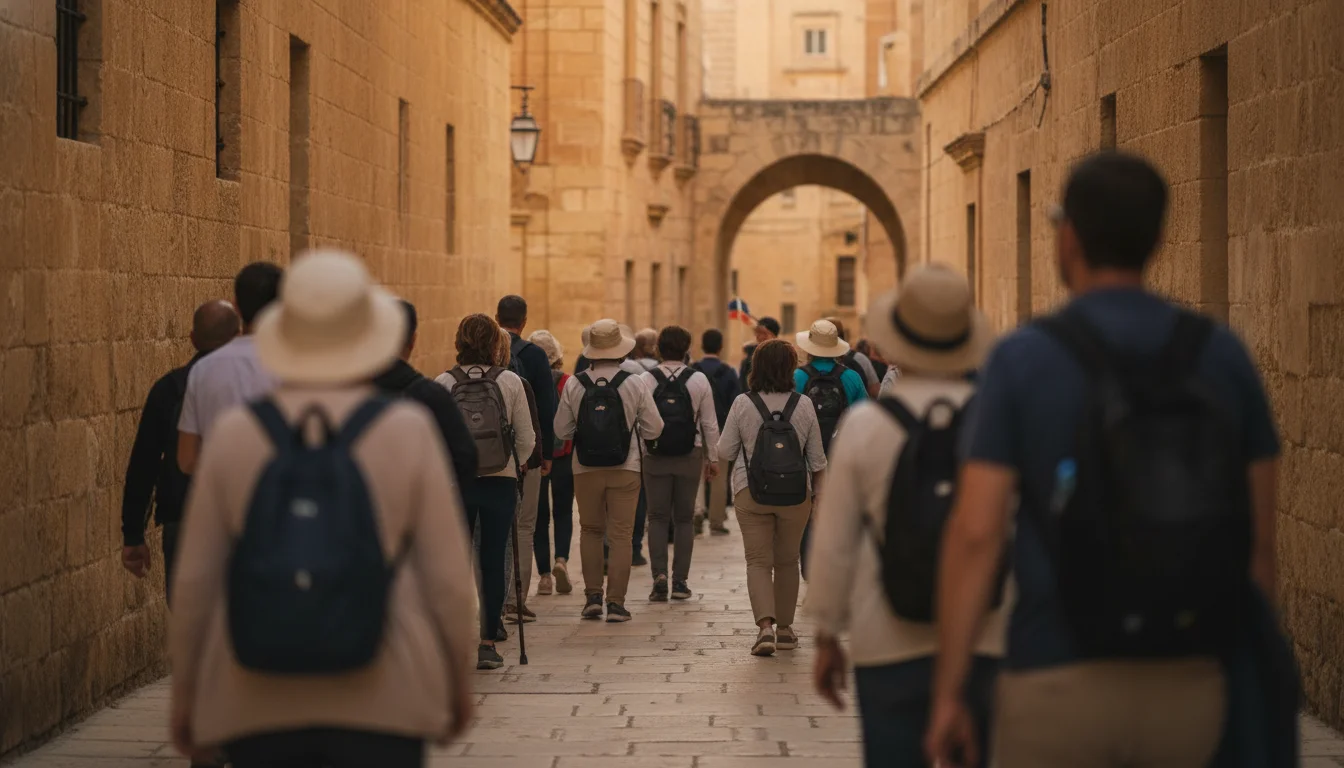
A rabbi called me a few years back with fifty-five people signed up for a Malta trip and a simple question: “Is that too many?” It was not a number I could answer with a shrug. Malta is a small island, and unlike a country where you can spread forty people across a wide plaza or a modern museum floor, some of Malta’s most meaningful sites sit inside spaces that were built centuries before anyone imagined a tour group. The honest answer to his question was: it depends on where you are standing, so let’s plan by site, not just by headcount.
That is the real lesson of group size in Malta. There is no single right number. There is a right number for Mdina, a different one for St. Paul’s Grotto, and a more forgiving one for Valletta’s open squares. Let me walk through how this actually works so you can size your group, or plan your splits, with confidence.
Why Malta’s Size Cuts Both Ways
Malta makes group logistics easy in most respects. The island is small, your group stays in one hotel base for the whole trip, and there are no internal flights or multi-city moves to coordinate, the same simplicity I cover in our guide to planning a group heritage tour to Malta. But that same smallness means the heritage sites themselves are often compact. A country with vast archaeological parks can absorb a fifty-person group without anyone noticing. Malta’s most historic quarters were built as medieval walking cities, not tourist infrastructure, and they were never meant to move large crowds through narrow passages at once.
This is not a flaw in the destination. It is part of what makes Malta authentic. The Giudecca, Mdina’s ancient Jewish quarter, still has the same narrow width it had five centuries ago, as I describe in our post on Jewish heritage in Malta. Nobody widened it for buses. That is exactly why walking through it feels real rather than staged. The tradeoff is that a large group has to move through it differently than it would move through a modern plaza.
Mdina: The Silent City Needs a Quieter Group
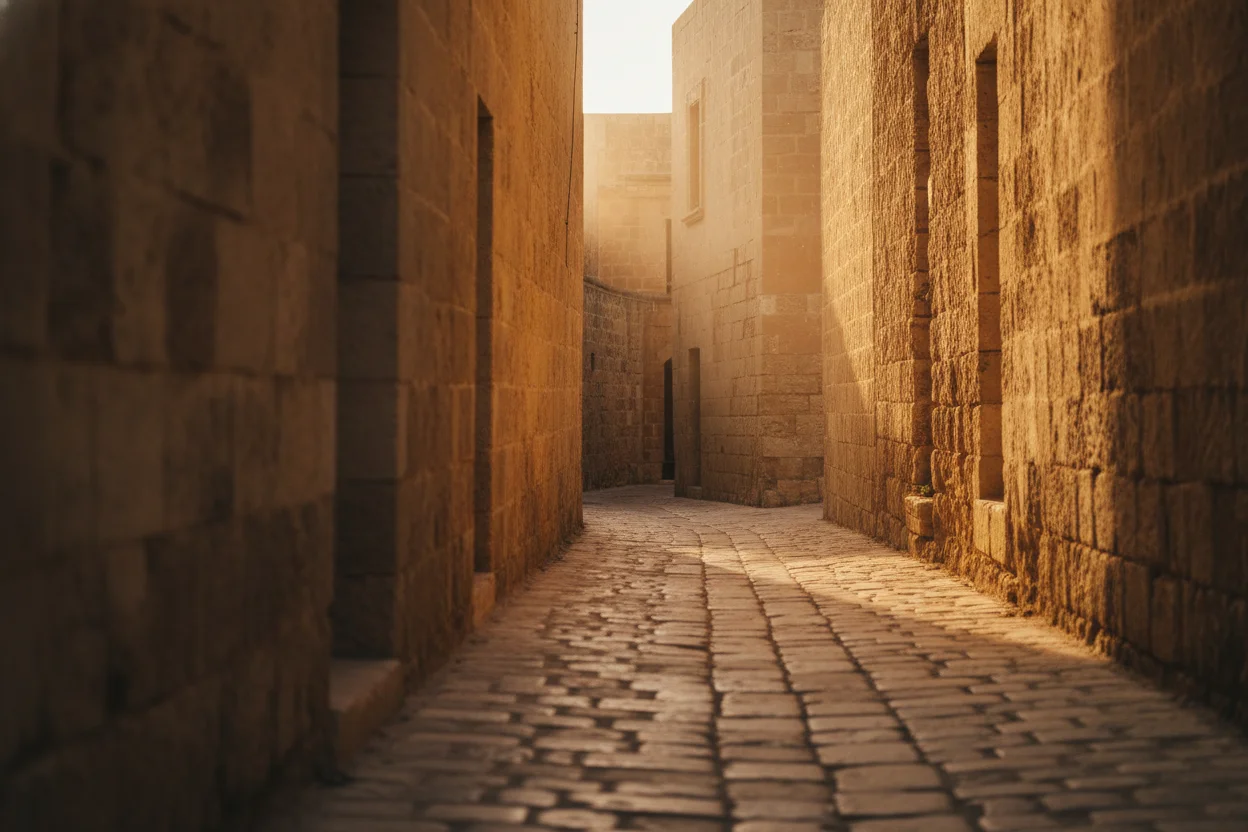
Mdina is the clearest example of a site where size matters. Its streets are narrow limestone corridors, some barely wide enough for two people to pass comfortably, built for medieval foot traffic and the occasional cart, not forty people walking twelve abreast with a guide shouting over the group. A group larger than about 25 to 30 people moving through Mdina at once starts to lose the thing that makes Mdina special in the first place: its quiet.
For groups above that size, the practical solution is not to shrink your congregation. It is to split for this specific stop. We commonly divide a large group into two smaller clusters, staggered by ten or fifteen minutes, each with its own guide, moving through Mdina’s streets and the Giudecca separately before reconvening at a wider point like Mdina’s main square or the Cathedral. Nobody in your congregation notices this as a compromise. They experience Mdina the way it is meant to be experienced: as a walk through a silent medieval city, not a crowd shuffling through a corridor.
St. Paul’s Grotto: An Intimate Space by Nature
St. Paul’s Grotto in Rabat, the cave where tradition holds Paul stayed during his time on the island, is a genuinely small physical space. It was never designed to hold a large group standing at once, and cramming forty people into it does not make the moment more powerful. It makes it logistically awkward and spiritually rushed.
Here again, splitting works better than forcing everyone in together. Smaller clusters enter the grotto in turn, spend real time there, and rotate while the rest of the group visits an adjacent site or takes a moment in the surrounding area. A good guide times this so nobody feels like they are waiting in a line for a photo opportunity. The goal at a site like this is stillness, and stillness is easier to protect in a group of ten than a group of fifty standing shoulder to shoulder.
Where Large Groups Work Just Fine
Not every Malta site has this constraint, and it is worth being clear about where size stops mattering. Valletta’s main streets, Republic Street and the harbor-facing squares, are wide enough to comfortably hold a large congregation. St. John’s Co-Cathedral has a large interior that accommodates sizable groups without crowding, though timing around cruise ship crowds matters more there than group size itself, as I cover in our Malta travel tips post. St. Paul’s Bay is an open coastal area with plenty of room for a large group to gather for a reading from Acts. And the megalithic temples of Ħaġar Qim and Mnajdra, along with Gozo’s Ġgantija temples, sit on open archaeological grounds that handle groups of considerable size without difficulty.
So the rule of thumb is: Malta’s open-air and larger interior sites handle big congregations well. Its medieval walking quarters and small enclosed spaces, Mdina and St. Paul’s Grotto specifically, ask for either a smaller group or a planned split.
What Group Size Actually Works Best Overall
Setting aside the site-specific constraints, most operators, ourselves included, find that groups of 15 to 40 work comfortably for a Malta congregational trip, with 20 to 30 hitting the sweet spot for a group that wants both the camaraderie of traveling together and the ability to move through tighter sites without excessive splitting. Smaller groups of 8 to 14 work beautifully for a more intimate pilgrimage-style trip and rarely need to split anywhere on the island.
The number that matters most for your budget, regardless of your total group size, is fifteen. At fifteen or more participants, the group leader travels free, and that threshold is worth building your recruitment around even if your ultimate group ends up larger.
Planning Your Group Size With Us
When we build a Malta itinerary, group size is one of the first things we talk through, not an afterthought discovered on the ground. If your congregation is on the larger side, we plan the Mdina and Grotto stops with a split built in from day one, so your day flows smoothly rather than stalling at a narrow street corner while forty people wait their turn. If you are still recruiting and not sure where you will land, we can help you think through what group size fits the trip you are imagining, whether that is an intimate clergy delegation or a full congregational pilgrimage.
You can see the full range of what a Malta heritage journey looks like on our Malta destination page, and our group heritage tours page lays out how we structure trips at every size.
FAQ: Malta Heritage Group Size
What is the ideal group size for a Malta heritage trip?
Most groups do well between 15 and 40 participants, with 20 to 30 often the sweet spot. Fifteen is the important threshold because it unlocks the free group leader policy. Smaller groups of 8 to 14 work well for a more intimate pilgrimage experience.
Why does Mdina have a group size limit?
Mdina’s streets are narrow medieval passages built for foot and cart traffic centuries before tour groups existed. A group larger than about 25 to 30 moving through at once loses the quiet, intimate character that makes Mdina, the Silent City, worth visiting. Larger groups typically split into smaller clusters for this stop.
Is St. Paul’s Grotto too small for a large group?
The grotto itself is a compact space not built to hold a large crowd at once. Groups typically enter in smaller clusters, spend real time inside, and rotate through while the rest of the group waits nearby or visits an adjacent site, rather than everyone crowding in together.
Do we need to shrink our congregation to fit Malta’s sites?
No. You do not need a smaller group overall. You need a plan for the one or two sites, mainly Mdina and St. Paul’s Grotto, that benefit from a temporary split. Sites like Valletta, St. Paul’s Bay, and the megalithic temples handle large groups without any special adjustment.
Does splitting the group at certain sites cost extra?
Not typically. It usually means an additional local guide for that portion of the day, which we build into the itinerary and quote up front rather than as a surprise add-on. It is a normal part of planning a larger Malta trip well.
If you are trying to figure out the right group size for your Malta trip, or how to handle the sites that ask for a smaller footprint, I am glad to walk through it with you.
Contact us and let’s plan a Malta itinerary that fits the group you are actually bringing.