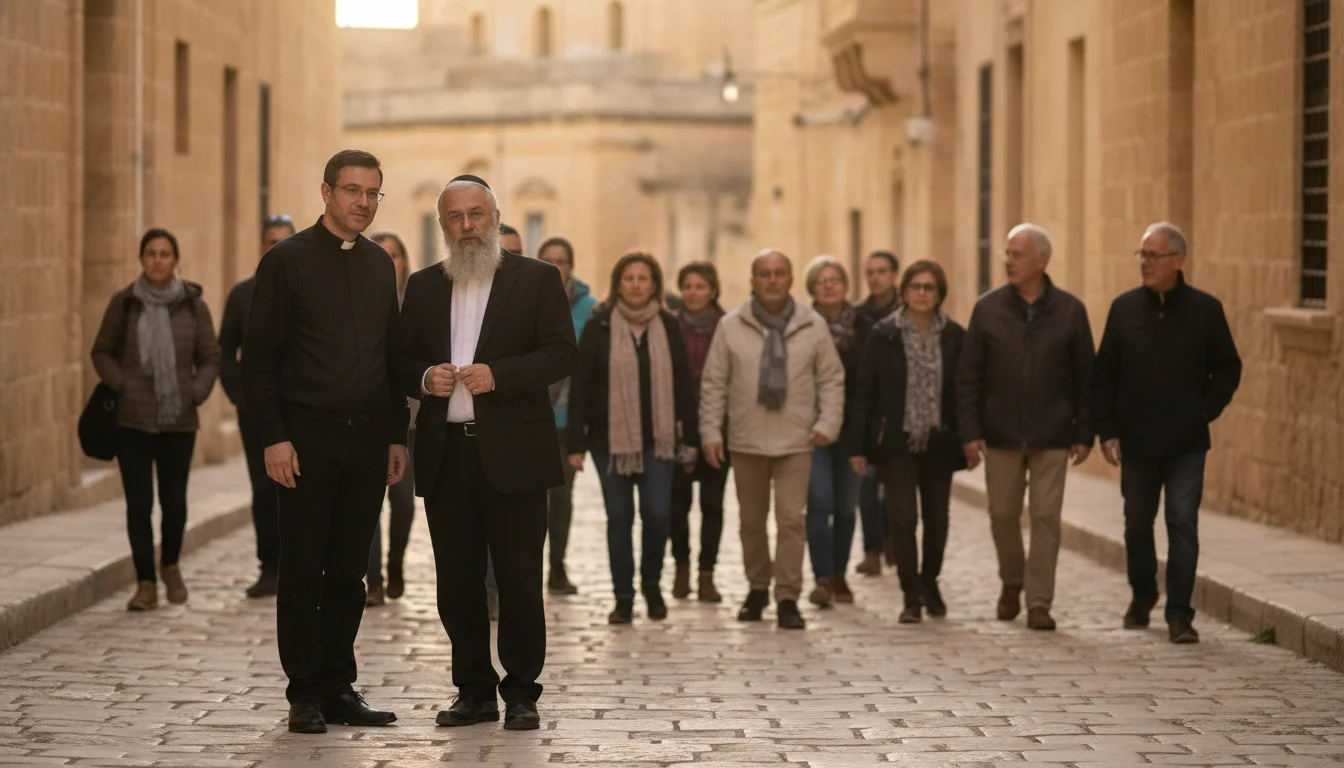
A pastor and a rabbi called me on the same conference line a couple of years ago, which does not happen often. Their communities had done joint events for years, a shared Thanksgiving service, a food pantry, a few adult education nights, and they wanted to take that partnership further with a trip. Their worry was not whether their two congregations could travel together. It was whether any single destination actually had enough real heritage in both traditions to justify one shared itinerary instead of two separate trips bolted together.
Malta is the answer I gave them, and it is the answer I give most co-leading clergy pairs who ask me this question, because Malta is not a destination where you build an interfaith trip out of goodwill and a loose theme. It is a destination where the dual heritage is already there, physically, in the ground.
Why Malta Is Different From a Generic Interfaith Itinerary
Most interfaith trip requests I get start from a well-meaning but somewhat artificial place: two congregations want to travel together, so we go looking for a destination that has “something for everyone,” and often that means alternating days, a Christian site one day, a Jewish site the next, stitched together more by scheduling than by substance.
Malta does not require that stitching. The island’s Christian heritage, centered on the Apostle Paul’s shipwreck at St. Paul’s Bay and the centuries of the Knights of Malta, and its Jewish heritage, centered on the ancient Giudecca in Mdina and a community that lived on the island for over 1,500 years before the 1492 expulsion, occupy the same small geography, often the same towns, sometimes the same few blocks. You are not choosing between two trips. You are walking one island where both stories are true at once.
The Shared Ground: Mdina and Rabat
The clearest example of this is a single day most co-leading pairs end up calling the heart of the trip. Mdina, Malta’s walled medieval capital, holds both the Cathedral of St. Paul, built on the traditional site of the house of Publius where Paul healed the Roman governor’s father, and the Giudecca, the old Jewish quarter whose narrow streets have kept the same layout since the fifteenth century.
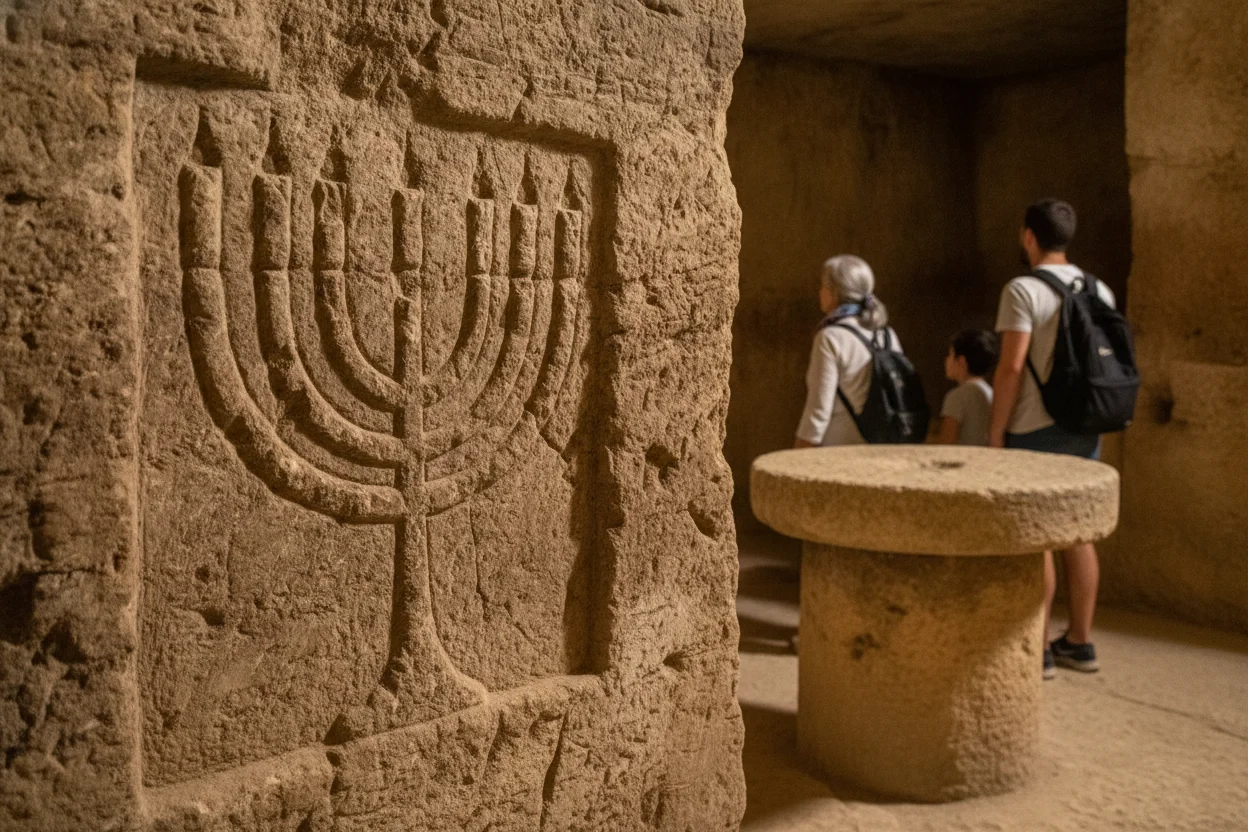
Beneath adjacent Rabat, the catacombs go further still. Christian burial chambers, with their round stone tables for funeral meals, sit within the same rock as a Jewish section identified by menorahs carved into the stone. Jewish, Christian, and pagan Maltese buried their dead within meters of each other seventeen centuries ago, and the limestone does not distinguish between them. For a pastor and a rabbi standing together in that space with their combined congregations, the point makes itself. Our guide to Malta’s spiritual sites and our piece on Malta’s Jewish heritage both cover this ground individually if you want to prepare either narrative in depth before the trip.
How to Actually Structure a Co-Led Itinerary
The itineraries that work best are not split by tradition. They are built around a shared daily rhythm where both leaders speak at both kinds of sites, even if one leader carries more of the narrative weight at their tradition’s specific stops.
At St. Paul’s Bay, the pastor typically leads the reading from Acts 27 and 28, but I encourage the rabbi to speak too, often about the broader Jewish presence on Malta at the same historical moment, since Paul’s shipwreck and the island’s Jewish community both belong to the same first-century Mediterranean world. At the Giudecca and the Rabat catacombs, the roles reverse: the rabbi carries the history of the 1492 expulsion and the community that came before it, and the pastor speaks to what it means for a Christian congregation to stand in solidarity with that history rather than simply observe it.
This dual-voice approach takes more coordination up front, two clergy agreeing on who speaks where and how much time each site gets, but it is what separates a trip that feels genuinely interfaith from one that just happens to include members of two congregations.
Where to Build in Joint Reflection Time
Beyond Mdina and Rabat, a few other stops give a co-led group natural pause points. St. John’s Co-Cathedral in Valletta, with its floor of over four hundred Knights’ tombstones, works well as a joint stop on faith and mortality that both leaders can speak to without either tradition needing to dominate the moment. The new synagogue in Valletta, the first Jewish house of worship on the island since the 1492 expulsion, is a hopeful closing stop for a co-led trip: a place where a five-century absence is, in a small way, being answered.
I recommend building at least one evening into the trip, often after the Mdina and Rabat day, where both congregations sit together, not for a lecture, but for open conversation about what the day surfaced. The site work does the heavy lifting during the day. The evening is where two communities actually process it together.
Logistics for a Two-Congregation Group
Practically, a co-led interfaith trip runs on the same group logistics as any Heritage Tours group trip, one hotel base, one bus, one guide team, but a few things are worth deciding before you book. Confirm dietary needs early, since a combined group may include kosher-observant members alongside no dietary restrictions at all, and Malta’s kosher infrastructure, while workable, benefits from lead time to arrange. Agree in advance on how prayer moments are structured at shared sites, whether each tradition offers its own brief moment sequentially or whether some moments are genuinely joint. And name a single point of contact between the two clergy for trip logistics, so decisions do not require both leaders to weigh in on every small detail.
Group size for a two-congregation trip should be planned jointly from the start. The group leader travels free at fifteen or more total participants, and most co-leading pairs count both congregations toward that single threshold, which usually makes the free-leader benefit easy to reach even when neither congregation alone would hit the number.
Why Clergy Keep Choosing Malta for This
I have organized more of these two-congregation trips to Malta than to any other single destination, and the reason is not that Malta is uniquely convenient, though it is genuinely one of the easier islands to plan for logistically. It is that the heritage itself refuses the split. You cannot tell Malta’s story honestly without both threads, and that makes it one of the few places where an interfaith trip is not a compromise between two agendas but a single true story told by two voices.
FAQ: Co-Leading an Interfaith Trip to Malta
Can a pastor and a rabbi really lead one combined trip rather than two separate ones?
Yes, and Malta is one of the destinations where this works most naturally, because the island’s Christian heritage, centered on St. Paul’s shipwreck and the Knights of Malta, and its Jewish heritage, centered on Mdina’s Giudecca and the 1492 expulsion, occupy the same small geography. A well-built itinerary has both leaders speaking at most sites rather than splitting the trip by tradition.
Which sites work best for a joint interfaith moment?
Mdina and Rabat are the strongest, since the Cathedral of St. Paul, the Giudecca, and the Rabat catacombs, with their adjacent Christian and Jewish burial chambers, sit within the same small area. St. John’s Co-Cathedral and the new Valletta synagogue also work well as shared reflection points on faith and history.
How do we handle dietary needs across two congregations?
Confirm kosher and other dietary requirements early. Malta’s kosher infrastructure is workable with advance planning, though thinner outside Valletta, so lead time matters more for a combined group than for a single-tradition trip.
Does the free group leader policy apply when two congregations travel together?
Yes. Most co-leading pairs count both congregations toward the same fifteen-participant threshold, which makes reaching the free leader seat more achievable than either congregation might manage traveling alone.
How much advance coordination does a co-led trip actually need?
More than a single-clergy trip, mainly around who speaks where, how prayer moments are structured at shared sites, and dietary planning. Most pairs find one or two joint planning calls with us sufficient to settle these before departure.
If you and a fellow clergy leader are considering a shared trip and want to see whether Malta’s dual heritage fits both your communities, I would be glad to talk it through with you.
Contact us and let’s build a trip that tells the whole story, not half of it twice.