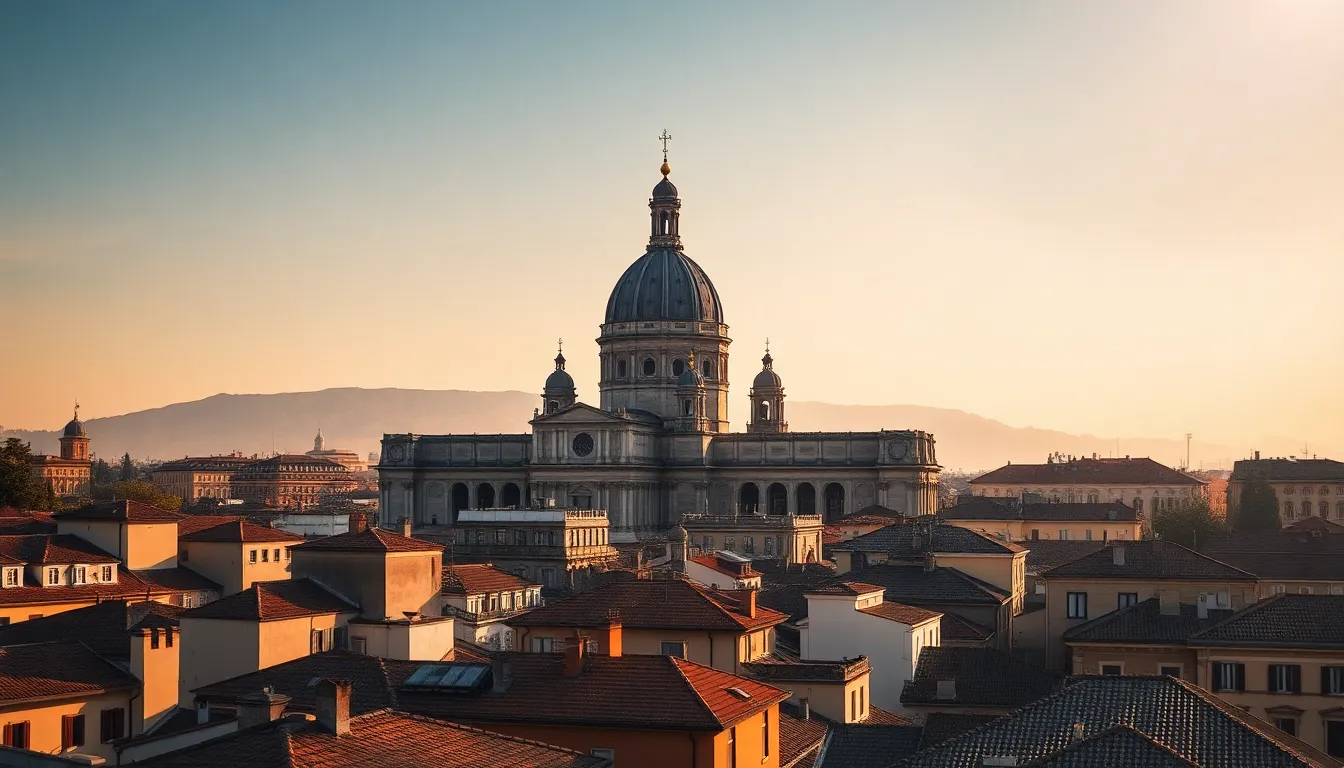
Turin surprises almost every group I bring there. People expect an industrial northern city, the home of Fiat, and they find instead a city of grand arcaded boulevards, baroque palaces, and one of the most discussed objects in Christianity. Turin does not have the crowds of Rome or the romance of Venice, and that is part of why it works so well for a faith group. You get the depth without the crush.
At the center of it sits the Shroud, the linen cloth that, by tradition, wrapped the body of Christ. Whatever a person believes about it, standing in the cathedral that houses it raises the central questions of the faith in a direct way. Around that, Turin holds a baroque Christian heart and one of the most significant Jewish heritage stories in Italy. Let me orient you to the city.
Getting Oriented: A City Built on Right Angles
Turin is unusual among Italian cities because it is laid out on a grid. The Romans founded it, and the regular plan survived, which means the historic center is easy to navigate, a rarity in Italy. Wide straight streets, long porticoed arcades, and grand squares make it one of the most walkable and group-friendly cities in the country.
The center of gravity is Piazza Castello, the grand square that holds the royal palace and sits a short walk from the cathedral. From there the arcaded streets run out in clean lines toward the river Po, the great Egyptian museum, the synagogue, and the Mole, the tower that has become the city’s symbol. Anchor your group at Piazza Castello and the grid does the rest.
A practical note for leaders: Turin’s arcades run for kilometers, which means your group can walk much of the center under cover, a real help in rain or summer sun. The flat grid is also forgiving for mixed-age groups in a way the hill towns are not.
The Shroud of Turin
The Shroud is why many groups come, and it deserves careful handling as a leader. The cloth is kept in the Cathedral of Turin, the Duomo, in a sealed case, and it is only put on public display rarely, during special expositions announced years in advance. Most of the time, what your group will see is the chapel and a high-quality replica, along with exhibits that explain the cloth, its image, and the long history of study around it.
I am always direct with groups about this. You are very unlikely to see the actual Shroud unless your trip coincides with a rare exposition. But standing in the cathedral where it is kept, before the replica and the explanatory displays, still confronts a group with the questions the Shroud raises, about the passion, the resurrection, and what we make of an image that has been venerated for centuries. For many groups, that encounter is more reflective than they expect.
The nearby Museum of the Shroud goes deeper, walking through the scientific testing, the photography that first revealed the detail of the image, and the debates that continue. For a Christian group serious about the subject, the museum is worth the time.
The Duomo Itself
The Cathedral of Turin is a Renaissance church, plainer than the baroque excess around it, with the Royal Chapel of the Holy Shroud attached. The chapel itself, a baroque masterwork by Guarini, was damaged by fire in 1997 and has since been restored. The cathedral grounds also sit beside Roman remains, a reminder of how old the city’s Christian roots run.
The Mole Antonelliana
The Mole is the tallest traditional building in Turin and the symbol of the city, a soaring spire visible from across the center. Here is the detail most groups do not know: it was originally built in the nineteenth century as a synagogue for Turin’s Jewish community, newly emancipated and eager to build something grand. The project grew too ambitious and too costly, the Jewish community eventually withdrew, and the city took it over. Today it houses the national cinema museum, and a glass elevator carries visitors to a viewing platform near the top.
I always tell the Mole’s origin story to groups, because it ties the city’s two heritage threads together. The building that became Turin’s icon began as a statement of Jewish arrival and confidence after centuries of confinement. That history is worth pausing on.
Piedmont Jewish Heritage
Turin holds one of the most important Jewish heritage stories in Italy, and it is not as widely known as Rome or Venice. After the Mole proved too costly, the Jewish community built a different synagogue, the Synagogue of Turin, a striking Moorish-revival building with four domes that still serves the community today. It is one of the great synagogues of Italy, and a guide can arrange a visit that tells the story of Piedmont Jewry from confinement to emancipation to the modern day.
But the deeper Jewish heritage of Piedmont lies in the small towns around Turin. Places like Casale Monferrato, Cherasco, and Carmagnola hold beautifully preserved baroque synagogues, hidden gems built when Jews could worship but not advertise it. The synagogue of Casale Monferrato in particular is one of the most beautiful in Europe, a jewel box of gilded baroque interior behind a plain street front.
For a Jewish group, I often build a Piedmont itinerary that pairs Turin’s grand city synagogue with a day in the small-town synagogues of the region. Together they tell the full arc of Piedmont Jewry, from confinement under the dukes of Savoy, through the ghetto years, to emancipation in the nineteenth century. It is one of the richest Jewish heritage routes in Italy, and most travelers never hear of it.
Christian and Byzantine Threads Beyond the Shroud
Turin’s Christian heritage runs beyond the Shroud. The city is tied to the nineteenth-century saint Don Bosco, who built a movement for poor and working children here, and the basilica and sites connected to him draw Catholic groups. The baroque churches scattered through the center reward a slow walk for groups interested in how Italian Christianity expressed itself in the age of the Savoy court.
Turin is not a Byzantine city, but its Egyptian museum, the second most important in the world after Cairo, gives groups with biblical interests an unexpected resource. For a group tracing the story of Israel in Egypt, or the world the Hebrew Bible grew out of, an afternoon in the Egyptian museum is a genuine heritage stop, not a detour.
Leading a Group Here: What Makes It Work
Turin is one of the easier major cities to lead a group through. The grid keeps people oriented. The arcades shelter them. The center is flat, the crowds are light by Italian standards, and the city is set up for groups without the tourist strain of Florence or Venice.
At Heritage Tours we build Turin as a base for the wider Piedmont heritage route, pairing the city with the small-town synagogues and, for some groups, the Egyptian museum and the Don Bosco sites. We handle the bus routing out to the small towns, arrange synagogue and cathedral visits in advance, and use guides who know both the Jewish and Christian threads of the region.
As always, the group leader travels free with fifteen or more participants. If Turin and Piedmont fit the route you are imagining, a conversation is the easiest first step. You can see how we structure Italy journeys in our Italy heritage travel guide, and look at how it connects to Verona and Bologna for a fuller northern Italy itinerary.
FAQ: Planning a Turin Heritage Visit
Can my group actually see the Shroud of Turin?
Usually not. The Shroud is only put on public display during rare expositions announced years ahead. Most of the time your group will see the cathedral chapel that houses it, a high-quality replica, and explanatory exhibits, plus the deeper Museum of the Shroud nearby. Even without the cloth itself on view, standing in the cathedral still confronts a group with the questions it raises.
What is the connection between the Mole and Jewish history?
The Mole Antonelliana, Turin’s symbol, was originally begun in the nineteenth century as a synagogue for the newly emancipated Jewish community. The project grew too costly, the community withdrew, and the city took it over for other use. It is now the cinema museum, but its origin ties Turin’s Jewish and civic stories together, a detail most visitors never learn.
Is Turin a good destination for a Jewish heritage group?
It is one of the richest in Italy and one of the least known. Turin’s Moorish-revival Synagogue of Turin still serves the community, and the small towns of Piedmont, especially Casale Monferrato, hold some of the most beautiful baroque synagogues in Europe. A Piedmont itinerary tells the full arc of the region’s Jewish life from confinement to emancipation.
Why is there an Egyptian museum in Turin, and is it relevant for faith groups?
Turin’s Egyptian Museum is the second most important in the world after Cairo, built from collections gathered in the nineteenth century. For groups tracing the biblical story of Israel in Egypt or the ancient world of the Hebrew Bible, it is a genuine heritage stop, not just a city attraction, and an easy afternoon to build into a Turin day.
Is Turin easy to lead a group through?
Yes. The Roman grid keeps everyone oriented, the kilometers of arcades shelter the group from rain and sun, the center is flat, and the crowds are far lighter than the headline cities. It is one of the more forgiving major Italian cities for a leader managing a mixed-age group.
If Turin and the Piedmont heritage route fit the journey you have in mind for your community, I would welcome the chance to talk it through. No pressure and no timeline, just a conversation about what this region could offer your group. Reach out whenever you are ready.