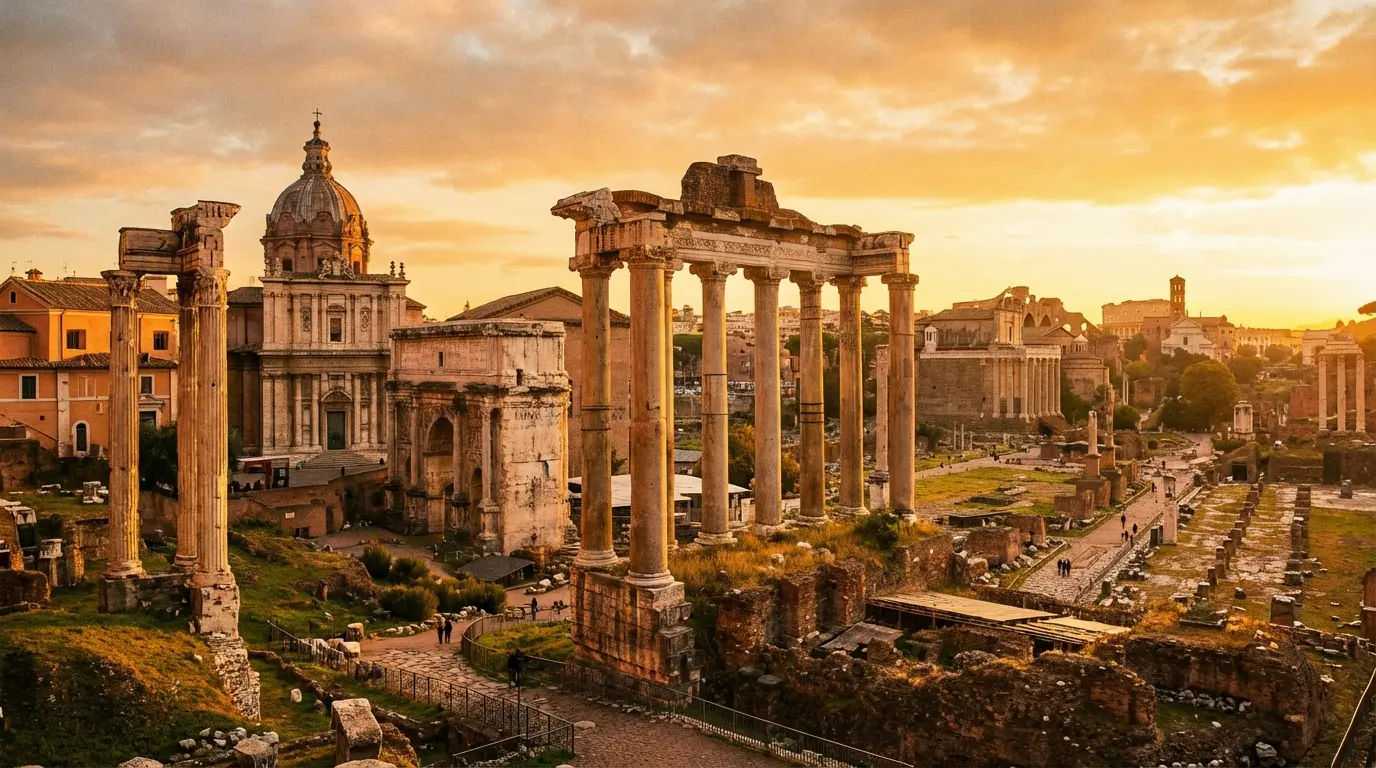
Why Italy? The Layered Heritage No Other Country Offers
When a rabbi or pastor tells me they’re considering Italy for their next group trip, I always say the same thing: no other country in the world holds Jewish and Christian heritage side by side the way Italy does.
In Rome alone, you can walk from the Jewish Ghetto, where families have lived continuously since the 2nd century BCE, to St. Peter’s Basilica in under thirty minutes. That single walk covers more than two thousand years of shared and separate history. It is not something you can replicate anywhere else.
I have been building heritage itineraries for over forty years, first through my work with the Israel Ministry of Tourism and now through Heritage Tours. And what I can tell you about Italy is this: the depth is real. This is not a destination where you check off famous buildings and move on. Every street in Rome, every canal in Venice, every hillside church in Tuscany carries a story that matters to people of faith.
For Christian groups, Italy holds the seat of the Catholic Church, the catacombs where early Christians worshipped in secret, and the basilicas that shaped Western Christianity for centuries. For Jewish groups, it holds the oldest continuously inhabited Jewish neighborhood in Europe, synagogues that survived the Inquisition, and communities whose roots stretch back before the Common Era.
If you are thinking about which destination will give your group the most to reflect on, Italy belongs at the top of the list.
The Jewish Heritage of Italy: From Rome to Venice to Sicily
Most people know about Rome’s Jewish Ghetto. Fewer know that Jewish families were living in Rome before the destruction of the Second Temple. The community there predates nearly every other Jewish settlement in Europe, and it has endured through the Roman Empire, the medieval period, papal decrees, and the Holocaust.
The Great Synagogue of Rome, built in 1904 on the banks of the Tiber, stands as a declaration of survival. Beneath it, the Jewish Museum of Rome tells the story of a community that never left, even when the walls of the ghetto closed around them in 1555.
Venice adds another layer. The Venetian Ghetto, established in 1516, is the origin of the word “ghetto” itself, named after the foundry, or “geto,” that once operated nearby. Walking through the campo today, your group will see five historic synagogues, each built by a different Jewish community: German, Italian, Spanish, Levantine, and Canton. The buildings are modest on the outside, deliberately so, because Jews were forbidden from making their places of worship visible from the street. Inside, they are beautiful.
Then there is Sicily. This is the part of Italy’s Jewish story that most travelers never hear. Before 1492, Sicily was home to one of the largest Jewish communities in Europe. When Ferdinand and Isabella issued their expulsion decree, the same one that emptied Spain, tens of thousands of Sicilian Jews were forced to leave. Some converted. Some fled to other parts of Italy. Some made their way, eventually, to the land of Israel.
Today, traces remain in the old Jewish quarter of Syracuse, in street names, in the mikveh discovered beneath the Palazzo Cataldi. For a group tracing Jewish continuity in Europe, Sicily is not optional. It is essential.
The Christian Heritage of Italy: Beyond the Tourist Trail
Rome is the center, of course. The Vatican, the Sistine Chapel, St. Peter’s Basilica, the catacombs beneath the Via Appia. For a Christian group, these are not tourist attractions. They are places where faith was tested, professed, and preserved under threat of death.
But Italy’s Christian heritage goes well beyond Rome. In Assisi, St. Francis built a movement that redefined what it meant to live in faith, and the Basilica that bears his name contains frescoes by Giotto that have taught the Gospel visually for seven hundred years. In Ravenna, the mosaics of the 5th and 6th centuries are among the oldest and most powerful Christian artworks still intact, glowing with gold against deep blue in a way that photographs cannot capture.
The early Christian communities of Naples and the underground chapels of Puglia rarely appear in standard tour brochures. But for a group whose interest is heritage rather than sightseeing, these are the places that stay with people long after they return home.
What I always tell group leaders is this: the famous sites in Italy are famous for a reason, and your group should see them. But the sites that will generate the deepest conversations on the bus ride home are often the ones that require someone who knows where to look.
Planning the Trip as a Group Leader: What’s Different
If you have never organized a group heritage trip before, here is what I want you to know: it is different from planning a family trip or a personal pilgrimage, and it is different in ways that matter.
You are responsible for the spiritual meaning of the experience. You are also responsible for making sure twenty or thirty people get from the hotel to the site and back without frustration overtaking reflection. Those two responsibilities can pull in opposite directions if the trip is not set up properly.
At Heritage Tours, we build itineraries specifically for faith groups. That means hotel pickup and dropoff so your group moves together without anyone getting lost in Roman traffic. It means local guides who understand that your group is there for heritage, not entertainment. It means building in time for reflection at sacred sites, not rushing through them to stay on schedule.
One thing that matters to many leaders: with fifteen or more participants, the group leader travels free. This is not a promotional offer. It reflects something we genuinely believe, that the person who brings the group together, who prepares the teaching, who carries the responsibility, should not also carry the financial burden.
If you are a rabbi or pastor considering this trip, the best first step is a conversation. We will talk about your group’s interests, the time of year that works, and what kind of experience you want your community to have. Everything starts there.
When to Go and What to Prepare Your Group For
Italy is a year-round destination, but not every season works equally well for heritage groups.
Spring, particularly April and May, is the most popular window. The weather is warm without being punishing, the gardens and hillsides are green, and the major sites are busy but manageable. For Christian groups, traveling during or just after Easter Week in Rome adds a layer of significance that transforms the trip entirely, though it also means larger crowds.
Autumn, September through early November, is what I often recommend for groups that want depth without the summer intensity. The light in Italy during autumn is extraordinary. Rome empties slightly, Venice becomes navigable, and the smaller heritage sites in Tuscany and Sicily are at their most accessible.
Summer works, but requires honesty with your group: July and August in Rome are hot, crowded, and demanding. If your group includes older members or families with children, build in more rest time and plan visits to major sites early in the morning.
Winter is quiet and cold, but it has its own appeal. The Vatican in January is a different experience than the Vatican in July. If your group is small and flexible, winter offers intimacy with the sacred sites that other seasons cannot match.
For Jewish groups, pay attention to the Hebrew calendar. Passover often overlaps with Italian spring peak season, and Shabbat observance requires itinerary adjustments that should be planned months in advance, not improvised on the ground.
FAQ: Honest Answers for Group Organizers
Is Italy a good destination for both Jewish and Christian heritage groups?
Yes, and this is what makes it unusual. Italy holds some of the most important Christian pilgrimage sites in the world alongside some of the oldest Jewish communities in Europe. A heritage tour can serve either tradition, or both. In cities like Rome and Venice, the stories are physically intertwined, separated by a few blocks at most.
What is the oldest Jewish community in Italy?
Rome’s Jewish community dates to the 2nd century BCE, making it the oldest continuously inhabited Jewish neighborhood in Europe. Jewish families were living in Rome before the destruction of the Second Temple in Jerusalem.
How does group pricing work for faith-based tours to Italy?
Group pricing is based on the size of the group, the itinerary, and the time of year. With fifteen or more participants, the group leader travels at no cost. Heritage Tours builds custom itineraries, so pricing reflects exactly what your group needs rather than a one-size-fits-all package.
What’s the difference between a pilgrimage tour and a heritage tour?
A pilgrimage tour typically follows a set religious route, visiting sites of devotion and worship. A heritage tour is broader. It includes sacred sites but also explores the cultural, historical, and communal dimensions of faith in a region. For many groups, the distinction matters less than the depth of the experience, and a good heritage tour can include deeply devotional moments alongside historical ones.
How far in advance should a group leader book an Italy heritage trip?
Twelve months is ideal, especially for spring or autumn travel. This gives enough time to secure preferred hotels, arrange local guides who specialize in heritage sites, and allow your congregation time to plan and commit. Six months is workable but limits some options, particularly during high season.
If Italy has been on your mind for your community, we would welcome the chance to talk it through. Explore our Italy heritage tours and reach out when you are ready. There is no pressure and no timeline. Just a conversation about what this trip could mean for your group.