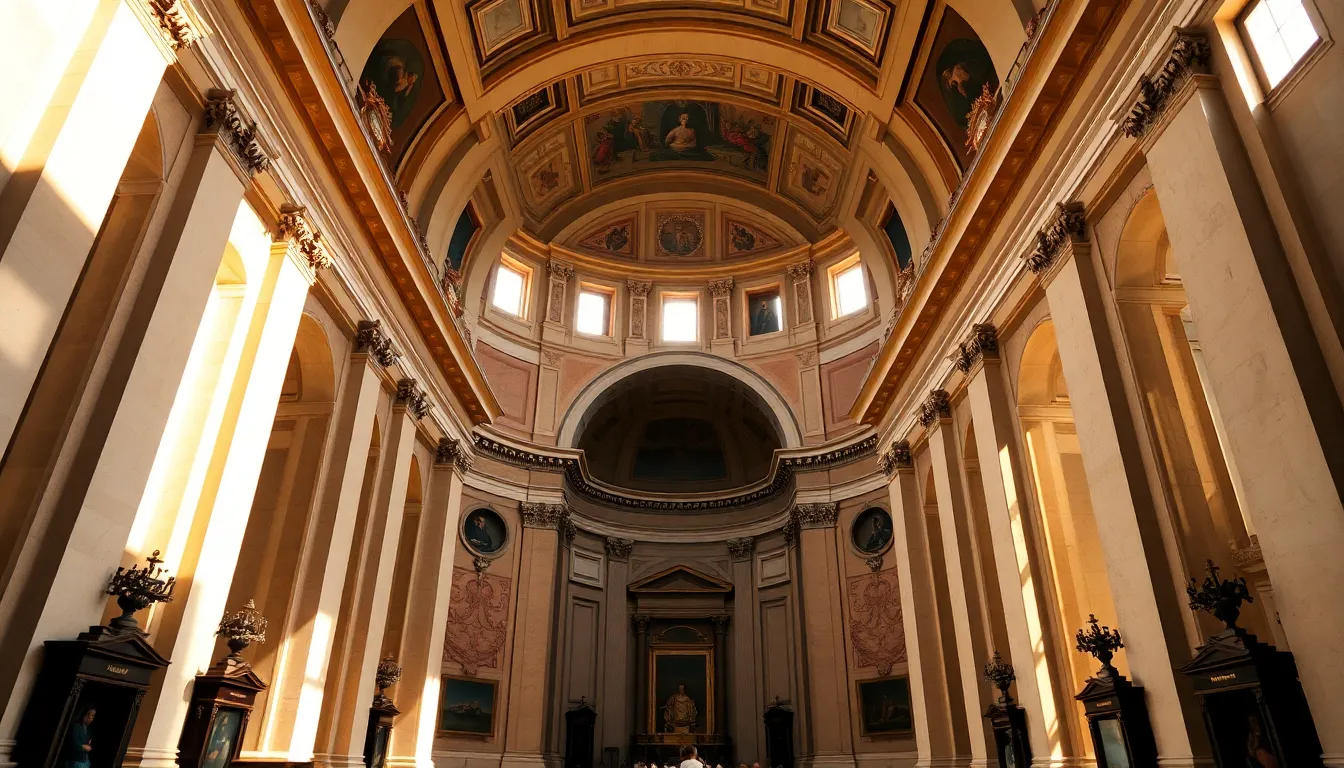
I have walked groups into Saint Peter’s Basilica more times than I can count, and I still slow down at the door. Not because of the size, though the size is real. It is because of where you are standing. The largest church in the world was built directly over the grave of a Galilean fisherman who denied Jesus three times and then gave his life rather than deny him again. That tension, between the marble grandeur and the man underneath it, is the whole story. If your group understands that before they walk in, the visit changes.
Most groups treat Saint Peter’s as the last stop after a long Vatican Museums morning. By then everyone is tired, footsore, and a little numb from the Sistine Chapel crowd. The Basilica deserves better than the tail end of someone’s attention. Here is how I plan it, and what I want your congregation to actually see.
Understanding What You Are Standing On
The Basilica you walk into today is the second church on this spot. The first was built by Emperor Constantine in the fourth century, around 320 AD, after Christianity became legal. Constantine did something strange and expensive to build it. He chose a sloping hillside crowded with pagan tombs, leveled part of it, and oriented the entire structure around one specific grave on the Vatican hill. Engineers do not pick a hard site for no reason. The early church believed Peter was buried there, and Constantine built to honor that grave, not to make construction easy.
That first basilica stood for over a thousand years. By the 1500s it was crumbling, and Pope Julius II made the bold and controversial decision to tear it down and build new. The church you see is the result, finished over roughly 120 years, with Bramante, Michelangelo, Maderno, and Bernini all leaving their hands on it. When I tell groups that one building absorbed the genius of four of the greatest minds of the Renaissance and Baroque, it reframes what they are looking at. This is not decoration. It is centuries of the church pouring everything it had into one place.
For the wider context of where this fits among Italy’s faith sites, our overview of spiritual sites in Italy for faith travelers is a good companion read before you build the itinerary.
The Confessio: Start Here, Not at the Pieta
When a group walks in, the instinct is to drift right toward Michelangelo’s Pieta. I redirect them. We go straight down the nave to the Confessio, the sunken semicircular space directly in front of the high altar, ringed with ninety-five oil lamps that burn continuously.
Stand at the rail and look down. You are looking toward the burial place of Saint Peter. The high altar above it, crowned by Bernini’s bronze baldachin with its twisting columns, sits directly over the apostle’s grave. This is not symbolic placement. The altar, the dome, the entire axis of the building all point to one spot in the ground. Every line in this enormous church was drawn to lead your eye to a fisherman’s tomb.
I let groups stand here in silence for a moment before anyone says a word. Pastors have told me this is the moment their people finally feel the weight of the place. The grandeur becomes meaningful only when you understand it is grandeur built around humility.
Michelangelo’s Pieta
Now we go to the Pieta, in the first chapel on the right as you enter. Michelangelo carved it from a single block of Carrara marble when he was around twenty-four years old. Mary holds the body of her crucified son across her lap. What stops people is her face. She looks young, younger than a mother of a grown man should look, and Michelangelo defended that choice on purpose. He believed her purity preserved a kind of agelessness. Whether you accept his theology or not, the effect is undeniable.
It is the only work Michelangelo ever signed. The story goes that he overheard visitors crediting the sculpture to another artist, slipped back in at night, and carved his name across the sash on Mary’s chest. He reportedly regretted the pride and never signed another piece.
The statue sits behind protective glass now, after a 1972 attack damaged it. You view it from a distance. I tell groups to take their time even so. A few minutes in front of this carving does more for the spirit than a rushed lap around ten chapels.
The Dome: Michelangelo’s Engineering Faith
Michelangelo designed the dome but did not live to see it finished. He died in 1564 with the drum complete and the dome itself still on paper. His successors carried it up, and it was capped in 1590. It rises about 448 feet from the floor to the top of the cross, and for centuries it shaped the skyline of Rome and the imagination of church builders across Europe and America. The dome of the United States Capitol owes a debt to this one.
Around the base of the dome, in letters seven feet tall, runs the Latin inscription drawn from Matthew 16: “Tu es Petrus, et super hanc petram aedificabo ecclesiam meam.” You are Peter, and on this rock I will build my church. That verse is the theological foundation of the entire building. Peter, whose name means rock, stands under the rock of the dome, over the rock of his own tomb. The architecture is preaching a sermon, and once a group sees it, they cannot unsee it.
Climbing to the Cupola
For groups with the energy, you can climb to the cupola. There is an elevator that takes you partway, then a narrow, curving staircase the rest of the way. The walls lean with the curve of the dome near the top, and it is genuinely tight, so it is not for everyone with mobility concerns or claustrophobia. But the reward is a walkway at the top with a view straight down Bernini’s colonnade and across all of Rome. I usually offer it as an optional add-on so the climbers can go and the rest of the group can rest in the square.
How Groups Actually Experience It
A few things I have learned over the years that make the difference between a rushed stop and a real encounter.
Go early or go at the end of the day. The Basilica itself is free to enter, but the security line forms across Saint Peter’s Square and can stretch long by mid-morning. We arrive close to opening. The light through the high windows in the first hour is worth the early start.
Mind the dress code, and tell your group before they leave the hotel. Shoulders and knees covered, for everyone. I have watched travelers turned away at the door over a tank top, and there is nothing I can do for them at that point. A scarf in the bag solves it.
Keep the group together near the Confessio for any shared moment. If your pastor or rabbi wants to offer a word, a prayer, or simply name what the group is standing over, the area near the altar is where it lands. The acoustics are vast, so speak quietly and close together.
Pair it with the tomb below. The Confessio shows you the grave from above. To go beneath the floor to the actual excavated burial ground, you need the scavi tour, which is separate, limited, and books out far ahead. I cover that fully in our guide to the tomb of Saint Peter and the Vatican Necropolis. For most groups, pairing the Basilica with the scavi tour is the most powerful single morning of the entire Rome itinerary.
If you want to extend the early-church thread further, the Catacombs of Callixtus outside the city walls show you where the popes who came after Peter were buried, and the contrast with this golden Basilica is striking.
You can see how we structure these Rome days on our Italy destination page, and our group heritage tours page explains how the group leader experience works.
FAQ: Visiting Saint Peter’s Basilica
Is Saint Peter’s Basilica free to enter?
Yes. Entry to the Basilica itself is free, which surprises many first-time visitors given the scale of the place. You pay only for optional extras: the climb to the cupola has a small fee, and the scavi tour beneath the church is a separate paid, advance-booking experience. The free entry does come with a security line, so arriving near opening time is the practical move for a group.
What is the dress code for Saint Peter’s Basilica?
Shoulders and knees must be covered for everyone, men and women alike. This is enforced at the entrance, and travelers are turned away for sleeveless tops, shorts, or short skirts. I tell every group member to bring a light scarf or wrap they can throw on. It solves the problem instantly and is useful at every church in Italy.
How long should a faith group spend inside Saint Peter’s Basilica?
Plan for at least ninety minutes inside, and more if your group is climbing the dome. A meaningful visit moves slowly: time at the Confessio over Peter’s tomb, time with the Pieta, time reading the dome inscription, and space for a shared moment of prayer or reflection. If you are also doing the scavi tour, give the whole morning to the Vatican and do not schedule anything tight afterward.
Where exactly is Saint Peter buried?
Tradition places his grave directly beneath the high altar, on the Vatican hill where he was martyred and buried around 64 to 67 AD during Nero’s persecution. The Confessio, the sunken area in front of the altar, lets you look down toward that spot. To stand at the excavated burial ground itself, you take the scavi tour into the necropolis beneath the church floor. The entire Basilica is oriented around this single grave.
Can our whole group climb the dome together?
It depends on your group. The climb involves an elevator to the roof level, then a narrow spiral staircase where the walls lean inward near the top. It is tight and not suitable for travelers with serious mobility limits or claustrophobia. I usually run it as an optional add-on: the climbers go up while the rest of the group rests in the square or revisits a chapel. That way no one feels pressured and no one feels left behind.
Saint Peter’s rewards groups who come to it with intention rather than fatigue. Give it room in your schedule, prepare your people for what they are standing over, and let the building do what it was built to do. If you want help structuring a Rome itinerary that puts the Basilica, the tomb, and the early-church sites in the right order, I would be glad to talk it through with you.
Contact us when you are ready to start planning your group’s journey to Rome.