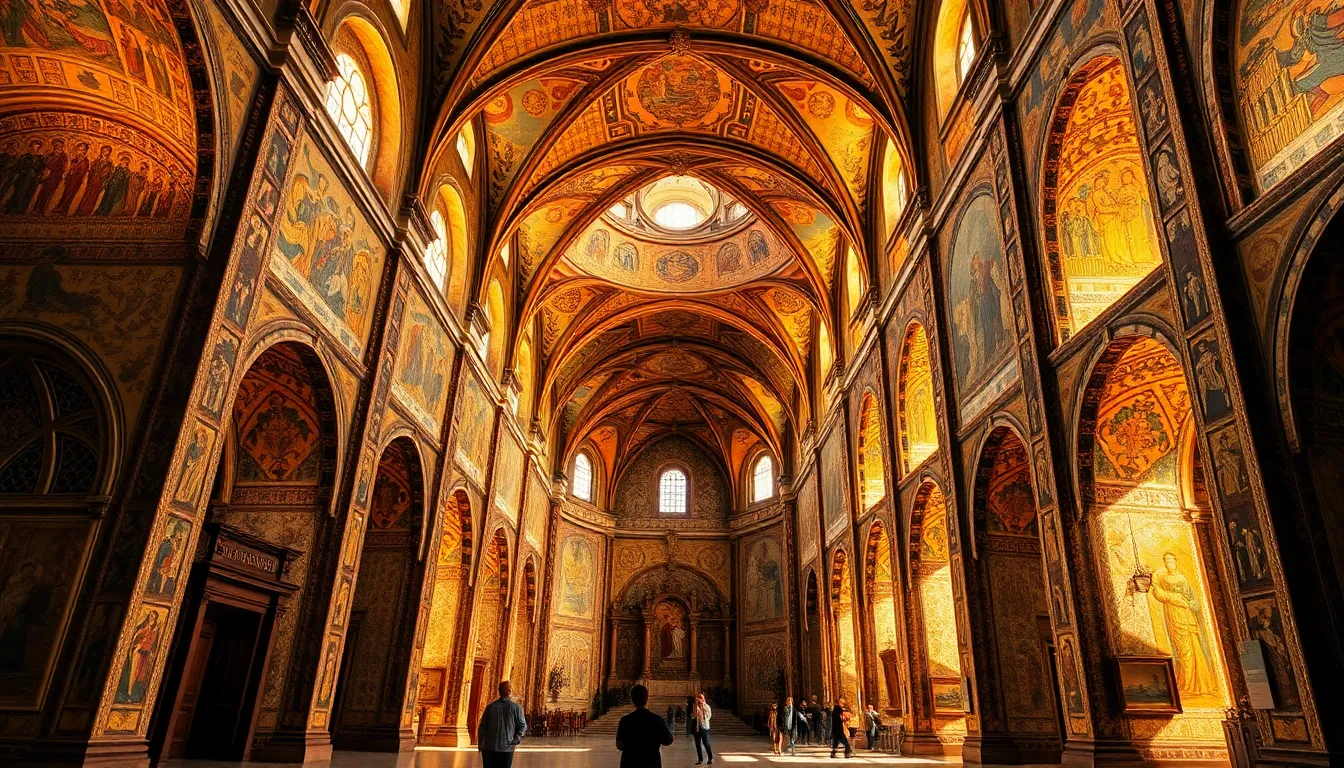
I tell every group leader the same thing before we fly to Sicily: forget what you think Italy is. Sicily is its own world. It has been Greek, Roman, Byzantine, Arab, Norman, and Spanish, and every one of those rulers left something standing. The result is a layered island where, in a single building, you can see Christian, Islamic, and Byzantine craftsmanship working side by side. For a heritage group, that layering is the whole reason to come.
And there is a story here that most travelers never hear, the one I care about most. Before 1492, Sicily held one of the largest Jewish communities in Europe. When the expulsion came, that world vanished almost overnight. Tracing what remains of it is one of the quietest, most meaningful things a group can do on this island.
Sicily takes more planning than mainland Italy. It is large, the driving distances are real, and the sites are spread out. But for groups willing to give it the time, it offers a depth of cross-cultural heritage you will not find anywhere else in the country. Here is how I frame it.
The Norman-Byzantine Wonders: Monreale and Palermo
The high point of Sicily’s Christian heritage comes from an unlikely source: the Norman kings who ruled the island in the 12th century. These were Christian rulers who inherited an island full of skilled Byzantine and Arab craftsmen, and rather than tearing that talent down, they put it to work. The result is a style found nowhere else.
The Cathedral of Monreale
Just outside Palermo, the Cathedral of Monreale is, to my eye, the single most spectacular interior in all of Sicily and one of the great sights of Italy. Built in the 1170s under King William II, its entire interior is covered in golden Byzantine mosaics, more than six thousand square meters of them, depicting the whole biblical narrative from Creation to the life of Christ. The enormous image of Christ Pantocrator in the apse, his hand raised in blessing, dominates the church and stops groups in their tracks. When I bring people in, I let them stand in silence first. There is no good way to prepare anyone for it.
The adjoining cloister, with its hundreds of carved columns, each one different, is a quieter companion to the blazing interior and worth real time.
The Palatine Chapel and Palermo
In Palermo itself, the Palatine Chapel inside the Norman Palace is the jewel. Built in the 1130s, it fuses Byzantine mosaics, a carved wooden ceiling in the Islamic muqarnas style, and Norman architecture into one harmonious room. It is small, intimate, and overwhelming. Palermo also holds the cathedral, the church of San Cataldo with its red Arab-style domes, and the Martorana with more superb Byzantine mosaics. These Arab-Norman monuments of Palermo, Monreale, and nearby Cefalù carry UNESCO World Heritage status together as a group, and they tell the story of an island where three faiths’ craftsmen built for the same kings.
The Vanished Jewish World of Sicily
This is the chapter I will not let a group skip.
For centuries, Sicily was home to a large and rooted Jewish population, perhaps the largest concentration in the Italian lands. They lived across the island, in Palermo, Syracuse, Agrigento, Marsala, and dozens of smaller towns, working as dyers, craftsmen, traders, and scholars. Then in 1492, the same expulsion decree that emptied Spain reached Sicily, which was under Spanish rule. Within a year, the community was gone. Tens of thousands of Sicilian Jews were forced to convert or flee. A presence of many centuries ended almost at once.
What remains is subtle, and that is part of why it moves people.
In Syracuse, on the island of Ortigia, lies the heart of the old Jewish quarter, the Giudecca. Beneath a hotel there, workers in the 1980s rediscovered a remarkable mikveh, a ritual immersion bath cut deep into the rock and fed by a natural spring, considered one of the oldest in Europe. Descending into it with a group, in a space carved before the expulsion, is unforgettable. The narrow streets of the Giudecca above still carry the memory in their layout and names.
In Palermo, the old Jewish quarter survives in street names and traces, and in recent years a former church near the site of the medieval synagogue has been returned, in a quiet act of reconciliation, for use by a small revived Jewish community. Across the island, towns like Agrigento and Marsala hold faint marks of the same vanished world.
I always tell groups that this part of Sicily is not about grand monuments. It is about standing where a whole community lived and worshipped, and where, in 1492, history closed a door. For a group tracing Jewish continuity and loss in Europe, Sicily belongs on the route, not as a footnote but as a chapter.
The Greek and Early Christian Layers
Sicily’s heritage runs deeper still. The island holds some of the best-preserved Greek temples anywhere, including the Valley of the Temples at Agrigento and the great theaters at Syracuse and Taormina. Syracuse was one of the most important cities of the ancient Greek world and is named in the Book of Acts, where Paul’s ship stops there for three days on his voyage to Rome. Syracuse also holds extensive early Christian catacombs, among the largest outside Rome. For a group, this means you can move in one island from Greek antiquity to the early church to the Norman-Byzantine high point, the full sweep in a single trip.
Practical Orientation for Group Leaders
Sicily demands more logistical care than the mainland. Be honest with yourself about that in planning.
A few things I tell every group leader:
- Distances are real. Palermo to Syracuse is a long drive across the island. Decide whether your group will base in one region or move, and build realistic transfer times into the plan rather than underestimating them.
- A coach and a local guide are not optional. Sicily’s sites are spread out and its history is complex. A knowledgeable local guide is what turns a confusing layered island into a clear story.
- Mind the heat and the terrain. Summers are very hot, and sites like Monreale, the Valley of the Temples, and the Greek theaters involve walking and some climbing. Spring and autumn are far better for a mixed-age group.
- Book the Jewish sites and catacombs ahead. The Syracuse mikveh and the catacombs are visited on guided tours with limited slots. Reserve for groups in advance.
- Give it enough days. Sicily is not a two-day add-on. Plan four or five days minimum to do even the core justice.
Sicily works beautifully as the southern anchor of a fuller Italian journey, often paired with time in Naples and Pompeii before crossing south. For groups whose main thread is Jewish heritage, the Sicilian story connects directly to the wider trail you can follow up through Tuscany and the historic communities of the north.
FAQ: Planning a Sicily Heritage Visit
Why is Sicily important for Jewish heritage?
Before the 1492 expulsion, Sicily held one of the largest Jewish populations in the Italian lands, present for centuries across the island. The Spanish expulsion erased that community almost overnight. Sites like the rediscovered medieval mikveh in Syracuse and the old quarters in Palermo make that vanished world tangible, which is why it belongs on any serious Jewish heritage route in Italy.
What is the must-see Christian site in Sicily?
The Cathedral of Monreale, just outside Palermo, with its vast golden Byzantine mosaics covering the entire interior. Together with the Palatine Chapel in Palermo and the cathedral at Cefalù, it forms the Arab-Norman heritage that is unique to Sicily and carries UNESCO World Heritage status.
How many days does a Sicily heritage trip need?
At least four to five days. The island is large, driving distances are significant, and the sites range from Greek temples to Norman cathedrals to Jewish quarters. A rushed two- or three-day visit cannot do it justice and wears a group down with transfers.
Is Sicily physically demanding for older travelers?
Some sites involve walking and climbing, including Monreale, the Valley of the Temples, and the Greek theaters, and summers are hot. With spring or autumn timing, a good coach, and a well-paced itinerary, mixed-age groups manage Sicily comfortably. Plan rest and avoid midday heat at the open-air sites.
When is the best time to visit Sicily?
Spring and autumn, roughly April to mid-June and September to October. The weather is warm but not punishing, the open-air Greek and Norman sites are comfortable, and crowds are lighter than in peak summer, when the heat makes long outdoor visits difficult.
If Sicily and its layered Christian, Jewish, and Byzantine heritage speak to your community, I would welcome the conversation. Start with our full Italy heritage travel guide, explore our Italy destination page, or see how our group heritage tours are designed for faith communities. When you are ready, reach out and we will plan it together.