There is a moment I look for on every Italy heritage tour, usually around the third or fourth day. A rabbi or an educator who has been to a few sites turns to me and says some version of: I keep hearing the word Sephardic, in Venice, in Livorno, in Ferrara. Why is it everywhere? And that is the question this whole story turns on. Because 1492 was not only an ending. The expulsion from Spain emptied one of the great Jewish civilizations of the world, and the people who carried it out did not vanish. Tens of thousands of them came to Italy, and they reshaped Jewish life on the peninsula in ways you can still see and feel five hundred years later.
This is the connective thread that ties together half the sites on an Italian Jewish itinerary. Once a group understands it, the whole trip clicks into place.
What Was Lost in 1492, and Where It Went
For centuries, Jewish life in Muslim and then Christian Spain had produced something extraordinary, a culture of poets, philosophers, physicians, financiers, and merchants, a civilization rich enough that Jews still call it the Golden Age. In 1492, Ferdinand and Isabella ended it. Their decree gave the Jews of Spain months to convert or leave. Within a few years, Portugal followed with forced conversions and its own expulsions. A world that had taken seven centuries to build was scattered in a generation.
The exiles, the Sephardim, named for Sefarad, the Hebrew word for Spain, went where they could. Many went to the Ottoman Empire, which welcomed them. Many went to North Africa. And a great many came to Italy, which sat directly across the Mediterranean and which, in several of its states, was prepared to receive them, sometimes out of genuine openness, often out of commercial calculation, but receive them it did.
They did not arrive empty-handed. They brought capital, trade networks that spanned the Mediterranean, scholarship, a distinct liturgy, the Ladino language, and a refined religious and intellectual culture. When I describe this to a group, I put it plainly: Italy did not just take in refugees in 1492. It took in the inheritors of a civilization, and that inheritance transformed Italian Jewish life.
How the Sephardim Reshaped Italian Jewish Life
Before 1492, Italian Jewry had its own ancient character, the Italkim, the Italian-rite Jews whose presence reached back to Roman times, and a strong Ashkenazi influence in the north. The arrival of the Sephardim added a third great stream, and it changed the texture of community after community.
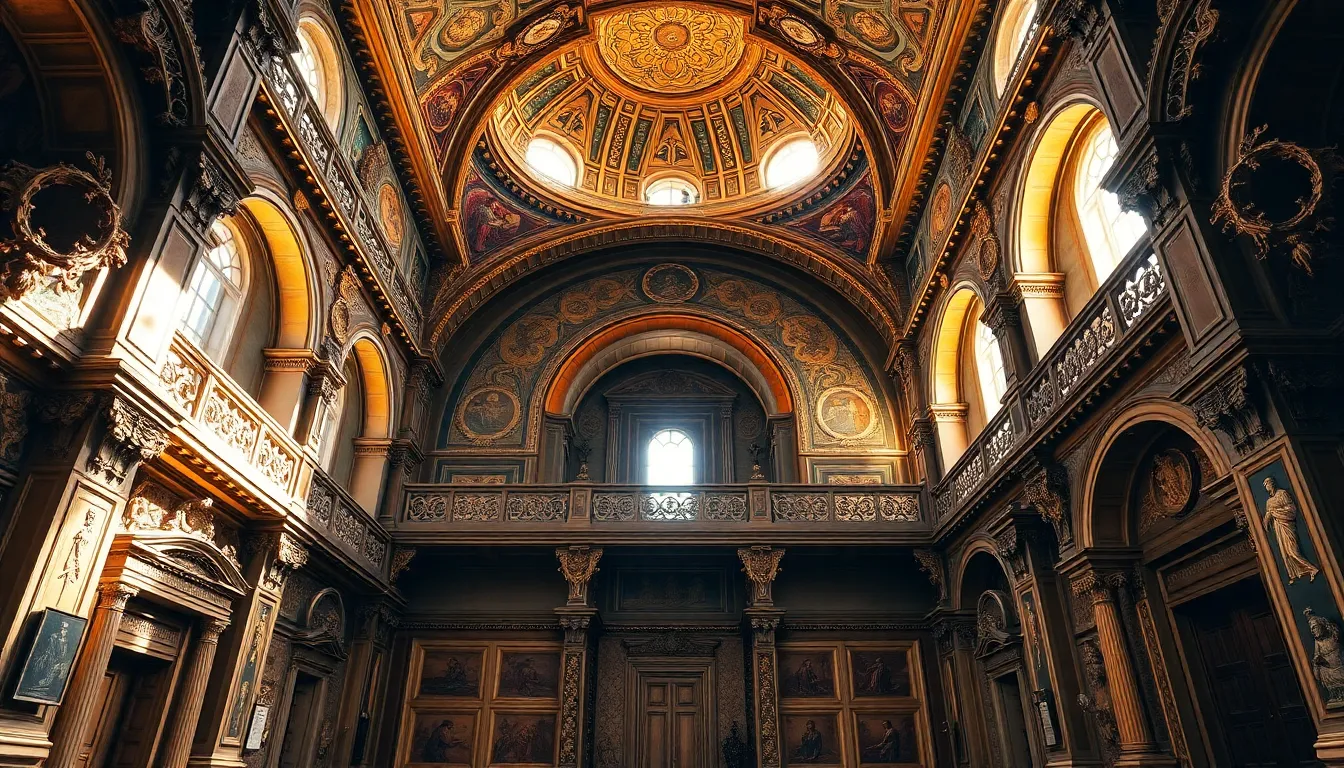
You can read this directly in the synagogues. In the Venetian Ghetto, the five synagogues were built by distinct communities, and two of the grandest, the Scola Spagnola, the Spanish synagogue, and the Scola Levantina, built by Jews from the Ottoman lands, are Sephardic foundations. Their gilded woodwork and Baroque splendor reflect a community that brought a particular aesthetic and a particular confidence with it. The very fact that Venice’s Jews organized themselves by origin, German, Italian, Spanish, Levantine, tells you that the Sephardic arrival was significant enough to form its own distinct congregations rather than simply blending in.
Nowhere is the Sephardic transformation clearer than in Livorno. When the Medici issued the Livornina charter in the 1590s, inviting Jews to settle freely in their new port, it was the Sephardic merchant networks they most wanted, and Sephardic families, including many former forced converts who could now live openly as Jews again, who answered. Livorno became a Sephardic merchant haven, one of the wealthiest and most outward-facing Jewish communities in Italy, a center of Mediterranean trade and Hebrew printing. It is the purest example of what the Sephardic diaspora built when given freedom.
The same story runs through Ferrara, where the Este dukes welcomed Sephardic exiles, including a famous wave of Portuguese New Christians returning to open Jewish practice, making the city a notable haven in the sixteenth century. It runs through Rome, Naples, and Ancona, each of which absorbed Sephardic exiles into communities that were already ancient. And it runs, with a darker thread, through Sicily, where the same 1492 decree that scattered the Sephardim across Italy also expelled the island’s own thousand-year-old community, so that the giudecche of Palermo and Siracusa emptied at the very moment the synagogues of Venice and Livorno were filling.
The Things They Carried
What I want a group to carry away is that Sephardic heritage in Italy is not only buildings. It is a whole way of being Jewish that grafted onto Italian soil and grew.
It is liturgy. The Sephardic rite, with its distinct melodies and order of prayer, took root in the Spanish and Levantine synagogues and shaped how communities prayed for centuries. It is language. The exiles brought Ladino, Judeo-Spanish, and even where the daily language became Italian, traces of that Iberian Jewish world lingered in dialect and song. It is print. Italy, and Livorno above all, became a powerhouse of Hebrew publishing, with Sephardic scholars and printers producing books that traveled to Jewish communities across the world. It is scholarship and a particular intellectual confidence, an inheritance from the Golden Age that did not die when Spain expelled it.
And it is, finally, a story of resilience that I think faith communities especially need. The Sephardim were torn from a homeland of seven centuries, and they did not disappear into history. They crossed the sea, rebuilt, established new centers of learning and worship and trade, and carried their identity forward. Some of those same families, over the generations, eventually made their way to the land of Israel. The expulsion of 1492 was a catastrophe. The Sephardic heritage of Italy is the proof that the catastrophe did not have the last word.
Building a Sephardic Thread Into Your Itinerary
The strength of this theme is that it lets a group experience Italy not as a collection of separate sites but as a single connected story. A Sephardic-themed itinerary moves from Venice, with its Spanish and Levantine synagogues, to Livorno, the free Sephardic merchant haven, and can extend to Ferrara for the Este welcome and to Sicily for the wrenching other side of 1492, the community that was expelled rather than received. Rome anchors the whole arc with its ancient community that absorbed Sephardic exiles into a presence already two thousand years old.
When I lead a group along this thread, I keep the question of 1492 in front of us at every stop: who arrived here, where did they come from, what did they bring, and what did they build. By the end, the people understand the Sephardic diaspora not as a word in a book but as a living force they walked through, city by city.
Heritage Tours builds these themed itineraries around exactly this kind of through-line, arranging guides who can carry the Sephardic story coherently from site to site, coordinating advance access to the synagogues and other sites that require it, and keeping the group together with hotel pickup and dropoff. With fifteen or more participants, the group leader travels at no cost, which for a rabbi or educator often turns an ambitious itinerary into a real one. You can see how we structure these journeys on our group heritage tours page and our Italy destination page.
FAQ: The Sephardic Heritage of Italy
Who were the Sephardim?
The Sephardim were the Jews of Spain and Portugal, named for Sefarad, the Hebrew word for Spain. They built one of the great Jewish civilizations of the medieval world, often called the Golden Age, producing poets, philosophers, physicians, financiers, and merchants. When Spain expelled its Jews in 1492 and Portugal followed soon after, the Sephardim scattered across the Mediterranean, carrying their culture, liturgy, language, and trade networks with them.
How did Jews expelled from Spain end up in Italy?
Italy sat directly across the Mediterranean from Spain, and several Italian states were prepared to receive the exiles, sometimes out of genuine openness and often out of commercial interest in the Sephardic merchant networks. Large numbers settled in Venice, Livorno, Ferrara, Rome, Naples, and Ancona. They arrived with capital, Mediterranean trade connections, scholarship, and a distinct religious culture that reshaped the communities they joined.
How can you see Sephardic heritage in Italy today?
It is visible in the synagogues, especially the Scola Spagnola and Scola Levantina in the Venetian Ghetto, both Sephardic foundations, and in Livorno, the free Sephardic merchant haven created by the Medici Livornina charter. It is also present in liturgy and melody, in the legacy of Ladino, and in Italy’s history as a center of Hebrew printing led by Sephardic scholars and printers, with Livorno foremost among them.
What was the Livornina, and why does it matter to the Sephardic story?
The Livornina was a Medici charter of the 1590s inviting Jews to settle freely in the Tuscan port of Livorno, without a ghetto, with freedom of worship and protection from the Inquisition. It was aimed largely at Sephardic merchants and welcomed many former forced converts who could now live openly as Jews again. Livorno became the clearest example of what the Sephardic diaspora could build when given real freedom, growing into one of Italy’s wealthiest and most outward-facing Jewish communities.
Why is the Sephardic story important for a Jewish heritage tour of Italy?
Because it is the thread that connects half the sites on the itinerary into a single story. The same expulsion of 1492 that scattered the Sephardim into Venice, Livorno, and Ferrara also emptied the thousand-year-old community of Sicily. Following the Sephardic thread lets a group experience Italy not as separate stops but as one connected narrative of loss, refuge, and rebuilding, a story of resilience that resonates deeply with faith communities.
If the Sephardic story is the thread you want running through your community’s journey, I would be glad to help you weave it from city to city. Reach out whenever you are ready, and we can build the route around it.