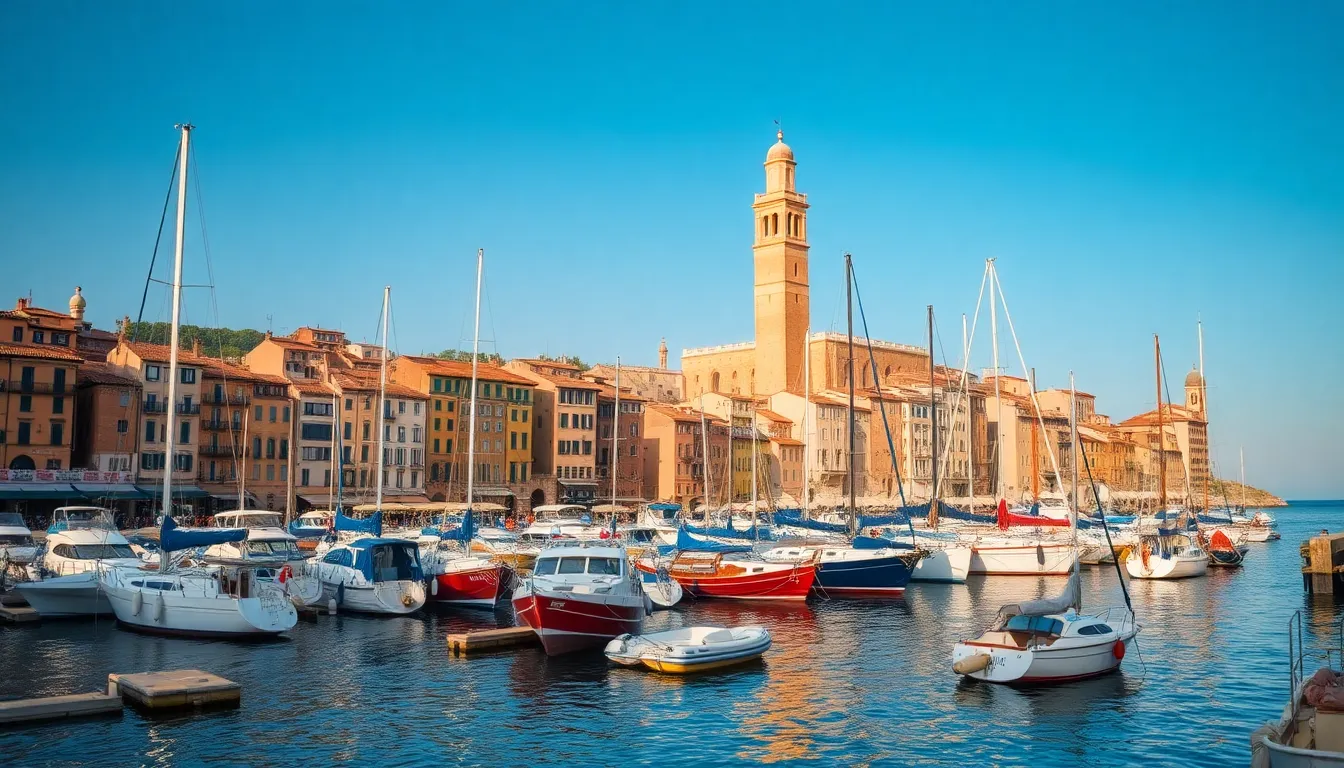
I always bring groups to Livorno after they have seen a ghetto. After Rome, after Venice, after the locked gates and the curfews and the walls. Because Livorno is the one place in Italy where the Jewish story turns the other way. There were no ghetto walls here. There was no curfew. For more than two centuries, this Tuscan port was the most welcoming place for Jews in all of Italy, and one of the most welcoming in Europe. When I tell a group that, after days of confinement stories, you can watch the relief move across the room. Livorno is the exhale.
It is a less famous stop than Rome or Venice, and that is part of why it matters. It tells a chapter of the Italian Jewish story that travelers rarely hear, the chapter about refuge, and it tells it through the same Medici dynasty that confined the Jews of Florence behind walls.
The Livornina: An Invitation, Not a Wall
The turning point is a remarkable document. In 1591 and again in 1593, the Medici grand dukes of Tuscany issued a charter known as the Livornina, or Leggi Livornine. As the Medici developed Livorno from a small fishing village into a major commercial port, they needed merchants, capital, and trade connections. So they issued an open invitation, addressed specifically to merchants of any nation and faith, and explicitly to Jews.
What the Livornina offered was extraordinary for its time. Jews who settled in Livorno were granted freedom of worship, the right to live where they chose without a ghetto, protection from the Inquisition, the right to own property and conduct business freely, and even an amnesty for those who had been forced to convert elsewhere and wished to return openly to Judaism. There were no yellow badges, no curfews, no walls. This was the opposite of the policy the same family had imposed in Florence, and the contrast is the whole point.
I want a group to sit with the why of it. The Medici were not motivated by tolerance for its own sake. They were motivated by commerce. They understood that the Sephardic merchant networks scattered across the Mediterranean, the families driven out of Spain and Portugal, were among the most capable traders in the world, with connections from the Ottoman ports to the Atlantic. Livorno’s welcome was a business decision. But the effect, whatever the motive, was a genuine haven, and the community that grew there flourished in ways that ghettoized communities could not.
The Sephardic Merchant Haven
The Jews who answered the Livornina came largely from the Sephardic diaspora, the descendants of those expelled from Spain in 1492 and from Portugal soon after, many of them New Christians who had been forced to convert and who now, under Livorno’s amnesty, could live openly as Jews again. This connects Livorno directly to the wider story of the Sephardic heritage of Italy after 1492, of which Livorno is perhaps the brightest single example.
The community grew quickly and prospered. By the eighteenth century Livorno held one of the largest and wealthiest Jewish communities in Italy, numbering in the thousands. Its merchants traded in coral, textiles, and goods moving across the whole Mediterranean. The community produced scholars and printers, and Livorno became a major center of Hebrew publishing, with its presses sending books across the Jewish world. The Livornese dialect even absorbed a Jewish vocabulary, a sign of how woven into the city the community had become.
What strikes groups is how different the texture of this community feels from the others on the itinerary. These were not people defined by confinement and survival behind walls. They were merchants and scholars who built a prosperous, confident, outward-facing community in a free port. It is a fuller, more dimensional picture of what Jewish life in Italy could be, and seeing it changes the way a group understands the rest.
The Great Synagogue, Lost and Rebuilt
The community built a synagogue to match its standing. The original Great Synagogue of Livorno, developed and expanded from the seventeenth century onward, was famous across Europe. Travelers wrote about it as one of the most beautiful synagogues on the continent, a vast and richly decorated space that reflected the wealth and confidence of a community that worshipped without fear.
That building did not survive. It was severely damaged by Allied bombing during the Second World War, and the ruins were later cleared. This is the hard turn in Livorno’s story, and I do not skip it. The same war that destroyed the synagogue brought the deportation of Livornese Jews, and the community that had flourished for more than three centuries was devastated.
After the war, the surviving community made a striking choice. Rather than reconstruct the old synagogue, they commissioned a boldly modern one, completed in 1962 on the site near where the old temple had stood. The new Great Synagogue of Livorno is a dramatic contemporary structure, its sweeping concrete form unlike any other synagogue in Italy, and it provokes strong reactions. Some groups find it jarring after the historic buildings of Rome and Venice. I have come to see it differently, and I share this with groups: it is a postwar community’s declaration that it would not simply rebuild the past but would continue, in its own time, in its own form. Inside, it incorporates objects and memory from the lost original, including a beautiful ark brought from elsewhere. The continuity is real, even in the modern shell.
Visiting Jewish Livorno
Livorno sits on the Tuscan coast, about ninety minutes from Florence, which makes it a natural pairing. I most often build it as a half-day or full-day extension from Florence, precisely so a group can feel the contrast between the Medici who walled the Jews into a ghetto in one city and invited them freely into another. That contrast, held in a single day, teaches more than either site alone.
A visit centers on the modern Great Synagogue and the Jewish community’s heritage sites, including the old Jewish cemetery, which holds centuries of Sephardic family history in its stones. The community is small today but active, and access requires advance arrangement and security clearance, as at active Jewish sites across Europe. Heritage Tours coordinates the bookings, arranges a guide who knows the Livornina story and the Sephardic merchant world it created, and keeps the group together with transport from Florence and back.
With fifteen or more participants, the group leader travels at no cost, which for a rabbi or educator often makes the wider itinerary possible. You can see how we structure these journeys on our group heritage tours page and our Italy destination page, and Livorno fits naturally into the broader hub guide to Jewish heritage in Italy.
FAQ: Jewish Livorno
What was the Livornina?
The Livornina, or Leggi Livornine, was a charter issued by the Medici grand dukes of Tuscany in 1591 and 1593 as they developed Livorno into a major port. It invited merchants of any nation and faith, explicitly including Jews, to settle in the city. It granted them freedom of worship, the right to live without a ghetto, protection from the Inquisition, freedom to own property and trade, and amnesty for those who had been forced to convert elsewhere. It made Livorno the most welcoming place for Jews in Italy.
Why was Livorno different from other Italian Jewish communities?
Most Italian Jewish communities, including those in Rome, Venice, and Florence, lived under restriction, often confined to walled ghettos with curfews and badges. Livorno had none of that. Because the Medici wanted to attract the skilled Sephardic merchant networks of the Mediterranean, they offered genuine freedom. The result was a prosperous, confident, outward-facing community that flourished as merchants, scholars, and Hebrew printers, a very different picture of Jewish life in Italy.
Who were the Jews of Livorno?
They came largely from the Sephardic diaspora, the descendants of Jews expelled from Spain in 1492 and Portugal soon after, including many former New Christians who, under Livorno’s amnesty, could live openly as Jews again. The community grew to be one of the largest and wealthiest in Italy by the eighteenth century, with extensive Mediterranean trade networks and a major Hebrew printing industry whose books reached across the Jewish world.
What happened to the Great Synagogue of Livorno?
The original Great Synagogue, famous across Europe as one of the most beautiful on the continent, was severely damaged by Allied bombing during the Second World War and later cleared. The war also brought the deportation of Livornese Jews and devastated the community. Rather than reconstruct the old building, the surviving community built a boldly modern synagogue, completed in 1962 on the site, which incorporates objects and memory from the lost original.
How does Livorno fit into an Italy heritage tour?
Livorno sits about ninety minutes from Florence on the Tuscan coast and pairs naturally with it as a half-day or full-day extension. The pairing is deliberate: the same Medici dynasty that confined the Jews of Florence behind ghetto walls invited the Jews of Livorno in freely, and holding that contrast in a single day is powerful. A visit centers on the modern Great Synagogue and the historic Jewish cemetery. Heritage Tours arranges access, guiding, and transport.
Livorno is the chapter that shows what Jewish life in Italy could be when the walls came down. If you want your community to feel that turn in the story, I would be glad to help you build it in. Reach out whenever you are ready.