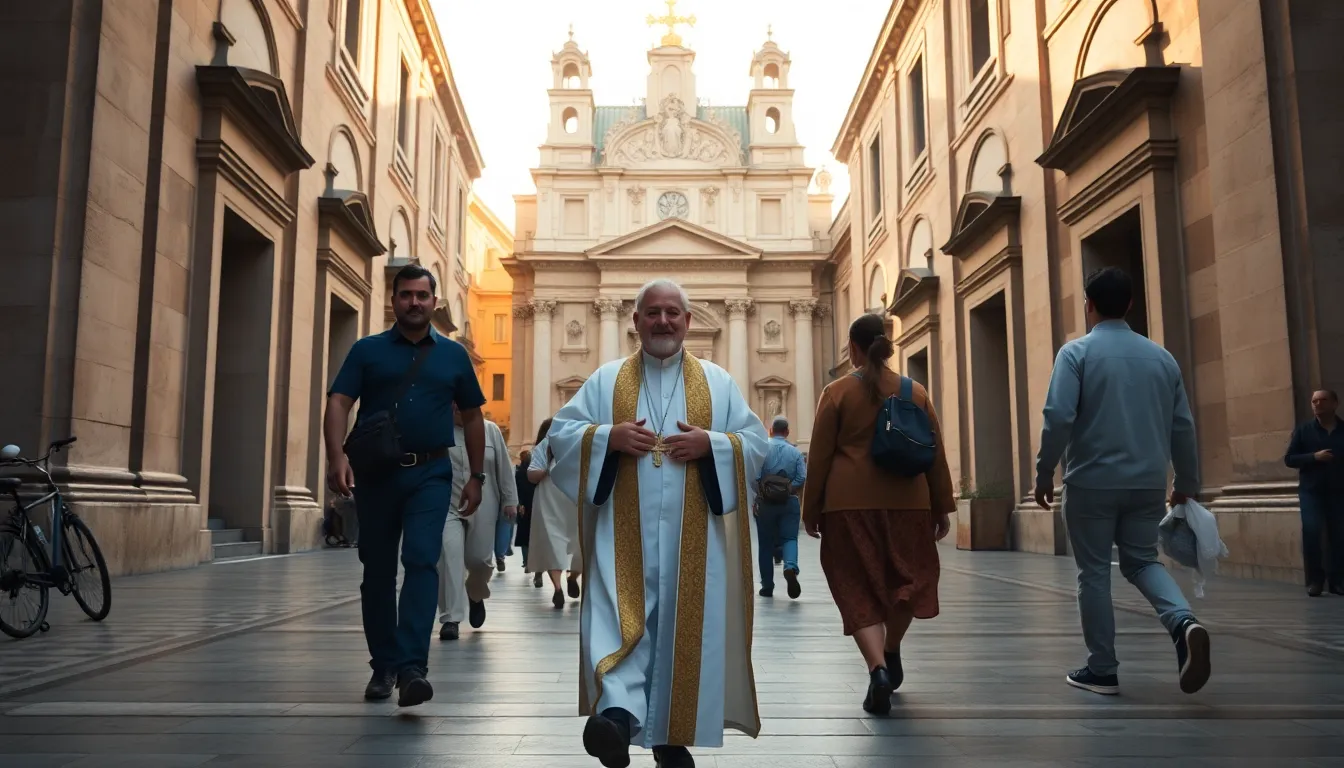
The first time I helped a pastor lead a group to Italy, he told me something I have never forgotten. He said, “I preach to these people every Sunday, but I have never been responsible for them at thirty thousand feet or in a foreign train station.” That is the real shift. Leading a heritage trip is not an extension of your pulpit work. It is a different kind of leadership, and most pastors are doing it for the first time.
If that is you, I want to take the fear out of it. You do not need to become a travel agent. You do not need to speak Italian. You do not need to have done this before. What you need is a clear sequence of decisions, an honest sense of what is yours to carry and what is not, and a partner who handles the logistics so you can stay where your gift actually is, with your people.
I have spent more than forty years walking pastors through their first trip, first at the Israel Ministry of Tourism and now at Heritage Tours. Here is the playbook I wish every first-timer had before they stood up and said, “I think we should go to Italy.”
Start With Why Italy, Not How
Before you touch a calendar, get clear on what you want this trip to do for your congregation. A first heritage trip to Italy can be many things. It can be a walk through the early church, from the catacombs of Rome to the basilicas built over the bones of the apostles. It can be a Renaissance pilgrimage through sacred art in Florence. It can be a quiet week in Assisi with Francis. The destination is the same country, but the spiritual shape of the trip changes completely depending on your answer.
Write down one sentence: “I want my people to come home with ______.” Maybe it is a clearer picture of the church’s first three centuries. Maybe it is a renewed sense of awe. Maybe it is the simple gift of forty people who prayed and ate and walked together for ten days. That sentence becomes the filter for every later decision. When you are choosing between Ravenna and Naples, between three nights in Rome or four, you hold each option up against that one sentence.
This is the part no operator can do for you, and it is the part that matters most. The logistics are solvable. The purpose is yours.
The First-Timer’s Timeline
Most pastors overestimate how hard the planning is and underestimate how much lead time they need. Twelve months is the right runway for a first trip. Here is how that year actually breaks down.
Twelve months out: Have one conversation with a heritage operator. Not a sales call, a conversation. Tell them your tradition, your rough group size, the season you are thinking about, and the sentence you wrote above. A good operator listens for the spiritual shape before they talk about hotels.
Ten months out: Tell your congregation. You do not need a finished itinerary or a final price. You need a clear, honest description of the trip and an invitation to express interest. Ask for raised hands, not deposits. This is also when you find out if the interest is real.
Eight months out: Build the itinerary with your operator. Which cities, how many nights, what level of hotel, which sites carry the weight you care about. This is where your one sentence earns its keep.
Six months out: Collect deposits and confirm your count. If you reach fifteen participants, your own costs are covered. More on that below, because for a first-timer it changes the math in a way you need to understand early.
Three months out: Confirm flights, travel insurance, dietary needs, and mobility considerations. Send your group a packing list and a short cultural orientation. Many Italian churches and heritage sites have dress codes. Your group should know before they pack, not at the door.
One month out: Final headcount. Walk through the day-by-day with your operator. Now prepare the part only you can do, the readings, the devotionals, the short teachings you will give at specific sites. This is what turns a tour into a heritage trip.
Day one: You land. The pickup is arranged. The local guide is waiting. Your job is to be present, not to manage luggage. Let the operator carry the details.
If you want to see how an experienced leader sequences all of this in more depth, our complete guide for pastors and rabbis planning an Italy heritage tour walks through the same arc with more detail on operator selection.
What a First-Time Leader Should Delegate, and What to Keep
The pastors who struggle on their first trip are almost always the ones who tried to do everything. The ones who thrive draw a clear line.
Hand off to your operator: flights and ground transport, hotel bookings, local licensed guides, site admissions and reservations, restaurant arrangements, dietary accommodations, the day-by-day logistics, and the contingency planning for when a site closes or someone needs a doctor. This is their craft. Let them practice it.
Keep for yourself: the spiritual content, the teaching at each site, the pastoral care of your group, the decision about which moments get unstructured time, and the relationships. You know which member just lost a spouse and might find Assisi hard. You know who needs a quiet word. No operator can do that, and you should not want them to.
When the line is clear, the trip gets lighter. You are not lying awake wondering whether the bus will show up. You are thinking about what you will say when your group stands in the Roman catacombs for the first time.
Building the Right First Itinerary
For a first trip, resist the urge to see everything. Italy will still be there for a second visit, and an overstuffed itinerary is the most common first-timer mistake I see.
A strong first Italy itinerary for a Christian group usually anchors in Rome for three or four nights. The Vatican, St. Peter’s, the catacombs, and the early Christian basilicas give your people a foundation in the church’s first centuries that everything else builds on. From there, Assisi offers a complete change of pace, slower, quieter, centered on Francis and the frescoes of the basilica. Then either Florence for Renaissance sacred art or Ravenna for the Byzantine mosaics, depending on whether your sentence leans toward beauty or toward the deep early history.
Whatever you choose, build in unstructured time. An afternoon free in a piazza. A dinner with nothing scheduled after. A morning where the group can return to a site that moved them. First-time leaders tend to pack the schedule out of anxiety, but the open moments are where your people actually connect, with the place and with each other.
If you are weighing how to assemble all of this from the ground up, the companion piece on building your congregation’s Italy trip from scratch takes you step by step from the first sermon mention to wheels up.
The Leader Travels Free, and Why That Matters for You
Let me be direct about money, because for a first-time pastor it is usually the quiet worry underneath everything else.
At Heritage Tours, with fifteen or more participants, the group leader travels at no cost. Flights, hotels, meals, every part of the trip your group receives, you receive at no charge. This is not a promotional gimmick. It reflects a conviction I have held since I started. The person who recruits the group, prepares the teaching, and carries the spiritual and organizational weight of the whole trip should not also be paying out of their own pocket to make it happen.
For a first-timer this matters in two practical ways. First, it removes the awkwardness of asking your church to fund your travel or covering it yourself. Second, it reframes your recruiting goal. You are not trying to fill a bus. You are trying to reach fifteen, the number where the economics work and your own costs disappear. Fifteen is reachable for almost any congregation, and once you frame it that way, the whole project feels possible. If filling those first fifteen seats feels daunting, our guide on how to recruit and fill your group breaks the ask down into simple steps. To understand the full leader experience, our group heritage tours page lays it out.
FAQ: Pastors Leading a First Italy Trip
Do I need previous travel-leading experience to lead a heritage trip to Italy?
No. Most pastors who lead a heritage trip are doing it for the first time. The operator handles the logistics that require experience, the flights, transport, guides, and contingencies. You handle the spiritual content and the care of your people, which is what you already do every week. A good operator structures the trip so a first-timer can lead it with confidence.
Does the pastor pay for the trip?
No. With fifteen or more participants, the group leader’s costs are fully covered, including flights, accommodation, meals, and all included activities. Heritage Tours covers the leader because the person carrying the spiritual and organizational responsibility should not also carry the financial burden.
How many people do I need for my first group?
Fifteen is the threshold where group pricing applies and the leader travels free. Most first trips land somewhere between fifteen and thirty participants, which is a comfortable size to lead. You can go larger, but for a first trip a group in that range is easier to keep together and care for.
How long should a first heritage trip to Italy be?
Eight to ten days is the sweet spot for a first trip. It is long enough to anchor in Rome and add one or two other places without the trip becoming exhausting, and short enough that members with work and family obligations can commit. Resist trying to see all of Italy on the first visit.
What is the single biggest first-timer mistake?
Overpacking the itinerary. New leaders try to see everything out of a fear of missing out, and the trip becomes a blur of buses and queues. Fewer places, more time at each, and built-in unstructured hours will give your people a far deeper experience than a checklist of sights.
If you are standing at the start of this, wondering whether you are the right person to lead it, I want to tell you plainly: you are. The calling you already carry is exactly what this trip needs. The logistics are ours to handle. If you want a broader framework that carries beyond Italy, the complete guide for group leaders walks through the whole arc of planning a group pilgrimage. Start with a conversation, no commitment and no pressure, just two people talking about what a first trip could mean for your church. Reach out whenever you are ready, or explore our Italy heritage tours to see where you might begin.