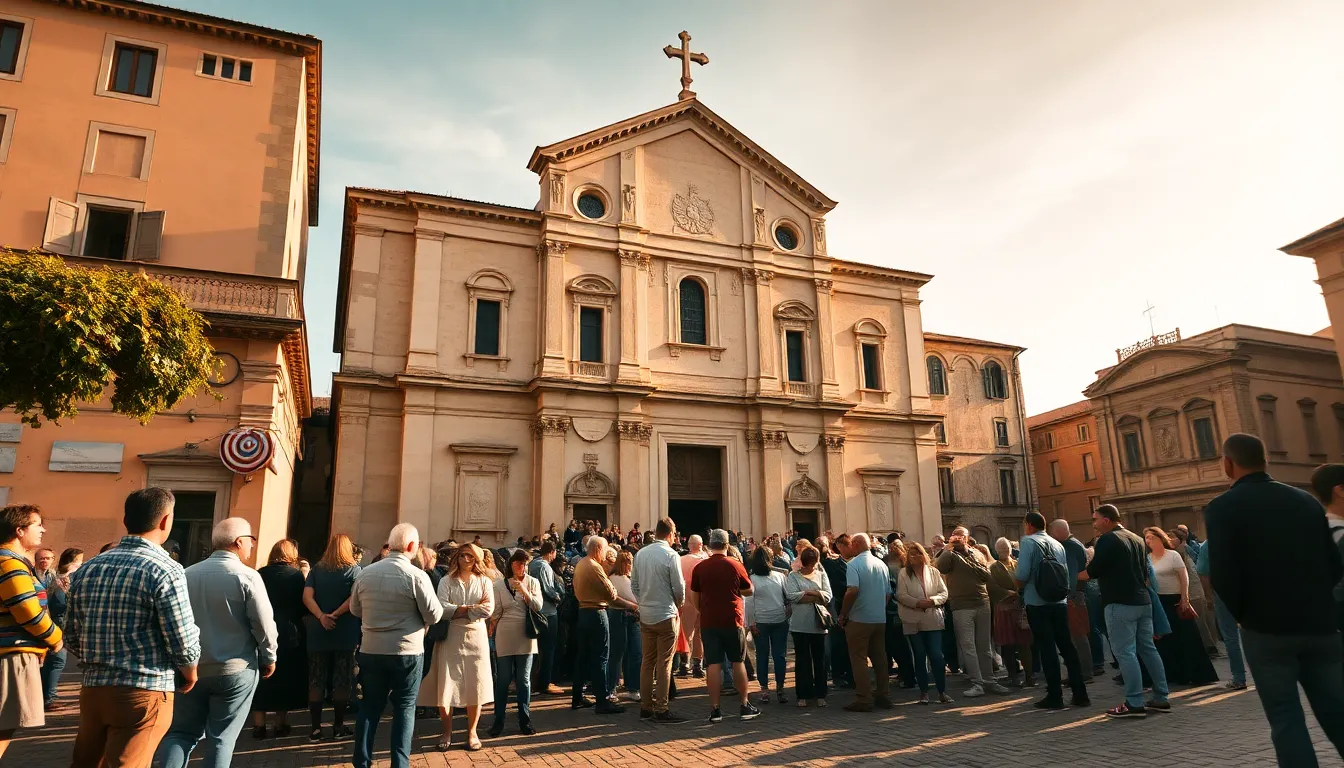
The hardest part of leading a congregation to Italy is not Rome. It is the empty page before Rome. The moment when you have the conviction that your people should go, but no group, no date, no itinerary, and no idea where the first thread goes. I have watched dozens of clergy stand at that exact spot. The ones who build a great trip are not the ones with the most travel experience. They are the ones who follow a clear sequence, one decision at a time, from the first mention in a sermon to the morning the bus pulls away from the hotel.
That is what this is, a build. Not a checklist of attractions but the order of operations for turning conviction into a trip that fifteen, thirty, or forty of your people actually take. I have spent more than forty years helping clergy do this, first at the Israel Ministry of Tourism and now at Heritage Tours. Here is how to build it from scratch.
Step One: The First Mention
Before any itinerary, before any operator, you plant the seed. The most natural place is from the front, woven into your teaching. Not “we are going to Italy,” which is premature, but something closer to “imagine standing where the early church first gathered.” You are testing for resonance. Does the idea land? Do people come up afterward and ask about it?
The first mention does two things. It surfaces who is genuinely interested, the people who will form your core, and it gives you honest data before you commit to anything. Make this mention a few times over a month or two. Watch who keeps bringing it up. Those are your first fifteen, and they matter more than any brochure.
Keep it warm and specific. A vague “someday we should travel together” goes nowhere. “I keep thinking about walking the catacombs of Rome with you” plants something people remember.
Step Two: One Conversation With an Operator
Once you sense real interest, have a single conversation with a heritage operator. This is roughly twelve months before you want to travel. You are not committing and you are not booking. You are exploring.
Bring three things to that conversation: your tradition and the spiritual shape you want, your rough group size, and the season you are eyeing. A good operator will listen far more than they pitch. They will ask what you want your people to come home with, and they will tell you honestly what is realistic for your size and your timeline.
This is also where you learn whether the operator understands faith groups. Ask directly: do they build custom itineraries or sell fixed packages? Who are their local guides and have they worked with congregations? How do they handle dietary needs, religious observance, and the moments that matter at a heritage site? If the answers are vague, keep looking. The full set of questions worth asking is laid out in our guide for pastors and rabbis planning an Italy heritage tour.
Step Three: Present It to the Congregation
About ten months out, you make it real to your people. You do not need a finished itinerary or a final price to do this. You need an honest description of the trip, an approximate cost range, and a clear sense of what makes it a heritage journey rather than a vacation.
Ask for expressions of interest, not deposits. A raised hand, an email, a name on a list. Your goal at this stage is to confirm you can reach fifteen, which is the number where the trip works economically and where your own travel is covered. If you have been seeding the idea well, the interest is usually already there.
Frame the invitation around meaning, not logistics. People do not commit a week and real money to a bus tour. They commit to standing in the early church, to walking with their community, to coming home changed. Lead with that. The detailed work of filling the group with the right people is its own craft, covered in our piece on marketing an Italy heritage trip to your congregation.
Step Four: Build the Itinerary
Around eight months out, with interest confirmed, you build the actual route with your operator. This is where your spiritual sentence from step one becomes geography.
For a Christian congregation, a strong first build anchors in Rome for three or four nights, the Vatican, St. Peter’s, the catacombs, the early basilicas. From there you add contrast and depth. Assisi for Francis and a slower, quieter pace. Then Florence for Renaissance sacred art, or Ravenna for the Byzantine mosaics, depending on whether your people lean toward beauty or toward the deep early history.
The discipline at this stage is restraint. Resist seeing everything. Three well-chosen cities over ten days will move your congregation more than six cities in a blur. Build in unstructured time too, an afternoon in a piazza, a dinner with nothing after, a free morning to return to a site that moved someone. Those open hours are where the trip becomes more than a tour.
Lock in the practical anchors here as well. If your group needs a particular observance protected, a Sunday service, a specific dietary standard, this is when it goes into the design, not after.
Step Five: Deposits, Logistics, and Preparation
From six months out, the build turns practical.
Six months out: Collect deposits and confirm your headcount. Reaching fifteen covers your own costs as the leader.
Three months out: Confirm flights, travel insurance, dietary requirements, and any mobility considerations. Send your group a packing list and a short cultural orientation. Italian churches and heritage sites often have dress codes and access protocols, and your people should know in advance.
One month out: Final headcount and a full day-by-day review with your operator. Now prepare the part only you can do, the readings, the devotionals, the short teachings you will give at each site. This is what turns a well-run tour into a heritage experience.
Day one, wheels up: You land. The pickup is arranged, the local guide is waiting. Your job is no longer logistics. It is presence. You walk with your people while the operator carries the details.
How the Leader Travels Free, and Why It Shapes the Build
A word on cost, because it shapes the whole build from step one.
At Heritage Tours, with fifteen or more participants, the group leader travels at no cost. Flights, hotels, meals, everything your congregation receives, you receive at no charge. This is not a promotional incentive. It reflects a conviction I have held for decades. The person who plants the seed, recruits the group, prepares the teaching, and carries the spiritual and organizational weight should not also be paying their own way.
For the build, this means your real target is never “fill a tour.” It is “reach fifteen.” Once you frame every step around that one threshold, the whole project becomes concrete and achievable. Fifteen is within reach for almost any congregation that has felt the first mention land. You can see how the full leader experience works on our group heritage tours page.
For your members, costs are typically shared equally and can often be spread over several months of payments before departure. Many congregations build the trip into their annual budget, hold a fundraiser, or offer a subsidy for members who need help. A good operator will talk through payment structures that fit your community.
FAQ: Building a Congregation Trip to Italy
How early should I start building a congregation trip to Italy?
Twelve months is the right runway, especially for spring or autumn travel when demand is highest. That gives you time to seed the idea, confirm interest, build the itinerary, collect deposits, and prepare the spiritual content properly. Starting earlier than you think you need to is rarely a mistake.
What is the very first step?
The first mention, not the first booking. Weave the idea into your teaching and watch who responds. The people who keep bringing it up are your core group. Confirming real interest before you commit to an operator or a date saves you from building a trip nobody takes.
How many people do I need?
Fifteen is the threshold where group pricing applies and the leader travels free. Most congregation trips land between fifteen and forty. You can go larger, but for a first build a group in that range is comfortable to lead and care for.
Do I have to handle all the logistics myself?
No. The operator handles flights, transport, hotels, guides, admissions, dietary accommodations, and contingencies. You keep the spiritual content, the teaching, and the care of your people. Drawing that line clearly is what keeps a first build manageable.
How do members pay for it?
Costs are usually shared equally and can be spread over several months of payments leading up to the trip. Many congregations build the trip into their annual budget or run a fundraiser, and subsidies for members who need assistance are common. Your operator should discuss a payment structure that works for your community.
If you are staring at the empty page right now, conviction but no group yet, that is exactly the right place to begin. The build is just a sequence, and the first step is a conversation. There is no commitment and no pressure. Reach out whenever you are ready, or explore our Italy heritage tours to start shaping what your congregation’s trip could become.