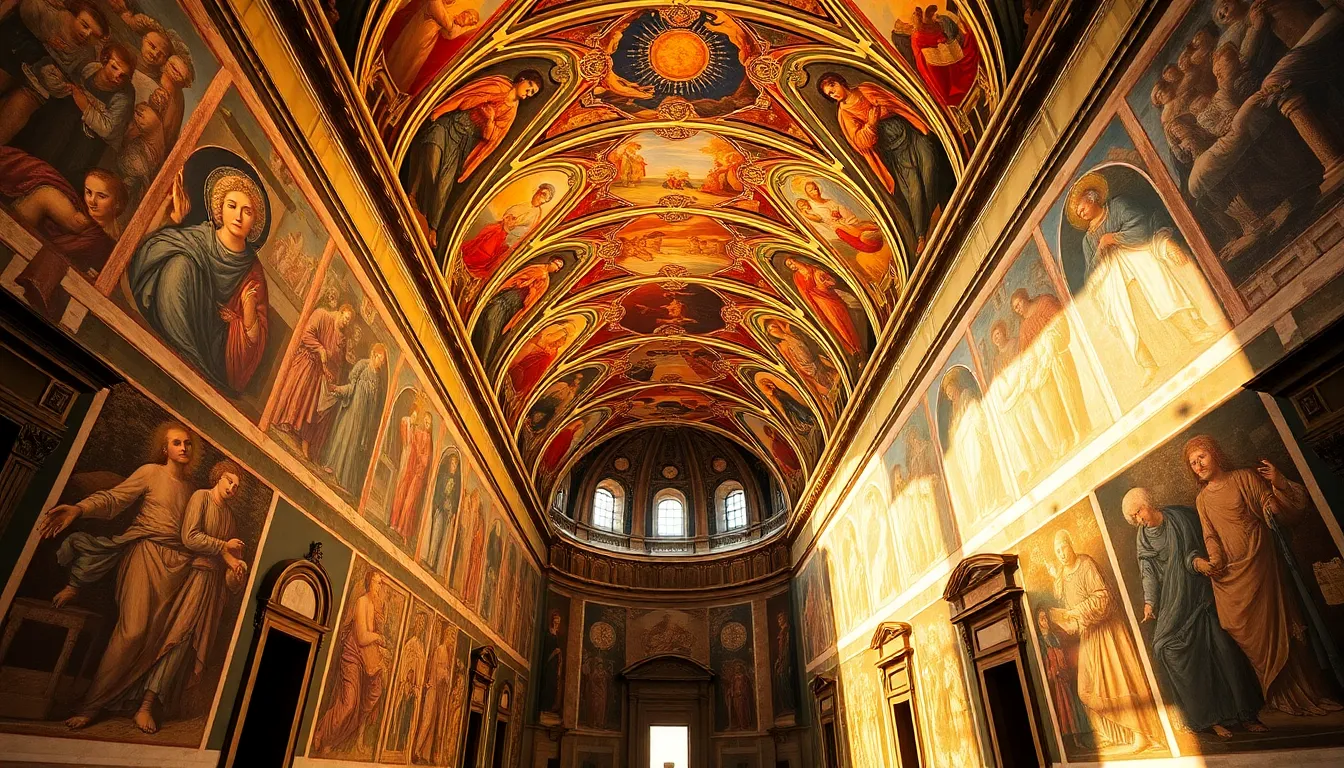
People come to the Veneto for Venice and treat Padua as the place the train passes through. I have watched group leaders fold it into a single afternoon, and every time I want to gently slow them down. Padua holds one of the most important pilgrimage churches in Catholic Europe, a chapel that changed the history of Western painting, and a Jewish quarter with roots running back more than five centuries. That is too much to give an afternoon.
Padua sits about half an hour west of Venice by train, which makes it easy to reach and easy to underestimate. It is a working university city, home to one of the oldest universities in the world, founded in 1222, where Galileo taught. It has the energy of a place that has been thinking and arguing for eight hundred years. For a heritage group, it offers Christian, Jewish, and intellectual history in a compact, walkable center.
Here is what your group should see and how I would plan it.
The Basilica of Saint Anthony: A Living Pilgrimage Site
For Catholic groups, this is the heart of Padua. The Basilica of Saint Anthony, known locally simply as “il Santo,” holds the tomb of Anthony of Padua, the 13th-century Franciscan preacher who is one of the most venerated saints in the Catholic world. Pilgrims have come here without interruption since his death in 1231.
This matters when you bring a group. Unlike a museum, the basilica is a place of active devotion. Visitors line up to touch the saint’s tomb and leave written prayers. Your group will be standing among pilgrims who have traveled great distances for this exact spot. I always prepare groups for that. It changes how you move through the space and how quiet you keep.
Architecturally the basilica is remarkable in its own right, a blend of Romanesque, Gothic, and Byzantine elements with multiple domes that give it an almost Eastern silhouette. Inside are works by Donatello, including his bronze reliefs and the famous equestrian statue, the Gattamelata, standing in the square outside. For a Christian heritage group, the combination of living devotion and major early Renaissance art in one building is rare and worth real time.
The Scrovegni Chapel: Giotto and the Birth of Modern Painting
If the basilica is Padua’s devotional heart, the Scrovegni Chapel is its artistic summit, and one of the most important rooms in the history of Western art.
Around 1305, the painter Giotto covered the interior of this small chapel with a fresco cycle telling the lives of the Virgin and Christ. What he did here broke from the flat, formal Byzantine style that came before. Giotto gave his figures weight, emotion, and real human gesture. Art historians point to this room as the moment Western painting turned toward realism and the Renaissance. The deep blue of the ceiling, scattered with gold stars, and the panel of the Lamentation over the dead Christ are among the most studied images in art.
For a group, this is theology told in pictures. Giotto painted the Gospel so a 14th-century congregation could read it on the walls, and it still works that way. A good guide walking your group through the narrative panels in order turns a famous artwork into a sermon in fresco.
One practical note that I cannot stress enough: access to the Scrovegni Chapel is strictly controlled to protect the frescoes. Visitors enter in small timed groups, often spending fifteen minutes in a climate-controlled waiting room before a short, limited slot inside. Tickets must be booked in advance, sometimes well in advance. For a group, this requires planning. It is not a walk-up site.
The Jewish Ghetto of Padua
Padua’s Jewish community is one of the older and more significant in northern Italy, and its physical heart still survives in the old ghetto a short walk from the city center.
Jews lived in Padua from the medieval period, drawn in part by the famous university, which at times admitted Jewish students of medicine when few other institutions in Europe would. The ghetto was formally established in 1603, when the Venetian Republic, which then ruled Padua, confined the community to a set of narrow streets around the present-day Via San Martino e Solferino. As in other Italian ghettos, the buildings grew tall and crowded because the community could not expand outward.
Today the quarter is a tangle of atmospheric lanes, and at its center stands the Italian Synagogue, still in use, which your group can visit. The community also maintains the Jewish Museum of Padua, set in a former synagogue, telling the story of a community that produced rabbis and scholars of real standing. There is also a historic Jewish cemetery, among the oldest in Europe still surviving, with graves dating back centuries.
When I bring a group here, the contrast with the basilica only a few minutes away is the lesson. In a single short walk you cross from one of Catholic Europe’s great pilgrimage churches to a living Jewish quarter that endured ghetto walls, Napoleon’s emancipation, and the Holocaust. The old ghetto streets carry plaques and memory of the wartime deportations that nearly ended the community, and the fact that a working synagogue still stands here is itself part of the story. Padua holds both traditions, close together, and that is exactly why it deserves more than an afternoon.
Practical Orientation for Group Leaders
Padua’s historic center is compact and largely flat, which makes it manageable for a mixed-age group. The main sites are within walking distance, though the basilica and the Scrovegni Chapel sit on roughly opposite edges of the center, so plan the order of your day around the chapel’s fixed entry time.
A few things I tell every group leader heading here:
- Book the Scrovegni Chapel first. Build the rest of your day around its timed slot. Everything else in Padua is flexible. The chapel is not.
- Allow real time at the basilica. Between the tomb, the Donatello works, and the sheer scale of the building, an hour is the minimum. Pilgrim crowds peak around midday and on the saint’s feast day, June 13.
- Coordinate the synagogue visit in advance. The Italian Synagogue and the Jewish Museum welcome groups, but visits work best when arranged ahead, especially around Shabbat and Jewish holidays.
- Use Padua as a base, not a stopover. Staying a night lets you give the city its due and still reach Venice easily. Day-tripping through it is the mistake I see most often.
Padua fits naturally into a Veneto and northern Italy route. Many of my groups pair it with Venice for the ghetto and synagogues, or extend southward toward Ravenna and its Byzantine mosaics. If your group is tracing Jewish heritage across Italy, Padua also connects well to the broader story you can follow down into Tuscany.
FAQ: Planning a Padua Heritage Visit
Do I need to book the Scrovegni Chapel in advance for a group?
Yes, without exception. Entry is strictly timed and limited to protect Giotto’s frescoes, and groups enter in small numbers for short, controlled slots. Tickets sell out, especially in spring and autumn. Reserve as early as you can and build the rest of your Padua day around that fixed time.
Is Padua a good day trip from Venice, or should we stay overnight?
It can be done as a day trip since it is only about half an hour from Venice by train, but I recommend at least one overnight. Between the Basilica of Saint Anthony, the Scrovegni Chapel, and the Jewish ghetto, a rushed afternoon leaves the best parts thin. Staying gives the city the time it deserves.
Can a group visit the synagogue and Jewish quarter in Padua?
Yes. The historic Italian Synagogue is still in use and welcomes group visits, and the Jewish Museum of Padua tells the community’s story. Arrange visits in advance, particularly around Shabbat and Jewish holidays when access changes.
Why is the Basilica of Saint Anthony so important?
It holds the tomb of Saint Anthony of Padua, one of the most venerated saints in the Catholic world, and has been a continuous pilgrimage site since 1231. It also contains major works by Donatello. For Catholic groups it combines living devotion with significant early Renaissance art in one place.
Is Padua suitable for older group members?
Yes. The historic center is compact and mostly flat, with the main sites within walking distance. The one thing to plan around is the basilica’s size and the timed chapel entry, but there are no demanding climbs in the core route.
If Padua and the heritage of the Veneto interest your community, I would welcome the conversation. Start with our full Italy heritage travel guide, see our Italy destination page, or learn how our group heritage tours are designed for faith groups. When the time feels right, reach out and we will plan it together.