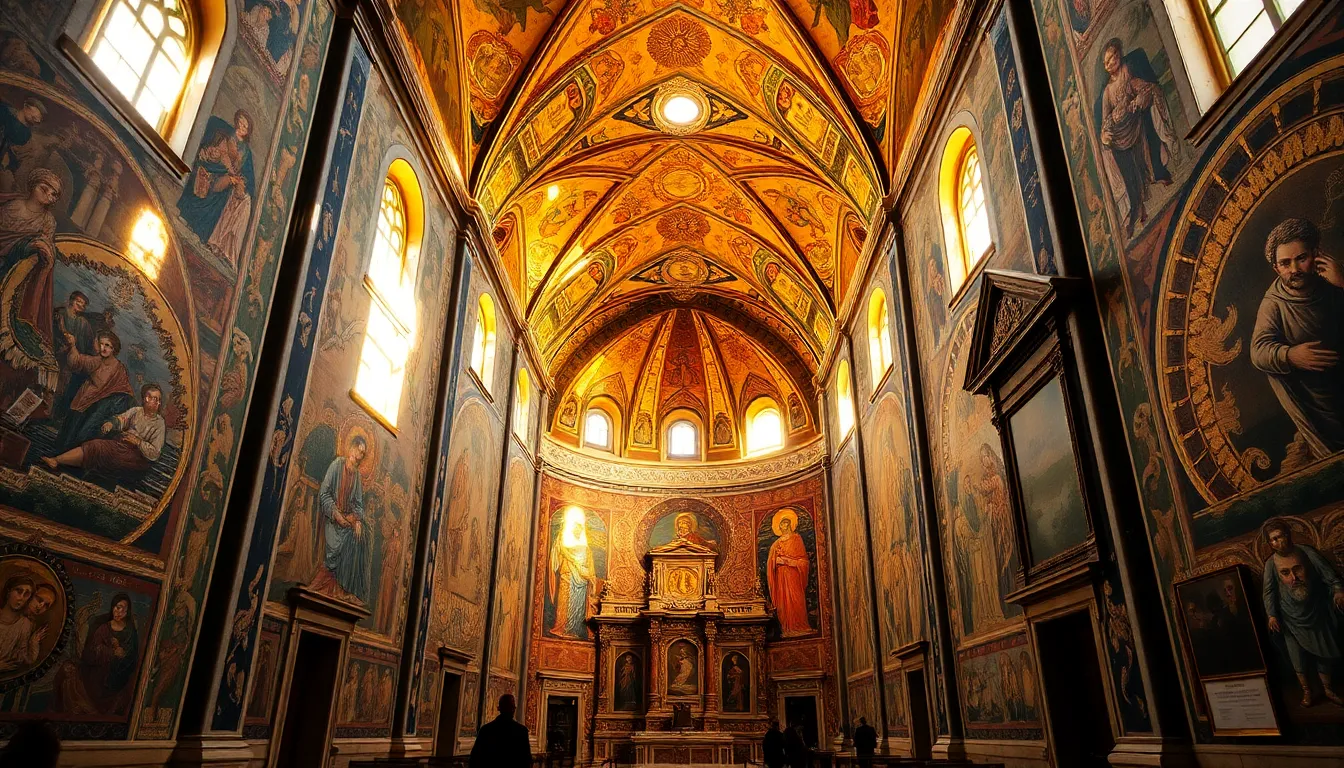
The first time I brought a group into the Basilica of San Vitale in Ravenna, a pastor who had seen mosaics all over Italy stopped in the doorway and went quiet. He told me later he had not expected to feel anything new. Then he stood under the apse, looked up at fifteen hundred years of gold, and changed his mind in about ten seconds.
That is Ravenna. It does not announce itself the way Rome or Florence does. It sits on the flat coastal plain of Emilia-Romagna, a smaller city most travelers skip. And it holds the single greatest concentration of early Christian and Byzantine mosaic art anywhere on earth. Eight of its monuments carry UNESCO World Heritage status. For a group that cares about where the faith took shape in its first centuries, this is not a side trip. It is one of the most important stops in Italy.
Let me walk you through what Ravenna actually holds, and how to plan the visit so your group gets the depth and not just the photographs.
Why Ravenna Mattered: The Last Capital of the Western Empire
To understand the mosaics, your group needs to understand why a small city on the Adriatic became the seat of an empire.
In 402, with the Western Roman Empire under pressure from invading tribes, the emperor Honorius moved the capital from Milan to Ravenna. The city was protected by marshes and had a working port at nearby Classe. For the next several centuries it stayed at the center of power. When the Western Empire fell in 476, Ravenna became the capital of the Ostrogothic kingdom under Theodoric. Then, in the 6th century, the emperor Justinian reconquered Italy from Constantinople, and Ravenna became the western capital of the Byzantine Empire.
That sequence is the whole story. Three different rulers, three different visions of Christianity, all leaving their mark in the same square mile. Roman, Gothic, and Byzantine hands all worked here, which is why the art feels layered in a way you do not find in a single-period city.
When I explain this to a group before we walk in, the mosaics stop being decoration and start being a record of who held power and what they believed.
The Mosaics: What Your Group Will Actually See
Basilica of San Vitale
This is the centerpiece. Consecrated in 547, San Vitale holds the famous imperial panels showing the emperor Justinian and the empress Theodora with their courts, facing each other across the apse. These are among the most reproduced images in all of Byzantine art, and standing in front of them in person is a different experience entirely. The gold ground was designed to catch candlelight and move. Your group will see the figures shift as they walk.
I always give people time here. A few minutes is not enough. The theology in this room, the way Christ is shown enthroned on the globe of the world, rewards slow looking.
Mausoleum of Galla Placidia
A short walk from San Vitale, this small 5th-century building is, to my eye, the most moving space in the city. The mosaics here are older than those in San Vitale and the blue is extraordinary, a deep night-sky blue scattered with gold stars across the vault. The image of Christ as the Good Shepherd over the entrance is one of the earliest and gentlest depictions of that scene anywhere. The room is tiny. Bring your group in slowly and let them look up.
Basilica of Sant’Apollinare Nuovo
Built by Theodoric in the early 6th century, this church holds two long processions in mosaic running the length of the nave, virgins and martyrs moving toward Christ and the Virgin. There is also a rare early depiction of the port of Classe and Theodoric’s palace. Look closely and your guide can point out where Byzantine hands later altered the original Gothic mosaics for theological reasons. That alteration is a history lesson in itself.
Sant’Apollinare in Classe and the Baptisteries
A few kilometers outside the center, in the old port suburb of Classe, stands Sant’Apollinare in Classe, with a vast apse mosaic of the Transfiguration rendered in symbol rather than literal figures. Back in the center, the Neonian Baptistery and the Arian Baptistery each hold a dome mosaic of the baptism of Christ, built by the two rival Christian communities of the era. Showing your group both baptisteries side by side is the clearest way to make the early doctrinal divisions concrete and human.
The Jewish Presence in Ravenna and the Region
Ravenna’s own medieval Jewish community was smaller and less continuous than those of Rome or Venice, and much of its physical trace has been lost. But the wider Emilia-Romagna region holds real Jewish heritage worth knowing about when you plan a route.
Ferrara, less than two hours away, has one of the most important Jewish stories in northern Italy. Its community flourished under the Este dukes, who welcomed Jews expelled from Spain in 1492, and the city’s old ghetto and the MEIS, the National Museum of Italian Judaism and the Shoah, make Ferrara a natural pairing with Ravenna for a group tracing both Christian and Jewish heritage. Bologna, also nearby, has its own former ghetto quarter. For a mixed-interest group, building Ravenna into a northern Italian loop that includes Ferrara gives you both traditions in a few days of travel.
Practical Orientation for Group Leaders
Ravenna is compact. The four central monuments, San Vitale, Galla Placidia, the Neonian Baptistery, and Sant’Apollinare Nuovo, sit within easy walking distance of each other in the historic center, which is largely flat and pedestrian-friendly. That matters for groups with older members. You can see the core in a focused day without anyone getting worn down by long walks or steep climbs.
A few things I tell every group leader:
- Buy the combined ticket. A single cumulative ticket covers the main monuments and saves time at each entrance. Galla Placidia sometimes carries a small timed-entry supplement in busy months.
- Light matters. The mosaics come alive in good interior light. Midday tends to be best inside San Vitale. Plan your visit order around that rather than rushing.
- Classe needs transport. Sant’Apollinare in Classe is outside the center. Factor in a short bus or coach transfer if you want to include it, and many groups do, because the apse there is unforgettable.
- Pace it. Ravenna tempts you to move fast because the sites are close together. Resist that. The whole point of these mosaics is slow looking. I would rather a group see four monuments well than eight in a hurry.
Ravenna pairs naturally with a fuller Italian itinerary. Many of my groups combine it with Venice to the north or work it into a broader route alongside Padua and the Veneto. If your group’s interest leans Byzantine and early Christian, Ravenna is the anchor the rest of the trip builds around.
FAQ: Planning a Ravenna Heritage Visit
How long does a group need in Ravenna?
One full day covers the four central monuments at a comfortable pace. If you want to add Sant’Apollinare in Classe outside town, plan for a day and a half. I would not try to do Ravenna as a half-day stop. The mosaics reward time, and a rushed visit misses the point of coming.
Is Ravenna suitable for older or less mobile group members?
Yes, more than most Italian heritage cities. The historic center is flat, the monuments are close together, and there are no long climbs in the core sites. This is one of the easier Italian destinations for a mixed-age congregation, which is part of why I recommend it.
Why is Ravenna important for Christian heritage specifically?
Ravenna holds the world’s best-preserved early Christian and Byzantine mosaics, made during the centuries when Christian art and doctrine were still taking shape. The two baptisteries, built by rival communities, and the imperial panels in San Vitale make the theological history of that era visible in a way few places can match.
Can we combine Ravenna with Jewish heritage sites?
Yes. While Ravenna’s own Jewish trace is limited, nearby Ferrara holds a major Italian Jewish story and the National Museum of Italian Judaism and the Shoah. Building a route through Ravenna and Ferrara gives a group both Christian and Jewish heritage within a short drive.
When is the best time to visit Ravenna?
Spring and autumn are ideal. The interiors are comfortable year-round since the experience is indoors, but the surrounding region is most pleasant in April, May, September, and October, and crowds at the monuments are lighter than in peak summer.
If Ravenna and the layered heritage of northern Italy speak to your community, I would be glad to talk it through. You can read our full Italy heritage travel guide for the bigger picture, explore our Italy destination page, or see how our group heritage tours are built for faith communities. When you are ready, reach out and we will start with a conversation.