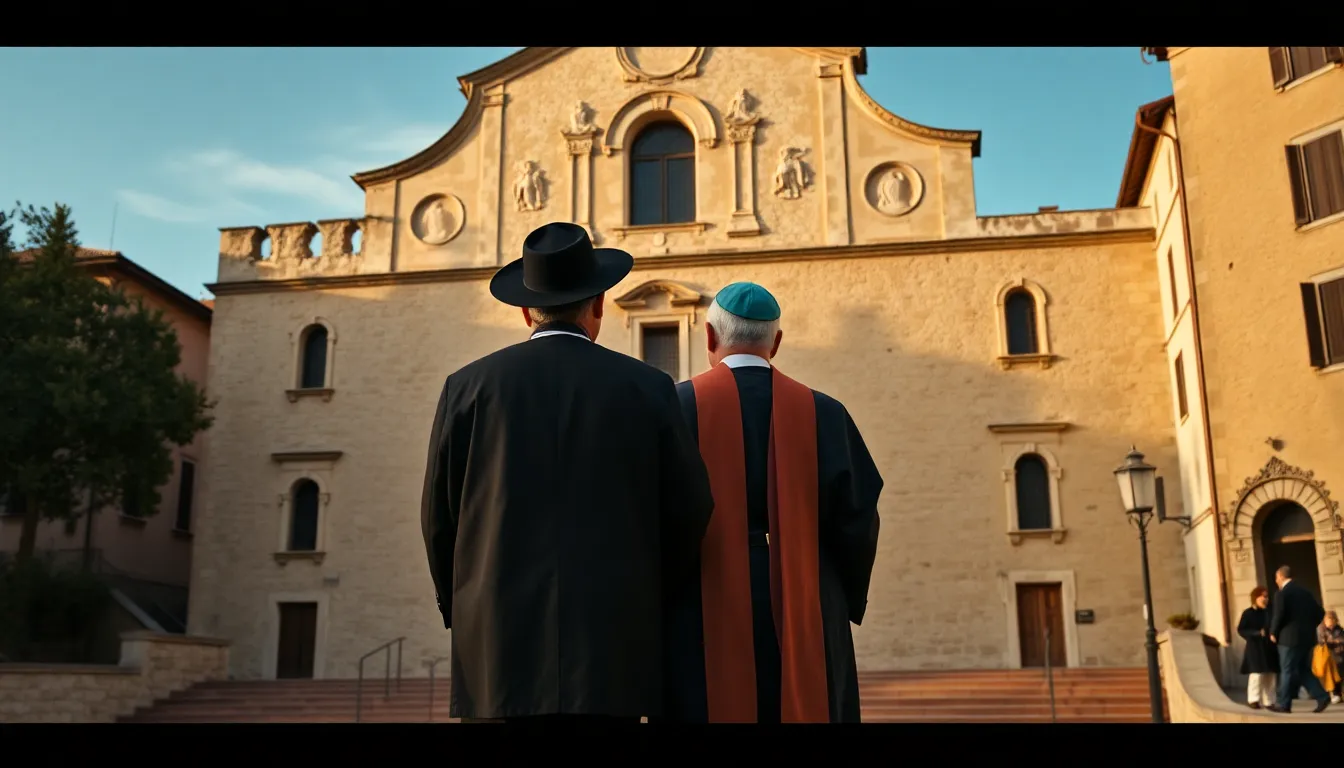
Some of the most moving trips I have ever been part of were the ones where a rabbi and a pastor led together. There is something about watching a Jewish group and a Christian group stand in the same Roman street, a short walk between the Ghetto and St. Peter’s, hearing each other’s stories told by each other’s leaders, that does something no single-tradition trip can do. People come home changed, not only by Italy, but by the experience of traveling alongside neighbors whose faith they had never really understood.
But I will be honest with you. These trips are also the hardest to lead well. Two leaders, two traditions, two sets of needs and sensitivities, all moving through a country together. When it works, it is unforgettable. When it is rushed or under-planned, it can leave both groups feeling shortchanged. The difference is almost entirely in the preparation and in the relationship between the two leaders.
If you are a rabbi or pastor considering co-leading a trip like this, let me share what I have learned about doing it well.
Start With the Relationship Between the Leaders
Before you plan a single day of the itinerary, the two of you need to talk, really talk, about what you are building together. This is not a logistics meeting. It is a conversation about trust.
You are about to lead your two communities into close quarters for a week or more. Your people will watch how you treat each other. If there is genuine warmth and respect between the two leaders, the groups absorb it, and the whole trip carries that spirit. If the leaders are merely cooperating politely, the groups feel that too, and stay subtly apart.
So spend time together first. Understand each other’s tradition well enough to speak about it with respect, not as experts, but as friends who have done their homework. Talk frankly about the moments that might be sensitive, where Jewish and Christian history intersect painfully, and agree on how you will handle them. The honesty you build in these early conversations becomes the foundation everything else rests on.
I always encourage co-leaders to agree on one principle up front: neither tradition is a guest in the other’s trip. This is a shared journey of equals. The moment one group starts to feel like an add-on to the other’s pilgrimage, the magic is gone.
Designing an Itinerary That Honors Both Traditions
Italy is one of the very few places in the world where this kind of trip works naturally, because the two stories are physically interwoven. In Rome especially, the Jewish Ghetto and the Vatican are separated by a short walk. The early Christian catacombs and the ancient Jewish catacombs sit in the same city. The histories are different, sometimes painfully so, but they are bound together by the same centuries and the same streets.
A well-designed interfaith itinerary uses this. The goal is balance, where neither tradition feels secondary, and shared experience, where both groups stand in the same place and each leader speaks to what it means from their tradition.
Some sites belong clearly to one tradition. The Venice Ghetto synagogues are a Jewish story. The Basilica of St. Francis in Assisi is a Christian one. On those days, the leader of that tradition takes the lead, and the other group travels as respectful guests, learning. The reciprocity over the course of the trip is what makes it fair. One day your people lead, the next day you learn, and back again.
Then there are the shared sites, and these are the heart of an interfaith trip. The Roman Forum, where both Jewish and Christian history unfolded under the empire. The Arch of Titus, which means something profound and painful to a Jewish group and something historically important to a Christian one. Standing there together, hearing both leaders speak, is the kind of moment people remember for the rest of their lives.
This is delicate itinerary work, and it is worth doing with an operator who has built these trips before. Our guide for pastors and rabbis planning a group heritage tour to Italy covers the broader planning, and an interfaith version simply layers this balance on top.
Handling Observance, Prayer, and Worship
This is where co-leaders need clarity and generosity in equal measure.
Each tradition will want time for its own prayer and observance, and that has to be built into the schedule, not improvised. If the Jewish group observes Shabbat, the itinerary must honor it, with the Christian group either joining respectfully as observers where appropriate or having their own quiet time. If the Christian group gathers for worship, the same courtesy applies in reverse.
I have found the best interfaith trips do two things at once. They protect each tradition’s own sacred time, and they create moments of shared reflection that belong to everyone. A reading both traditions hold dear. A moment of silence in a place that matters to both. A meal eaten together with a blessing offered from each side of the table. These shared moments do not blur the traditions into one. They honor both while building something between them.
The leaders should decide in advance how prayer will work at each site. Who offers a reflection where? When does each group have its own time? When do you come together? Clarity here prevents the awkward improvisation that can make people on both sides uncomfortable.
The Practical Layer: Meals, Lodging, and Logistics
Interfaith groups carry the dietary complexity of both traditions at once, and this needs real attention. You may have kosher travelers, halal travelers, and others all at the same table. The good news is that thoughtful planning lets everyone eat together, shared vegetarian and fish-based Italian meals satisfy a wide range of needs at once, which is good for the logistics and even better for the fellowship. We lay out exactly how to manage this in our guide on handling dietary needs across a mixed heritage group in Italy.
Lodging is usually simpler. Both groups stay in the same hotels, which actually helps the bonding. The shared breakfast, the lobby conversations, the evening gatherings, these informal moments are where the two communities really become one group.
There is also the question of the second free place. When two clergy co-lead, the economics of the trip are worth clarifying early. Depending on group size, a second leader’s place may be covered, and that is exactly the kind of thing to settle in writing before anyone books. Our overview of how the group leader travels free explains how the threshold works and when a second complimentary place becomes available.
Preparing Two Communities to Travel as One
The preparation before an interfaith trip is, in my experience, as meaningful as the trip itself. When each community studies its own tradition and also learns enough about the other to travel with understanding, something shifts before anyone even leaves home.
I encourage co-leaders to hold at least one or two joint preparation sessions where both communities come together, meet each other, and begin to build the relationships that will carry the trip. The first time the two groups meet should not be at the airport. By the time they travel, there should already be faces they recognize and names they know. Our guide on preparing your group spiritually for Italy works well as a backbone for this, with each tradition adapting it to its own people while sharing the joint sessions.
When two communities arrive in Italy already curious about each other, already a little bonded, the trip has a head start toward becoming the kind of experience people talk about for years.
FAQ: Co-Leading an Interfaith Trip to Italy
Why is Italy a good destination for an interfaith heritage trip?
Italy is one of the few places where Jewish and Christian history are physically interwoven. In Rome, the Jewish Ghetto and the Vatican are a short walk apart, and ancient Jewish and Christian catacombs sit in the same city. This lets an itinerary honor both traditions naturally, with shared sites where both groups stand together and each leader speaks to what the place means from their tradition.
How do a rabbi and pastor divide leadership on a shared trip?
By tradition and by site. At places belonging clearly to one tradition, that leader takes the lead while the other group travels as respectful guests, and the roles reverse the next day. At shared sites, both leaders speak. The guiding principle is reciprocity and equality, neither tradition is a guest in the other’s trip. Agreeing on who leads where, in advance, prevents awkward improvisation.
How do you handle different observance needs on an interfaith trip?
Build each tradition’s sacred time into the schedule rather than improvising it. If the Jewish group observes Shabbat, the itinerary honors it; if the Christian group worships, the same courtesy applies in reverse. The best trips also create shared moments, a reading both hold dear, a silence in a meaningful place, that honor both traditions without blurring them. Leaders should decide in advance how prayer works at each site.
Can kosher and halal travelers eat together on an interfaith trip?
Yes, with thoughtful menu planning. Shared vegetarian and fish-based Italian meals satisfy a wide range of needs at once and keep the group together rather than split. Travelers requiring strict certification have kosher or halal meals arranged separately in the cities where they are available. Gathering every dietary requirement in detail before the trip is the essential first step.
How should the two communities prepare before traveling together?
Hold at least one or two joint preparation sessions so the groups meet and begin building relationships before the airport. Each community studies its own tradition and learns enough about the other to travel with understanding. Arriving already curious and a little bonded gives the trip a real head start toward becoming a lasting experience.
If you and a fellow clergy member are thinking about leading your communities to Italy together, I would love to help you shape it. These trips take careful planning, but they are among the most rewarding I have ever been part of. Contact us when you are ready, and explore our Italy heritage tours and group heritage tours to see how a shared journey comes together.