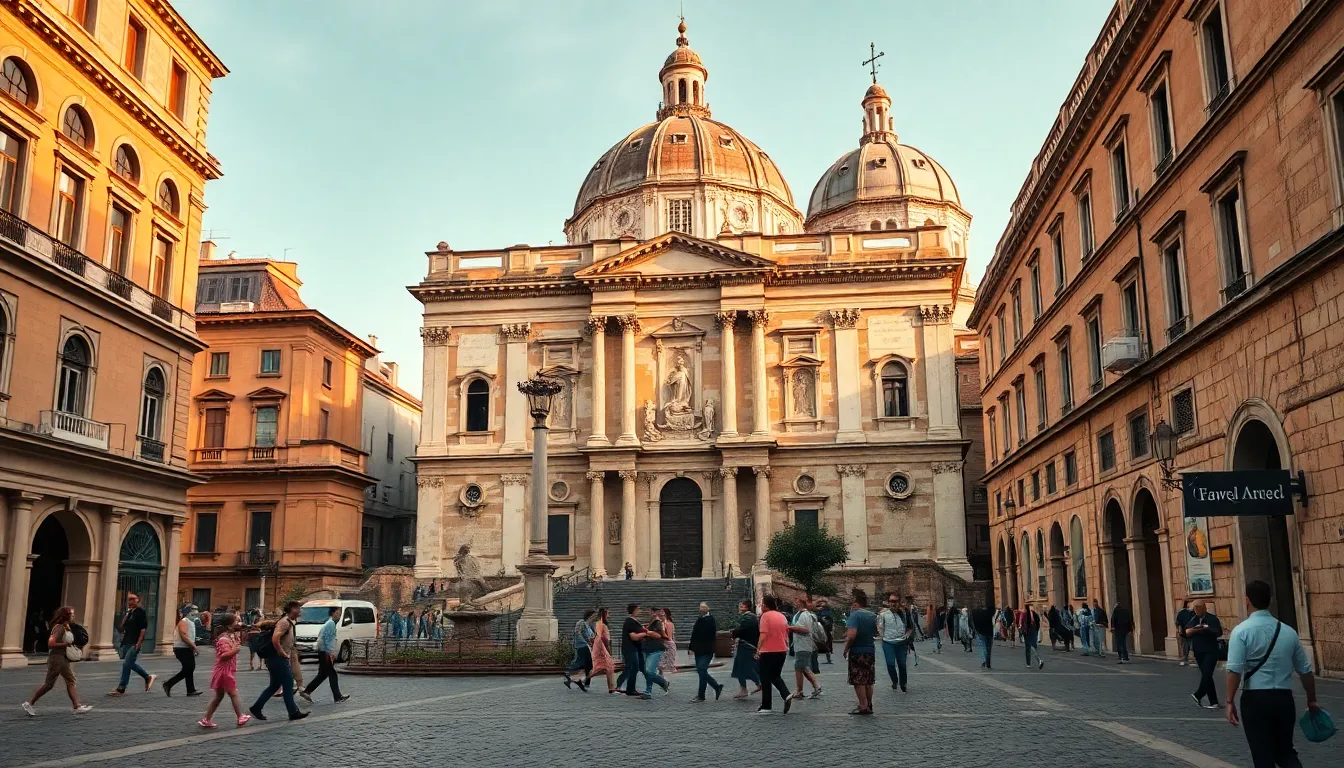
Before I take any group to Italy, I sit them down and tell them one number: two thousand years. Not two hundred. Not five hundred. The Jewish community of Italy has been continuous for more than two millennia, longer than almost any Jewish community on earth. When a group holds that number in their minds before they ever board the plane, every ghetto wall and synagogue dome they later stand in front of carries the weight it deserves.
The history of Italy’s Jews is not a single story. It is a long arc with chapters of welcome and chapters of persecution, of flourishing and of catastrophe, and through all of it, an unbroken thread. This is the framework I give every group before we go, because the sites only make full sense against the timeline. Let me walk you through the arc.
Ancient Rome: Older Than the Empire’s Memory
Jewish families were living in Rome by the 2nd century BCE, before the destruction of the Second Temple, before the Common Era began. They came as traders, as envoys, and after the fall of Jerusalem in 70 CE, as captives. The Arch of Titus, still standing in the Roman Forum, depicts Roman soldiers carrying off the menorah from the looted Temple. Your group can stand beneath that arch today, and it is a sobering thing to see the moment of exile carved in stone by the people who caused it.
But the Jewish community of Rome did not begin or end with that catastrophe. It was woven into the life of the ancient city. The Jewish catacombs of Rome, older than the Christian ones, hold the carved menorahs and inscriptions of a community that was Roman and Jewish at once. This is the foundation of the entire story, and it is unique in the Jewish world: a community that has lived in the same city, continuously, for over two thousand years.
The Medieval Centuries: Welcome and Restriction
Through the Middle Ages, Jewish communities spread across the Italian peninsula, their fortunes rising and falling with the ruler, the city, and the century. Italy was not one country then but a patchwork of states, and Jewish experience varied enormously from place to place.
In some cities and eras, Jews found relative tolerance and roles in commerce, medicine, and scholarship. Jewish learning flourished, and Italy became a center of Hebrew printing after the invention of the press. In other places and times, the community faced expulsions, restrictions, and violence. The pattern your group should carry is one of constant negotiation: Jewish communities adapting, contributing, and enduring inside a Christian society that could never quite decide whether to embrace them or push them out.
1492 and the Loss of the South
The year 1492 belongs in every group’s understanding of Italy, even though most people associate it only with Spain. When Ferdinand and Isabella expelled the Jews of Spain, the decree extended to the territories under Aragonese rule, including Sicily and, soon after, the Italian south.
Sicily held one of the largest Jewish populations in Europe, perhaps thirty-five thousand people, with roots going back to Roman times. In a matter of months, that world ended. Synagogues became churches. Neighborhoods emptied. Families that had been Sicilian and Jewish for over a thousand years converted, fled, or were lost. The Jewish communities of Rome and Venice survived the centuries. Sicily’s did not. Both truths belong in the story, and the loss of the south is the chapter that gives the survival of the north its weight.
The Ghetto Era: Walls and Endurance
The sixteenth century brought the ghetto, and with it one of the defining chapters of Italian Jewish history. In 1516, Venice ordered its Jews onto a small island near a foundry, the geto, and gave the world the word. In 1555, a papal decree enclosed the Jews of Rome behind walls. Other cities followed. For roughly three centuries, much of Italy’s Jewish population lived under curfew, behind locked gates, paying for their own guards, restricted in trade and movement.
What I want every group to understand about the ghetto era is that it was not only a story of confinement. It was a story of endurance inside confinement. The Venetian Ghetto, a space you can walk around in ten minutes, held five magnificent synagogues built by five communities. The Rome Ghetto sustained a Jewish life, a cuisine, and a culture that outlasted the walls. The community did not merely survive the ghetto. It built sacred and cultural life within it that we still travel to see.
Emancipation and the Great Synagogues
The walls came down in stages. Napoleon’s arrival in Venice in 1797 ended the ghetto there. Over the nineteenth century, as Italy unified, Jewish emancipation spread, and Jews gained civil rights and full participation in Italian life for the first time in centuries.
The great synagogues of this era are the architecture of that freedom. The Great Synagogue of Rome, completed in 1904 with its square dome visible across the Tiber, was built deliberately large and visible after three centuries behind walls. The Great Synagogue of Florence, finished in 1882 with its green copper dome, made the same statement. These buildings declared, without apology, that Jewish life in Italy was not over and would not hide. For a group, they are the visible monuments to the moment the walls finally fell.
The Shoah in Italy
The story turns dark again in the twentieth century, and this chapter must be told with care and honesty. Italy’s Jews lived in relative integration into the early twentieth century, until the Fascist racial laws of 1938 stripped them of rights. After Germany occupied much of Italy in 1943, deportations began. Thousands of Italian Jews were rounded up and sent to the death camps. In Rome, the deportation of October 1943 took more than a thousand people from the Ghetto, most of whom never returned.
There were also Italians who hid Jewish neighbors, who sheltered Torah scrolls, who resisted. The Great Synagogue of Florence survived the war damaged but standing, its sacred objects hidden by community members and sympathetic Florentines. The full truth holds both the catastrophe and the courage. A group that walks the Rome Ghetto should know what happened there in 1943, and should honor it with the dignity it asks for.
Italy’s Jewish Community Today
The thread was not broken. Italy’s Jewish community endures today, smaller than before the war but alive, centered in Rome and present in Venice, Florence, Milan, and other cities. The Great Synagogue of Rome holds services. The historic synagogues of Venice still mark Jewish life. Roman Jewish cuisine is still cooked in the Ghetto where it was born.
This is the chapter that completes the arc and that I make sure every group reaches. They are not visiting a museum of a vanished people. They are visiting a living community two thousand years old that has survived exile, expulsion, ghetto walls, and genocide, and that still welcomes Shabbat in the same city where its ancestors did before the Common Era began. Our overviews of Jewish heritage in Italy and the Jewish catacombs of Rome bring specific chapters of this arc to life on the ground, and for groups heading north, the Jewish heritage of northern Italy adds the Piedmont and Veneto threads.
With fifteen or more participants, the group leader travels at no cost, which for a rabbi or educator carrying this whole arc to a congregation removes a real barrier to making the journey real.
FAQ: The History of Italy’s Jewish Community
How old is the Jewish community of Italy?
More than two thousand years. Jewish families were living in Rome by the 2nd century BCE, before the destruction of the Second Temple and before the Common Era. The community of Rome is the oldest continuously inhabited Jewish community in Europe and among the oldest anywhere. This continuity is the defining fact of Italian Jewish history and the frame every heritage group should carry.
What happened to Italy’s Jews in 1492?
The Spanish expulsion of 1492 extended to territories under Aragonese rule, including Sicily and the Italian south. Sicily held one of the largest Jewish populations in Europe, perhaps thirty-five thousand people with roots to Roman times. Within months that world ended through conversion, flight, and loss. The communities of Rome and Venice in the north survived; Sicily’s did not.
Why is Italy associated with the word “ghetto”?
The word originated in Venice. In 1516, the city confined its Jews to a small island near a foundry, called the geto in Venetian, and the name spread to every similar enclosure across Europe. The ghetto era lasted roughly three centuries, ending in Venice with Napoleon in 1797. It was a period of confinement and, at the same time, of remarkable endurance and cultural life inside the walls.
What happened to Italian Jews during the Holocaust?
Fascist racial laws in 1938 stripped Italy’s Jews of rights. After the German occupation of 1943, deportations to the death camps began. The Rome deportation of October 1943 took more than a thousand people from the Ghetto, most of whom never returned. There were also Italians who hid and protected Jewish neighbors. The history holds both the catastrophe and the courage, and it is told with care.
Is there still a Jewish community in Italy today?
Yes. Italy’s Jewish community endures, smaller than before the war but alive, centered in Rome and present in Venice, Florence, Milan, and elsewhere. Historic synagogues hold services and Roman Jewish cuisine is still cooked in the Ghetto. A heritage group visits not a vanished people but a living community two thousand years old.
If you want your congregation to arrive in Italy holding the whole two-thousand-year arc, so that every site they see lands with its full weight, we would be glad to help you prepare and plan. Learn more about our Italy heritage tours, see how the group leader experience works, and reach out whenever you are ready.