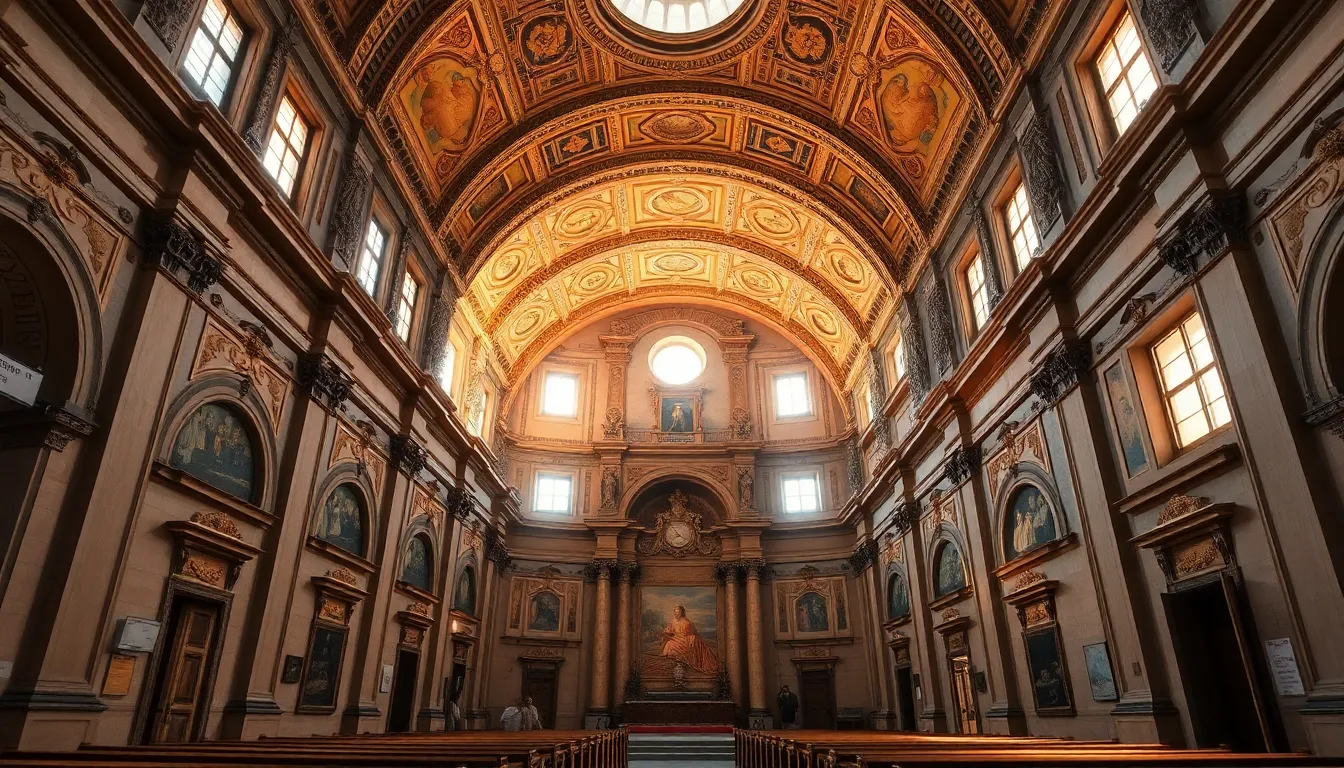
The first time I opened the door of the synagogue in Casale Monferrato for a group, someone gasped out loud. From the street it is nothing, a plain facade on a quiet lane in a Piedmont town most travelers never reach. Inside, it is a Baroque jewel box, gilded and carved and glowing, built by a community that had every reason to keep its splendor hidden from the outside and pour it inward instead. That contrast, plain without and glorious within, is the whole story of Jewish northern Italy in a single building.
Most groups going to Italy focus on Rome and Venice, and rightly so. But the Jewish heritage of the north, the Piedmont synagogues and the smaller communities of the Veneto, holds some of the most beautiful and least visited Jewish sites in the country. For a group willing to go a little off the main route, the north offers something Rome cannot: the feeling of discovering a chapter most travelers miss entirely, often with the space entirely to yourselves.
The Piedmont: A Region of Hidden Synagogues
The Piedmont, in Italy’s northwest, was a patchwork of small Jewish communities living in towns under the rule of the House of Savoy. For centuries these communities were confined to ghettos, restricted in trade and movement, yet they built synagogues of astonishing richness inside their walls. The pattern repeats across the region: a modest exterior, demanded by the restrictions of the time, concealing an interior of remarkable Baroque artistry.
This is the defining character of Piedmont Jewish heritage. The communities could not display their faith outwardly, so they directed everything inward, into sanctuaries of carved wood, gilding, and ornamental craft that rival anything in the great cities. Walking into one after another, a group begins to feel the spirit of a people who refused to let confinement diminish the beauty of their worship.
Casale Monferrato
The synagogue of Casale Monferrato is the crown of Piedmont Jewish heritage. Built in the late sixteenth century and richly decorated in the Baroque period, its interior is a masterpiece of gilded woodwork and ornamental detail. The community here was small but cultured, and the building reflects centuries of devotion poured into a single sacred space.
Today the synagogue also houses a Jewish museum, with ritual objects and a record of the community’s life across the centuries. For a group, Casale Monferrato is the kind of site that justifies the journey north on its own. It is rarely crowded with international travelers, which means your group often has this extraordinary room to itself, in a quiet that lets the beauty and the history settle.
Carmagnola and the Other Piedmont Towns
Carmagnola holds another of the region’s treasures, a synagogue with its own richly worked interior, set in the former ghetto of the town. Like Casale, it speaks of a small community that invested its heart in its sanctuary.
The Piedmont holds more of these than most travelers realize. Across the region, towns that once held Jewish communities preserve synagogues and the traces of ghetto life, each with its local story. Seeing several in the course of a trip gives a group a sense of range, of a whole regional world of small Jewish communities that persisted, built beauty, and endured. We build the route to include the sites that fit the group’s time and interests, and we arrange the access that many of these less-visited synagogues require.
The Veneto Beyond Venice
When groups think of the Veneto, they think of Venice, and Venice deserves its place at the center, with the original Ghetto and its five historic synagogues. But the Veneto holds Jewish heritage beyond the lagoon, in towns where communities lived for centuries.
Padua, with its ancient university, had a Jewish community of real significance, including a long tradition of Jewish students drawn to the university when few others in Europe would admit them. The city preserves synagogue heritage and the memory of that community. Verona and other towns of the Veneto carry their own Jewish histories, with ghetto traces and synagogue sites that reward a group looking beyond the obvious.
For groups whose itinerary already includes Venice, extending into the wider Veneto adds depth without adding great distance. It turns a single famous site into a fuller picture of how Jewish life spread across the region, in cities large and small, under the same long pattern of restriction and endurance that shaped the whole Italian north.
Why the North Belongs on a Serious Itinerary
I understand the pull of keeping a trip to the famous cities. But for a group that wants more than the standard route, the north offers three things worth the detour.
It offers beauty that surprises. The Piedmont synagogues are among the most stunning Jewish interiors in Europe, and most travelers have never heard of them. There is real power in showing a group something extraordinary that they did not know existed.
It offers solitude. These are not crowded sites. A group often has a Baroque sanctuary to itself, which changes the experience entirely. The quiet lets the history breathe in a way that a busy site never can.
And it offers a fuller truth. The story of Italian Jewry is not only Rome and Venice. It is also a regional world of small communities, in Piedmont towns and Veneto cities, that lived the same long arc of welcome, restriction, endurance, and survival. A group that sees the north comes home with a deeper and more honest picture of the whole.
For the wider context, our overview of Jewish heritage in Italy sets the north in the national story, and our guide to the history of Italy’s Jewish community traces the two-thousand-year arc these northern communities are part of. For Venice itself, the heart of the Veneto, the Jewish heritage in Italy overview covers the original Ghetto and its five synagogues in detail.
Practical Notes for Group Leaders
A few things to know about traveling the Jewish north:
Many of these synagogues are less visited, which is part of their appeal, but it also means access is arranged in advance rather than by walking up. Opening hours can be limited and some sites open specifically for groups. We coordinate the access so the doors are open when your group arrives.
The north suits a group that has a little extra time and an appetite for the road less traveled. It pairs naturally with Venice in the Veneto, and the Piedmont connects well with a route through Milan or Turin. We build the geography to flow sensibly rather than forcing detours.
With fifteen or more participants, the group leader travels at no cost, which makes adding a northern leg to an Italy itinerary an easier decision for a congregation weighing the trip.
FAQ: Jewish Heritage of Northern Italy
What makes the Piedmont synagogues special?
The Piedmont synagogues, above all Casale Monferrato, are defined by a striking contrast: plain exteriors demanded by the restrictions of the time, concealing interiors of extraordinary Baroque richness, gilded woodwork, and ornamental craft. The communities could not display their faith outwardly, so they poured their devotion inward. These are among the most beautiful and least visited Jewish interiors in Europe.
Which Piedmont towns hold the most important sites?
Casale Monferrato is the crown, with a late-sixteenth-century synagogue richly decorated in the Baroque period and a Jewish museum housed within it. Carmagnola holds another treasure in its former ghetto. The region preserves synagogues and ghetto traces across many towns, each with its local story, and a route can include several based on the group’s time and interests.
Is there Jewish heritage in the Veneto beyond Venice?
Yes. Venice and its original Ghetto with five historic synagogues are the center, but the Veneto holds more. Padua had a significant community, including a tradition of Jewish students at its ancient university, and preserves synagogue heritage. Verona and other towns carry their own Jewish histories. Extending beyond Venice adds depth without much added distance for groups already in the region.
Why visit northern Italy instead of just Rome and Venice?
The north offers beauty most travelers have never heard of, solitude in sites that are rarely crowded, and a fuller, more honest picture of Italian Jewry as a regional world of small communities, not only the famous cities. A group willing to go a little off the main route is often rewarded with an extraordinary sanctuary entirely to itself.
Do these northern synagogues require advance arrangement?
Most do. Many are less visited, with limited opening hours, and some open specifically for groups. Access is arranged ahead of time rather than by walking up. Heritage Tours coordinates the access so the doors are open when your group arrives, and builds the geography to flow sensibly within the wider itinerary.
If you want your group to discover the Italy that most travelers miss, the gilded sanctuaries of the Piedmont and the quieter communities of the Veneto, we would be glad to help you build it into the journey. Learn more about our Italy heritage tours, see how the group leader experience works, and reach out whenever you are ready to begin.