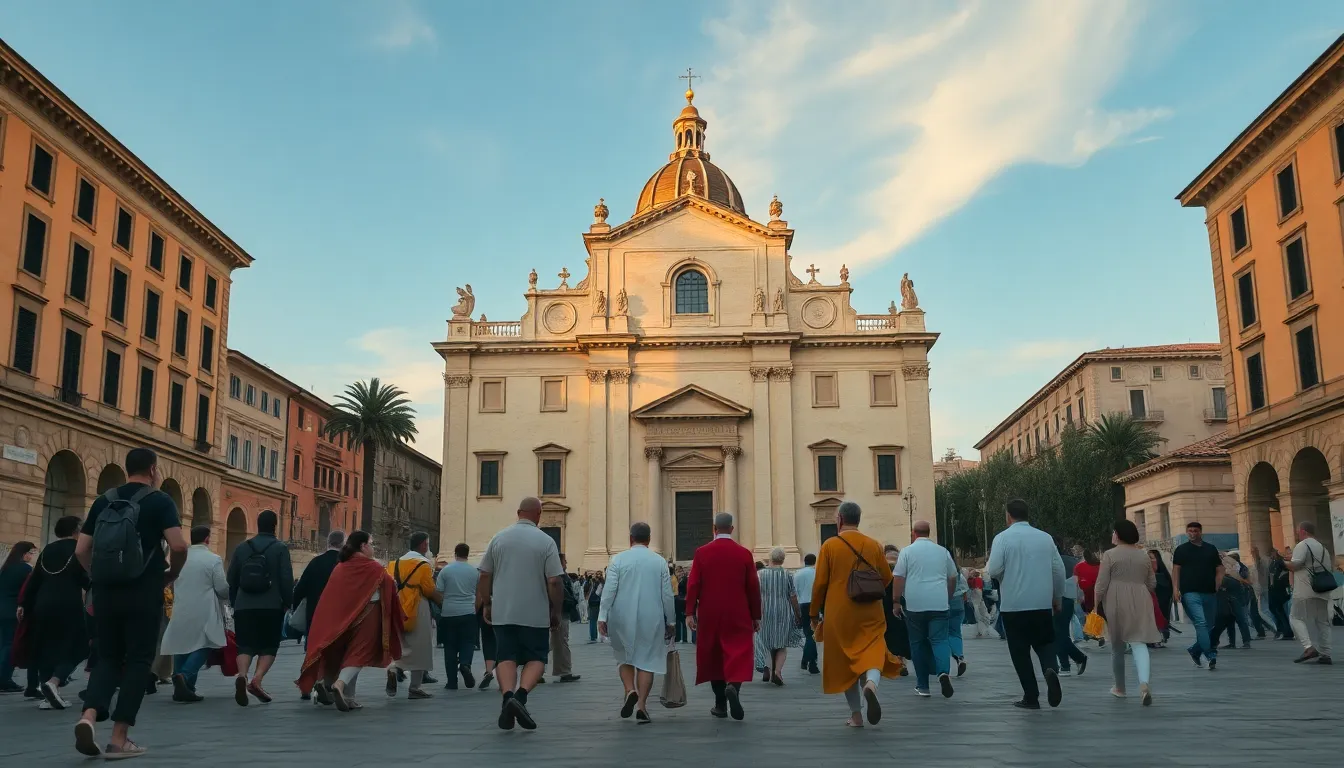
When a pastor first calls me about taking a group to Italy, the conversation almost never starts where they expect it to. They want to talk about which sites to see. I want to talk about what they want their people to come home with. Because a Christian pilgrimage to Italy is not a tour with prayer attached. It is a journey with a shape, and if you get the shape right, the sites take care of themselves.
I have planned a lot of these. Some have gone beautifully. A few of the early ones taught me hard lessons about pace, about expectations, about the difference between a vacation and a pilgrimage. What follows is the framework I now use with every group leader, the end-to-end logic of building a Rome-and-beyond journey that actually does what a pilgrimage is supposed to do.
Start With the Why, Not the Where
Before a single hotel is booked, I ask the group leader one question. What do you want this trip to do for your congregation? The answers vary, and they should shape everything that follows.
Some pastors want their people to encounter the early church, the persecuted believers who held the faith before it was safe. Some want a Pauline journey, walking where the apostle preached and died. Some want a Franciscan trip, centered on Assisi and the radical poverty of St. Francis. Some want a broad Catholic pilgrimage touching the great Marian sites and the relics. And many want a mix, with a particular emotional peak in mind.
The reason this matters is that Italy offers far more than any group can absorb in one trip. If you try to see everything, you see nothing. The “why” is your editing tool. Once you know what this journey is for, deciding what to include and what to leave for next time becomes straightforward instead of agonizing.
The Anatomy of a Rome-and-Beyond Pilgrimage
Almost every Christian pilgrimage to Italy is built on the same skeleton. Rome at the core, with one or two journeys outward. Here is how I think about the pieces.
Rome: The Non-Negotiable Center
Rome holds the tombs of Peter and Paul, the four major papal basilicas, the catacombs, the house churches of the early believers, and the Vatican. No Christian pilgrimage to Italy skips it. I usually give Rome at least three full days, often four. Less than that and you are sprinting past the most important sites in Christendom.
Within Rome, I build a deliberate sequence. I like to begin with early Christian Rome, the catacombs and house churches, so the group meets the persecuted church first. Then the great basilicas land with their full weight, because the group understands the cost behind the gold. We cover the basilicas in our guide to the four major basilicas of Rome, and they form the spine of the Rome days.
Assisi: The Most Common Second Destination
If a group leaves Rome for anywhere, it is usually Assisi. The hill town of St. Francis sits within reach for a day trip but rewards an overnight, and the change of pace is part of its value. After the intensity and crowds of Rome, the quiet of Assisi lets a group breathe and reflect. The Basilica of St. Francis, the tomb in the lower church, and the mountain hermitage above the town give a pilgrimage its still center.
The Wider Options
Beyond Rome and Assisi, the choices depend on the “why” and the time available. Groups drawn to early Christian art add Ravenna and its Byzantine mosaics. Marian pilgrimages add Loreto and its Holy House. Groups with a connection to particular saints add Padua, Siena, or Lanciano. Those with two weeks sometimes work northward toward Florence and Venice. I cover the wider landscape in our overview of spiritual sites in Italy, which is a good companion to this planning piece.
The rule I hold to is restraint. A pilgrimage of Rome plus one or two carefully chosen destinations almost always outperforms a frantic loop of six cities. Depth over breadth, every time.
Building the Daily Rhythm
This is where a pilgrimage either works or quietly becomes an ordinary tour, and most of it comes down to rhythm.
A pilgrimage day should not look like a sightseeing day. I build in time to stop. Each major site gets a moment of devotion, a reading, a prayer, a few minutes of silence, before the group moves on. Without that, your people accumulate photos and lose the thread. With it, the sites connect into a spiritual arc.
I also resist the urge to over-schedule. Two or three significant sites in a day is plenty. A morning at the Vatican and an afternoon at the catacombs is a full, rich day. Cramming a fourth and fifth stop in to “get value” backfires, because tired people stop being able to receive anything. Build in a free afternoon somewhere in the middle of the trip too, so people can rest, journal, or simply sit in a piazza and let it settle. The mornings are your best hours, when the light is good, the crowds thinner, and your group fresh, so front-load the most important sites there.
Timing the Trip
When you go shapes the experience more than most leaders expect. We go deep on this in our guide to the best time to visit Italy for a heritage tour, but here is the short version for pilgrimage planning.
Spring and fall are the sweet spots, comfortable temperatures and manageable crowds. Summer in Rome is hot and packed, and outdoor sites like the catacombs and the Roman Forum become taxing for older travelers. Winter is cold but quiet, and for a contemplative pilgrimage that quiet can be a gift.
The liturgical calendar adds another layer. Lent and the weeks around Easter give a pilgrimage a powerful frame, though Rome is at its busiest during Holy Week. A Holy Year, when the Vatican opens the Holy Doors of the major basilicas, draws enormous crowds but offers an experience available only once every quarter century. Weigh the spiritual resonance against the practical crowds, and decide what fits your congregation.
The Practical Decisions That Make or Break It
A few logistics that I have learned never to leave to chance.
Group size and economics. A group of fifteen to twenty-five tends to be the sweet spot: large enough to be economical, small enough to stay together and move through sites without becoming a herd. One detail worth knowing early, because it shapes the whole budget conversation: with Heritage Tours, the group leader travels free with fifteen or more participants. That means the pastor’s own pilgrimage is built into the trip rather than added on top, which often makes the difference in whether a church can say yes.
Lead time. For most of the year, eight to twelve months of planning is comfortable. For Easter or a Holy Year, start earlier, twelve to eighteen months, because hotels near the Vatican fill fast and the best dates go first. Early planning also gives you time to present the trip to your congregation properly and build your numbers without pressure.
Accessibility and age range. Italy’s heritage sites involve cobblestones, stairs, and a fair amount of walking. If your group includes older members or anyone with mobility limits, plan for it honestly. The catacombs have uneven steps. Assisi is built on a hillside. Knowing your group’s real capacity lets you build a journey they can actually complete with joy rather than gritted teeth.
Mass and worship. As a Christian pilgrimage, you will likely want to celebrate Mass or hold worship at significant sites. This usually needs arranging in advance, and chapels at the major basilicas can be reserved for groups. Decide early where your group’s central worship moments will be, because those become the emotional anchors of the whole trip.
A guide who understands faith. A secular city guide reciting dates is not the same as a leader who can stand in the catacombs and connect them to your group’s faith. The spiritual register of the guiding is what separates a pilgrimage from a tour, and it is worth insisting on.
Group Tour or Private Journey
One decision deserves its own moment, because group leaders ask about it constantly. Do you join a structured group program or build a private journey for your congregation alone? Each has real advantages, and the right answer depends on your group’s size, budget, and how much they want the trip tailored to them. We walk through the full comparison in our guide to private tours versus group tours in Italy, which is worth reading before you commit either way.
Pulling It Together
A Christian pilgrimage to Italy, done well, has a beginning, a middle, and an end that mean something. It starts with the persecuted early church, builds through the great basilicas and the tombs of the apostles, moves outward to the stillness of Assisi, and gives your people moments of genuine prayer along the way. The sites are extraordinary on their own. The shape is what turns them into a pilgrimage.
You can see how we structure these journeys on our Italy destination page, and learn how the group leader experience works on our group heritage tours page.
FAQ: Planning a Christian Pilgrimage to Italy
How many days do you need for a Christian pilgrimage to Italy?
For Rome alone, plan at least three to four full days to do justice to the basilicas, the catacombs, the Vatican, and the early church sites. Add two or three more days if you are including Assisi, which most groups do. A well-paced Rome-and-Assisi pilgrimage runs about seven to nine days on the ground, not counting travel. Trips that try to add Florence, Venice, or Ravenna usually need ten days to two weeks to avoid feeling rushed.
What should be on a Christian pilgrimage itinerary in Italy?
The essentials are Rome’s four major basilicas, the catacombs, St. Peter’s and the Vatican, and the early Christian house-church sites. Most pilgrimages then add Assisi for St. Francis. Beyond that, the choices depend on your group’s focus: Ravenna for early Christian art, Loreto for Marian devotion, Padua for St. Anthony. The key is restraint, choosing a clear focus rather than trying to see everything in one trip.
When is the best time for a Christian pilgrimage to Italy?
Spring and fall offer the best balance of comfortable weather and manageable crowds. Lent and the weeks around Easter add powerful liturgical meaning but draw heavy crowds in Rome during Holy Week. Summer is hot and crowded, which is hard on older travelers at outdoor sites. Winter is cold but quiet, which suits a contemplative pilgrimage. A Holy Year offers a rare experience but with the largest crowds.
How far in advance should a church group book a pilgrimage to Italy?
For most of the year, eight to twelve months of lead time is comfortable. For Easter travel or a Holy Year, plan twelve to eighteen months ahead, because hotels near the Vatican fill quickly and the best dates go first. Early planning also gives you time to present the trip to your congregation, answer questions, and build your group to the size that makes the economics work.
Should we book a group tour or a private journey for our church?
It depends on your group’s size, budget, and how customized you want the experience. A structured group program is typically more economical and removes the planning burden, while a private journey lets you tailor every detail to your congregation’s specific focus. For smaller or highly specific groups, private can be worth it. For most churches, a well-run group program delivers depth at a better price. Our comparison guide walks through the tradeoffs in detail.
The first conversation I have with most group leaders is exactly this one, what do you want this pilgrimage to be. It is my favorite part of the job, and every congregation’s answer is a little different. I would be glad to help you think yours through from the very beginning.
Contact us whenever you are ready to start planning.