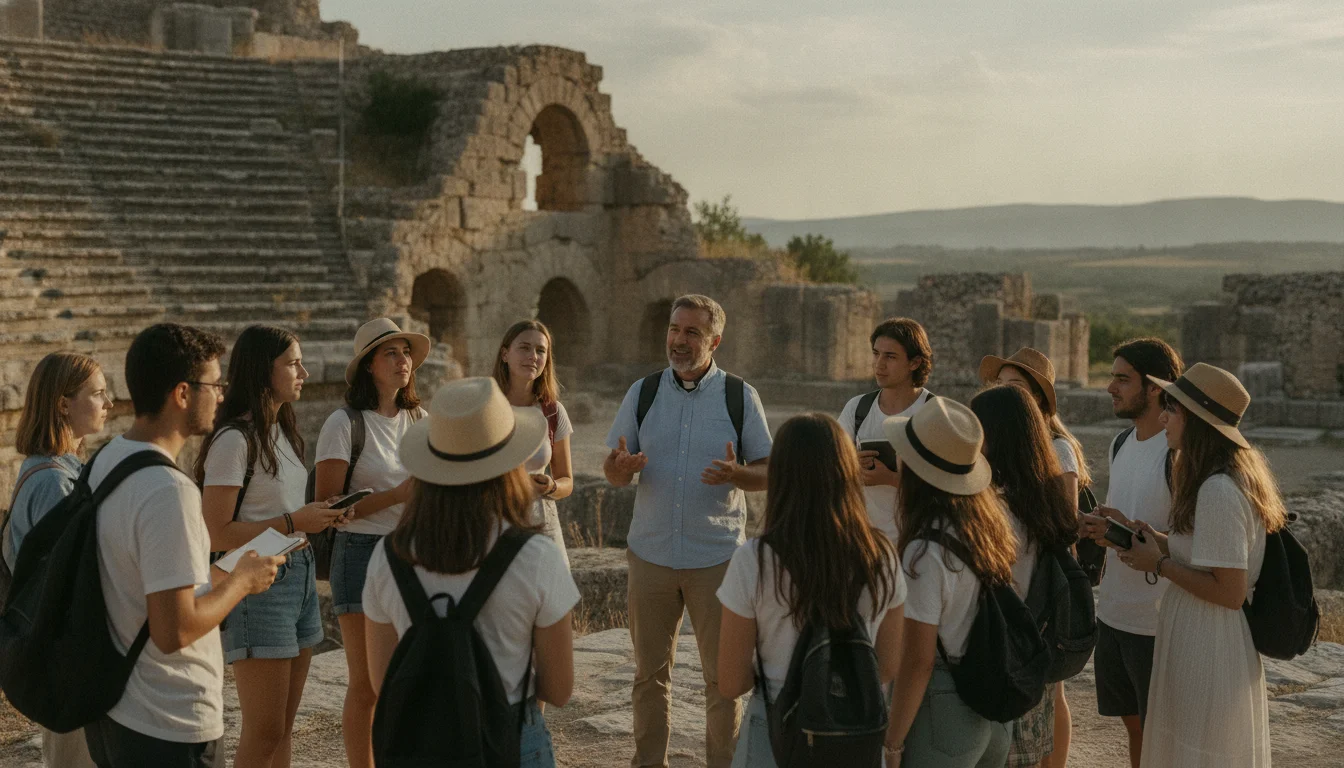
The first youth pilgrimage I ever helped a pastor build had eleven teenagers, two nervous chaperones, and a leader who was convinced the whole thing would fall apart before the deposits came in. It did not fall apart. It became the trip that half that youth group still talks about a decade later, and three of those kids ended up in ministry. I tell that story often, because summer youth pilgrimage planning scares a lot of leaders more than it should. The logistics feel bigger than an adult trip. The stakes feel higher because these are other people’s children. And the calendar is unforgiving.
I have built heritage journeys for more than forty years, and youth trips are some of the most rewarding work I do. This guide walks you through how to plan one well: when to schedule it, how to recruit, how the budget actually works, and how to lead teenagers through a heritage experience without spending the whole trip counting heads. I am writing this for the organizer, the pastor or youth director or congregation leader who carries the responsibility, not for a parent thinking about sending one kid.
Why Summer Is the Right Window, and Its One Catch
Summer is the natural season for youth pilgrimage. School is out, families are more flexible, and teenagers have the open weeks that a heritage journey needs. That is why most youth trips I run happen between mid-June and mid-August.
The catch is that everyone else knows this too. Summer is peak season for heritage travel, which means the strongest hotels, the best local guides, and the group airfare all get claimed early. A summer trip that starts planning in March is already behind. Groups that travel well in July usually locked their dates the previous fall. So the first thing I tell any leader eyeing summer is simple: the season is right, but the runway must be long. More on timing below, because it is the decision most groups get wrong.
If you want the full framework before you go deep on youth specifics, our complete guide to planning a group pilgrimage covers the whole arc from first meeting to final payment. This article assumes that foundation and focuses on what changes when your travelers are teenagers.
How to Plan a Group Tour Around the Church Calendar
A youth trip does not exist in a vacuum. It sits inside a church year that already has its own rhythm, and the leaders who plan well treat that calendar as the frame, not an afterthought.
Start by mapping your fixed points. Vacation Bible School, summer camp, the mission trip your church already runs, confirmation season, the fall program launch. A youth pilgrimage has to fit around those, not compete with them. I have watched more than one promising trip stall because it landed on the week half the youth group was already at camp.
Here is how I think about slotting a heritage journey into the church calendar:
- Anchor it to something you are already teaching. If your congregation is walking through Acts, a trip that follows Paul’s route lands with far more weight. The pilgrimage becomes the living version of the lessons the students already sat through.
- Avoid the crowded months. December and the weeks around Easter are usually the worst time to pull teenagers and their families away. Summer and the shoulder of early fall are cleaner.
- Give the fall program a runway. If your students come home three days before the youth year kicks off, you will have exhausted leaders and no room to debrief. Build in breathing space.
- Coordinate with your senior pastor and the church office early. A youth trip that surprises the rest of the staff creates friction. A youth trip that appears on the master calendar a year out gets support.
The point is that the church calendar is not an obstacle. Used well, it tells you exactly when your trip will have the most meaning and the least competition.
Fall Heritage Tour for a Church Group: The Underrated Alternative
Not every youth pilgrimage has to happen in summer, and I want to make the case for fall before you assume otherwise.
A fall heritage tour for a church group has real advantages. The peak-season crowds have thinned, so sites like the ancient agora or the Sea of Galilee feel less packed. Prices soften once the summer rush ends. The weather in the Mediterranean in late September and October is often kinder than August, which matters a great deal when you are moving a group of teenagers through open-air sites all day.
The tradeoff is school. A fall trip means pulling students out of the classroom, which raises the bar on parent buy-in and requires more coordination with families about missed coursework. For some congregations that is a dealbreaker. For others, especially those with homeschool families or a fall break that lines up, it opens a quieter and more affordable window.
My honest read after decades of this: summer is easier to fill, fall is easier to enjoy. If your group can navigate the school question, a fall pilgrimage often delivers a calmer, richer experience for a lower price.
How the Budget Works, Including the Free Leader Seat
Money is where youth trips either come together or quietly die, so let me be direct about the economics.
The single most important number for an organizer to understand is the free-leader threshold. On our group heritage journeys, when you gather fifteen or more paying travelers, the group leader’s own trip is covered. That means flights, hotels, ground transportation, and included site entries for the leader are built into the structure of the group booking rather than paid out of pocket. You are the reason the group exists, so the model is built around your seat being the free one. Our breakdown of how many people you need for the leader to travel free walks through exactly where that number comes from.
For a youth pilgrimage this matters twice over. First, most youth directors are not on a budget that lets them self-fund a heritage trip. Second, a youth group of fifteen paying travelers is very reachable when you count the students and the chaperones together. If you have twelve teenagers and four adult chaperones, you are already at sixteen, and the leader travels free.
That chaperone math is worth sitting with. Youth trips need adult coverage anyway, typically one adult for every five or six students. Those chaperones are paying travelers who also happen to solve your supervision ratio. They count toward your fifteen and they keep the trip safe. A well-built youth group naturally crosses the free-leader line because of the very adults you needed on the trip regardless.
The rest of the budget conversation is the same as any group trip: a deposit to hold seats, a payment schedule that lets families pay over several months, and clear communication about what is and is not included. Families with teenagers respond well to structure, so a written payment plan does a lot of the recruiting work for you. If fundraising is part of your plan, and for youth trips it often is, our notes on how to fundraise for a church trip cover the approaches that actually move money without exhausting your volunteers.
Recruiting Teenagers and Their Parents
Recruiting for a youth pilgrimage is really two campaigns running at once. You are selling the trip to the students and reassuring the parents. Both have to land.
With the students, concreteness wins. A vague “we might do a trip” gets a shrug. “We are walking where Paul walked, eight days next July, here is the itinerary” gets a hand raised. Teenagers commit to specific, real, and slightly adventurous. Show them the actual places. Let a student who went on a past trip talk to the group. Peer voice moves teenagers far more than an adult pitch ever will.
With the parents, safety and structure win. Parents are not asking whether the trip is meaningful. They assume it is. They are asking who is watching their child, what the chaperone ratio is, what the medical and insurance coverage looks like, and what happens if something goes wrong. Answer those questions before they are asked. Hold a parent information night with the itinerary, the chaperone list, and the coverage details in writing. A parent who feels informed becomes your best recruiter to other parents.
Start with your core, not your whole roster. You do not need to recruit fifteen strangers. You need the six or eight students already leaning in, plus the chaperones you trust, and you let it grow from there. Every youth trip I have run started small and filled as it became real.
How to Plan a Graduation Season Heritage Trip
A special note for one of the most meaningful youth trips a congregation can run: the graduation season pilgrimage.
There is something fitting about marking the end of high school with a heritage journey. A graduation-season trip becomes a rite of passage, a way to send young adults into the next chapter grounded in something larger than a diploma. I have led several of these, and they carry a weight that ordinary trips do not.
The planning has its own quirks. Graduation season is a tight, crowded window in late May and June, so dates get complicated fast. Some students are juggling ceremonies, family celebrations, and summer job start dates all in the same three weeks. My advice is to pick your dates the moment the school calendar is published, usually the previous fall, and to build a little flexibility into the front and back ends so a student who graduates on a Saturday can still make a Monday departure.
Consider the mix, too. A graduation trip sometimes blends graduating seniors with a few younger students and a strong adult contingent, which again helps you clear the fifteen-traveler line comfortably. And because these trips carry emotional significance for families, parents are often more willing to invest, which makes the budget conversation easier. Frame it as a milestone, not just a trip, and it tends to fill.
Leading Teenagers Once the Logistics Are Handled
Here is what I most want youth leaders to hear. When the operator carries the logistics and the free-leader model carries your cost, your job on the trip is not to be the travel agent. It is to be present for your students in places that will mark them.
That is the whole point of a youth pilgrimage. Standing teenagers at the empty tomb, or reading Scripture aloud at the site where it happened, or sitting with them at a Holocaust memorial and letting the silence do its work, these are the moments that reshape a young faith. You cannot be fully in those moments if you are counting bags and confirming bus times. So build the trip with an operator who makes the logistics invisible, and reserve your attention for the students. Our guidance on how to choose a faith tour operator covers what to look for, because with a youth group the operator’s competence is not a convenience, it is a safety and experience issue.
You can see how the group experience is structured on our group heritage tours page, and it is worth reviewing early so you know what the operator handles and what stays with you.
FAQ: Planning a Summer Youth Pilgrimage
How many travelers do I need for the youth leader to go free?
Fifteen paying travelers. On our group journeys, once you reach fifteen or more, the group leader’s trip is covered, including flights, hotels, ground transportation, and included site entries. For a youth group this is very reachable, because your students and your adult chaperones both count toward the fifteen.
How far ahead should I start planning a summer trip?
For a summer youth pilgrimage, start nine to twelve months out. Summer is peak season, so the best hotels, guides, and group airfare get claimed early. The groups that travel smoothly in July almost always locked their dates the previous fall. Earlier planning is also recruiting runway, which for a youth trip is the real work.
What chaperone ratio should I plan for?
Plan for roughly one adult for every five or six students, adjusted for the age and maturity of your group. Those chaperones are paying travelers who also keep the trip safe, so they help you reach the fifteen-traveler line and cover your supervision needs at the same time.
Is a fall trip a real alternative to summer?
Yes. A fall heritage tour for a church group means thinner crowds, softer prices, and often kinder weather. The tradeoff is pulling students out of school, which raises the bar on parent buy-in. If your families can navigate the school question, fall often delivers a calmer, less expensive experience.
How do I get parents comfortable enough to say yes?
Answer their questions before they ask them. Hold a parent information night with the itinerary, the chaperone list, and the medical and insurance coverage in writing. Parents assume the trip is meaningful. What they need is proof that their child will be supervised and safe. An informed parent becomes your best recruiter to other parents.
If you are weighing a summer youth pilgrimage for your congregation, the two things that decide it are usually the timing and the budget, and both are more workable than they first appear. Start early, count your chaperones toward the fifteen, and let the trip become concrete enough that students and parents can say yes.
Contact us and we will help you map the dates around your church calendar and run the numbers for your group.