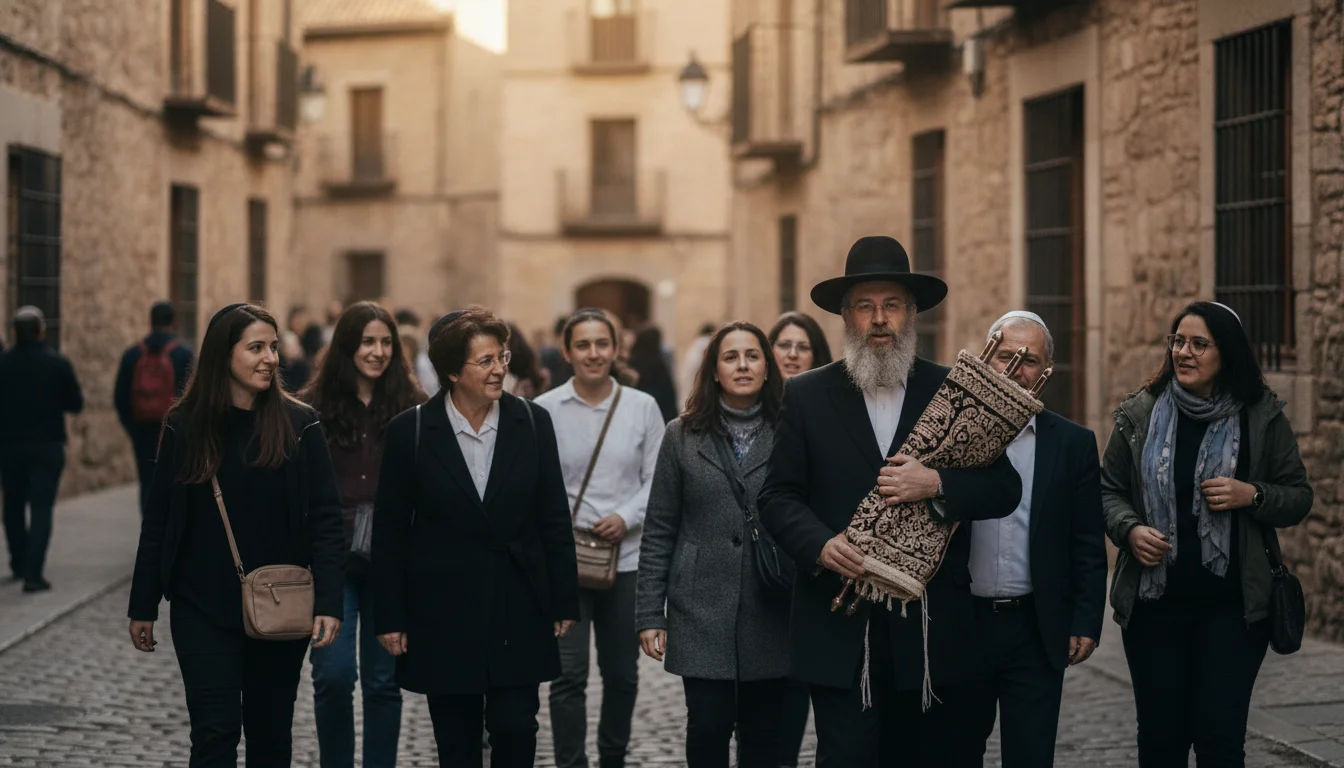
When a rabbi calls me about a Sephardic heritage trip to Spain and Portugal, the first thing I hear is longing, and the second thing I hear is worry. The longing is easy to understand. This is the land your community’s ancestors walked, prayed in, built in, and were expelled from in 1492. The worry is always the same: how do I turn a beautiful idea into a real trip that my congregation can afford and that I can actually lead without it becoming my second job.
I have built heritage journeys for more than forty years, and I want to walk you through how a synagogue heritage trip to Spain and Portugal comes together from the organizer’s chair. Not the traveler’s chair. Yours. The one where you decide the route, recruit the people, manage the budget, and stand at the front of the group when you reach the old Jewish quarter of Toledo or the medieval synagogue in Tomar. This is the planning guide I wish every congregation leader had before they started.
Why Spain and Portugal Speak to a Sephardic Community
Sepharad is not a metaphor. It is a place, and it is these two countries. For your congregation, this is not a general sightseeing trip with a Jewish theme laid on top. It is a return.
Spain gives you Toledo, once home to one of the most important Jewish communities in the medieval world, where the Synagogue of Santa Maria la Blanca and the Sinagoga del Transito still stand. It gives you Cordoba, birthplace of Maimonides, with its narrow Juderia and the small preserved synagogue near his statue. It gives you Girona, with a Jewish quarter so intact you can trace the streets your ancestors knew, and Seville and Granada, where the story of expulsion and the story of flourishing sit side by side.
Portugal carries the second half of the story. When the Jews were expelled from Spain in 1492, many crossed into Portugal, only to face forced conversion five years later. Lisbon, Porto, and the mountain town of Belmonte, where crypto-Jewish families kept their traditions in secret for five centuries, give your community a story of survival that most travelers never hear. When I bring a group to Belmonte and they meet a community that hid its Judaism for five hundred years and then came back into the open, the room goes quiet. That is the moment you are building the whole trip toward.
For a decision-maker, this matters because it makes recruiting easier. You are not selling a vacation. You are offering your members a chance to stand where their story began. That is a message that fills a bus.
The Free Group-Leader Model, and Why It Changes Your Math
Here is the part that takes the biggest weight off your shoulders. When your group reaches fifteen or more paying travelers, the group leader travels free. That means you, the rabbi, cantor, educator, or lay leader organizing the trip, join at no personal cost.
Free means the full trip on the same terms as a participant: international flights, hotel accommodation, ground transportation, entry fees to the synagogues and heritage sites, and the group meals built into the itinerary. It is not a discount off your ticket. It is a complimentary seat funded by the economics of the group booking.
The reason the number is fifteen is simple once you see it. A trip has fixed costs that do not change whether you bring twelve people or twenty: the local guide, the coach, the ground operators in each city, the coordination. At fifteen paying travelers, those costs are spread widely enough that the structure can carry one additional seat without raising anyone’s price. That seat is yours, because you are the reason the group exists.
For a synagogue, this reframes the entire conversation with your board. You are no longer asking the congregation to fund an expensive trip for the rabbi. You are organizing a journey your members pay into, and your participation is part of how the trip is built. I wrote more about the details of that arrangement in does the pastor travel free, and the same logic applies exactly to a rabbi or a cantor. If you want the specific headcount thresholds, how many people you need for a leader-free trip lays them out.
If your group grows past twenty-five or thirty, there is often room for a second benefit: a reduced or complimentary seat for a co-leader, a spouse, or an educator traveling with you. If that matters to your community, raise it early so we can build the trip toward that number.
What Your Trip Actually Costs, and How Members Pay for It
Congregation leaders always want a real number, so let me be direct about the shape of the budget rather than quoting a figure that will be wrong for your dates.
A Sephardic heritage trip to Spain and Portugal usually runs eight to twelve days, because the route covers real distance. The per-person price depends on your departure city, your travel season, the hotel level you choose, and how many internal flights or long coach transfers the itinerary needs. Spring and fall cost more than winter. A route that includes both countries costs more than Spain alone. Those are the levers you control as the organizer.
What I want you to focus on is not the sticker price but the payment structure, because that is what determines whether your people actually commit. Most of my synagogue groups use a deposit plus installment plan: a modest deposit to hold each seat, then monthly payments spread across the months before departure. It turns a large single number into something a family can plan around. I walk through the mechanics of that in setting up a group trip payment plan.
Some congregations go further and fundraise part of the cost, especially to help send members who could not otherwise afford it, or to underwrite an educator. If that fits your community, how to fundraise for a trip covers the approaches that work without exhausting your donor base. And before you set the final per-person price, it is worth reading how to budget a group trip so you know which costs are fixed and which move with your group size.
Building a Group That Reaches Fifteen
This is the fear I hear most, so let me be practical. You do not need to convince your whole membership. You need a committed core, and then you let the trip grow.
Start With the People Already Leaning In
Every heritage trip I have run started with eight to ten people who already wanted to go. Find them first. They are the members who ask about Jewish history, who came to your Sephardic Shabbat, who mention wanting to see where their family came from. Once that core commits, they bring others. Couples travel together, friends bring friends, and adult study groups often travel as a unit. Fifteen is very reachable when you start from the people leaning in rather than the full directory. The full recruiting playbook is in how to recruit for a group trip.
Give People a Real Date and a Real Route
Vague interest never fills a bus. A specific journey on specific dates does. “We are walking the Sephardic route from Toledo to Cordoba to Lisbon next April, ten days, here is what we will see” lets a family decide. “We might do a Spain trip someday” converts no one. Tie the trip to something your community is already engaged with, a class on Sephardic history, a Ladino music evening, the anniversary of the expulsion, and the interest sharpens into commitment.
Plan Far Enough Ahead
For a group of fifteen to thirty, six to nine months is the working window. That gives your members time to budget, request time off, and commit, and it gives you time to recruit, which is the real work. If you want to time the trip around a holiday or bring a larger group, give yourself nine to twelve months. Earlier planning is not just about logistics. It is recruiting runway. I put numbers to this in how far ahead to plan a group trip.
Choosing How to Route Spain and Portugal
As the organizer, one of your real decisions is scope. You have three sensible options, and each fits a different group.
Spain alone, eight to nine days, gives you the densest concentration of Sephardic sites: Toledo, Cordoba, Girona, Seville, and Granada. It is the easiest first trip and the simplest to recruit for, because the story is famous and the logistics are contained. You can see the country’s heritage sites on our Spain heritage page.
Spain and Portugal together, ten to twelve days, gives you the full arc: the golden age and the expulsion in Spain, then the forced conversion and the hidden communities in Portugal. This is the richer journey, and it is what I recommend for a group that wants the whole story. Portugal’s own heritage route is on our Portugal heritage page.
Portugal-focused, with a lighter Spain touch, works for a group that specifically wants the crypto-Jewish story of Belmonte, Porto, and Lisbon. It is less common but deeply moving for the right community.
There is no wrong answer. The right one depends on your days, your budget, and your people. When we talk, I will help you match the route to the group you actually have.
Your Job Once the Logistics Are Handled
Here is what I most want you to hear. When the free-leader model takes your personal cost off the table and the operator handles the coaches, the guides, the hotels, and the site access, your attention is freed for the thing only you can do.
You are not the trip’s travel agent. You are its spiritual leader. Your role is to stand in the Sinagoga del Transito and help your community feel the weight of what happened there, to lead a moment of memory in the Juderia of Girona, to sit with your members in Belmonte as they meet a community that never let go. The operator’s job is to make everything else invisible so that you can be fully present. The free seat is part of how we keep your focus where it belongs.
If this is your first time leading a group abroad, do not let that stop you. How pastors afford to lead a trip speaks to the same practical worries a rabbi has, and the broader how to plan a group pilgrimage guide is the full step-by-step for organizing a faith heritage journey from first idea to departure.
FAQ: Planning a Sephardic Heritage Trip to Spain and Portugal
How many people do I need for the group leader to travel free?
Fifteen. With fifteen or more paying travelers, the group leader’s full trip is covered, including flights, hotels, ground transportation, and entry fees to the synagogues and heritage sites. Below fifteen, the trip is still possible, but the leader pays a participant’s price.
How long should a Spain and Portugal Sephardic trip be?
Plan eight to nine days for Spain alone and ten to twelve days for both countries. The route covers real distance, from Toledo and Cordoba in Spain to Lisbon and Belmonte in Portugal, so a rushed itinerary loses the depth that makes the journey worth taking.
Which sites belong on a Sephardic heritage itinerary?
In Spain: Toledo (Santa Maria la Blanca and the Sinagoga del Transito), Cordoba (Maimonides and the Juderia), Girona’s Jewish quarter, and Seville and Granada. In Portugal: Lisbon, Porto, and Belmonte, where a crypto-Jewish community kept its traditions in secret for five centuries.
How do my congregation members pay for the trip?
Most synagogue groups use a deposit plus monthly installments across the months before departure, which turns a large number into a manageable one. Some congregations also fundraise part of the cost to help send members or an educator who could not otherwise join.
How far ahead should I start planning to reach fifteen travelers?
Six to nine months for a group of fifteen to thirty, and nine to twelve months for a larger group or a holiday-timed trip. The lead time is as much about recruiting your group as it is about booking, because concrete dates and a real route are what move members from interested to committed.
If you are weighing whether a Sephardic heritage trip to Spain and Portugal is realistic for your congregation, the free-leader math is usually the thing that tips it. You can see how the group experience works on our group heritage tours page.
Contact us and we will help you run the numbers for your community and your dates, and shape a route that fits the group you actually have.