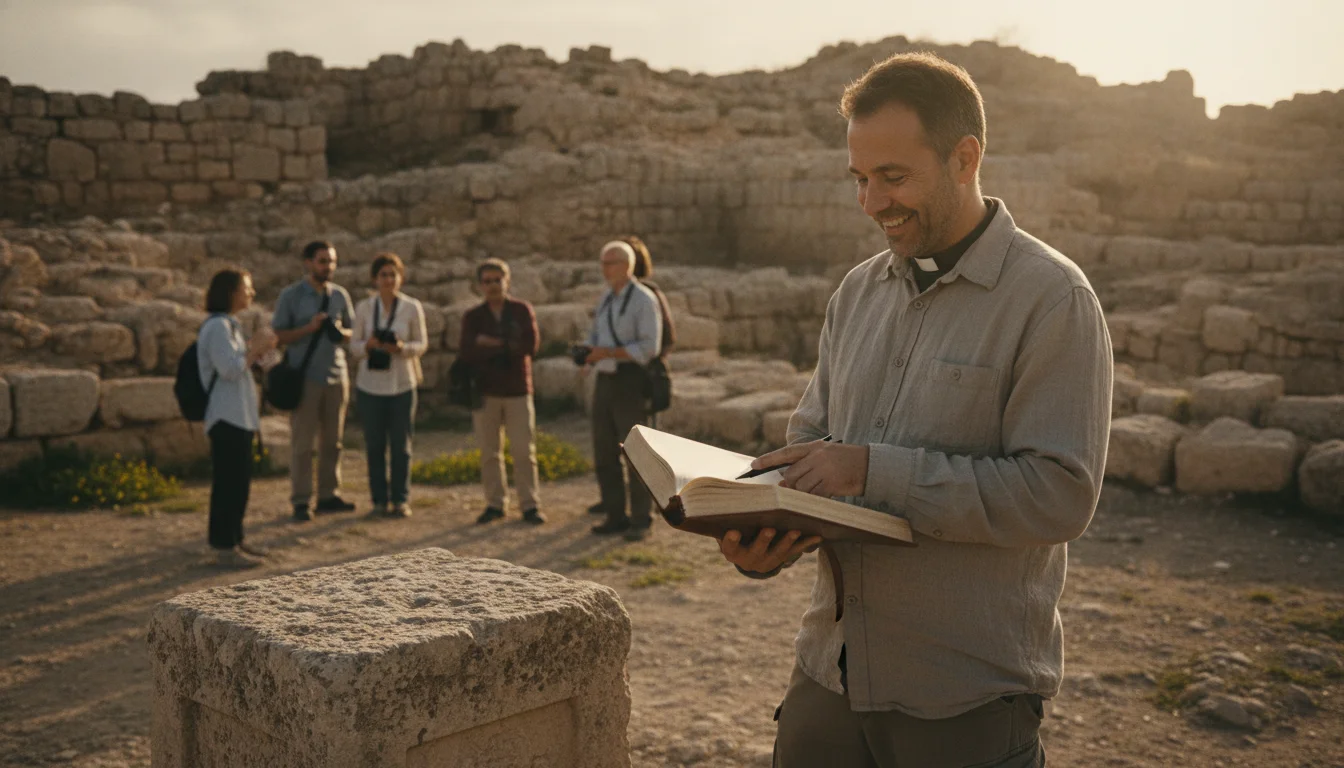
A pastor called me last spring and opened with an apology. He was about to take his first sabbatical in eleven years, the elders had finally insisted on it, and he felt guilty about the whole thing. He wanted the time to mean something, to study where the text he preaches actually happened, but he did not know how to plan it, how to pay for it, or whether he could bring anyone with him. By the end of the call the guilt was gone and the trip had a shape. That conversation is the reason I am writing this.
I have built heritage journeys for more than forty years, and sabbaticals are some of the most important trips I plan, because the person leading is usually exhausted and rarely asks for anything for himself. So let me take the planning weight off your shoulders. This is how a pastor sabbatical heritage trip actually gets built, and how the same framework turns a church anniversary, a milestone pilgrimage, or a reunion into a journey rather than a vacation.
What a Sabbatical Heritage Trip Is, and What It Is Not
A sabbatical is not a long weekend with extra days. It is protected time to rest, study, and return renewed. A heritage trip built around that time gives the rest a place to happen. You rest by walking the roads of Acts, sitting in the ruins of the seven churches, or standing in Jerusalem with a study Bible and no sermon due on Sunday.
Here is the distinction I hold onto when I plan these. A tourist collects sights. A pastor on sabbatical collects understanding. The itinerary I build looks different because of that. We slow down. We leave margin in the day for reading and prayer rather than cramming a ninth site before dinner. You are not trying to see everything. You are trying to see a few things in a way that changes how you preach for the next decade.
That is the frame for everything below. Whether you travel alone, with your spouse, or with a group from your congregation, the goal is renewal, not accumulation.
How to Plan a Sabbatical Study Trip
Most pastors ask me the same first question: where do I even start. So here is the order I walk people through.
Start with the study, not the map. Before you pick a country, decide what you want to come home understanding. A pastor working through a preaching series on Paul plans a very different trip from one who wants to sit with the Reformation or trace the Exodus. The theme sets the geography, not the other way around. Once you tell me you want to spend three weeks in the world of Paul, the route almost builds itself: Greece, Turkey, and the places where those letters were written and read.
Then decide the shape of the group, if any. This is the decision that most changes the cost and the character of the trip, so I put it early. You have three real options:
- Travel solo or with your spouse. The most personal option, fully your own pace, and the simplest to plan.
- Travel with a small study cohort. A handful of fellow pastors or elders who want the same renewal you do.
- Build a congregation group around your sabbatical. Ten to a hundred of your people, with your study time protected inside a larger journey.
That third option surprises people, so I will come back to it, because it is often how a pastor gets the whole trip funded without asking the church for a dime toward his own seat.
After the theme and the group shape, everything else is logistics I handle: flights, hotels chosen for rest rather than just location, ground transport, guides who teach rather than recite, and a daily rhythm that leaves you room to breathe. If you want the full checklist I use so nothing slips, our group planning checklist lays it out step by step, and the master guide to planning a group pilgrimage walks the whole process from first idea to departure.
The Money Question, Answered Plainly
I know this is the part that keeps pastors from picking up the phone, so let me be direct about it.
If you build a group of fifteen or more paying travelers from your congregation, your seat as the leader is covered. That means your flights, your hotels, your ground transportation, and your included site entries. The economics of a group booking carry the leader’s cost, so the person organizing and guiding the trip does not pay his own way. For a sabbatical, this is the whole game. You get your study time in the field, and the congregation that travels with you funds it without a special line in the church budget for the pastor’s flight.
This is not a discount. It is how group travel is structured. Fifteen paying participants generate enough margin inside the trip’s costing to absorb one more traveler, and that traveler is you. I walk through the full mechanics in how pastors afford to lead a trip and answer the direct version in does the pastor travel free.
If your sabbatical is more solitary and you are traveling alone or with your spouse, the trip is still very doable. We simply plan it as an individual study journey rather than a group booking, and I help you keep the cost sane. Either way, do not let the money question stop the first conversation. It is almost always more solvable than pastors expect.
How to Plan a Church Anniversary Trip
The same framework that renews a pastor also marks a milestone for a whole congregation, and a church anniversary is the most common one I plan.
When a church turns 50, 75, or 100, a heritage journey does something a banquet cannot. A dinner celebrates the past for an evening. A trip to the roots of the faith reminds a congregation why it exists at all. I have watched a church anniversary group stand together in Jerusalem and understand, in a way no sermon quite delivered, that they are one link in a very long chain.
If you are the pastor planning this, here is how I would approach it:
- Anchor the trip to the anniversary theme. If your church was founded on a missionary vision, walk Paul’s routes. If it grew out of a particular tradition, travel to that tradition’s homeland. The trip should tell your church’s story, not a generic one.
- Give it a long runway. Anniversary trips draw bigger, more mixed groups, including people who rarely travel, so I want twelve months to build one well.
- Make the leader’s seat work for you. An anniversary group is usually well past fifteen travelers, which means your seat is covered and you lead the celebration as its shepherd, not its accountant.
An anniversary trip is also the easiest kind to fundraise around, because the whole congregation feels ownership of the milestone. If part of your group needs help affording it, the approaches in how to fundraise for a trip work especially well when the cause is the church’s own jubilee.
How to Plan a Milestone Pilgrimage
Not every milestone belongs to the church calendar. Sometimes the milestone is personal to the community: a beloved pastor’s retirement, the closing of a building campaign, a congregation emerging from a hard season and wanting to mark the healing. I treat these as milestone pilgrimages, and they plan a little differently.
The key with a milestone pilgrimage is that the destination has to carry meaning, not just history. When the trip commemorates something the congregation lived through together, I build the itinerary so the emotional high points land in the right places. A retirement pilgrimage for a forty-year pastor might end, deliberately, at a site tied to the calling that started his ministry.
Practically, milestone pilgrimages are usually mid-sized groups, twenty to forty people, drawn from the core of the congregation. That size comfortably clears the free-leader threshold and still feels intimate. Six to nine months of planning is the sweet spot, and I lay out why that window works in how far ahead to plan. The one piece of advice I give every leader here: decide early what the single most meaningful moment of the journey should be, and let me build the rest of the itinerary to protect it.
How to Plan a Reunion Heritage Trip
The last variation is my favorite to plan, because it is pure joy. A reunion heritage trip gathers people who were once together and have since scattered: a seminary class, a former youth group now in their forties, families who grew up in the same congregation, mission team members who served together decades ago.
A reunion trip has a different emotional engine than a sabbatical or an anniversary. The heritage is the reason to gather, but the reunion is the reason people say yes. I plan these with more shared meals and more time for the conversations that only happen when old friends are finally in the same room again. The sites give the days their spine. The reunion gives the trip its warmth.
Two things I tell every reunion organizer:
- Start recruiting from the tightest circle outward. A reunion fills when a few committed friends each bring the people they are still close to. You are not marketing to strangers, you are reconnecting a network, so the recruiting is more personal and usually faster. The practical tactics live in how to recruit for a church trip.
- Pick dates people can actually plan around. Reunion groups are spread across cities and schedules, so I want nine to twelve months of lead time so people can request time off and buy in before life fills the calendar.
Because reunion groups tend to land between fifteen and fifty travelers, the organizer’s seat is typically covered too. If you are the one pulling old friends back together, you can do it without paying your own way.
Building the Budget, Whatever the Occasion
Across all four of these, sabbatical, anniversary, milestone, and reunion, the budgeting logic is the same, so I will give it to you once.
The price per traveler depends on the destination, the length, the season, and the group size. Larger groups spread fixed costs wider, which lowers the per-person price and makes the leader’s free seat possible. I always give a clear breakdown of what is included so there are no surprises: flights, hotels, ground transport, guiding, included entries, and the meals built into the itinerary. If you want to see how I structure a realistic budget from first estimate to final payment, how to budget a church trip walks through it, and it applies just as cleanly to an anniversary or reunion group as to a standard pilgrimage.
The reason I put the budget last rather than first is deliberate. When the theme and the group shape are decided, the budget almost writes itself. Leaders who start with the budget tend to shrink the vision to fit a number they guessed at. Leaders who start with the meaning find the number works out better than they feared.
FAQ: Planning a Sabbatical or Milestone Heritage Trip
How do I plan a pastor sabbatical heritage trip without it eating my rest?
Start with what you want to study, choose a pace with real margin in each day, and let the operator handle every logistic. A sabbatical trip should leave room for reading, prayer, and reflection, not cram in sites. The whole point is renewal, so we build the itinerary to protect your rest, not fill every hour.
Can I bring my congregation on my sabbatical trip and still travel free?
Yes. If fifteen or more of your people travel as paying participants, your seat as the leader is covered, including flights, hotels, ground transport, and included entries. Your study time stays protected inside the larger journey, and the group funds the trip without a special line for the pastor’s cost.
How far ahead should I plan an anniversary or reunion trip?
Twelve months for a church anniversary, since those groups are larger and more mixed, and nine to twelve months for a reunion, since people are scattered across cities and schedules. Mid-sized milestone pilgrimages of twenty to forty travelers work well on six to nine months. The lead time is mostly about recruiting, not booking.
What makes a milestone pilgrimage different from a regular tour?
The destination has to carry the meaning of what you are commemorating, not just historical interest. We identify the single most meaningful moment of the journey early, whether it ties to a retiring pastor’s calling or a congregation’s season of renewal, and build the rest of the itinerary to protect that moment.
Do I have to lead a group, or can I take a solo study sabbatical?
You can absolutely travel solo or with your spouse. We plan it as an individual study journey rather than a group booking, with a slower pace and space for reflection. You lose the free-leader economics that come with a group of fifteen, but the trip is still very doable, and I help you keep the cost reasonable.
Whatever the occasion behind your trip, planning gets simpler once you name the meaning first and let the logistics follow. You can see how the group experience comes together on our group heritage tours page, and the master guide to planning a group pilgrimage covers the full process.
Contact us and tell me what you are marking, a sabbatical, an anniversary, a milestone, or a reunion, and I will build the journey around it.