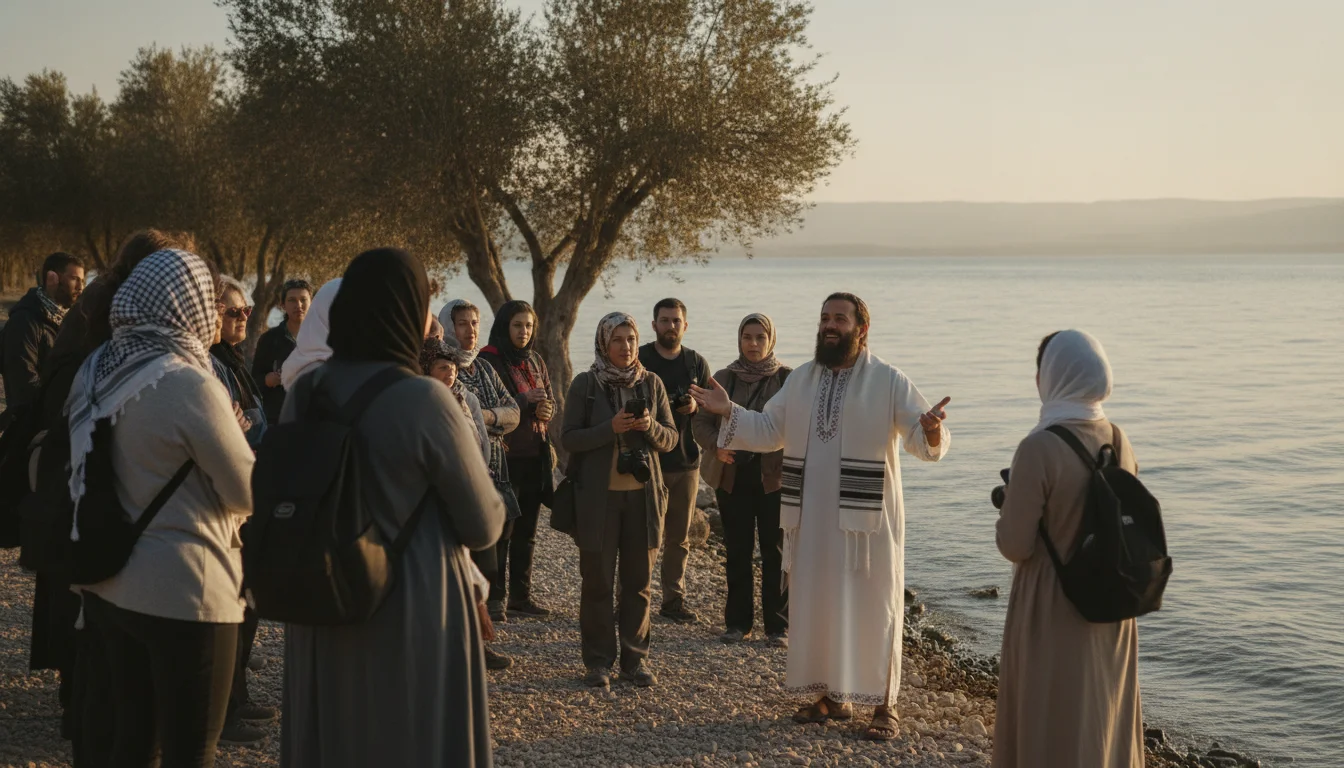
When a messianic congregation leader first calls me about bringing the community to Israel, the conversation almost never starts with logistics. It starts with longing. This is the land where Yeshua walked, where the feasts were given, where the whole story your congregation lives inside actually happened. You do not want to visit Israel. You want to take your people home to it. My job is to turn that longing into a real trip with real dates, and to make sure the cost and the planning do not stop it before it starts.
I have built heritage journeys for more than forty years, and I have led messianic congregations through Israel more times than I can count. I want to walk you through exactly how to plan this trip as the leader who organizes it, not as someone hoping a solo traveler talks them into it. The decisions are yours: the itinerary, the budget, the group you build, and the seat you sit in. Let me show you how each one works.
Your Seat Is the Free One
Let me put the money question on the table first, because it is usually the quiet thing holding a leader back. With fifteen or more paying participants, the group leader travels free. That means your full trip cost is covered: flights, hotel accommodation, ground transportation, site entry fees, and the group meals built into the itinerary. You are not asking your congregation to fund an expensive trip for the rabbi or the messianic leader on top of everyone else’s cost. You are organizing a journey your people pay into, and your seat is part of how the economics are structured.
This is not a discount or a partial credit. It is a complimentary spot that a group of fifteen paying travelers generates enough margin to absorb. You are the reason the group exists, so the model is built around your seat being the free one. If you want the full breakdown of how that benefit works and who qualifies, our guide on whether the leader travels free lays it out, and the piece on how many people you need for a free leader seat answers the number question directly.
Larger groups make the math friendlier. A congregation that brings twenty-five or thirty travelers sometimes unlocks a second benefit, a reduced or complimentary seat for a co-leader or a spouse. If your congregation has a worship leader, a teaching elder, or a spouse who serves alongside you, raise that early so we can build toward it.
What a Messianic Itinerary in Israel Should Actually Cover
A generic Holy Land tour and a messianic congregation trip are not the same journey, and the difference is the whole point. Your people read the land through both covenants. They want the Galilee where Yeshua taught, and they want the Temple Mount, the City of David, and the places where the feasts and the prophets come alive. A good itinerary honors both without treating either as a footnote.
Here is the shape I usually build toward for a messianic group.
The Galilee comes first for most congregations. The Sea of Galilee, Capernaum, the Mount of Beatitudes, and the Jordan River are where the ministry of Yeshua becomes physical. Many groups hold a time of immersion in the Jordan, and that moment tends to be the emotional center of the whole trip. Give it room in the schedule. Do not rush your people through it on the way to the next site.
Jerusalem is the heart. The Western Wall, the Southern Steps where teaching happened, the Garden Tomb, the Mount of Olives, the City of David, and the Temple Mount all sit within reach of each other. For a messianic congregation, Jerusalem is where the two testaments stop being two. Plan for at least three full days here. Two is not enough, and your people will feel the loss.
Then there are the layers most tours skip. The messianic story includes the feasts, so if your trip can align with Sukkot or Passover, the land teaches in a way a classroom never will. It includes the prophets, so a stop at a site like Tel Dan or the Dead Sea and Masada connects the ancient story to the ground. And it includes the modern return of the Jewish people to the land, which for a messianic congregation is not politics. It is prophecy that your people are watching unfold.
You do not have to design all of this alone. That is the operator’s work. Your job is to know your congregation and tell us what matters most to them, and we build the route around it. You can see how the full country comes together on our Israel heritage page.
How Long the Trip Should Be
The most common mistake I see leaders make is planning a trip that is too short for the land and too long for the budget in the wrong places. For a messianic congregation trip to Israel, ten days is the sweet spot. It gives you the Galilee, Jerusalem, and the desert and Dead Sea without a forced march.
Seven or eight days can work if your group is experienced or time-limited, but you will have to choose what to cut, and the cuts hurt. A congregation’s first trip to Israel should not feel like a sprint. If you are weighing the length question, our ten-day Holy Land itinerary walks through how the days actually distribute, which sites earn a full morning, and where the natural rest points fall.
Twelve to fourteen days opens the door to the far north, the coast, and deeper time at each site. If your congregation is bringing thirty people and this is a milestone journey, the longer trip is worth the conversation.
Building a Group That Reaches Fifteen
This is the part leaders worry about most, so let me be practical about it. You do not need to convince fifteen strangers. You need to start with the eight to ten people in your congregation who already ache to go, and let them bring others.
Start with your core. Every trip I have run began with a small group of committed travelers, not a full sign-up sheet. Couples come together. Families travel as a unit. Your home group or your worship team often moves as a block. Fifteen is reachable when you count the people leaning in, not the whole membership roll.
Give people a real reason and a real date. Vague interest never fills a group. “We might do an Israel trip someday” converts no one. “We are immersing in the Jordan and standing on the Southern Steps next Sukkot, ten days, here is the itinerary” lets people decide. Tie the trip to a season your congregation is teaching through, a feast, or an anniversary, and the interest sharpens fast.
Plan far enough ahead. Nine to twelve months is right for a messianic group of fifteen to thirty, and I lean toward the longer end when the trip is timed around a feast, because flights and Jerusalem hotels fill early during Passover and Sukkot. Lead time is not only logistics. It is recruiting runway, and it is how your people budget and request time off. Our guide on how to recruit for a congregation trip goes deeper on filling the seats, and the piece on when to bring a group to Israel covers the season and weather tradeoffs.
What the Trip Costs Your People, and How to Make It Reachable
Your congregation will not commit to a number they cannot picture, so give them one early. The honest cost of an Israel trip depends on season, group size, and hotel level, and it climbs during the feasts. Rather than guess, I always help a leader build a real per-person figure for their dates before they announce anything. Our breakdown of what a group trip to Israel costs shows what sits inside the price and what does not, so you can present a whole number instead of a range.
Then make it reachable. Two things do this better than anything else. The first is a payment plan. When people can put down a deposit and pay monthly across nine or ten months, an Israel trip stops feeling like a wall and starts feeling like a decision. Our guide on setting up a group trip payment plan shows how to structure it so your congregation can budget in comfort. The second is time. The earlier you announce, the longer people have to save, and the fuller your group gets.
Your Real Job Once the Money Is Handled
Here is what I most want you to hear. When the free-leader model takes your personal cost off the table, it also frees your attention. You stop being the trip’s accountant. You become its shepherd.
That is the point of all of it. Your role in Israel is not to check people onto buses. It is to read the text aloud where it happened, to lead your congregation into the Jordan, to stand with them on the Mount of Olives looking across at the Old City, to be present in the moments that will mark them for years. The operator’s job is to make the flights, the hotels, the guides, and the logistics invisible so your focus stays on your people. The free seat is part of how we keep it there. If you want the full planning arc from first idea to departure, start with our group pilgrimage planning guide, and the piece on how to organize a trip to Israel covers the step-by-step for a first-time leader.
FAQ: Planning a Messianic Congregation Trip to Israel
How many people do I need for the group leader to travel free?
Fifteen. With fifteen or more paying participants, the group leader’s full trip cost is covered, including flights, hotels, ground transportation, and site entry fees. Below fifteen the trip is still possible, but the leader pays a participant’s price or the group covers the seat by agreement.
Is a messianic itinerary different from a standard Holy Land tour?
Yes, and the difference matters. A messianic congregation reads the land through both covenants, so the itinerary balances the Galilee ministry sites with Jerusalem, the Temple Mount, the City of David, and the feasts. We build the route around what your specific congregation cares about most, rather than a fixed one-size template.
How long should the trip be?
Ten days is the sweet spot for a first congregational trip. It gives you the Galilee, three full days in Jerusalem, and the desert and Dead Sea without rushing. Shorter trips work if you accept some cuts, and twelve to fourteen days opens up the far north and deeper time at each site.
When is the best time to bring a messianic group?
Many congregations want to align with Sukkot or Passover, because the land teaches the feasts in a way nothing else can. Those seasons fill early, so plan nine to twelve months ahead and book Jerusalem hotels well in advance. Spring and fall outside the feasts also offer comfortable weather and easier availability.
How do I make the cost reachable for my congregation?
Announce a real per-person number early, then offer a payment plan so people can put down a deposit and pay monthly across nine or ten months. Early planning and a clear budget do more to fill a group than anything else. We help you build the actual figure for your dates before you announce it.
If you are weighing whether an Israel trip is realistic for your congregation, the free-leader math is usually the thing that tips it. You can see how the group experience works on our group heritage tours page, or look at the full route on our Israel heritage page.
Contact us and we will help you run the numbers for your congregation and your dates.