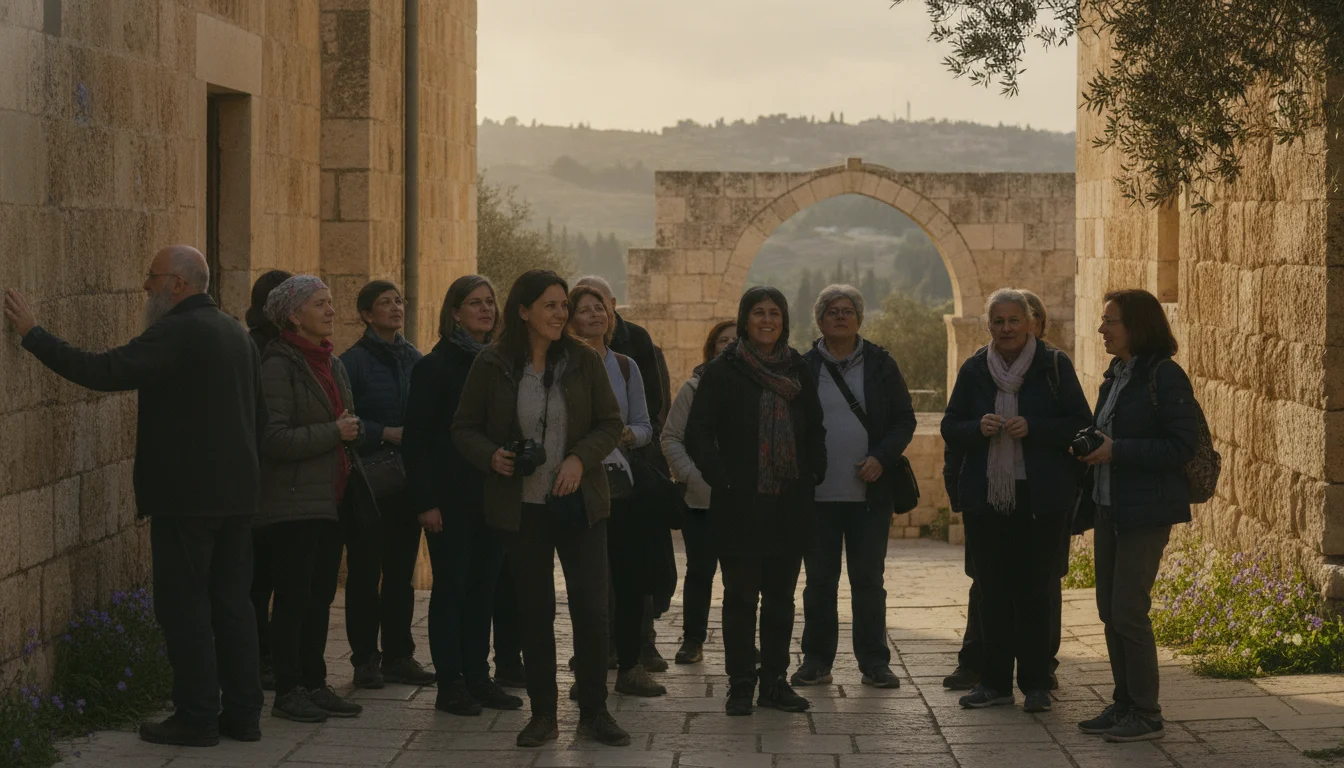
Every pastor who calls me about a first trip to the Holy Land eventually asks the same question, usually near the end. “So when should we go?” It sounds simple. It is not, because the honest answer depends on what your group can tolerate in heat, what they can afford, and how much they mind sharing the Garden Tomb with three other groups at the same hour. I have built heritage journeys to Israel for more than forty years, and timing is the one question where a little guidance saves people the most money and the most frustration.
So let me walk you through the year the way I walk a new leader through it. Season by season, with the tradeoffs named. By the end you will know which window fits your congregation, and how far ahead to start so the dates you want are still open.
The Short Answer, Before the Long One
The two best windows for a church group in Israel are spring and fall. March through May, and late September through November. The weather is kind, the walking is comfortable, and the sites are open and green. Those are also the months everyone else wants, which is the catch we will deal with later.
If your priority is a lower price and thinner crowds, and your group can handle heat or a bit of rain, the shoulder edges and the off months open up real savings. And if your group is drawn to Christmas or Easter in the actual places, that is a different decision entirely, one worth making with your eyes open.
Now the full year.
Spring: March, April, May
Spring is what most people picture when they imagine walking where Jesus walked. The hills around Galilee turn green. Wildflowers come up across the Golan and the Judean countryside. Daytime temperatures sit comfortable for walking, roughly the sixties to upper seventies in March and warming through May. Evenings in Jerusalem stay cool enough for a light jacket.
For a group that does a lot of walking, and every good Holy Land itinerary does, spring is close to ideal. You are climbing to Masada, walking the Old City, standing at the Sea of Galilee, and moving through open sites for hours. Spring lets your people focus on where they are standing instead of how hot they feel.
The catch is Easter. Easter and Passover often fall in this window, and they bring the year’s heaviest crowds and highest prices. Holy Week in Jerusalem is powerful, and for some groups it is the whole point. For others it is a logistical strain of booked-out hotels, packed sites, and a premium on every part of the trip. If Easter is your reason for going, plan early and price it in. If it is not, the weeks just before Palm Sunday or a few weeks after Easter give you spring weather without the surge.
Summer: June, July, August
I will be direct about summer, because leaders need the truth here more than reassurance. Summer in Israel is hot. Jerusalem is dry heat in the nineties. The Dead Sea and the Jordan Valley run hotter, often past a hundred, and that is where some of the most physical parts of a pilgrimage happen. A group at the top of Masada at midday in July feels every degree of it.
That does not make summer impossible. It makes summer a decision about your group. School-year timing pushes many congregations toward summer because families and teachers are free, and youth groups almost have to travel then. If that is you, summer can work, but the trip has to be built for the heat. That means early starts, the hardest walking done in the morning, long midday breaks, and constant water, so nobody is on an exposed site at two in the afternoon.
Summer crowds are also heavy, since it is peak vacation season worldwide. So you get the heat and the crowds together, without the price relief of the true off season. For most adult church groups I steer them away from July and August unless the calendar leaves no other option. For youth and family groups tied to the school break, we build around it and make the heat manageable.
Fall: September, October, November
Fall is my quiet favorite, and I tell most first-time leaders so. Late September through November brings the heat down to comfortable again, the light turns golden across the hills, and the land still carries the dryness of summer without the mud of deep winter. The walking is easy and the evenings are pleasant. It is spring’s comfort without spring’s Easter premium.
There is one thing to watch in the fall, the Jewish High Holy Days. Rosh Hashanah, Yom Kippur, and Sukkot usually fall in September and into October. Around those dates some sites, shops, and services close or shift hours, transportation gets tighter, and domestic travel picks up. It is not a reason to avoid fall. It is a reason to plan the exact dates with someone who knows the calendar, so your itinerary flows around the holidays instead of colliding with them. Built right, fall gives you the best balance of weather, access, and value in the whole year.
Winter: December, January, February
Winter surprises people. They picture the Holy Land as always warm and are startled to hear that Jerusalem can get cold, wet, and every few years even sees snow. December through February is the rainy season. Days are cooler, in the fifties and low sixties in Jerusalem and colder up north, and you can lose an afternoon to rain.
Here is what winter gives you in return. It is the quietest and most affordable stretch of the year outside Christmas week itself. Sites that feel crowded in April are calm in January. Prices soften. And for many faith groups, winter carries its own meaning, because Bethlehem and the Nativity story belong to December in a way no other month can match. A winter pilgrimage that leans into that, standing in Bethlehem in the actual season of the story, is a different experience from a spring trip.
The exception inside winter is Christmas itself. The days around December 25th in Bethlehem and Jerusalem are among the most in-demand of the year, with the crowds and prices to match. So winter splits in two. Christmas week is a peak-season decision that needs the same early booking as Easter. The rest of winter, January and February especially, is the closest thing to an off-season bargain the Holy Land offers, if your group does not mind a coat and an umbrella.
How Weather Actually Shapes the Day
It helps to understand why the season matters so much for this kind of trip. A Holy Land tour is not a resort holiday where weather is a backdrop. Your people are on their feet for hours, often on uneven ground, in the sun, at Capernaum and Caesarea and the City of David and a dozen other open sites. Heat and rain do not just make the day less pleasant. They change what the group can do and how much they absorb of the places they came so far to see.
That is why spring and fall are worth the crowds for most groups. Comfortable weather keeps energy up across an eight or ten day itinerary, and energy is what lets people be present at the Jordan River or the Mount of Beatitudes instead of counting down to the coach. For more on building the itinerary, our complete leader’s guide walks through how the days come together, and the church group trips to Israel overview covers what a week on the ground looks like.
How to Time a Trip to Avoid the Crowds
You have two levers for dodging crowds.
The first is the season. Choosing January and February, or the quieter weeks of late fall, puts you in the country when far fewer groups are there. You feel it at the major sites, where you can pause and reflect instead of shuffling through in a line.
The second is timing inside a busy season. Even in peak spring, the crowd is not evenly spread. The weeks right around Easter are the crush. Push a few weeks to either side and you keep the good weather while the crowds thin. The same holds in fall around the Jewish holidays, and in winter around Christmas week. Peak season is really a peak few weeks with calmer stretches on both sides, and a good operator knows where those stretches are.
For most groups I recommend the second lever. Aim for the comfortable seasons, then let us place your exact dates in the calmer part of that window.
The Money Side: Shoulder Season and Off Season
Timing is the biggest single factor you control on price. Peak dates, meaning Easter, Christmas, and the height of spring, carry premium airfare and premium hotel rates, and both feed straight into your per-person cost.
Shoulder season, the edges of spring and fall just outside the peak weeks, gives you most of the good weather at a lower price. The true off season, January and February, goes further still on cost, with the tradeoff being cooler, wetter days. If price will make or break your group reaching the numbers it needs, shifting into a shoulder or off month is often the difference between a trip that fills and one that stalls. For a full breakdown of where the money goes, our guide on what a group trip costs lays it out line by line.
How Far Ahead to Book, by Season
This is where timing and planning meet, so let me be specific.
For a normal trip in a comfortable season, outside the peak weeks, six to nine months of lead time is the working range for a group of fifteen to thirty. That gives people time to budget, request time off, and commit, and it gives you time to build the group, which is the real work.
For peak dates, book earlier. Easter, Christmas week, and the popular spring weeks want nine to twelve months, sometimes more for a larger group. Hotels in Jerusalem and Bethlehem fill first for those dates, and flights follow. If your heart is set on Bethlehem on Christmas or Jerusalem for Holy Week, treat that as a trip you start planning roughly a year out. Our guide on how far ahead to plan goes deeper on the full timeline and what happens in each phase.
The pattern is simple. The more in demand your window, the earlier you commit. Off-season winter has the most give. Easter and Christmas have the least.
FAQ: Timing a Church Group Trip to Israel
What is the single best month for a church group in Israel?
If I had to name one, I would say October. The heat has broken, the light is beautiful, the walking is easy, and it sits after the busiest spring rush. April is its spring equal, with the caveat that Easter can crowd it.
Is it too hot to visit Israel in summer?
It is hot, especially in the Jordan Valley and at the Dead Sea, where it can pass a hundred degrees. Summer is workable for youth and family groups tied to the school break, as long as the trip is built for the heat with early starts and midday rest. For adult groups with flexibility, spring or fall is more comfortable.
When should we go if we want to keep the cost down?
January and February are the most affordable months, outside Christmas week. You trade warm, dry days for cooler and sometimes wet ones, and get thinner crowds and lower prices in return. The shoulder weeks at the edges of spring and fall are a middle path, with better weather at a lower price than peak.
How far ahead do we need to book for Easter or Christmas?
Nine to twelve months, and earlier for a larger group. Those are the two most in-demand windows of the year, and hotels in Jerusalem and Bethlehem book out first. If either is your reason for going, start about a year ahead.
How do we get good weather without the heavy crowds?
Aim for spring or fall, then place your exact dates a few weeks away from the peak, meaning just before or after Easter, or around but not on the Jewish holidays in fall. You keep the comfortable weather while the crowds thin. We match your dates to the calmer part of the good season.
The best time for your group is the one that fits your people, your budget, and your reason for going. Tell me roughly when your congregation is free and what matters most, whether that is Christmas in Bethlehem, comfortable spring walking, or the lowest cost, and I can point you to the right window and tell you how far ahead to start. You can see the full route on our Israel heritage tours page.
Contact us and we will find the season that fits your group and get the dates on the calendar.