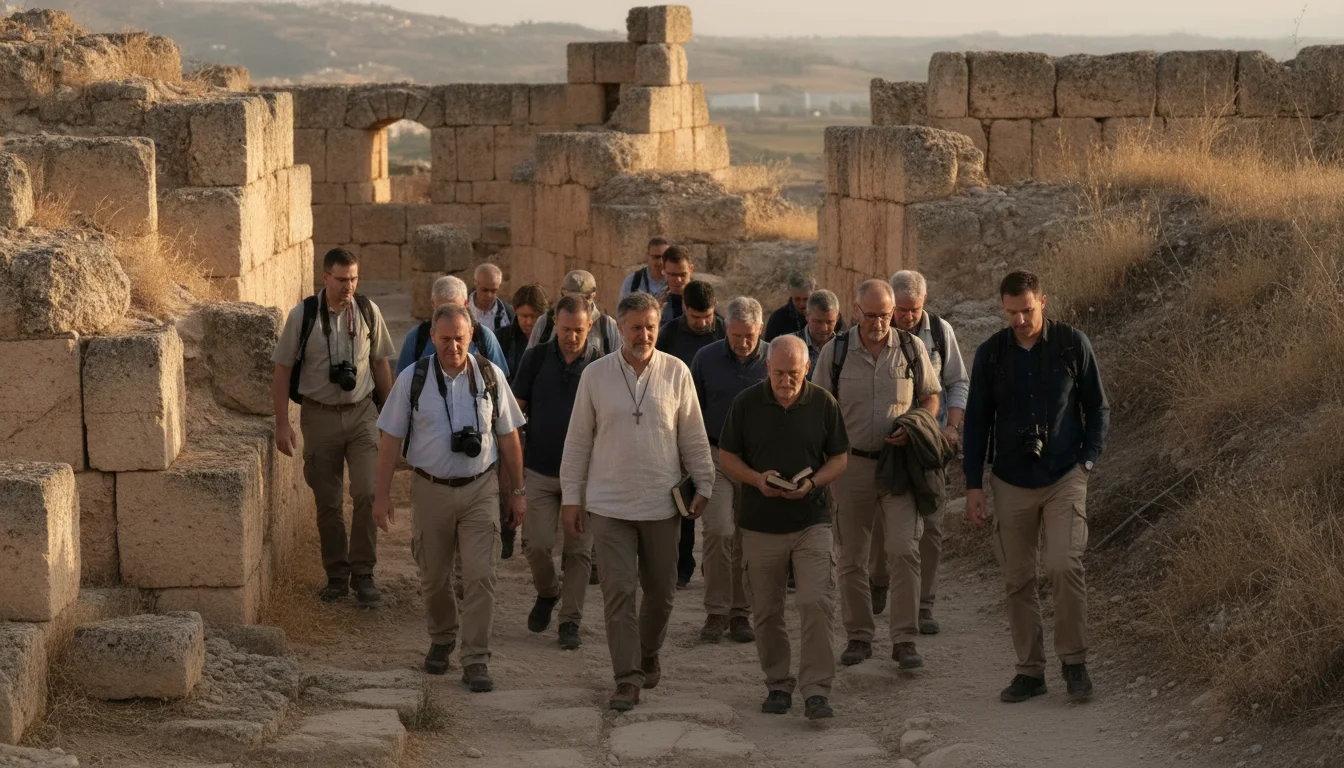
Most men’s retreats I hear about happen at a lodge two hours from home. Same cabins, same firepit, same talks the men will half-remember by August. Then a pastor calls me and asks a different question: what would it take to walk the men through Paul’s route in Greece, or stand them together at the Sea of Galilee, and let the retreat be the trip itself. That is a better question, and it is the one I want to answer here.
I have built heritage journeys for more than forty years, and a men’s retreat abroad is one of the trips that changes a group the most. Men who have sat in the same pews for a decade come home closer than the last ten retreats put together. But it only works if the leader plans it as a leader, not as a traveler. So this is a planning guide for you, the man organizing and leading the trip, not a brochure for the men going on it.
Why a Heritage Trip Beats Another Weekend at the Lodge
A retreat at a local lodge asks men to step out of their lives for two days. A heritage trip abroad asks them to step into something. That difference is the whole point.
When you put twelve or twenty men on the ground in Israel, Greece, Turkey, or Jordan, the teaching stops being abstract. You read the text where the text happened. You climb the same hills. You share long bus rides and late dinners, which is where men actually talk. The shared experience does the bonding work that a structured icebreaker never quite manages. I have watched quiet men open up at a table in Corinth in a way they never would have in a church basement.
It also removes the biggest weakness of the local retreat: everyone goes home Sunday night and slides back into the week. A trip abroad is a shared story your men will retell for years. That story is the discipleship. You are not buying flights. You are building something the group carries back.
The Free-Leader Model: How You Lead Without Paying Your Own Way
Here is the part that takes the personal cost off your shoulders, and it is the first thing I want you to understand before you plan anything else.
When you bring a group of fifteen or more paying travelers, your seat as the group leader is covered. Full trip: flights, hotels, ground transportation, site entries, and the group meals built into the itinerary. Not a discount. A complimentary spot built into the economics of a group booking. Fifteen paying travelers generate enough margin within the trip’s costing to carry one additional person, and that person is you, because you are the reason the group exists.
This matters for a men’s retreat specifically, because the leader is often a volunteer, a lay elder, or a men’s ministry director working on a tight personal budget. If leading the trip meant paying full price out of pocket, most of you would quietly decide it is not feasible and go book the lodge again. The free seat removes that decision. I explain the full mechanics in how pastors afford to lead a trip and answer the direct version in does the pastor travel free.
Below fifteen, the trip is still possible. We run groups of ten to fourteen regularly. In that range the leader pays a participant’s price, or the group agrees to absorb a small premium to cover the leader’s seat. If you are close to the line, plan anyway. Interest firms up once dates and an itinerary are real, and I have seen many groups cross from twelve to seventeen in the final two months. For the full breakdown of the threshold, see how many people you need for a leader-free trip.
How to Plan a Small Group Getaway Abroad, Step by Step
Let me walk you through the actual sequence. Whether you are planning a men’s retreat, a small group getaway, or a family ministry trip, the bones are the same. I will flag where the men’s version differs.
Step 1: Pick the Destination Around Your Teaching
Do not start with airfare. Start with what your men are studying or what you want them to walk into.
If your men’s ministry has been in the Gospels, Israel puts them at the Sea of Galilee, the Mount of Beatitudes, and Jerusalem. If you have been preaching Acts and the letters, Greece and Turkey walk them through Paul’s missionary journeys city by city. Jordan adds Petra and Mount Nebo. The destination should serve the teaching, not the other way around. A trip tied to something your group is already living through recruits itself.
Step 2: Set the Dates and Length
For a men’s group, shorter and tighter often works better than a two-week grand tour. Most working men can protect eight to ten days once. Fewer can protect fourteen. An eight-day Holy Land route or a footsteps-of-Paul loop through Greece hits the core sites without asking men to burn their whole vacation allowance. Pick real dates early. Vague interest never fills a trip, a specific journey on specific dates does.
Step 3: Build the Budget Before You Announce Anything
Know your per-person price before you say a word to the group. That number drives everything: who can come, how you fundraise, and whether you clear fifteen. I walk through the full method in how to budget a church trip, and the short version for a men’s trip is to price it honestly, then build a payment plan so no man rules himself out over cash flow. A group trip payment plan that spreads the cost over several months is often the difference between a man saying yes and a man saying maybe.
Step 4: Recruit From Your Core, Not Your Whole Roster
You do not need to recruit fifteen strangers. You need the six or eight men who already want to go, then let them pull others in. Men recruit men. A guy who commits will bring his brother-in-law, his neighbor, the friend he has been trying to get back to church. Fifteen is reachable when you start from the men leaning in rather than the full membership list. I go deep on this in how to recruit for a church trip.
Step 5: Work From a Checklist So Nothing Slips
Passports, deposits, insurance, rooming, dietary needs, and a hundred small logistics will pile up. Do not carry them in your head. Run the whole thing off a church group planning checklist and hand the invisible logistics to your operator. Your job is the men. The operator’s job is everything else.
How to Plan a Family Ministry Heritage Trip
Some of you are not planning a men-only trip. You are planning a family ministry heritage trip, where households travel together and the point is to disciple parents and kids in the same experience. The free-leader model works the same way, and most of the planning sequence above still holds, but a few things change.
Age range is the big one. A family trip has to pace for children and older grandparents in the same group, which means shorter walking days, earlier dinners, and site choices that hold a ten-year-old’s attention as well as an adult’s. Rooming gets more complex because you are booking family configurations, not just twins and singles. And your recruiting pitch is different: you are selling parents on a trip their children will remember for life, not a study tour.
The free seat still lands on the trip organizer once you clear fifteen paying travelers, and children usually count toward that number depending on age and pricing tier, which is worth confirming early because it can pull a family group over the threshold faster than you expect. If you are weighing a family version, tell me the age spread when we talk and I will shape the itinerary around it.
The Same-Sex Retreat Dynamic: Why the Trip Structure Matters
A men’s retreat abroad has a particular rhythm, and a good operator builds for it. Men bond through shared effort and shared meals more than through structured sharing time. So the itinerary should leave room for it: a long table dinner after a hard day of walking, a morning devotion at a site that carries weight, unstructured hours where conversation happens on its own.
That is the argument for handing the logistics off entirely. When you are not managing the coach, the check-in, or the lunch reservation, you are free to lead the men. You can read the text aloud at the right spot, pull a man aside who has gone quiet, and be present for your group in the places that move them. The free-leader model is not only about money. It frees your attention, which on a men’s trip is the thing that matters most.
If you want the full framework for pulling all of this together, from destination choice through the day you board the plane, our guide to planning a group pilgrimage is the pillar I point every new leader to first. And you can see how the group experience works on our group heritage tours page.
FAQ: Planning a Men’s Retreat Heritage Trip Abroad
How many men do I need for my seat as the leader to be free?
Fifteen paying travelers. At fifteen or more, the group leader’s full trip cost is covered: flights, hotels, ground transportation, and included site entries. Below fifteen the trip still runs, but the leader pays a participant’s price or the group agrees to cover the leader’s seat.
How long should a men’s retreat abroad be?
Eight to ten days is the sweet spot for most working men. It covers the core sites of a Holy Land route or a footsteps-of-Paul loop without asking men to spend their entire vacation allowance. Fourteen-day trips are possible but harder to fill with a men-only group.
How far ahead should I start planning?
Six to nine months for a group of fifteen to thirty. That gives men time to budget, request time off, and commit, and gives you the runway to recruit. Holiday-timed trips want nine to twelve months. See how far ahead to plan for the full timeline.
What if I can only gather ten or twelve men?
The trip can still happen. We run groups of ten to fourteen regularly. That size just will not include the free-leader benefit, since the economics that fund the complimentary seat start at fifteen. Many groups that begin at twelve reach fifteen before departure, so it is worth planning anyway.
Can I plan a family version instead of a men-only trip?
Yes. A family ministry heritage trip uses the same free-leader model and a similar planning sequence, with the itinerary paced for children and older travelers and rooming built around family configurations. Tell me the age range and I will shape the route to fit it.
If you are weighing a men’s retreat that goes further than the lodge this year, the place to start is a real conversation about your group size, your dates, and your teaching focus.
Contact us and we will help you run the numbers and build a route your men will still be talking about a decade from now.