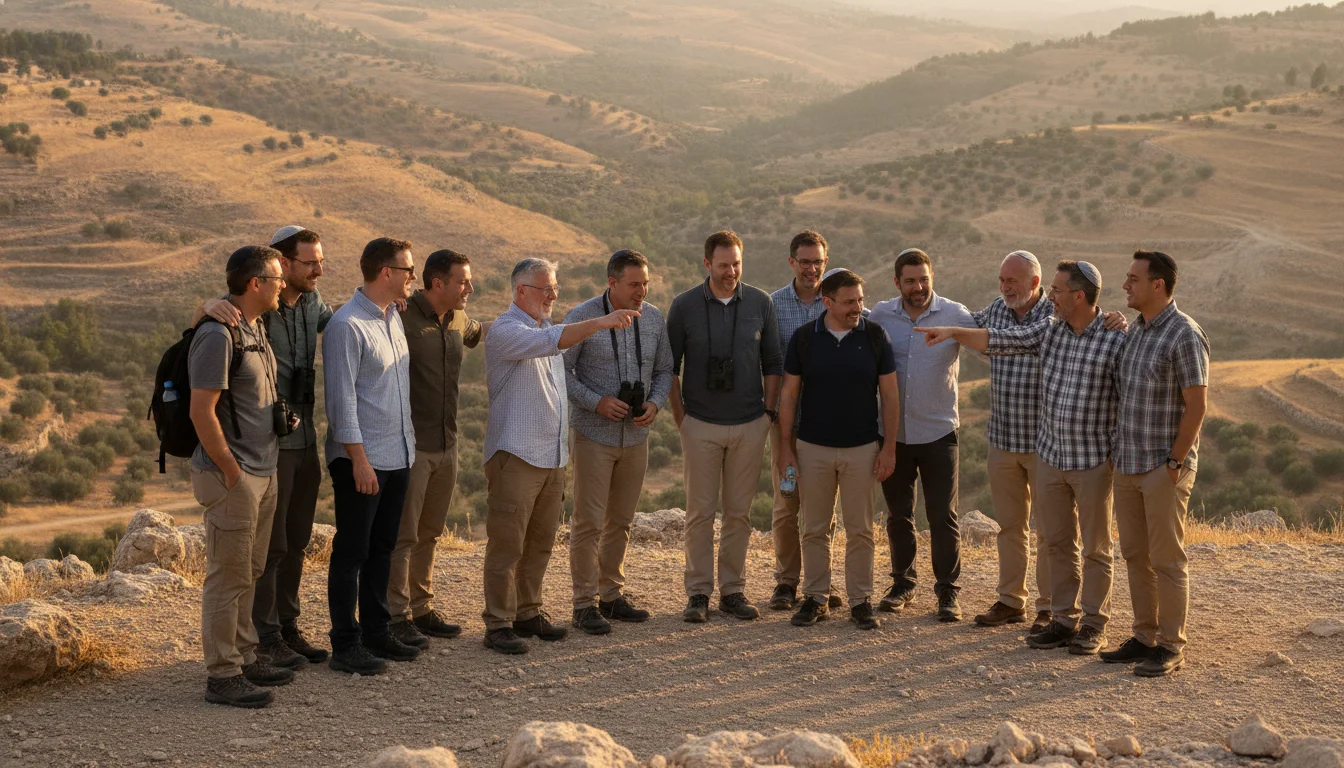
The first time a pastor calls me about a men’s ministry trip, he usually opens with an apology. He tells me the men in his church are not the type to sign up for a tour, that they are busy, that half of them have never left the country, and that he is not sure he can fill fifteen seats. I have heard that same speech for more than forty years, and it is almost never true. The men are ready. What is usually missing is a plan they can say yes to. That is the part you build, and that is what this guide is about.
I have led and organized heritage journeys for decades, most of them to Israel, and I want to walk you through how to plan a men’s ministry heritage trip from the leader’s chair. Not as a traveler deciding where to go, but as the person recruiting, budgeting, and carrying the group. If you have never done this before, the whole thing can feel like guesswork. It is not. There is a repeatable structure, and once you see it, the trip stops feeling like a gamble.
Start With Why the Men, Specifically
A men’s trip is not just a regular tour with a narrower guest list. The reason it works is the reason you build it around. Men in your congregation will commit to something that has a purpose they can name to their wives, their bosses, and themselves. “We are going to walk where the disciples walked and come back changed” is a purpose. “We are doing a Holy Land tour” is a brochure.
So before you pick dates or price anything, decide what this trip is for your men. A few frames I have watched fill fast:
- A discipleship journey tied to a study series the men are already in, so the trip becomes the capstone.
- A leadership retreat for elders, deacons, and small-group leaders, where the goal is to come home more unified.
- A father-and-son or father-and-grandson trip, which reliably pulls in men who would never come alone.
Pick one. A trip that tries to be all three blurs, and a blurry trip is hard to sell. When you can stand up on a Sunday and tell the men exactly what this journey is and who it is for, recruiting gets far easier.
The Money Question, Handled First
Here is the thing most first-time organizers get backward. They try to recruit before they understand the cost structure, so when a man asks “what does it cost and what does it cost you to lead it,” they fumble. Handle the money first, in your own head, so you can answer plainly.
The single most important number for you as the leader: with fifteen or more paying participants, the group leader travels free. That means your full trip cost is covered, flights, hotels, ground transportation, and site entries included. You are not asking the church to fund the pastor’s vacation. You are organizing a journey the men pay into, and your seat is built into how the group is structured. If you want the full breakdown of that math, our guide on whether the pastor really travels free lays it out, and the piece on how many people you need for the leader-free benefit explains exactly where the fifteen comes from.
Once your own seat is off the table, you can look clearly at what the men will pay. For a full itinerary in Israel, cost depends on season, length, and hotel level, and it is worth understanding the pieces before you quote anyone. Our church trip to Israel cost breakdown walks through what is included and what is not, and the budget a church trip guide helps you set a per-man price you can defend.
Two tools make the price feel smaller without lowering it. The first is a payment plan. Most men can handle a trip they pay for over eight or ten months that they could never write one check for, so I always recommend setting up a group trip payment plan from day one. The second is light fundraising. A men’s ministry can offset a real chunk of the cost with a couple of well-run events, and our fundraise for a trip guide has approaches that do not feel like begging.
How to Recruit Men (Who Say They Are Too Busy)
This is where organizers lose sleep, so let me be direct about what works.
You do not need to recruit fifteen strangers. You need to find the six or seven men who already want to go, get them committed with a deposit, and let them pull the rest. Men recruit men. One respected guy in your congregation saying “I am going, you should come” moves more people than three announcements from the front.
A few practical moves:
- Start with a named list, not a general call. Sit down and write the fifteen to twenty men you think are most likely. Talk to them one at a time, in person, before you ever announce it publicly.
- Anchor it to a real date and a real itinerary. Vague interest never fills a group. “We are going to Israel for nine days next March, here is the route” gives a man something he can take home and decide on.
- Make the first step small. A refundable or modest deposit turns “I am interested” into “I am in.” Interest is free. A deposit is a decision.
If recruiting is the part that worries you most, spend time with our recruit for a church trip guide, because filling the group is genuinely more of the work than booking it.
Timing: How Far Ahead to Start
For a men’s group of fifteen to thirty, six to nine months of lead time is the sweet spot. That gives your men time to budget, request time off work, and clear it at home, and it gives you time to do the real work, which is recruiting. If you are aiming for a larger group or a trip timed around a holiday, give yourself nine to twelve months. Our how far ahead to plan guide goes deeper on the calendar, but the short version is this: earlier is not about logistics, it is about recruiting runway. The trip fills in the last two months, but only if you started the conversation early enough for that to happen.
The Same Model Works for the Whole Congregation
The structure I just described is not unique to men. Once you have run a men’s trip, you will see how the same playbook fills every other kind of group journey your congregation might build. A few that come up constantly:
How to Plan a Women’s Ministry Pilgrimage
A women’s ministry pilgrimage runs on the identical economics. Fifteen or more paying travelers, and the leader travels free, whether that leader is the pastor’s wife, a women’s ministry director, or a lay leader the women trust. What changes is the tone of the recruiting, not the math. Women’s groups tend to fill through relationship and small-group networks rather than a single announcement, so the “start with your core and let them bring others” approach works even better here. The purpose framing matters just as much: a pilgrimage tied to a specific study, a season of life, or a milestone will always fill faster than a generic tour. Everything in the group pilgrimage planning guide applies directly.
Worship Team Heritage Tour in Israel
A worship team heritage tour is one of the most rewarding trips I help build, and it has a wrinkle worth planning around. Your team is going to want to sing in the places they read about. Standing on the Sea of Galilee shore, at the Garden Tomb, in a chapel overlooking Jerusalem, these become worship moments your team will talk about for years. When you plan a worship team trip, tell your operator early that you want time and space built in for the team to lead worship on site, because access and scheduling for that is something we arrange in advance, not on the day. The rest is the standard model: reach fifteen and the worship pastor or team leader travels free.
Congregation Anniversary Heritage Trip
Marking a church or synagogue anniversary with a heritage journey is a beautiful way to make a milestone tangible, and it has a built-in recruiting advantage most trips do not. The anniversary itself is the reason, so you are not manufacturing urgency. “We are celebrating our fortieth year by walking the land together” is a purpose people rally to. Anniversary trips also tend to run larger, which is worth knowing, because groups of twenty-five or thirty sometimes open room for a reduced or complimentary second seat for a co-leader or spouse. If you think your anniversary trip could pull thirty people, raise that with your operator early so it can be built into the structure.
Choosing Who You Build It With
One decision shapes everything else: who you partner with to run the trip. A men’s ministry trip, a worship team tour, an anniversary journey, these all live or die on the ground, in the hands of the guide and the local operators. The wrong partner turns a spiritual journey into a stressful bus schedule. The right one makes everything else invisible so you can be present for your men.
Before you sign anything, know what to ask. Our questions to ask an operator guide gives you the list, and the how to choose a faith tour operator piece walks through what separates a real heritage operator from a generic tour company. You can also see how the group experience is structured on our group heritage tours page, and look at the full route options on our Israel heritage page.
Your Real Job Once the Logistics Are Handled
Here is what I most want you to hear as the organizer. When the free-leader model takes your personal cost off the table, and a real operator takes the logistics off your plate, something important happens: your attention comes free. You are no longer the trip’s accountant or its travel agent. You get to be what your men actually need on this journey, which is their pastor.
That is the whole point. Your job in Israel is not to worry about the coach or the hotel check-in or the lunch reservation. It is to read Scripture aloud at the place it happened, to lead a moment of reflection at the Garden Tomb, to be present with your men in the places that move them and to help them carry it home. The structure exists so your focus can stay where it belongs. Get the plan right on the front end, and the trip itself becomes the easy part.
FAQ: Planning a Men’s Ministry Heritage Trip
How many men do I need before I travel free as the leader?
Fifteen paying participants. At fifteen or more, the group leader’s full trip is covered: flights, hotel accommodation, ground transportation, and included site entries. Below fifteen the trip can still happen, but the leader pays a participant’s price rather than traveling free.
How do I recruit men who say they are too busy or not the traveling type?
Start with a named short list of the men most likely to go, and talk to each one in person before any public announcement. Get a few respected men committed with a deposit first, then let them pull the rest, because men recruit men. Anchor everything to a specific date and a real itinerary so the decision is concrete rather than vague.
How far ahead should I start planning?
Six to nine months for a group of fifteen to thirty, and nine to twelve months for larger groups or trips timed around a holiday. Most of that time is recruiting runway, not booking logistics. Groups tend to fill in the final two months, but only if the conversation started early enough.
Can the same model work for a women’s ministry, a worship team, or an anniversary trip?
Yes. The fifteen-and-up free-leader structure is identical across all of them. What changes is the recruiting style and the purpose you build around, whether that is a women’s pilgrimage, a worship team tour with on-site worship time, or a congregation anniversary journey.
Can a co-leader or my spouse also travel with a reduced cost?
Not automatically at fifteen, but larger groups create room. Groups of around twenty-five or thirty can sometimes unlock a reduced or complimentary second seat for a co-leader or spouse. If you expect a bigger group, raise it with your operator early so it can be built into the trip’s structure.
If you are weighing whether a men’s ministry heritage trip is realistic for your church, the honest answer is that it usually comes down to the plan, not the appetite. The men are more ready than you think. Start with the full group pilgrimage planning guide to see the whole picture, then contact us and we will help you run the numbers for your group and your dates.