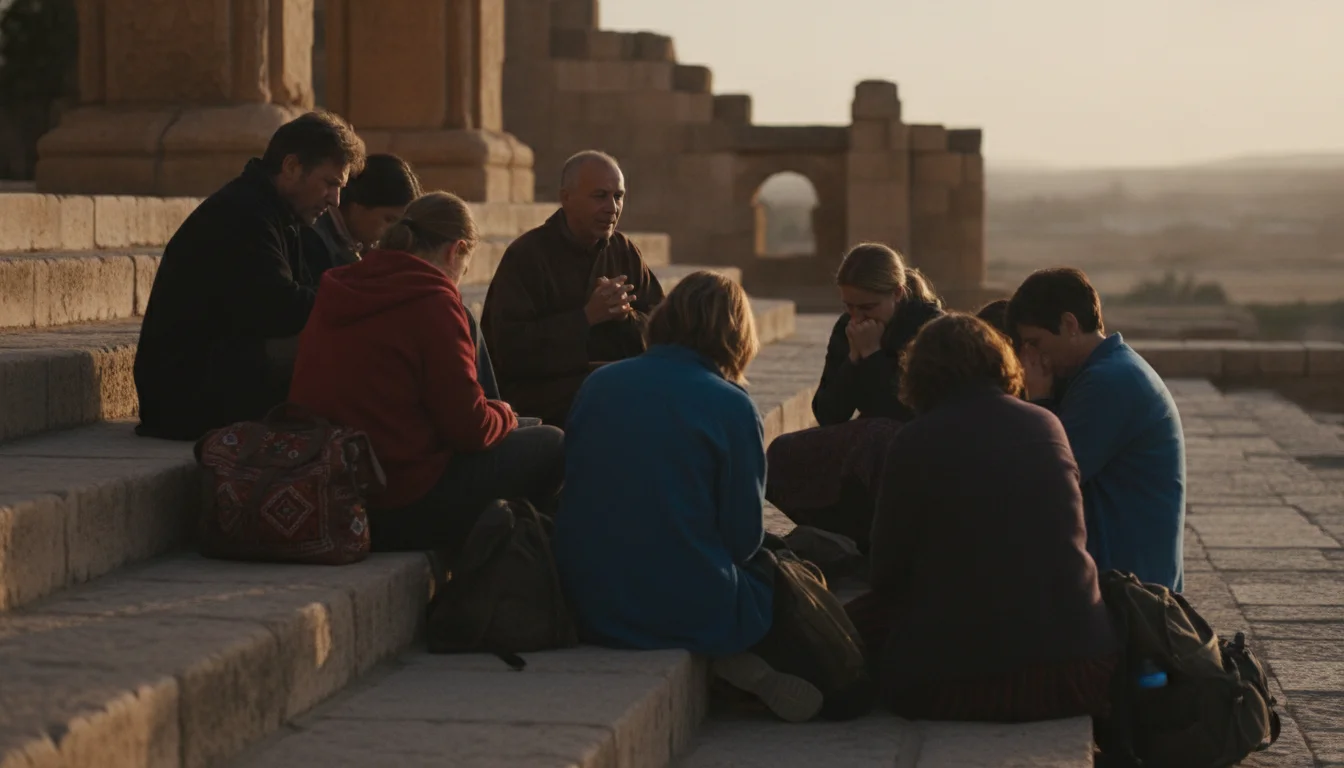
A pastor told me once, on the last night of a trip, that he was worried. His people had seen everything on the itinerary. They were tired in the happy way people get tired after a full week. And still he worried that in a month they would remember the trip the way they remember a nice vacation, not the way they remember a sermon that changed something. He asked me the question I have heard in one form or another for forty years. How do I make sure this was a pilgrimage and not just sightseeing?
I have built heritage journeys for more than forty years, and I want to answer that directly, because it is the right question and most planning guides skip past it. They tell you how to pick dates and fill a group. Those things matter. But the difference between a trip people enjoyed and a trip that reshaped their faith is not the itinerary. It is what you, the leader, do before, during, and after the days on the ground. That work is yours. No operator can do it for you, and it is not complicated once you see the shape of it.
Why the Leader Is the Whole Difference
Here is the thing I most want organizers to understand before they book anything. The bus, the guide, the hotels, the site access, all of that is the container. It is necessary and it should be excellent. But the container is not the meaning. Your group can stand at the exact spot where Paul preached or where a community was destroyed and remember only that it was hot and crowded, or they can stand there and be moved for the rest of their lives. What decides which one happens is almost always the person leading them.
That is a heavy thing to hear, so let me also say the reassuring part. This is why the free-leader model exists. When you gather fifteen or more paying travelers, your own seat is covered, which is not a marketing gift. It reflects the fact that your presence is the point of the trip. You are not a chaperone. You are the reason the journey means anything. If you want the economics of how that seat gets covered, our guide on how pastors afford to lead a trip walks through it plainly.
Once the money is off your shoulders, your attention is free for the actual job: guiding your people through an experience that stays with them. Everything below is that job, broken into the four moments where it happens.
How to Prepare Your Group Spiritually Before Travel
The most common mistake I see is treating the pre-trip meetings as logistics sessions. Passports, packing lists, what to wear, how much to tip. Those meetings are necessary, but if that is all they are, your group arrives ready to travel and unready to receive anything.
Spiritual preparation is simpler than it sounds. It means giving your people the story before they stand inside it. A traveler who has read Acts 16 three times before landing in Greece feels something at Philippi that a first-time reader never will. A group that has studied the history of a Jewish community before visiting the place it once lived walks into that square already carrying its weight. Preparation is what turns a location into a place.
Practically, I ask leaders to do three things in the weeks before departure:
- Pick the passages and the history that matter for your specific route, and assign them as reading. Not a heavy syllabus. A handful of chapters and a short history, spaced out so people actually do it.
- Hold at least one gathering that is teaching, not logistics. Preach the trip before you take it. Let people ask what they are about to see and why it matters to your community.
- Name the intention out loud. Tell your group, in plain words, that this is a pilgrimage and not a tour, and that you will be asking them to slow down and pay attention in ways a normal vacation does not require. People rise to the expectation you set.
If you are still building your group while you plan this, the two efforts feed each other. A congregation that hears you teaching toward a real trip signs up faster than one hearing a vague invitation. Our guide on how to recruit for a church trip covers that side in detail.
How to Slow the Trip Down So People Actually See
On the ground, the enemy of meaning is pace. A packed itinerary feels generous, and travelers who paid good money often want to see everything. But a group that races from site to site collects photographs and loses the thread. Sightseeing is what happens when you see a lot and absorb little.
Your job as leader is to protect the moments that matter from the schedule. That does not mean cutting sites. It means building in stillness at the two or three places on your route that carry the most weight, and being willing to let the smaller stops be quick. Before the trip, sit with your operator and decide together where the group will linger. At those places, you do the thing only you can do.
What is that thing? It is small and it is not hard. You gather your people, you read the passage aloud in the place it happened, and you give them a minute of silence to let it land. You do not fill the silence with commentary. At a memorial, you do not rush people back to the bus. You let them stand. I have watched hardened, practical people weep at a river in Greece because their pastor read six verses and then simply stopped talking. The guide gives the history. You give the meaning. Keep those roles clear and your group will feel the difference without being able to name it.
How to Help Members Process What They See
Seeing something powerful is not the same as understanding what it did to you. Many travelers have a strong experience at a site and then get back on the bus, and the feeling drains away before they can hold onto it. Part of leading well is helping people process in real time, so the experience becomes something they own rather than something that washed over them.
The tool I recommend is the simplest one there is: a daily rhythm of reflection. It costs nothing and it changes everything.
- Each evening, gather the group for fifteen or twenty minutes. Not a lecture. A circle.
- Ask one or two open questions. What moved you today? Where did you feel God, or feel your people’s history, most strongly? What surprised you?
- Let people speak who want to, and let the quiet ones stay quiet. The point is not to perform. It is to say out loud what happened inside, which is how a fleeting feeling becomes a lasting memory.
I also tell leaders to encourage a private practice alongside the group one. A small journal. Five minutes before bed. People who write down what they saw remember it in a way photos never reproduce. You do not need to police this. Just model it and mention it.
For a Christian group, this reflection can be openly devotional: prayer, a short reading, a moment of worship. For a Jewish group, it might center on memory, on the community that was, on what it means to stand where your people stood. For a mixed or interfaith group, keep the questions human and let people bring their own faith to them. In every case, the structure is the same. See, sit, speak, remember.
How to Debrief a Group After a Pilgrimage
The trip does not end when the plane lands. In some ways the most important work starts there, and it is the part almost every leader neglects. People come home full of something they cannot quite explain, and then normal life closes over them, and within a few weeks the whole journey starts to feel like a dream they once had. A good debrief keeps that from happening.
Plan the debrief before you leave, because you will not have the energy to plan it when you get back. Here is what I have seen work:
- Hold a reunion gathering two to three weeks after return, while it is still fresh but the jet lag is gone. Bring the group back together, share a meal, and let people tell their stories to each other. The shared retelling is what fixes the memory in place.
- Give them one reflective question to prepare in advance. Something like: what is one thing you saw that you are still thinking about, and what do you want to do differently because of it? That question turns a memory into a change.
- Invite people to bring one photo that means something, not the highlight reel. The single image that carries the weight. It keeps the debrief from becoming a slideshow and keeps it personal.
The debrief is also where you learn how the trip actually landed. Listen closely. The things your people were moved by are not always the things you planned around, and that knowledge makes you a better leader for the next one.
How to Bring the Trip Back to the Pulpit
A pilgrimage that changes fifteen or thirty people is a gift. A pilgrimage that changes your whole congregation is a different order of thing, and the bridge between the two is you, in the pulpit, in the weeks after you return.
The travelers came home changed. The rest of your community did not go, but they can still receive the harvest of the trip through your preaching. When you stand where Paul stood and then preach Acts from that memory, your congregation hears something they cannot get from a commentary. When you have walked the ground of a history and then teach it, the room leans in. The trip becomes a well you draw from for years, not a week that happened once.
I encourage leaders to plan this deliberately. Come home with two or three specific things you want to preach or teach, tied to places you stood. Let a traveler or two share a short testimony in a service. Show a few images, not as a travelogue but as a way in to a truth. Done well, this does two things at once. It feeds your whole congregation from a trip only some of them took, and it plants the seed for the next journey, because people who hear what happened want to go next time. Meaning, it turns out, is the best recruiting there is.
FAQ: Leading a Pilgrimage That Actually Means Something
What is the real difference between a pilgrimage and sightseeing?
Sightseeing is seeing a lot of places. A pilgrimage is being changed by a few of them. The sites can be identical. The difference is preparation, pace, and reflection, all of which the leader controls. A group that reads the story beforehand, slows down at the places that matter, and reflects together each day comes home changed. A group that races through a checklist comes home with photos.
How much of this depends on me versus the tour operator?
The operator owns the container: transport, hotels, expert guides, and access to the sites. You own the meaning: the teaching before, the moments of stillness on the ground, the reflection each evening, and the debrief at home. A great operator makes the logistics invisible so your attention is free for the part only you can do. If you want help thinking through the whole plan, our group pilgrimage planning guide lays out the full sequence.
How do I prepare my group spiritually if they are all at different places in their faith?
Set the intention clearly and give everyone the same story to arrive with. Assign a few readings and the relevant history, hold one teaching session that is not about logistics, and tell them plainly that this is a pilgrimage. People at different points in their faith will still meet the same passages and places, and each will bring what they have. You are not trying to make everyone feel the same thing. You are making sure everyone arrives ready to feel something.
What if my people resist slowing down and want to see more?
Explain the trade before you travel, not during. Tell them a packed schedule collects sights and loses depth, and that you have chosen to linger where it counts. Most travelers, once they experience one truly still moment at a meaningful site, stop asking for more stops. The stillness is what they end up remembering.
Do I need a large group for any of this to work?
No. Meaning does not depend on size, and small groups of ten to fourteen often reflect more deeply because everyone gets to speak. That said, at fifteen or more paying travelers your own seat is covered, which frees your budget and your attention for the work above. Whether you are leading twelve or forty, the four moments are the same: prepare, slow down, reflect, and bring it home to the pulpit.
If you want a journey people carry for the rest of their lives, the itinerary is the easy part and we will handle it. The meaning is your work, and it is the work worth doing. You can see how the group experience comes together on our group heritage tours page.
Contact us and we will help you build a route that gives your people room to be changed, not just shown around.