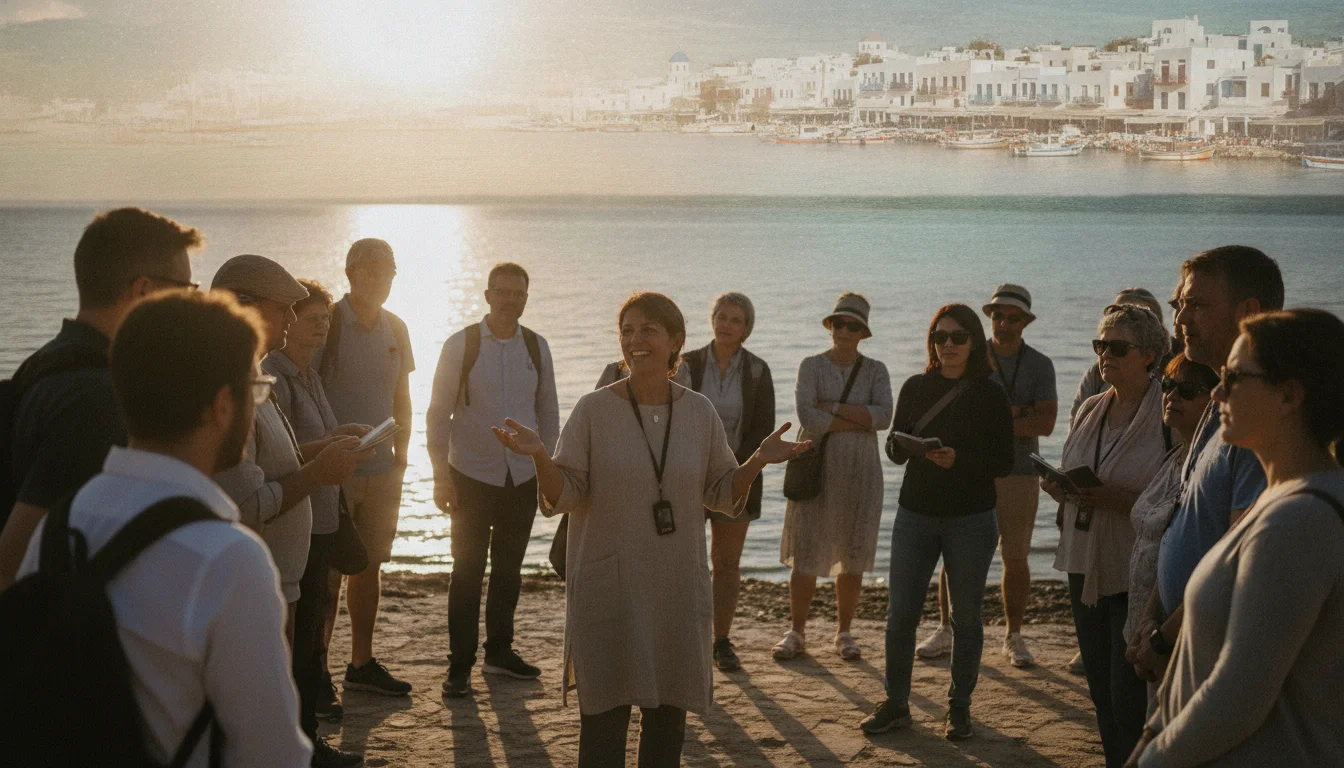
Most of the pastors and rabbis who come to me about a combined Israel and Greece itinerary have already run the idea past their people once, and it landed. Someone in the congregation said the word Israel and half the room leaned in. Then someone else said Greece, Paul, the seven churches, the islands, and the other half leaned in too. Now the leader is sitting with a real appetite and no map for turning two big destinations into one trip that holds together. That is the part I can help with.
I have built heritage journeys for more than forty years, and a combined Israel and Greece trip is one of the most rewarding routes a group can take, precisely because it tells one continuous story. This guide walks you through how I structure it, why fourteen days is the honest length for it, and every organizer decision you will face along the way. I am writing this for the person who leads and organizes the trip, not the person who simply signs up for it.
Why Combine Israel and Greece at All
The two countries are not a random pairing. They are the first and second acts of the same narrative.
Israel is where the story begins: Galilee, Jerusalem, the Jordan, the places where faith was formed. Greece is where the story spread: Philippi, Thessaloniki, Athens, Corinth, the cities where the early church moved out into the world. For a Christian congregation, the throughline is obvious. You stand where Jesus taught, then you stand where Paul carried that teaching to the Gentiles. For a group with Jewish heritage interests, the pairing works differently but still holds, from the land of Israel to the ancient Jewish communities of Thessaloniki and the islands.
When your people experience both in one journey, they stop seeing two separate vacations and start seeing one arc. That is the recruiting advantage too. A combined trip is easier to fill than either destination alone, because it speaks to more of your congregation at once.
The Case for Fourteen Days
People ask if they can do both countries in ten. You can move that fast, but I will tell you honestly what you lose.
A serious Israel visit alone wants seven to eight days: Galilee in the north, Jerusalem and the surrounding sites, the Dead Sea and Masada if you want them, plus travel time between regions. Greece on the Pauline route wants five to six days, because it moves from Thessaloniki and Philippi in the north down to Athens and Corinth, and that is real ground to cover. Add the transfer day between the two countries and you land at fourteen days as the number that lets both halves breathe.
Fourteen days is why I call this a 14 day biblical lands itinerary rather than a whirlwind. It is the length where your group experiences each site instead of photographing it from the coach window. If your congregation genuinely cannot give fourteen days, my advice is to pick one country and do it well rather than rush both. A strong single-country trip beats a thin two-country one every time. If you land on Israel alone, our 10-day Holy Land itinerary shows how that shorter trip comes together.
The Route, Region by Region
Here is how I sequence the fourteen days. Your group’s focus, Christian, Jewish, or mixed, shifts the emphasis, but the spine stays the same.
Days One to Four: Galilee and the North
Most groups fly into Tel Aviv and drive north to base near the Sea of Galilee. This is the gentle start the trip needs after a long flight. You visit Capernaum, the Mount of Beatitudes, Nazareth, and take a boat on the Galilee itself. It is quiet, green, and it eases your people into the rhythm of travel before the intensity of Jerusalem. For a leader, these are the days where the group becomes a group, where the strangers who signed up start eating together and looking out for each other.
Days Five to Eight: Jerusalem and the South
Then you move to Jerusalem, and everything deepens. The Old City, the Western Wall, the Mount of Olives, the Garden of Gethsemane, the Via Dolorosa. This is the emotional center of the whole fourteen days, and I always tell leaders to protect time here rather than pack it. If your group wants the Dead Sea and Masada, this is where they fit, as a day out to the south. You can see how the full Israel side comes together on our Israel heritage page.
Day Nine: The Transfer
One day belongs to moving from Israel to Greece, usually a flight into Athens or Thessaloniki. Do not resent this day. Use it. It is a natural breath between the two halves, a chance for your group to reflect on Israel before Greece begins. I often suggest leaders plan a short debrief or shared meal that evening, because the transfer day is where people process what they just experienced.
Days Ten to Fourteen: The Greek Route
Greece opens the second act. Depending on your entry point, you move between Thessaloniki, Philippi, Athens, and Corinth, walking the cities where the early church took root. At Philippi you can read Acts 16 at the river where Lydia was baptized. In Athens you stand on the Areopagus where Paul addressed the philosophers. Corinth brings the letters to life. For groups drawn to the deeper Pauline path, our footsteps of Paul itinerary lays out that route site by site, and our Greece heritage page shows the full destination.
This is what makes it the best multi country biblical itinerary for groups in my experience: the two halves are not stitched together, they finish each other. Israel plants the story. Greece carries it out.
The Organizer Decisions You Actually Own
Now the practical part, because a combined trip has more moving pieces than a single-country one, and those pieces are yours to decide.
The Free-Leader Math on a Two-Country Trip
The benefit that makes leading affordable works the same way here as on any group trip. With fifteen or more paying participants, the group leader travels free. That covers the leader’s full journey across both countries: flights, hotels, ground transportation, site entries, and the meals built into the itinerary. On a fourteen-day two-country trip, that free seat is worth more than on a short trip, simply because the trip costs more per person. It is often the single factor that lets a pastor or rabbi say yes to leading at all. If you want the full breakdown of how the fifteen-person threshold works, our guide on whether the pastor travels free walks through it.
Reaching Fifteen Is Easier Here, Not Harder
A combined trip fills more readily than a single destination, because it appeals to two overlapping groups of interest at once. You do not need to recruit fifteen strangers. You need eight to ten people from your core who already want to go, then let them bring others. Couples travel together, friends bring friends, a study group signs up as a unit. Because the trip touches both the Holy Land and the Greek church, you draw from a wider slice of your congregation than either alone would reach.
Plan Nine to Twelve Months Out
A fourteen-day two-country trip needs more runway than a short one. I tell leaders to give themselves nine to twelve months. Your people need time to budget for a larger trip, request two weeks off work, and commit. You need that time to build interest, which is the real recruiting work. If your trip touches Orthodox Easter or the Jewish holidays, lean toward the twelve-month end. For a fuller view of timing, see our guide on how far ahead to plan a group trip.
Payments Make or Break a Larger Trip
A two-country itinerary carries a higher per-person price, so a payment plan is not optional, it is the mechanism that lets ordinary members join. A deposit to hold the seat, then monthly installments up to departure, turns a number that feels out of reach into one people can plan around. Our guide on setting up a group trip payment plan shows how to structure it so nobody is priced out.
The Leader’s Real Role Across Both Countries
Here is what I most want you to hear as the organizer. Once the free-leader model takes your personal cost off the table and a good operator handles the logistics, your job across all fourteen days is not administration. It is shepherding.
Your people will look to you at the Sea of Galilee, in the Old City of Jerusalem, at the river in Philippi, on the Areopagus in Athens. Your role is to be present in those places, to teach, to lead reflection, to hold the group together across two countries and fourteen days. The transfer logistics, the coaches, the hotels, the local guides, that is the operator’s work, and it should be invisible to you. Everything in how I build these trips is designed to keep your attention where it belongs, on your community rather than on the schedule. Before you commit, it helps to read our full group pilgrimage planning guide, which covers the leader’s role from first idea to final day.
FAQ: Planning a Combined Israel and Greece Trip
How many days do I really need for a combined Israel and Greece itinerary?
Fourteen days is the honest length. Israel wants seven to eight days for Galilee, Jerusalem, and the south, Greece wants five to six for the Pauline route from Thessaloniki to Corinth, and one day covers the transfer between them. You can compress to ten, but you lose the depth that makes the trip worth taking.
What does a 14 day biblical lands itinerary usually cover?
The Israel half covers Galilee, Nazareth, Jerusalem and the Old City, and often the Dead Sea and Masada. The Greek half covers Philippi, Thessaloniki, Athens, and Corinth, walking the cities of the early church. The two halves tell one continuous story, from where faith was formed to where it spread.
Does the group leader travel free on a two-country trip?
Yes. With fifteen or more paying participants, the leader’s full journey is covered across both countries: flights, hotels, ground transport, site entries, and included meals. Because a fourteen-day trip costs more per person than a short one, that free seat carries more value here than almost anywhere else.
Is a combined trip harder to fill than a single destination?
In my experience it is easier. The trip appeals to two overlapping groups of interest at once, the Holy Land and the Greek church, so you draw from a wider part of your congregation. Start with the eight to ten people already leaning in and let them bring others toward fifteen.
How far ahead should I start planning?
Nine to twelve months for a fourteen-day two-country trip. Your people need time to budget for a larger journey and request two weeks off, and you need time to recruit and build interest. Trips timed around Orthodox Easter or the Jewish holidays want the full twelve months.
A combined Israel and Greece trip is one of the most complete journeys a group can take, but it lives or dies on the planning. If you are weighing whether it is realistic for your community, start with the route and the numbers rather than the doubt. You can see how the group experience works on our group heritage tours page.
Contact us and we will help you shape the fourteen days, run the free-leader math for your group, and set dates your people can commit to.