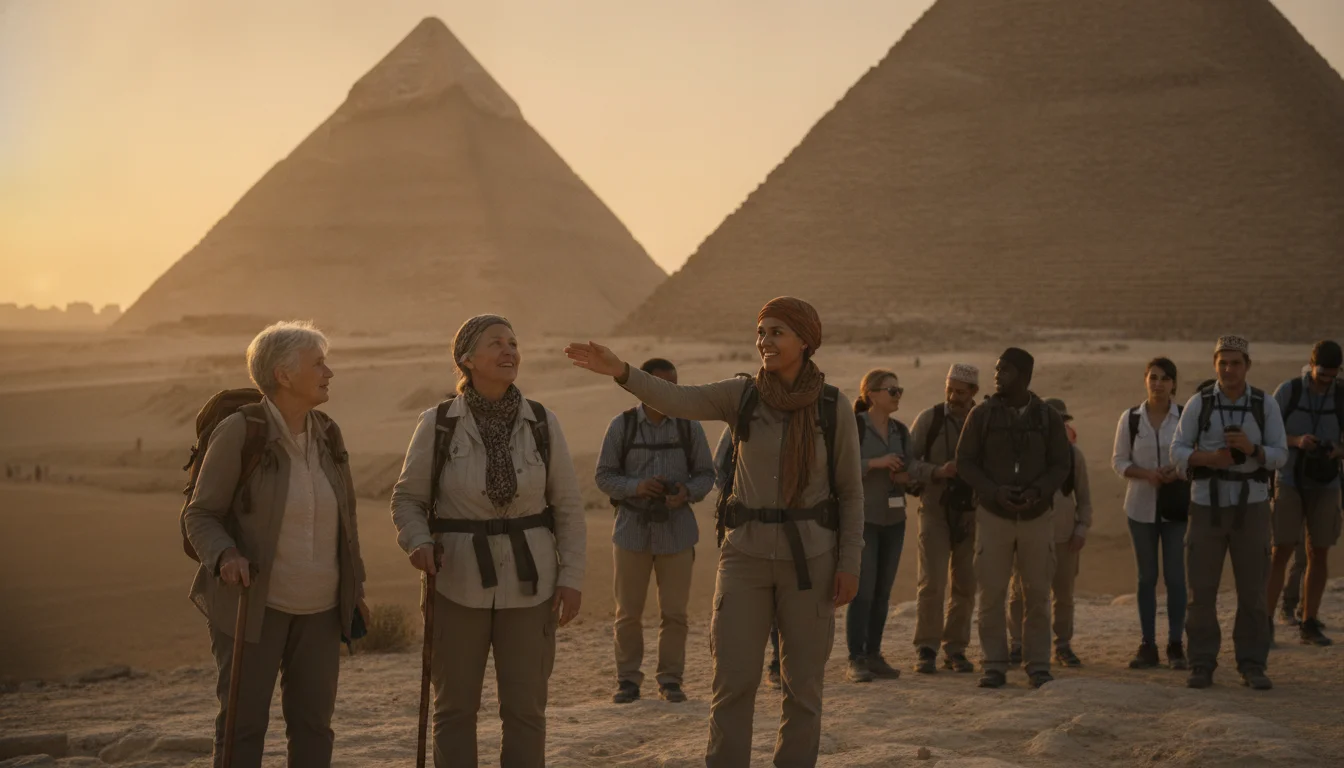
When a pastor or a rabbi calls me about combining Egypt and Israel into one journey, the first real question is almost never spiritual. It is financial. They already know they want to stand at the edge of the Red Sea and read Exodus aloud, or walk the Old City of Jerusalem with their people. What they do not know is what it costs, who pays for what, and whether they can put a real number in front of their board without looking like they guessed. That is the question I want to answer here.
I have built heritage journeys for more than forty years, and Egypt and Israel together is one of the routes I get asked about most. It is also one of the most misunderstood on price, because people compare it to a single-country trip and get startled. So let me walk you through the actual cost structure the way I would if you were sitting across from me, from the organizer’s side of the table, not the traveler’s.
Why Egypt and Israel Costs More Than One Country Alone
Let me start with the honest part. A combined Egypt and Israel tour costs more per person than either country on its own, and there is a reason for that.
You are running two countries, two sets of ground operators, two guide teams, and a border crossing or an internal flight between them. Egypt on its own is a full itinerary: Cairo, the pyramids at Giza, often a stretch of the Nile or a run down to the Red Sea and Mount Sinai. Israel on its own is another full itinerary: Jerusalem, the Galilee, the Dead Sea, Bethlehem. Put them together and you are not adding a day or two, you are stitching two complete journeys into one trip with a connection in the middle.
That connection is where a lot of the added cost sits. Most groups fly between Cairo and Tel Aviv rather than driving the Sinai land route, which means an extra internal flight for every person. There is also visa handling for Egypt, additional local guides, and the coordination of moving fifteen to fifty people cleanly across an international border on a schedule. None of that is padding. It is the real work of making two countries feel like one seamless trip instead of two trips you booked yourself.
So when you set expectations with your congregation, be straight with them. This is a bigger trip than a single-country pilgrimage, and the price reflects a bigger journey, not a markup.
What Actually Sits Inside the Per-Person Price
The number that matters to your travelers is the per-person land-and-air price. Before you can recruit anyone, you need to know what that number includes, because the fastest way to lose trust is to quote a price and then surprise people with add-ons.
On a well-built Egypt and Israel tour, the per-person price typically covers:
- International flights, or a land-only price if your group is flying in from many different cities
- The internal flight between Egypt and Israel
- Hotel accommodation for the full itinerary, usually on a twin-share basis
- Ground transportation by private coach in both countries
- Professional licensed guides in Egypt and in Israel
- Entrance fees to the sites on the itinerary (the pyramids, the Egyptian Museum, the major Jerusalem sites, and so on)
- Daily breakfasts and most dinners, often built around the hotels
What usually sits outside that price, and what you should name out loud to your group, includes lunches, tips for guides and drivers, personal spending, travel insurance, the Egypt visa fee, and any optional excursions like a hot air balloon over Luxor or a camel ride at Giza. When you list these clearly up front, nobody feels misled later. I go deeper on separating the quoted price from the true all-in cost in the guide on how to budget a church trip, and it is worth reading before you announce a single figure.
The Free-Leader Model: Your Seat and How It Works
Here is the part that changes the math for you personally, and it is the reason most leaders can say yes at all.
When you gather fifteen or more paying participants, your seat as the group leader is covered. That means your full trip cost is absorbed into the group’s economics: your flights, the internal Egypt-to-Israel connection, your hotel accommodation, your ground transport, and your included site entries. You are not paying your own way and then asking the church to reimburse you. Your participation is built into how the trip is priced.
This is not a discount code or a partial credit. A group of fifteen paying travelers generates enough margin within the trip’s costing to carry one additional person, and that person is you. You are the reason the group exists, so the model is designed around your seat being the free one. If you want the fuller explanation of the mechanics, I lay it out in detail in the piece on whether the pastor travels free and the companion piece on how many people you need for the leader to travel free.
For your budget conversation, the effect is simple. When you present the trip to your board or your congregation, you are not asking them to fund an expensive seat for the pastor. You are organizing a journey your people pay into, and your own cost is already handled by the group reaching fifteen. That reframes the whole ask.
What Happens Below Fifteen
Smaller groups are absolutely possible. We run Egypt and Israel trips for ten to fourteen people, and they can be wonderful. They simply do not carry the free-leader benefit, because the economics that fund the complimentary seat start at fifteen. In that range, you either travel at a participant’s price like everyone else, or the group agrees to a small premium to cover your seat.
My advice when you are close to the line is always the same: start planning anyway. I have watched many groups sit at twelve committed with a handful of maybes, then cross to seventeen once real dates and a real itinerary were on the table. Interest firms up when the trip stops being an idea and becomes a plan. The guide on how to recruit for a church trip covers exactly how to move people from interested to committed.
Building the Group Budget as the Organizer
Your job is not just to know the per-person price. It is to structure how your people pay it, because a trip that people cannot afford in one lump does not fill, no matter how good it is.
Break the Cost Into Deposits and Installments
Almost nobody writes a single check for an international heritage tour. The way these trips actually fill is with a modest deposit to reserve a seat, then a series of monthly installments leading up to a final balance due date, usually sixty to ninety days before departure. When you offer a payment plan, a trip that felt impossible at full price becomes a manageable monthly line in someone’s budget. I walk through how to structure this cleanly in the guide on setting up a group trip payment plan.
Decide Early How You Handle Your Free Seat
Because your seat is covered at fifteen, you have a decision to make, and it is worth making it out loud with your leadership. Some pastors simply travel free and that is the end of it. Others use the value of that free seat to reduce the price for everyone, or to sponsor a member who could not otherwise afford to come. Both are honorable. What matters is that you decide on purpose rather than letting it be a quiet assumption. The piece on how pastors afford to lead a trip covers the ways leaders handle this well.
Name the True All-In Number
The single most useful thing you can do for your travelers is give them the real total, not just the tour price. Add up the quoted per-person price, then add a realistic figure for the visa, tips, lunches, insurance, and personal spending. When someone knows the trip will cost them, say, the quoted price plus a few hundred more, they can plan and they trust you. When they find out about the extras at the airport, they do not.
Why the Combined Trip Is Worth the Higher Number
I would not be honest if I only talked about cost. Let me tell you why leaders keep choosing the combined route despite the higher price.
Egypt and Israel together tells one continuous story. You stand where the Exodus began and then walk where it was fulfilled. For a Christian group, you move from the shadow of the pyramids and the wilderness of Sinai into the land of the Gospels, and the arc of Scripture becomes physical. For a Jewish congregation, you trace the journey from bondage in Egypt to the land itself, from the Nile to Jerusalem, in a way no single country can hold. Doing it in two separate trips, in two separate years, loses that thread. Doing it in one journey is why people remember it for the rest of their lives.
That is the return on the higher cost. You are not buying two vacations bolted together. You are giving your people a single narrative they can walk through with their own feet, and you are there to guide them through it.
The Leader’s Real Role Once the Money Is Handled
Here is what I most want you to hear. When the free-leader model takes your personal cost off the table, it also frees your attention. You stop being the trip’s accountant and become its shepherd.
That is the point of the whole structure. Your role on this journey is to read Exodus at the water, to lead a moment of reflection at the Western Wall, to be present for your people in the places that move them. The operator’s job is to make everything else invisible: the coach that shows up on time, the guide who knows which gate to use, the hotel that is ready when you arrive. The free seat and the clear budget are how we keep your focus where it belongs.
If you want to see how the two countries come together as a route, our Egypt heritage page and Israel heritage page lay out the sites, and the broader group heritage tours page shows how the group experience is built. For the full planning picture from first idea to departure, start with the pillar guide on how to plan a group pilgrimage.
FAQ: The Cost of an Egypt and Israel Group Tour
Why does an Egypt and Israel tour cost more than visiting just one country?
Because you are running two complete itineraries, two sets of ground operators and guides, and a connection between the countries, usually an internal flight from Cairo to Tel Aviv. You also add Egypt visa handling and the coordination of moving your group across an international border. The higher price reflects a bigger journey, not a markup on a single-country trip.
Do I pay for my own seat as the group leader?
Not once you reach fifteen paying participants. At fifteen or more, your full trip cost is covered, including flights, the internal Egypt-to-Israel connection, hotels, ground transport, and included site entries. Below fifteen the trip still runs, but you travel at a participant’s price or the group agrees to cover your seat.
What is included in the per-person price, and what is extra?
The per-person price typically covers international and internal flights, hotels on twin-share, private coach transport in both countries, licensed guides, entrance fees to the itinerary sites, and daily breakfasts with most dinners. Lunches, tips, the Egypt visa, travel insurance, personal spending, and optional excursions usually sit outside that price, so name them clearly to your group up front.
How should I structure payments for my travelers?
Use a deposit to reserve each seat, then monthly installments with a final balance due sixty to ninety days before departure. A payment plan turns a large one-time cost into a manageable monthly amount, which is how these trips actually fill. Give your people the true all-in figure, including the extras, so nobody is surprised at the airport.
Can I combine Egypt and Israel if my group is smaller than fifteen?
Yes. We run combined trips for ten to fourteen travelers regularly. They just do not include the free-leader benefit, since the economics that fund the complimentary seat begin at fifteen. Many groups that start at twelve reach fifteen before departure once dates and an itinerary are set, so it is worth planning the trip either way.
If you are trying to put a real number in front of your board, the combined Egypt and Israel cost is easier to defend once you see how the free-leader seat and a clear payment plan fit together. You can look at the full route on our Egypt heritage page and Israel heritage page, or see how the group model works on our group heritage tours page.
Contact us and we will help you build a per-person budget for your group, your dates, and your itinerary.