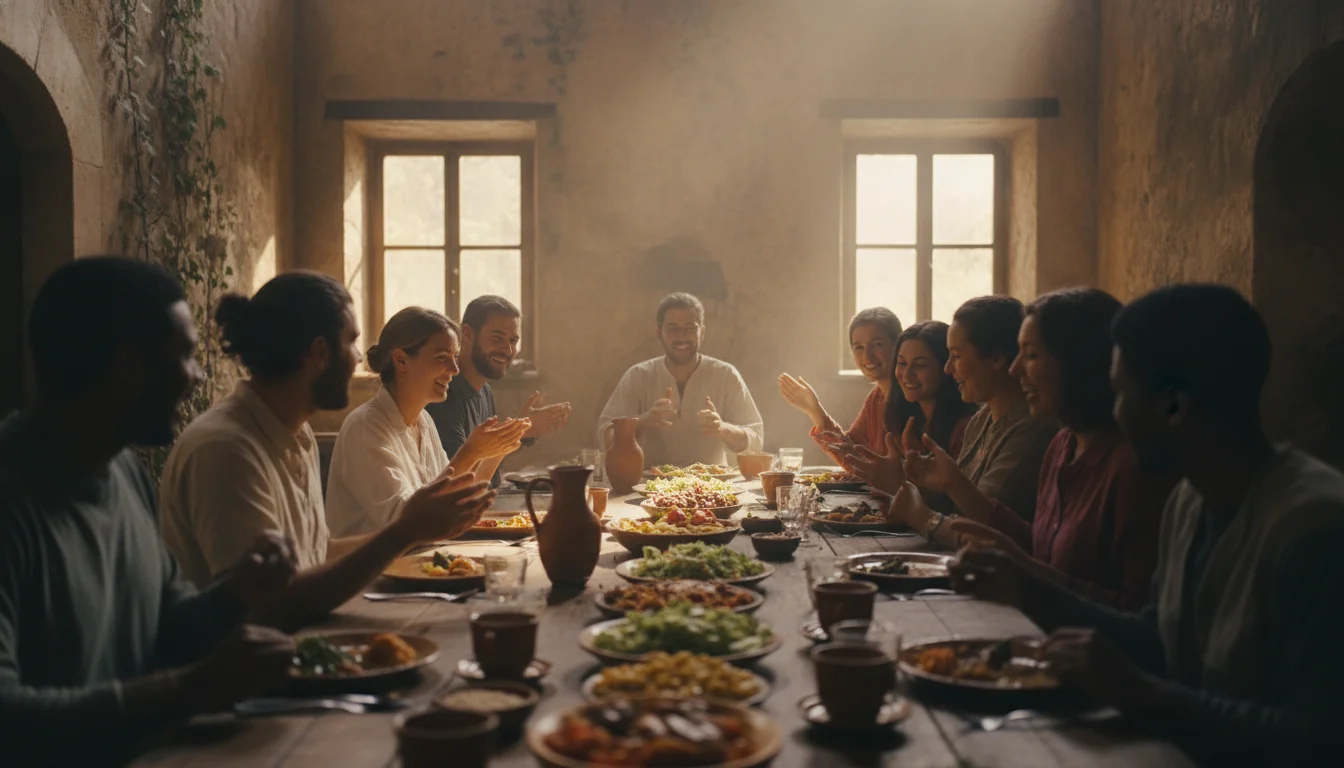
The first meal is where a group either relaxes or tenses up. I have watched it happen from the back of a hundred dining rooms. Fifteen or forty people sit down after a long travel day, plates start coming out, and within two minutes I can read the whole table. Either everyone is served what they can actually eat and the room exhales, or one person is staring at a plate they cannot touch while the leader across the table quietly panics. That second version is avoidable. It comes down to work you do months before anyone boards a plane.
I have built heritage journeys for more than forty years, and dietary needs are one of the areas where good planning is invisible and bad planning is loud. This guide is written for you, the person organizing and leading the trip. Not the individual traveler managing their own allergy, but the pastor, rabbi, or congregation leader who is responsible for making sure every person in the group is fed well and safely. Here is how I handle it, and how you can.
Start Collecting Needs at Registration, Not at the Airport
The single biggest mistake I see leaders make is treating dietary information as something to sort out on the ground. By then it is too late to do it well. Kitchens in the places we travel plan menus and order ingredients days ahead, sometimes for groups arriving in sequence. A kosher request that lands the night before dinner is a scramble. The same request made at registration is simply part of the booking.
So build the question into your sign-up form from day one. When someone commits to the trip, they answer it right then, alongside their passport details and rooming preference. I keep the field simple and specific. Not “any dietary restrictions?” which people leave blank, but a short checklist:
- Do you keep kosher, halal, or another religious dietary practice? If yes, how strict?
- Do you have a food allergy? If yes, which foods, and how severe (preference, intolerance, or medical allergy)?
- Are you vegetarian, vegan, gluten-free, or on another dietary pattern?
- Anything else a kitchen should know to serve you safely?
That fourth question catches the things a checklist never anticipates. Once you have real dates and a real itinerary, this collection is part of the same recruiting rhythm I describe in the group pilgrimage planning guide. Dietary needs are just another line on the roster you are already building.
Kosher Meals on a Heritage Group Tour
Kosher is the request that worries leaders most, and it is worth understanding why. Kosher is not a flavor preference or a single ingredient swap. It is a system: separation of meat and dairy, certified ingredients, and in the strictest practice, food prepared under rabbinical supervision on dedicated equipment. When a member of your group says they keep kosher, your first job is to find out what level of kosher they need, because the range is wide.
Some travelers keep kosher-style, meaning they avoid pork and shellfish and do not mix meat and dairy, but will eat in a regular restaurant that accommodates those rules. Others require glatt kosher, sealed and certified meals prepared in a certified kitchen, with nothing from the hotel line touching their plate. Those are two very different logistics, and you cannot plan for one and hope it covers the other. Ask directly, and ask kindly. Most people who keep kosher are used to explaining their needs and will tell you exactly what works.
Once you know the level, the operator’s job begins. On a well-run heritage trip, sealed certified kosher meals can be arranged in most destinations we serve, ordered per person, per day, and delivered to the hotel or restaurant where the group eats. In cities with established Jewish communities, Thessaloniki, Rome, Budapest, and of course throughout Israel, there are kosher restaurants and certified caterers we work with directly. In smaller towns along a route, we plan ahead by carrying sealed meals or routing a dinner through a place that can certify. None of this is improvised on the day. It is built into the itinerary the same way a museum entry is.
Here is the part I most want organizers to hear. You do not have to solve the kosher logistics yourself. That is what you are paying an operator for. Your job is to gather the need accurately and pass it along early. The operator’s job is to make sure the certified meal is waiting when your traveler sits down, and that it arrives with enough respect that the person never feels like an afterthought. When you choose a faith tour operator, how they answer your kosher and dietary questions tells you a great deal about how they will handle everything else.
How to Handle Special Requests Within a Group
Kosher and halal get the headlines, but the daily reality of feeding a group is the long tail of individual requests. The gluten-free traveler. The person with a severe nut allergy who carries an EpiPen. The vegan. The diabetic managing blood sugar across long touring days. The two people who simply do not eat fish. Across a group of thirty, you will have a dozen small accommodations to track, and the leaders who handle this well treat it as a list, not a series of surprises.
Build a single dietary roster. One document, one row per traveler, with their name and their exact need. Share it with your operator well before departure and keep it current as people join or drop. This one habit prevents almost every dining-room problem I have seen. When the guide walks into a restaurant with the roster in hand, the kitchen gets clear numbers: twenty-two standard, three vegetarian, two gluten-free, one severe shellfish allergy, two certified kosher. That is a kitchen that can succeed. A vague “we have some dietary stuff in the group” is a kitchen that cannot.
A few principles I hold to when managing the special requests within a group:
- Separate preference from safety. A vegetarian preference and a medical allergy are not the same category, and the kitchen needs to know which is which. A missed vegetarian meal is a disappointment. A missed allergy is an emergency.
- Confirm the severe allergies twice. Once at registration, once again in the final weeks before departure, in writing. People sometimes assume the operator already knows. Never let an anaphylactic allergy ride on an assumption.
- Give people a private channel. Some travelers are shy about their needs and will downplay them in a group setting. Tell your group early, in a warm all-group message, that you want every dietary need shared, and that they can tell you privately if they prefer. You will surface needs that would otherwise stay hidden until the first bad meal.
- Do not let one person become the group’s project. The goal is quiet accommodation, not a nightly announcement about whose plate is different. Handle it upstream so that at the table, everyone is simply served.
Included Meals Versus Meals on Your Own
Part of managing dietary needs is knowing which meals you actually control. On most heritage itineraries, some meals are included in the trip cost and eaten as a group, and others are on the traveler’s own in a city with plenty of options. The included group meals are the ones you plan for tightly, because those are the ones where your operator is ordering and the kitchen is serving to your numbers. The free evenings are where individual travelers make their own choices.
This distinction matters for your budget and for your messaging. When you budget a church trip, the included meals are a fixed line, and specialized meals like certified kosher can carry a small added cost per person that is worth confirming in your quote. Tell your group clearly which meals are covered and which are on their own, so a traveler with a strict dietary need knows when the operator has them covered and when they are choosing for themselves. A kosher-keeping traveler navigating a free evening in an unfamiliar city will appreciate a short list of nearby options, which a good operator can provide.
What to Ask Your Operator Before You Commit
The time to test whether an operator can handle your group’s dietary needs is before you sign, not after. When you are comparing operators, dietary handling is a fast and revealing question. I would put these on your list of questions to ask the operator:
- Can you arrange sealed, certified kosher meals throughout this specific itinerary, and what is the added cost per person per day?
- How do you handle severe, medical food allergies, and what is your protocol if a reaction happens on the road?
- How far in advance do you need our final dietary roster, and how do you communicate it to each kitchen?
- In the smaller towns on this route, how do you accommodate specialized diets where certified options are limited?
- Who on the ground, the guide or a local coordinator, owns dietary accommodation day to day?
The answers separate operators who have a real system from operators who will improvise and hope. You want to hear specifics: named suppliers, a clear deadline for the roster, a concrete allergy protocol. Vagueness here is a warning sign about the whole trip.
The Leader’s Real Role at the Table
When the logistics are handled well upstream, your job at mealtime changes completely. You are not the person chasing down a missing gluten-free plate or apologizing to a traveler whose kosher meal never arrived. You are free to do what you actually came to do: be present with your people. A shared meal on a heritage journey is not just refueling. It is where the day’s experiences get processed, where a widow traveling alone finds herself folded into a table of new friends, where the group becomes a community.
That is the point of getting the food right. Not perfection for its own sake, but the removal of a barrier that would otherwise sit between a traveler and the experience you brought them for. Every person who eats well and safely is a person fully present for the river outside Philippi, the Western Wall at dusk, the quiet of a hillside chapel. The dietary roster you build months ahead is, in the end, a hospitality document. It says to every member of your group that they belong at the table, exactly as they are.
FAQ: Dietary Needs on a Group Heritage Tour
When should I collect dietary needs from my group?
At registration, not later. Build the question into your sign-up form so every traveler answers it when they commit. Kitchens on the route plan menus and order ingredients days ahead, so a need shared at registration is planned for calmly, while a need shared the night before dinner is a scramble. Confirm severe allergies a second time in the final weeks before departure.
Can you arrange kosher meals for a group heritage tour?
Yes. Sealed, certified kosher meals can be arranged in most destinations we serve, ordered per person per day and delivered where the group eats. The key is knowing the level of kosher each traveler needs, from kosher-style to strict glatt certified, and passing that to the operator early. In cities with established Jewish communities there are certified restaurants and caterers, and along the smaller stretches of a route the meals are planned ahead rather than improvised.
How do I handle a severe food allergy in the group?
Treat it as a safety issue, not a preference. Capture it at registration, confirm it again in writing before departure, and make sure your operator has a clear on-the-road protocol. Keep the allergy on the dietary roster you share with every kitchen, and make sure the guide knows which traveler it belongs to. Never let an anaphylactic allergy ride on the assumption that someone already knows.
Do specialized meals cost extra?
Sometimes. Standard accommodations like vegetarian or gluten-free are usually built into the included group meals at no added cost. Certified kosher or halal meals can carry a small per-person, per-day charge because they are ordered and prepared separately. Confirm this in your quote so it is part of your budget rather than a surprise. Ask the operator to state it clearly per person.
What is my job as the group leader once the food is handled?
To be present with your people. When the logistics are managed upstream by the operator, you are not chasing missing plates or apologizing at the table. You are free to lead, to guide reflection, and to let the shared meals become the moments where your group turns into a community. Getting the food right removes a barrier so every traveler is fully present for the trip.
If you are organizing a faith or heritage journey and want to be sure every traveler is fed well and safely, that is exactly the kind of detail we handle for you. See how the group experience works on our group heritage tours page, and when you are ready, contact us with your group size and dates so we can build a dietary plan that fits your people.