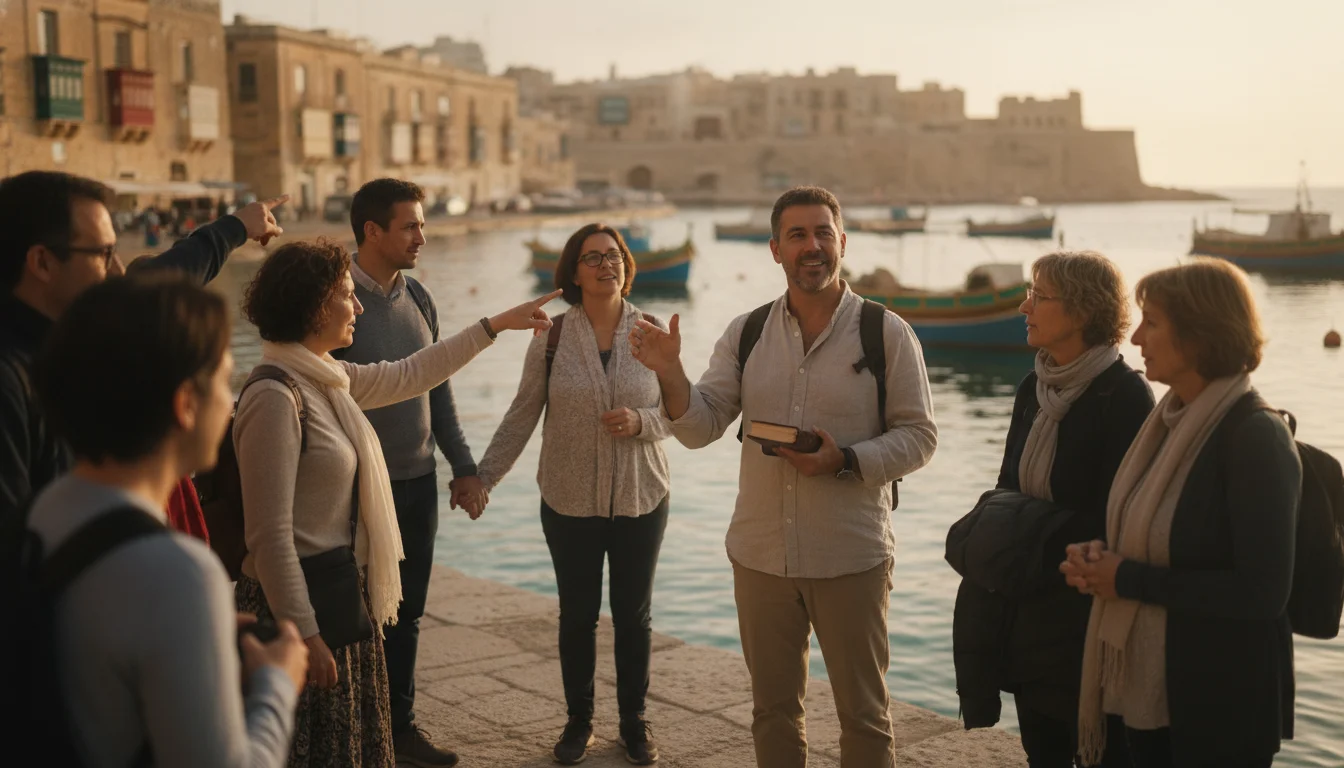
Most leaders come to me thinking of Malta as a warm-water detour, a pretty island they might tack onto a bigger trip. Then they open Acts 27 and 28 and something changes. Paul shipwrecked here. He was bitten by a viper and lived. He healed the father of Publius. A whole island watched the gospel arrive by storm. Once a pastor sees that, Malta stops being a detour and starts being a destination in its own right. And for a congregation, it turns out to be one of the most manageable heritage trips you can lead.
I have built heritage journeys for more than forty years, and I want to walk you through what it actually takes to organize a congregation trip to Malta. Not the brochure version. The organizer’s version: who to recruit, what it costs, how the free leader seat works, and how to hand your people an experience that stays with them long after the plane lands. If this is your first time leading a group abroad, you may also want to read our guide to planning a group pilgrimage alongside this one, because the two fit together.
Why Malta Works So Well for a Congregation
Malta is small, and that is a feature, not a limitation. The whole country is about the size of a mid-sized city, which means your group is never spending four hours on a coach to reach the next site. You base yourselves once, usually near Valletta or St. Julian’s, and you reach almost everything in under an hour. For a leader, that changes the entire feel of the week. Less transit, less fatigue, more time in the places that matter.
The other thing that makes Malta work is how much sits in a compact radius. St. Paul’s Bay, where tradition places the shipwreck, is a short drive from the capital. The Grotto of St. Paul in Rabat, where he is said to have sheltered, sits beside the St. Paul catacombs. Mdina, the silent walled city, was the Roman capital and the seat of Publius. The Co-Cathedral of St. John in Valletta holds Caravaggio’s Beheading of St. John the Baptist, one of the most arresting religious paintings anyone in your group will ever stand in front of. You can build a rich, unhurried week without your people ever feeling rushed.
For a congregation studying the book of Acts, this is a rare gift. Your people can read the shipwreck account standing at the bay it describes. That kind of alignment between text and place is exactly what a heritage trip is for.
The First Decision: How Many People You Are Building Toward
Before you think about dates or itineraries, settle the number, because the number drives your economics. The single most important thing to understand as an organizer is this: with fifteen or more paying travelers, you as the group leader travel free.
That means your flights, your hotel, your ground transportation, your site entries, and the group meals built into the itinerary are all covered. You are not asking your church or synagogue to fund an expensive trip for the pastor or rabbi. You are organizing a journey your people pay into, and your seat is part of how the trip is structured. If you want the full breakdown of how leaders cover their own cost, our piece on how pastors afford to lead a trip walks through it in detail.
Groups of ten to fourteen are absolutely possible, and we run them regularly. They simply do not carry the free leader seat, because the economics that fund it start at fifteen. If you are sitting at twelve committed with a few maybes, my advice is always the same: start planning anyway. Interest firms up fast once people see real dates and a real itinerary, and I have watched more groups than I can count cross from thirteen to seventeen in the final weeks.
Larger groups open more room still. Once you are in the range of twenty-five or thirty travelers, you can often ask about a reduced or complimentary second seat for a co-leader or a spouse. If that matters to you, raise it early so we can build the trip toward it rather than bolt it on at the end.
How to Recruit for a Congregation Trip to Malta
This is the part most leaders worry about, and it is worth being practical rather than reassuring.
You do not need to recruit fifteen strangers. You need to find the eight or ten people in your community who already want to go, and let them bring the rest. Every heritage trip I have run started with a small core of committed travelers, not a mass sign-up. Couples travel together. Friends bring friends. Bible study groups often move as a single unit. Fifteen is very reachable when you start from the people already leaning in.
Give people a real reason and a real date. Vague interest never fills a group. A specific journey on specific dates does. “We are following Paul’s shipwreck and the early church on Malta next spring, seven days, here is what we will see” gives people something to decide on. “We might do a Malta trip sometime” gives them nothing. Tie the trip to whatever your community is studying or preaching through, and the interest sharpens on its own.
If you want a deeper playbook on filling seats, our guide to recruiting for a church trip covers the sequence of announcements, info nights, and deposits that actually moves people from interested to committed.
What It Costs, and How to Talk About Money
Leaders always want a number, and I understand why. The honest answer is that a Malta trip is one of the more affordable heritage journeys, precisely because the island is compact. Shorter internal transfers, fewer overnight base changes, and a single hotel for most of the week all keep the per-person cost sensible.
Your travelers’ price generally covers international flights, hotel accommodation, ground transportation on the island, entries to the included sites, guiding, and the group meals built into the itinerary. Personal spending, optional excursions, and anything off the set menu are each traveler’s own. Being clear about that line from the first announcement saves you a hundred small questions later.
The tool that makes the money feel manageable to your people is a payment plan. Almost nobody wants to write one large check. A deposit to hold the seat, then a handful of scheduled installments across the months before departure, turns an intimidating figure into something an ordinary family can budget for. Our guide to setting up a group trip payment plan shows how to structure the schedule so it protects both your travelers and the trip.
Building the Week: A Sample Shape
I will not hand you a rigid itinerary, because the right one depends on your group and your focus. But it helps to see the shape.
A strong seven-day congregation trip to Malta usually spends its first full day easing in around Valletta: the Co-Cathedral of St. John, the Grand Master’s Palace, the harbor views from the Upper Barrakka Gardens. It is a gentle start that lets jet lag settle while still delivering something extraordinary.
The heart of the week follows the Pauline thread. A day around St. Paul’s Bay and the island of St. Paul, reading Acts 27 and 28 where the story lands. A day in Rabat and Mdina: the Grotto of St. Paul, the catacombs, and the walled silence of the old capital where Publius governed. Somewhere in there, a boat across to Gozo, quieter and greener, where the Ġgantija temples predate the pyramids and the pace slows even further.
You leave room to breathe. That is the advantage of a small island. You are not cramming; you are dwelling. For a leader, the empty hour on a terrace overlooking the harbor is not wasted time. It is when your people talk, reflect, and connect the week to their own faith. The full range of what you can build is laid out on our Malta heritage page, and you can see how the group experience is structured on our group heritage tours page.
Your Real Job Once the Logistics Are Handled
Here is what I most want you to hear as an organizer. When the free leader seat takes your personal cost off the table and a good operator carries the logistics, your attention is freed for the thing only you can do.
You are not the trip’s accountant or its travel agent. You are its shepherd. Your job is to read the shipwreck account aloud at the water’s edge, to lead a moment of reflection in the grotto, to be present for your people in the places that move them. The operator’s job is to make the coaches, the hotels, the entries, and the timing invisible. When it works, your congregation never sees the machinery. They only see you, leading them through something they will talk about for years.
That is the whole point. The structure exists so your focus can stay where it belongs.
FAQ: Organizing a Congregation Trip to Malta
How many people do I need for the group leader to travel free?
Fifteen paying travelers. At fifteen or more, the group leader’s full trip is covered: flights, hotel, ground transportation, included site entries, and the group meals in the itinerary. Below fifteen the trip is still possible, but the leader pays a participant’s price.
Is Malta a full heritage destination or just a stopover?
It is a full destination for a congregation. Malta is where Paul was shipwrecked (Acts 27 and 28), where he sheltered in the grotto at Rabat, and where he healed the father of Publius. Between St. Paul’s Bay, Mdina, Valletta, and Gozo, there is enough to fill a rich seven-day journey without ever feeling stretched.
How far ahead should I start planning?
Six to nine months is the sweet spot for a group of fifteen to thirty. That gives your people time to budget, request time off, and commit, and it gives you time to recruit, which is the real work. Larger groups or trips timed around Easter or a holiday season want nine to twelve months of runway.
What does the trip cost cover, and what is extra?
The traveler price typically covers international flights, hotel accommodation, island transportation, guiding, entries to the included sites, and the group meals built into the itinerary. Personal spending, optional excursions, and anything outside the set menu are each traveler’s own. A deposit plus scheduled installments makes the total manageable for most families.
Can Malta be combined with another destination?
Yes, and it often is. Malta pairs naturally with a longer footsteps-of-Paul route or with a stop in nearby Sicily or Italy. If your group has the time and appetite for a two-country journey, tell me early so we can build the connection into the plan rather than improvise it later.
If you are weighing whether a Malta trip is realistic for your congregation, the free leader math and the compact island are usually the two things that tip it. You can see the full picture on our Malta heritage page and review how groups travel with us on our group heritage tours page.
Contact us and we will help you run the numbers for your group and your dates.