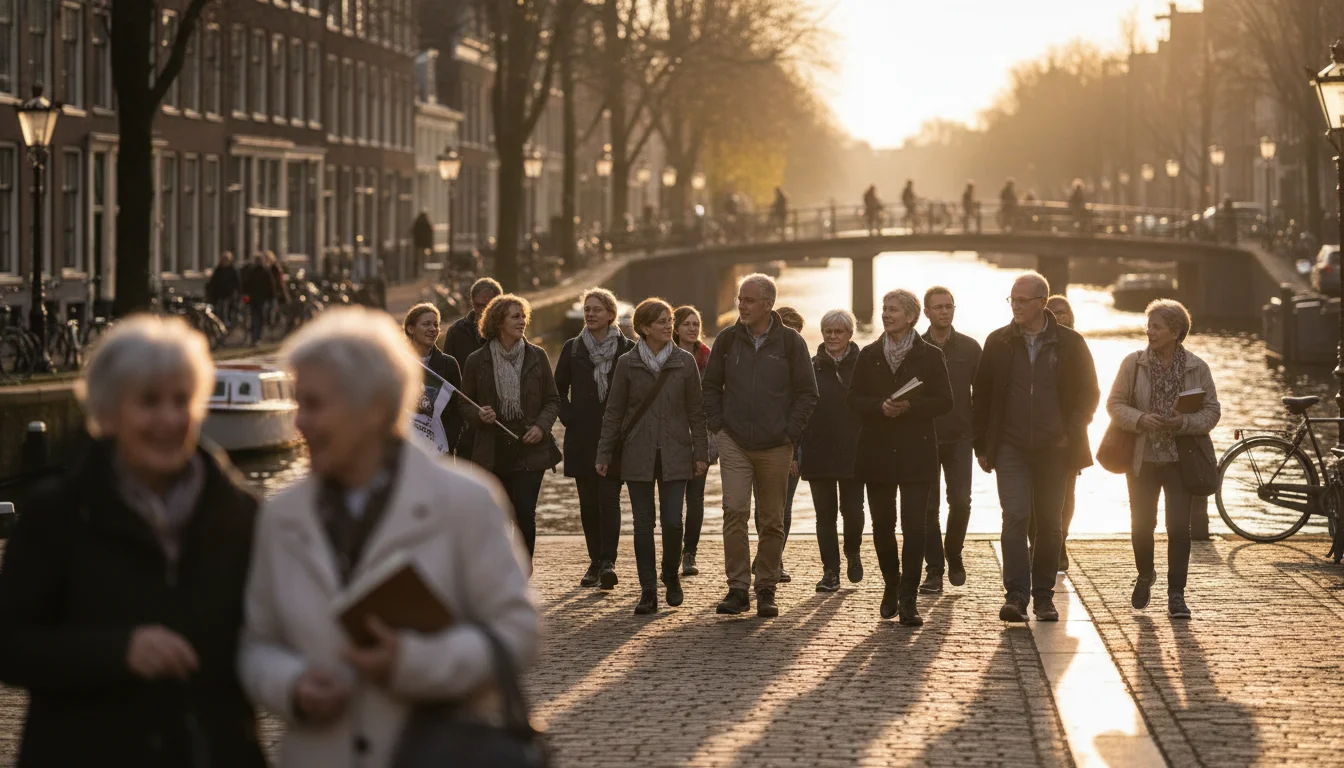
When a pastor or a rabbi first calls me about the Netherlands, they almost always start with the same worry. Not the itinerary, not the sites, but whether they can pull off leading a group at all. They are picturing themselves as the person responsible for fifteen or forty people in a foreign country, handling money, hotels, buses, and someone’s lost passport. I have built heritage journeys for more than forty years, and I want to tell you what I tell them: the leading is the part you are already good at. The logistics are my job, not yours. Once we separate those two things, a congregation trip to the Netherlands stops feeling like a burden and starts feeling like what it actually is, one of the most rewarding things you will ever do with your community.
This guide is written for you as the organizer, the person who decides to make the trip happen, recruits the group, and leads them once you land. It is not written for the individual traveler. So everything below is framed around your decisions: what it costs you, how you fill the group, how you plan the timeline, and what your real job is once the wheels are up.
Why the Netherlands Works for a Congregation
The Netherlands rewards a congregation in a way few destinations do, because it speaks to both Christian and Jewish groups without straining.
For a Christian group, the country holds a deep Reformation and resistance story. Haarlem gives you the Corrie ten Boom House, where a watchmaker’s family hid Jews during the occupation and paid for it in the camps. Leiden holds the story of the Pilgrims who lived there for over a decade before sailing for the New World, with the Pieterskerk and the American Pilgrim Museum making it tangible. You can trace faith under pressure, which is often exactly what a congregation is studying or preaching through.
For a Jewish group, Amsterdam is one of the most significant heritage cities in Europe. The Portuguese Synagogue, the Jewish Historical Museum, the Anne Frank House, the Hollandsche Schouwburg memorial, and the National Holocaust Museum sit within a short walk of one another. A serious Jewish heritage route here is not a single stop. It is a week of memory, resilience, and community that people carry home for the rest of their lives.
And for a mixed or interfaith congregation, the two stories meet. The Corrie ten Boom House and the Anne Frank House are, at their core, the same story told from two sides of a hidden door. That is a rare thing to be able to show your people in one trip.
If you want to see how the full route comes together, our Netherlands heritage page lays out the cities and the sites so you can picture the shape of the week before you commit.
What It Costs You as the Leader
Here is the question most leaders are too polite to ask directly, so I will answer it plainly. With fifteen or more paying participants, you as the group leader travel free. That means your flights, hotel, ground transportation, site entries, and the group meals built into the itinerary are all covered. You are not paying your own way to lead your own group.
This is not a discount or a partial credit. It is a complimentary seat built into the economics of a group booking. A group of fifteen paying travelers generates enough margin within the trip’s costing to carry one more person, and that person is you. You are the reason the group exists, so the model is built around your seat being the free one. I have written more fully about how pastors afford to lead a trip and about whether the pastor travels free, because this single fact changes what is possible for so many leaders.
For your congregation, this reframes the whole decision. You are not asking your church or synagogue to fund an expensive trip for the clergy. You are organizing a journey your people pay into, and your participation is structured into how it works. That is a much easier conversation to have with a board or a lay committee.
If you are wondering exactly how many travelers unlock the benefit and what happens above that line, our guide on how many people you need for a leader-free trip walks through the thresholds, including the room that larger groups create for a co-leader or spouse.
Recruiting the Group: Start Small, Not Wide
The part leaders worry about most is filling the group. Let me be practical, because this is where trips are won or lost.
You do not need to recruit fifteen strangers. You need to find the eight or ten people in your community who already want to go, then let them bring others. Every heritage trip I have run started from a small committed core, not a mass appeal to the whole membership list. Couples travel together. Friends bring friends. A Bible study group or an adult education class often goes as a unit.
Three things make recruiting easier:
- Give people a real destination and real dates. Vague interest never fills a group. “We are walking the Corrie ten Boom and Anne Frank story in Amsterdam and Haarlem next April, eight days” gives people something they can decide on. “We might do a Netherlands trip someday” converts no one.
- Tie the trip to what your community is already engaging with. If you are teaching through a season on faith under pressure, or marking a milestone anniversary, the trip becomes an extension of your ministry rather than a separate ask.
- Let your core do the selling. Once eight people are in and talking about it at the coffee hour, momentum builds on its own. Your job shifts from convincing to organizing.
I have laid out a full playbook in our guide on how to recruit for a church trip, and the same principles apply cleanly to a synagogue or an interfaith group.
Handling the Money Without Carrying It Yourself
Cost is the most common reason a congregation member says no, and most of the time the real issue is not the total price but how it is paid. A trip that costs a few thousand dollars feels impossible as one lump sum and very manageable as monthly payments over most of a year.
That is why I always encourage leaders to offer a payment plan from the first announcement. A deposit to hold a seat, then installments spread across the months before departure, lets people budget the trip into their normal life. Our guide on setting up a group trip payment plan shows how to structure it so you are not the one chasing checks.
Some congregations go further and raise part of the cost together. Meal nights, sponsorship of a traveler who could not otherwise go, and congregation-wide fundraisers can lower the barrier for your group. If that fits your community, our notes on fundraising for a trip give you concrete formats that work.
The key point for you as the organizer is this: you should never be personally holding the group’s money or absorbing the financial risk. A good operator handles deposits, installments, and refunds directly with each traveler. Your name is on the spiritual leadership, not the accounting.
How Far Ahead to Plan
For a group of fifteen to thirty, six to nine months is the sweet spot. That gives your people time to budget, request time off work, and commit, and it gives you time to build interest, which is the real work. Larger groups, or trips timed around a holiday or a specific anniversary, want nine to twelve months.
Earlier planning is not only about logistics. It is recruiting runway. The longer your window, the more time your core has to bring others in and the more comfortably people can fold the payments into their budget. Our guide on how far ahead to plan breaks down the timeline month by month, and the group planning checklist gives you a running list so nothing slips.
One practical note specific to the Netherlands: spring and early summer are popular, and Amsterdam hotel space around the tulip season and major holidays fills early. If you are aiming for April or May, start the conversation on the earlier end of that window.
Your Real Job Once the Trip Is Built
Here is what I most want you to hear. When the free-leader model takes your personal cost off the table, and a good operator takes the logistics off your plate, something important happens. Your attention is freed. You are no longer the trip’s travel agent or its accountant. You are its shepherd.
That is the point of all of it. Your role on a heritage journey is to guide your people through an experience that changes them. To stand with your congregation in the hidden room in Haarlem and read the passage that gives it meaning. To be present at the Anne Frank House when your people go quiet. To lead a moment of reflection at the Hollandsche Schouwburg, or a prayer in the Pieterskerk where the Pilgrims once worshiped. The buses, the hotels, the entry tickets, and the timing are the operator’s job, and they should be invisible to you. The free seat and the handled logistics exist so your focus stays where it belongs, on your community.
If you are still deciding whether you can lead at all, the honest answer is that the leading was never the hard part. You already pastor or teach or guide these people every week. A heritage trip is that same work, in one of the places where the story actually happened.
FAQ: Leading a Congregation Trip to the Netherlands
How many people do I need for the group leader to travel free?
Fifteen. With fifteen or more paying participants, your full trip is covered as the leader, including flights, hotels, ground transportation, and site entries. Below fifteen the trip can still happen, but you would pay a participant’s price like everyone else.
Is the Netherlands right for both Christian and Jewish congregations?
Yes, and that is one of its strengths. Christian groups can trace the Reformation, the Pilgrims in Leiden, and the resistance story of the Corrie ten Boom House. Jewish groups have Amsterdam’s Portuguese Synagogue, Jewish Historical Museum, Anne Frank House, and Holocaust memorials. Mixed and interfaith groups find that these stories meet in the same city.
How do I fill a group of fifteen if my congregation is small?
Start with the eight or ten people who already want to go, not the whole membership list. Let couples, friends, and study groups bring others. A real destination and real dates do most of the recruiting for you. Many groups that begin around ten reach fifteen well before departure.
Do I have to handle all the money myself?
No. A good operator manages deposits, installment plans, and refunds directly with each traveler. You offer a payment plan from the first announcement so people can budget the trip monthly, but you should never personally hold the group’s funds or carry the financial risk.
How far in advance should we start planning?
Six to nine months for a group of fifteen to thirty, and nine to twelve months for larger groups or holiday-timed trips. In the Netherlands, spring dates around the tulip season fill early, so start on the earlier end if you are aiming for April or May.
If you are weighing whether a congregation trip to the Netherlands is realistic for your community, start with the free-leader math, because it is usually the thing that tips the decision. For the full framework on organizing a trip like this, read our pillar guide on how to plan a group pilgrimage, and see how the group experience works on our group heritage tours page.
Contact us and we will help you run the numbers for your group and your dates.