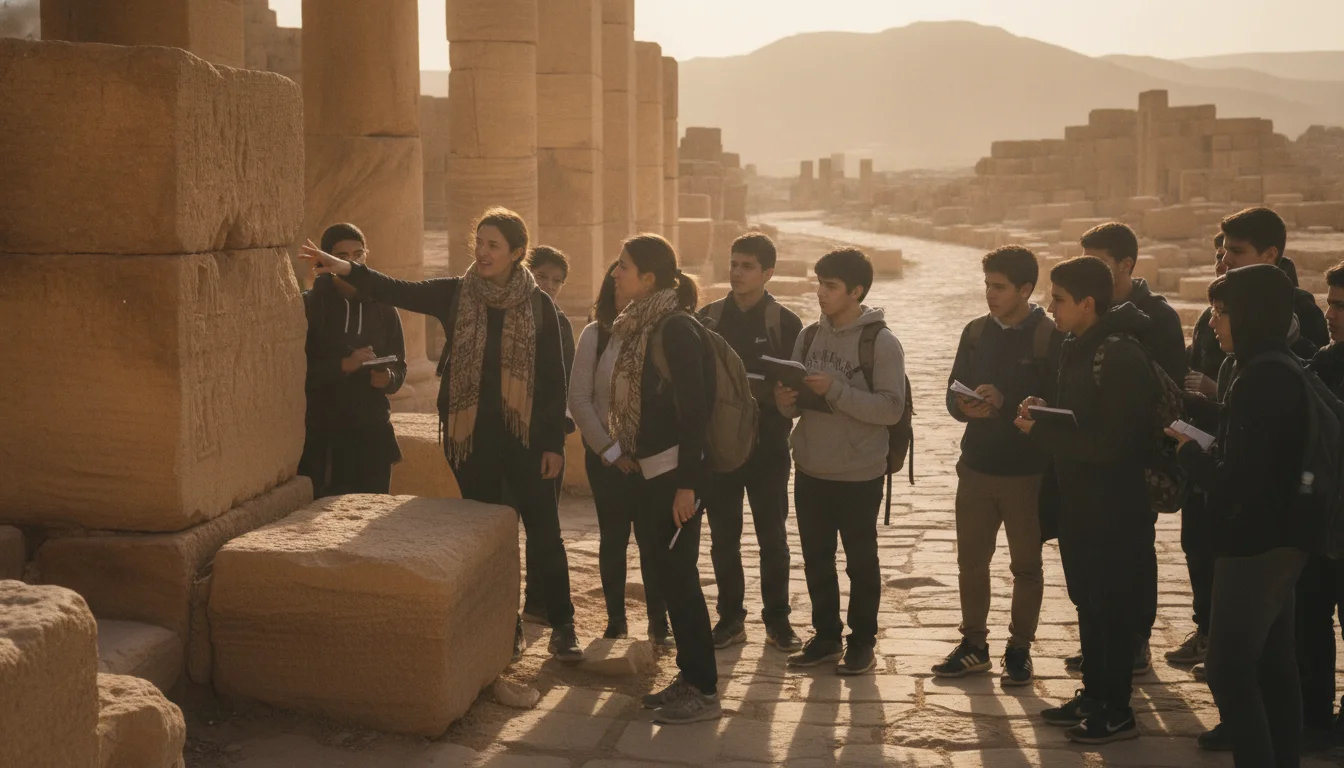
The first youth trip I helped a church organize, the youth pastor called me two weeks before departure in a mild panic. He had eighteen teenagers signed up, four adult volunteers, and a growing suspicion that nobody had thought through who was responsible for whom. That call is why I now start every youth conversation the same way: leading young people through a heritage journey is not a harder version of leading adults, it is a different job entirely, and the planning has to reflect that from day one.
I have built heritage journeys for more than forty years, and a good share of them have carried students, youth groups, scout troops, and young adult ministries. This guide is written for you, the person organizing and leading the trip. Not the traveler. The decision-maker who recruits the group, picks the chaperones, and stands responsible when a parent hands you their fifteen-year-old at the airport. I want to walk you through how to chaperone a youth heritage trip the way leaders who do it well actually do it: the ratios, the roles, the cost structure, and the logistics that keep the whole thing calm.
Start With Your Real Job as the Organizer
Before we get to ratios, get clear on what you are signing up for. As the organizer you carry three jobs at once, and confusing them is where most trips get stressful.
You are the recruiter, filling the group and communicating with parents. You are the trip leader, making decisions on the ground. And you are the safeguarding lead, responsible for every young person’s wellbeing from wheels up to wheels down. On an adult trip, the operator absorbs most of the logistics and you get to be present. On a youth trip you keep more of the responsibility, because the duty of care does not transfer. A guide runs the itinerary. Only you and your chaperone team can supervise the students.
That is not a reason to avoid youth trips. It is a reason to plan them like the serious undertaking they are. Our group pilgrimage planning guide covers the broad framework every group leader should start from. This article layers the youth-specific parts on top.
How Many Chaperones for a Youth Group Tour
This is the first number every organizer asks about, and rightly so, because it drives your budget, your recruiting, and your peace of mind.
Here is the working standard I recommend. It is deliberately more conservative than a day trip at home would need, because you are in a foreign country, across time zones, with jet-lagged teenagers.
- Middle school age (roughly 11 to 13): one chaperone for every 5 to 6 young people.
- High school age (roughly 14 to 18): one chaperone for every 7 to 8 young people.
- Young adults (18 and up): supervision loosens, but you still want two adult leaders minimum, never a solo leader.
Two rules sit on top of those numbers and I treat them as non-negotiable.
First, gender balance. If your group includes boys and girls, your chaperone team must include men and women, so that rooming, supervision, and any private conversation can be handled appropriately. A group of twenty mixed teenagers with four male chaperones is a structure I will push back on every time.
Second, never a solo adult. No chaperone should ever be alone with a single young person who is not their own child, not in a hotel room, not in a car, not on a walk apart from the group. Two-deep leadership protects the students and it protects your volunteers from any ambiguity. Build your ratios so this is always possible.
Run the math before you open registration, not after. Twenty-four high schoolers means at least three or four chaperones plus yourself, balanced by gender. That number shapes your whole cost model, which brings us to the part organizers underestimate most.
The Cost Structure Nobody Explains to You
Youth trips have a cost quirk that adult trips do not, and understanding it early will save you a hard conversation later.
Your chaperones are adults on the trip, so each occupies a paying seat unless something offsets it. That is real money, and the students cannot always absorb four or five extra adult fares. So the question every youth organizer has to answer is: who pays for the chaperones?
There are three common models, and I have seen all three work.
- The group absorbs it. The chaperone cost gets spread across every student’s price. Clean and simple, but it raises the per-student number, so be transparent about it up front.
- Chaperones pay their own way. Common with parent volunteers who are glad to travel alongside their own child. Fair, and it keeps the student price lower.
- The leader-free benefit covers you. On many group heritage trips, once you reach fifteen paying travelers, the group leader travels free, which covers your seat as the organizer. For additional chaperones, larger groups can sometimes unlock a reduced or second complimentary seat, so ask your operator early.
That free-leader threshold is genuinely useful for youth budgets, because it takes at least one adult fare off the table. Our explainer on how many travelers you need for the leader to go free lays out the math, and how pastors and youth leaders afford to lead walks through the budgeting side.
One more line item youth organizers cannot skip: travel insurance for the whole group, chaperones included. With minors in your care, medical coverage and a clear emergency protocol are not optional. Our guide to travel insurance for a group covers what to look for.
How to Combine Youth and Adults on One Trip
A lot of the trips I build are not pure youth groups. They are intergenerational: a congregation travels together, and the teenagers come along with parents and grandparents. Organizers often assume this is harder than a youth-only trip. Done right, it is easier, because the adult travelers share the supervision load and the group has natural energy across ages.
The trick is to plan for two different rhythms inside one itinerary.
Teenagers and retirees do not experience a heritage site the same way. A seventy-year-old wants time to sit and take the history slowly. A fifteen-year-old wants to move and not stand through a forty-minute explanation. Build the whole trip at one pace and half your group is bored while the other half is exhausted.
So I build intergenerational trips with a shared spine and flexible ribs. Everyone does the major sites and the meaningful moments together, because that shared experience is the entire point of traveling as a community. Then I add optional splits: while the adults linger at a museum, the youth do an active workshop or a guided walk. Meals and evenings come back together. The group feels whole, but nobody is forced through the wrong pace.
The supervision benefit is real. When parents travel alongside their own teenagers, your effective chaperone ratio improves without adding cost, because family units supervise themselves for much of the trip. Just be clear in writing about where the youth are the chaperones’ responsibility and where they are their own parents’. Ambiguity there is what causes the two-weeks-out panic call.
If your congregation is weighing a full-community trip, our guide on organizing a church group trip and the church group planning checklist both apply, with the youth ratios above layered on top.
How to Plan a Young Adults Heritage Trip
Young adults, meaning college-age and twenties, are their own category, and organizers often over-plan them or under-plan them.
The supervision question mostly disappears. These are adults, so you are not chaperoning in the safeguarding sense. But you are still leading, and young adults have distinct expectations that shape the trip.
They want meaning and depth, not a checklist of photo stops. A young adults heritage trip built around real engagement, walking a biblical route and reading the text at the site, sitting with the weight of a place, lands far better than a rushed highlights tour. Build in reflection time and discussion, not just transit.
They also travel on tighter budgets and thinner vacation allowances. That pushes you toward shorter, sharper itineraries and toward payment plans that let people pay over months. Our guide to setting up a group trip payment plan is worth reading before you announce pricing, and if you need to close a gap, fundraising for a trip covers the approaches that work.
The leader-free model still applies here and is often the cleanest way to fund your own seat. Fifteen paying young adults, and you travel free. For a ministry on a lean budget, that is frequently the difference between the trip happening and staying an idea.
How to Plan a Scout or Club Heritage Trip
Scout troops, youth clubs, and similar organizations travel differently from a congregation, and the planning reflects it.
The biggest difference is documentation and approval. Scout and club trips usually run through a chartering organization or governing body with its own rules: permission forms, background checks for adult leaders, insurance requirements, and sometimes a formal trip-approval process months ahead. Find out your organization’s requirements before you pick a date, because they often set your real timeline.
The second difference is the program itself. A heritage trip for a scout or club group works best when it ties to a badge, an award, or a program goal. Young people engage more deeply when the travel has a purpose beyond sightseeing. Bring that goal to your operator early so the itinerary can be built to support it rather than bolted on afterward.
The chaperone ratios above still apply, and for scout and club groups I lean toward the more conservative end, because you are often operating under an external safety standard. Two-deep leadership and gender balance are usually formal requirements here, not just good practice.
The good news is that these groups tend to recruit well, because the membership base is already organized and used to traveling together. Once you have the approvals and ratios set, filling the group is often the easiest part. Our guide on how far ahead to plan a group trip will help you back-plan from your approval deadlines.
The Logistics That Actually Keep You Sane
A few practical systems separate the calm youth trips from the chaotic ones. These are the ones I insist on.
Buddy system and headcounts. Assign buddies, count heads at every transition (off the coach, out of the site, onto the coach), and give each chaperone a fixed small group all trip. Diffuse responsibility is how people get left behind.
Parent communication plan. Before departure, give parents a written itinerary, an emergency contact protocol, and a set daily or every-other-day check-in window so nobody is calling at 3am your time.
Rooming rules in writing. Same-gender rooming, no student alone with an adult, chaperones on the same floors as their groups. Decide it before the trip and there are no surprises.
Free time boundaries. Teenagers need some autonomy or they rebel against the structure. Give it in controlled doses: defined areas, defined times, defined buddy groups, and a hard return time.
Health and documents. Collect medical forms, allergies, medications, and passports before you leave, held by the lead chaperone.
None of this is complicated. It just has to be decided in advance rather than improvised on the ground, which is the whole theme of leading young people well.
FAQ: Chaperoning a Youth Heritage Trip
How many chaperones do I need for a youth group tour?
Plan for one chaperone per 5 to 6 middle schoolers, or one per 7 to 8 high schoolers, plus yourself. Always include both men and women if the group is mixed, and never let a single adult be alone with a student. Run those numbers before registration opens, because the chaperone count drives your budget.
Do the chaperones have to pay full price?
Not necessarily. Many groups have chaperones pay their own way (often parent volunteers traveling with their own child), while others spread the cost across the students. On many heritage trips, once you reach fifteen paying travelers the group leader travels free, and larger groups can sometimes unlock a second reduced or complimentary adult seat.
Can I combine teenagers and adults on the same heritage trip?
Yes, and intergenerational trips often run more smoothly because parents share the supervision. Build a shared spine of major sites and meals that everyone does together, with optional splits so the youth get a more active pace while the adults take things slower. Put in writing where students are the chaperones’ responsibility versus their parents’.
What is different about a young adults trip versus a teen trip?
The safeguarding supervision mostly disappears since young adults are legally adults, but they expect depth and reflection rather than a checklist tour, and they travel on tighter budgets. Lean toward shorter itineraries and offer a payment plan. Two adult leaders minimum is still wise, and the leader-free benefit still funds your own seat.
How far ahead should I plan a youth or scout heritage trip?
Give yourself six to nine months for a straightforward youth trip, and nine to twelve months for scout or club groups that need formal approvals, background checks, and parent documentation. The external requirements, not the travel logistics, usually set your real timeline.
If you are weighing a youth, young adult, scout, or intergenerational heritage journey, the planning is very doable once the ratios, roles, and budget are set early. See how the group experience works on our group heritage tours page.
Contact us and we will help you build the ratios, the itinerary, and the cost model around your specific group and its ages.