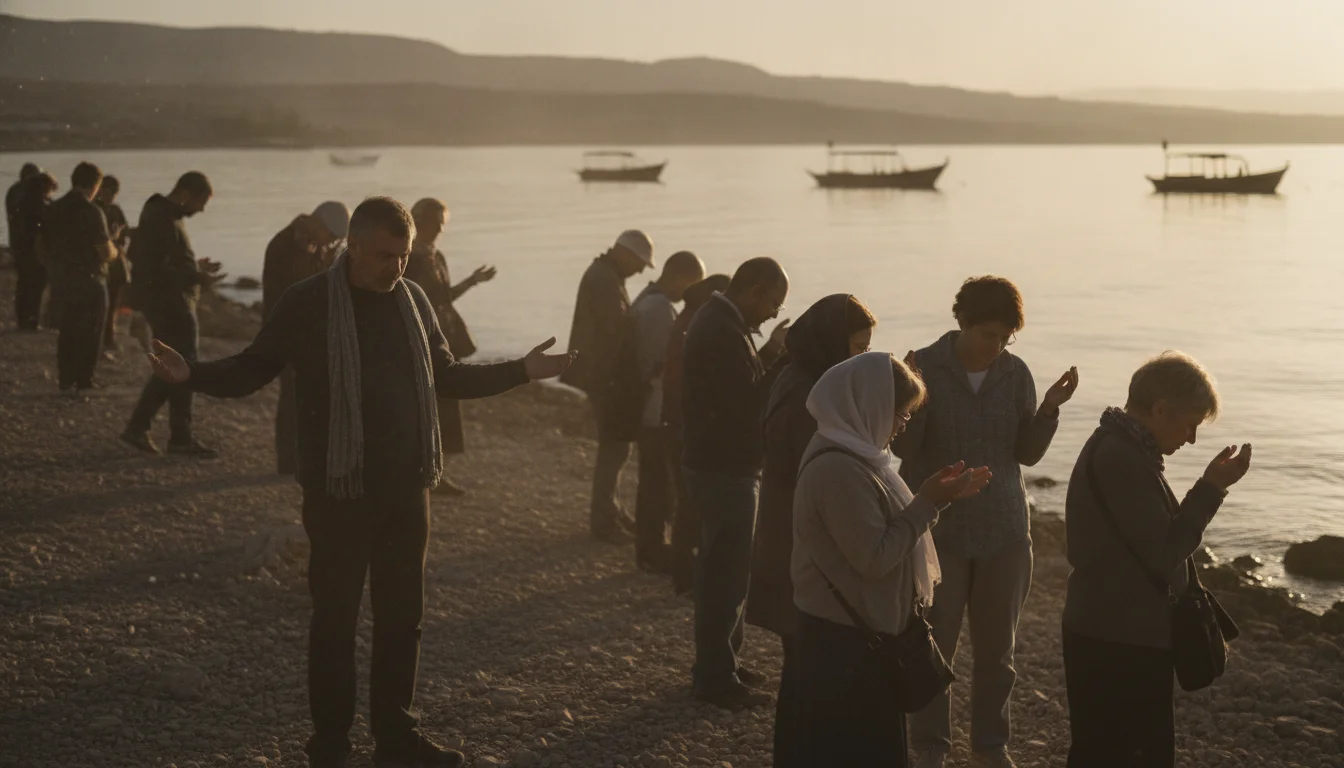
Most pastors I meet do not doubt that their parish should walk the Holy Land. What they doubt is that they can be the one to make it happen. They picture the phone calls, the deposits, the family who cancels three weeks out, the parishioner who wants to know why the Jerusalem hotel costs what it costs. It feels like a second job stacked on a full one. So the pilgrimage stays a someday, and someday keeps moving.
I have built heritage journeys for more than forty years, and I want to take that weight off you. Organizing a Catholic parish pilgrimage to the Holy Land is not the impossible logistics puzzle it looks like from the pulpit. It is a small set of decisions made in the right order, with an operator carrying the parts that would otherwise eat your week.
Start With the Decision, Not the Details
The first thing to settle is not the itinerary or the price. It is whether you are actually leading this trip. Everything downstream depends on that answer, because a pilgrimage without a committed shepherd never fills. Your parishioners are not signing up for a destination. They are signing up to walk the Gospel with you, to hear you read the Beatitudes on the mount where they were preached, to have you celebrate Mass at the Church of the Holy Sepulchre. You are the reason the trip exists.
Once you have decided you are leading, the rest becomes a sequence. Pick a rough season. Set a target group size. Choose the length of trip. Get a real itinerary and a real price in hand. Then start recruiting. Notice that recruiting comes last, not first. Leaders who open with “would anyone be interested in a Holy Land trip someday” get warm nods and no deposits. Leaders who come to the parish with dates, a route, and a per-person price get sign-ups. If you want the full sequence laid out end to end, our group pilgrimage planning guide is the pillar I point every organizer to first.
The Cost Question, Answered Honestly
Let me deal with money early, because it is the question sitting under every other one.
A Catholic parish pilgrimage to the Holy Land is a serious trip, and I will not pretend the number is small. Between international flights, hotels, ground transportation, a licensed local guide, site entries, and the daily meals built into a pilgrimage, the per-person cost lands in a real range that depends on your season, your departure city, and your hotel level. What matters is that the price is transparent and that you understand what sits inside it. When a parishioner asks why Jerusalem costs what it costs, you should be able to answer plainly, and a good operator gives you exactly that breakdown. I go deeper on the components in our piece on the cost of a church trip to Israel, and it applies to Catholic parishes the same way.
Here is the part that changes the math for you as the organizer. On a group of fifteen or more paying pilgrims, the group leader travels free. Your own seat, flights, hotel, ground transport, site entries, and included meals, is covered. You are not asking your parish to fund an expensive trip for the pastor on top of everything else. You are organizing a journey your people pay into, and your participation is built into how the trip is structured. For the full logic of who the free seat covers and why, our note on whether the pastor travels free spells it out.
Where Fifteen Comes From, and What Happens Below It
People ask why the number is fifteen. The honest answer is that fifteen is the point where a group pilgrimage becomes economically self-supporting at the quality we build at. Below that, the fixed costs of the trip, the guide, the coach, the local coordination, get spread across too few travelers, the per-person price climbs, and there is no room to carry a complimentary leader seat without raising everyone’s cost. At fifteen, those fixed costs are shared widely enough that the structure holds and your seat fits inside it.
Above fifteen, the math gets friendlier, not harder. Larger parishes running groups of twenty-five or thirty sometimes unlock a reduced or complimentary spot for a deacon, a co-leader, or a spouse. If you are building toward a bigger group, raise that early. For the full picture of the thresholds, see how many people you need for the leader to travel free.
If you can only gather twelve, the pilgrimage still happens. We run groups of ten to fourteen regularly. They simply do not include the free leader benefit, because the economics that fund the complimentary seat begin at fifteen. My advice when you are close to the line is to start planning anyway. Interest firms up once people see real dates and a real itinerary, and I have watched parish groups cross from thirteen to seventeen in the final two months for exactly that reason.
Recruiting Your Parish Without It Feeling Like Sales
This is the part leaders dread most, so let me make it concrete.
You do not need to recruit fifteen strangers. You need to find the eight to ten households in your parish who already want to go, then let them bring others. Every pilgrimage I have run started from a small core. Couples come together. The parish council travels as a group. A Bible study or an adult faith formation class books as a unit. Fifteen is reachable when you begin with the people already leaning in rather than the whole registry.
Give them a real reason and a real date. “We are walking from Nazareth to the Sea of Galilee to Jerusalem next spring, ten days, here is what we will pray at each place” is a decision people can make. “We might do a Holy Land trip sometime” never converts. Tie the pilgrimage to the liturgical calendar or to a season your parish is catechizing through, and the interest sharpens on its own.
Then announce it more than once, in more than one place. A single bulletin mention is not a campaign. An announcement after Mass, a note in the bulletin, a table in the narthex with the itinerary printed, a mention in the parish email, all working together over a few weeks. Our guide on how to recruit for a church trip has the full playbook, and the same rhythm works for a Catholic parish.
Money Mechanics That Keep Families In
Two practical tools keep a group from shrinking between the sign-up and the departure.
The first is a payment plan. Very few families can write one check for a pilgrimage. A deposit that holds the seat, followed by monthly installments across the planning window, turns an intimidating number into something a household can budget around. Almost nobody drops out over a monthly payment they chose. People drop out when they are asked for the full amount at once. We build these plans as a standard part of a group booking, and our overview of a group trip payment plan shows how to present it.
The second is fundraising, which parishes are often better positioned for than they realize. A parish that runs fish fries, festivals, and second collections already knows how to raise money together. The same muscle can offset trip costs or subsidize a few parishioners who could not otherwise come. If that fits your community, our notes on how to fundraise for a trip give you the practical options.
Building the Actual Itinerary
A Catholic Holy Land pilgrimage is not a single hotel with day trips. It moves, and it moves for a reason, because you are following the shape of the Gospel across the land.
A well-built ten-day pilgrimage usually opens in the Galilee, where so much of Jesus’ public ministry unfolded. You pray at the Mount of Beatitudes, renew baptismal promises at the Jordan, sail the Sea of Galilee, and celebrate Mass at Tabgha and Capernaum. From there the route moves south, with Nazareth, Mount Tabor, and often a night in Bethlehem for the Church of the Nativity. Jerusalem anchors the heart of the trip: the Via Dolorosa, the Mount of Olives, the Garden of Gethsemane, and Mass at the Church of the Holy Sepulchre. Many parishes add Ein Karem and time at the Western Wall, because a serious pilgrimage honors the whole layered story of the land.
You do not have to design this from scratch. The pattern is well established, and a good operator adapts it to your parish, your pace, and your feast-day priorities. Our ten-day Holy Land itinerary shows one full version you can react to, which is far easier than building from a blank page. To see how the destination comes together, our Israel heritage page lays out the regions and the sites.
Timing and Season
Six to nine months is the sweet spot for a parish group of fifteen to thirty. That gives families time to budget, request time off, and commit, and it gives you time to recruit, which is the real work. Larger groups, or pilgrimages timed around a major feast, want nine to twelve months of runway.
Season matters in the Holy Land more than people expect. Spring and fall bring the most comfortable weather. Summer is hot but very workable with an itinerary built for it, and some parishes travel outside the peak windows for calmer sites and better pricing. Our guide on the best time for a group trip to Israel walks through the tradeoffs.
The One Detail Leaders Forget
Travel insurance. On a pilgrimage, someone will have a health scare, a family emergency at home, or a lost bag, and the group leader is who everyone looks to. Group travel protection turns those moments from a crisis into a phone call. It is inexpensive relative to the trip and it protects both your pilgrims and you as the organizer. Do not treat it as optional. Our piece on travel insurance for a church group covers what to look for.
Your Real Job Once the Logistics Are Handled
Here is what I most want you to hear. When the free leader model takes your personal cost off the table and the operator carries the logistics, your attention is freed for the only job that actually needs you. You are not the trip’s accountant or its travel agent. You are its shepherd.
That is the point of all of it. Your role on a Holy Land pilgrimage is to lead your people through a sacred and formative experience, to celebrate Mass where the Church was born, to read Scripture aloud in the places it describes, to be present for your parishioners in the moments that move them to tears. Everything in this guide exists to protect that. The free seat, the payment plans, the itinerary we build for you, all of it clears the ground so you can do the one thing no operator can do for you.
FAQ: Planning a Catholic Parish Pilgrimage to the Holy Land
How many parishioners do I need for the pastor to travel free?
Fifteen paying pilgrims. At fifteen or more, the group leader’s full trip is covered, including flights, hotels, ground transportation, and site entries. Below fifteen the pilgrimage is still possible, but the leader pays a participant’s price. Larger groups of twenty-five or thirty can sometimes add a reduced or free second seat for a deacon, co-leader, or spouse.
How far ahead should we start planning?
Six to nine months for a group of fifteen to thirty, and nine to twelve for larger groups or feast-timed trips. Most of that runway is recruiting, not booking. Concrete dates and a real itinerary are what move parishioners from interested to committed, so the earlier you have those in hand, the easier the group fills.
What does a typical Holy Land pilgrimage cost per person?
It depends on your season, departure city, and hotel level, so I will not quote a single number that would be wrong for half of readers. What matters is a transparent breakdown of flights, hotels, ground transport, guide, site entries, and included meals, which you should insist on. Payment plans spread that cost into monthly installments so families can budget for it.
Can my parishioners pay in installments?
Yes, and I strongly recommend it. A deposit holds each seat, then monthly payments run across the planning window. Almost nobody drops out over a monthly payment they chose, while asking for the full amount at once is the fastest way to shrink a group. We set these plans up as a standard part of a group booking.
What does a ten-day itinerary usually include?
A typical route opens in the Galilee (Mount of Beatitudes, the Jordan, Capernaum, the Sea of Galilee), moves south through Nazareth and Bethlehem, and anchors in Jerusalem for the Via Dolorosa, the Mount of Olives, Gethsemane, and Mass at the Church of the Holy Sepulchre. We adapt the pattern to your parish, your pace, and your feast-day priorities rather than handing you a fixed template.
If you are weighing whether a Holy Land pilgrimage is realistic for your parish, the free leader math is usually what tips it, and the logistics are lighter than they look from where you stand. You can see how the group experience works on our group heritage tours page, or start with the full sequence in our group pilgrimage planning guide.
Contact us and we will help you run the numbers for your parish, pick your dates, and shape an itinerary your people will carry for the rest of their lives.