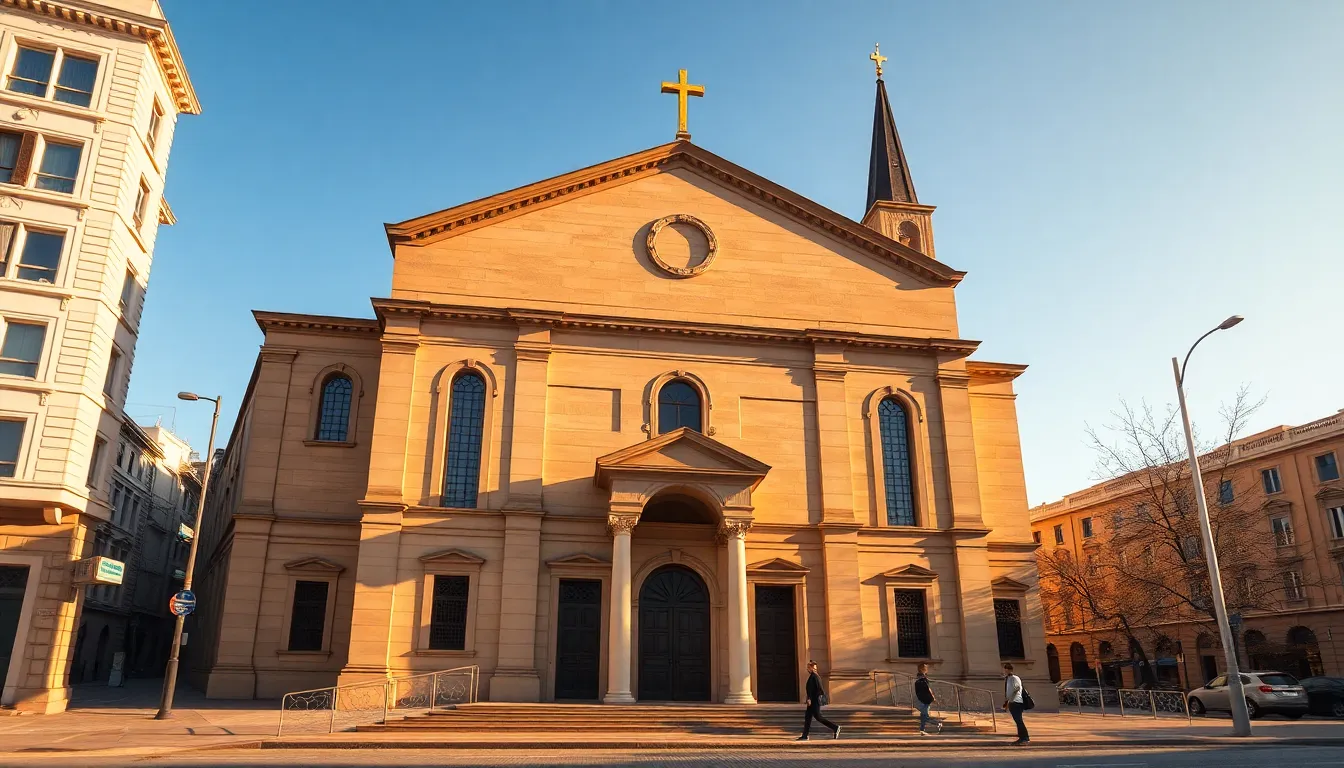
There is a quiet street in central Athens, a short walk from the ancient agora, where two synagogues stand facing each other. I bring groups here and watch them try to make sense of it. Two shuls, across a narrow street, in a city most people do not associate with Jewish life at all. Then I explain, and the picture comes into focus: two traditions, one Romaniote and one Sephardic, and a community that held on through everything the twentieth century threw at it. Standing between Beth Shalom and Etz Hayyim, your group is standing in the living heart of Athenian Jewry. Not a ruin, not a memorial. A community that still gathers to pray.
This guide is about those two synagogues and the people who worship in them. It is written for rabbis, educators, and group leaders who want to understand Athens as more than a stop on the way to the Acropolis. The Jewish story of this city is small, but it is alive, and it deserves real attention.
Two Synagogues, One Street
The two synagogues sit on Melidoni Street, in the Thiseio area near the old town, and the relationship between them tells you much of what you need to know about Athenian Jewish history.
Etz Hayyim: The Romaniote Synagogue
Etz Hayyim is the older of the two, built in the early twentieth century to serve the Romaniote community. The Romaniote Jews are Greek-speaking Jews whose presence in Greece predates the Sephardic arrival by well over a thousand years. Their liturgy, their melodies, and their customs developed along a path entirely their own, distinct from anything in the Sephardic or Ashkenazi worlds. We go deeper into this remarkable tradition in our guide to Jewish heritage in Greece.
Etz Hayyim is the synagogue of that ancient, indigenous Greek Jewish tradition. Today it is used mainly on special occasions rather than for regular services, but its presence on the street is essential. It marks the older layer of Athenian Jewry, the Greek-speaking Jews who were here long before the exiles from Spain arrived.
Beth Shalom: The Sephardic Synagogue and the Main Shul
Directly across the street stands Beth Shalom, the larger and newer of the two, completed in the mid-twentieth century. Beth Shalom is the main functioning synagogue of Athens today and serves the Sephardic rite that became dominant in the community. This is where the regular minyan gathers, where Shabbat and the festivals are kept, and where a visiting group is most likely to daven.
The building is dignified and well kept, with a Sephardic interior and the bimah arrangement of that tradition. When you bring a group for prayer, this is usually the room you will be in. The fact that the two synagogues face each other, the ancient Romaniote and the later Sephardic, makes Melidoni Street a kind of map of Greek Jewish history compressed into a few meters of pavement.
The Community That Worships Here
A synagogue is only as alive as the people who fill it, and Athens has held onto its community against long odds.
Survival Through the War
The Jewish community of Athens survived the Holocaust in greater proportion than the communities of the north, like Thessaloniki, which we describe in our guide to the Holocaust memorial of Thessaloniki. Athens was under Italian control for part of the occupation, and when German deportations came, many Athenian Jews were hidden by neighbors, sheltered by the Greek Orthodox Church, or escaped into the resistance and the countryside. The Archbishop of Athens and the chief of police are remembered for actions that saved Jewish lives. The community suffered terribly, but a larger share survived, and that survival is why Athens, rather than Thessaloniki, holds the country’s main living Jewish community today.
Jewish Athens Now
The community in Athens today numbers a few thousand. It maintains the synagogue, a Jewish school, communal organizations, and the Jewish Museum of Greece, which is one of the finest small Jewish museums anywhere and tells the story of all the country’s communities. There is a Chabad presence in the city as well, serving residents and travelers. For a visiting group, this means Athens offers something many Greek heritage sites cannot: a chance to meet Jews who live here now, to daven in a working shul, and to see that the story did not end in 1944.
Visiting the Synagogues With a Group
A few practical notes for leaders, because these are working religious institutions, not tourist attractions.
Access and Security
The synagogues maintain security, as Jewish institutions in Europe generally do. Visits and group prayer are arranged in advance through the community, not by simply showing up. Bring identification, expect a security check, and coordinate ahead. We handle this coordination as part of building the trip, so your group is expected and welcomed rather than turned away at the door. Modest dress is appropriate, and men should bring a kippah.
Making It a Real Encounter
The mistake I see is treating the synagogues as a ten-minute photo stop. They deserve more. I arrange, where possible, for someone from the community to speak with the group, to tell the story of Athenian Jewry in their own voice. I pair the synagogue visit with the Jewish Museum of Greece, so the group gets both the living community and the wider history. And when an itinerary places Shabbat in Athens, Beth Shalom becomes the center of the day, which we describe in our guide to observing Shabbat in Greece. A visit built that way leaves your group with a real sense of the community, not just a building.
Fitting It Into the Athens Day
Athens is dense with sites, and the Jewish quarter sits close to the classical heart of the city. The synagogues on Melidoni Street are a short walk from the ancient agora and within easy reach of the Acropolis. That proximity lets you weave the Jewish story into a full Athens day without strain, moving from the ancient classical world to the living Jewish community in the same afternoon. It is a contrast that helps your group hold both stories at once.
Athens as the Anchor of a Jewish Greece Trip
For most Jewish heritage groups, Athens functions as the anchor of the trip. It is the arrival and departure point, it holds the main living community, it has the strongest kosher and Shabbat infrastructure, and the Jewish Museum of Greece frames everything the group will see elsewhere. The two synagogues on Melidoni Street are the beating heart of that anchor.
At Heritage Tours, we build the Athens portion to give the living community its due, coordinating synagogue visits, community contacts, and museum time so the city is more than a gateway to the Acropolis. A group leader travels free when you bring fifteen or more participants, which makes a fuller, unhurried itinerary reachable for many congregations. If you are a rabbi or educator planning a Jewish journey through Greece, we would be glad to shape the Athens days with you. You can also see how the group experience works on our group heritage tours page.
FAQ: The Synagogues of Athens
What are the two main synagogues of Athens?
Beth Shalom and Etz Hayyim, which face each other on Melidoni Street in central Athens. Etz Hayyim is the older Romaniote synagogue, representing Greece’s ancient Greek-speaking Jewish tradition. Beth Shalom is the larger Sephardic synagogue and the main functioning shul where the regular minyan gathers today.
What is the difference between the two synagogues?
Etz Hayyim serves the Romaniote rite, the indigenous Greek-speaking Jewish tradition that predates the Sephardic arrival by over a thousand years, and is used mainly for special occasions now. Beth Shalom serves the Sephardic rite that became dominant in the community and is the main active synagogue, used for regular Shabbat and festival services.
Can a group visit and pray at the Athens synagogues?
Yes, with advance arrangement. The synagogues are working religious institutions with security, so visits and group prayer are coordinated ahead of time rather than by showing up unannounced. Bring identification, dress modestly, and expect a security check. We handle this coordination so your group is expected and welcomed.
Why does Athens have a larger Jewish community than Thessaloniki today?
A greater proportion of Athenian Jews survived the Holocaust. Athens was under Italian control for part of the occupation, and when deportations came, many Jews were hidden by neighbors, sheltered by the Greek Orthodox Church, or escaped into the resistance. Thessaloniki’s much larger community was almost entirely deported. Athens now holds Greece’s main living Jewish community.
What else should our group see in Jewish Athens?
The Jewish Museum of Greece is essential and tells the story of all the country’s communities. Pair it with the synagogue visit and, where possible, a conversation with a community member. The synagogues sit a short walk from the ancient agora and the Acropolis, so the Jewish story fits naturally into a full Athens day.
If you want your group to encounter the living Jewish community of Athens, not just its monuments, I would be glad to help you build those days with care. Meeting the people who kept this community alive is often what travelers remember most. You can see how we approach Greece on our Greece heritage page.
Contact us whenever you are ready to start planning.